Unisciti a noi in un viaggio nel mondo dei libri!
Aggiungi questo libro allo scaffale
Grey
Scrivi un nuovo commento Default profile 50px
Grey
Iscriviti per leggere l'intero libro o leggi le prime pagine gratuitamente!
All characters reduced
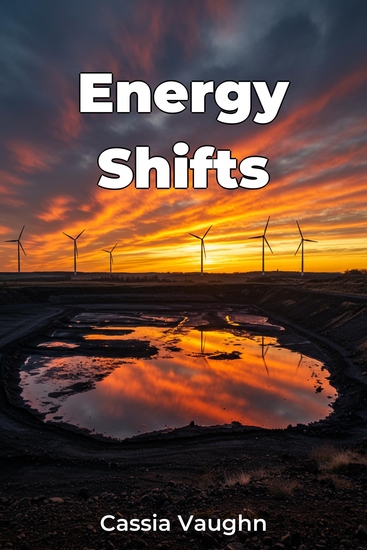
Energy Shifts - cover

Energy Shifts

Cassia Vaughn

Traduttore A AI

Casa editrice: Publifye

  • 0
  • 0
  • 0

Sinossi

Energy Shifts delves into the complex transition from coal to renewable energy in the United States, examining the political negotiations, environmental consequences, and energy economics at play. It highlights how the shift impacts everything from climate change mitigation to economic development. The book reveals how technological advancements in renewable energy, coupled with growing awareness of coal's environmental toll, are reshaping the energy landscape. A key argument is that moving away from coal is not just an environmental issue but a political one, influenced by vested interests and policy decisions.

 
The book begins by establishing the historical context of coal's dominance and its subsequent decline due to environmental regulations, such as impacts following the Clean Air Act. It then progresses to analyze the drivers behind renewable energy adoption, like government policies promoting sustainable energy and market forces. Through statistical data, policy analyses, and case studies, Energy Shifts offers a nuanced understanding of this transition.

 
Ultimately, Energy Shifts provides an assessment of the challenges and opportunities that lie ahead, offering policy recommendations for a sustainable energy future. It emphasizes the interplay between policy and technology, moving beyond simplistic narratives to highlight the critical role of government policies in shaping the energy transition. This approach makes the book valuable for policymakers, academics, and anyone interested in understanding the future of energy.
Disponibile da: 06/05/2025.
Lunghezza di stampa: 76 pagine.

Altri libri che potrebbero interessarti

  • 170 Chinese Poems - cover

    170 Chinese Poems

    Arthur Waley

    • 0
    • 0
    • 0
    A selection of the very best of Chinese poetry over the course of a thousand years, from 100 years before Christ was born up of the middle ages. Arthur Waley's translations of Chinese poetry are still the benchmark by which such translations are held, nearly two hundred years after he introduced the west to the wonder of classical Chinese poetry.Includes Waley's interpretations of poems originally by Altun, Fu Hsüan, Ch‘U Yüan, Ch’ēn Tzŭ-Ang, Ch’ēng-Kung Sui, Ch’ien Wēn-Ti, Ch’in Chia, Ch’ü Yüan, Chan Fang-Shēng, Chang Tsai, Chi K’ang, Hsieh T’iao, Hsü Ling, Li Fu-Jēn, Li Po, Liu Hsün’s Wife, Lu Yu, Lu Yün, Miu Hsi, Ou-Yang Hsiu, Pao Chao, Po Chü-I, Po Hsing-Chien, Su Tung-P’o, Sung Yü, T’ao Ch’ien, Tao-Yün, Ts’ao Chih, Ts’ao Sung, Tsang Chih, Tso Ssŭ, Tzŭ-Yeh, Wang Chi, Wang Chien, Wang Wei, Wei Wēn-Ti, Wu-Ti, Yüan Chen, Yüan Chieh, &Yüan-Ti
    Mostra libro
  • Money Parties and Democracy - Political Finance Between Fat Cats and Big Government - cover

    Money Parties and Democracy -...

    Zim Nwokora, matteo Bonotti

    • 0
    • 0
    • 0
    Democratic politics is expensive. In US presidential elections, for instance, total spending now exceeds $6.5 billion. In the US, election campaigns are largely funded by private donations from individuals and corporate entities, whereas in Germany, the state is the main funder of electoral politics through subventions to parties. In some other countries, parties have been able to raise most of what they need internally by charging membership dues or, more exceptionally, by relying on a wealthy patron. However, there have been numerous scandals and controversies involving political finance, which pose a serious challenge to fundamental democratic principles.Matteo Bonotti and Zim Nwokora analyze the nature of these democratic risks and how they differ across various models of political finance. They argue that political finance rules ought to counterbalance the weaknesses of the party system they are being used alongside. To do so, political finance rules and party systems should be assessed together, in terms of three distinctive normative dimensions—collegiality, systemic voice, and systemic accountability—which capture what parties, at their best, can contribute to democratic politics. Money, Parties, and Democracy sets out a framework for evaluating political finance systems so that they can be designed or reformed to better support good governance.
    Mostra libro
  • Essays: First Series Intellect - cover

    Essays: First Series Intellect

    Ralph Waldo Emerson

    • 0
    • 0
    • 0
    Intellect is not a possession but a force—fluid, expansive, untamed. It cannot be hoarded, nor can it be caged within doctrine or tradition. In Intellect, Ralph Waldo Emerson urges us to see thought as a living current, not a stagnant pool. True understanding, he suggests, is not about collecting knowledge but about breaking through to deeper insight, where intuition leads and logic follows.
    Emerson's vision of the mind defies confinement. He challenges the idea that intelligence is something fixed, something to be measured or owned. Instead, he sees it as a ceaseless motion, a self-renewing energy that thrives on boldness and independence. To think freely is to embrace the unknown, to risk uncertainty in pursuit of wisdom.
    Part of Essays: First Series, Intellect is a call to let go of borrowed opinions and trust the mind's own unfolding. It is not a guidebook, not a doctrine—it is an invitation to intellectual courage. To read it is to reconsider not only what we think but how we think.
    Mostra libro
  • Divine Feminine Energy - Awakening Your Inner Goddess to Fulfill Your Soul's Deepest Desires Unlock the Magnetic Power of Rituals and Embodiment Practices for Manifestation - cover

    Divine Feminine Energy -...

    Melissa Smith

    • 0
    • 0
    • 0
    Are you yearning to tap into your feminine wisdom, power, and purpose? 
    Do you feel called to align your life with the rhythms of the natural world and embody your divine essence? 
    In this groundbreaking book, Melissa Smith takes you on a journey of deep feminine awakening, empowering you to:Break free from the chains of patriarchal conditioningShatter limiting beliefs and societal conditioning that have kept you disconnected from your true feminine powerCultivate a profound connection with your body, sexuality, and cyclical nature, harnessing the magic of your menstrual cycleCraft potent rituals and embodiment practices that activate your innate manifestation abilities and attract your heart's desiresAlchemize past wounds and traumas into potent fuel for your soul's growth and transformationEmbody the full spectrum of your femininity, from the wild and untamed to the sensual and sovereignNavigate the heroine's journey with grace and resilience, transmuting challenges into opportunities for growthUnleash your authentic feminine leadership and become a beacon of change in your community and the worldRelease the martyr-motherhood paradigm and embrace a more empowered and balanced approach to parenting 
    Whether you're seeking to deepen your self-love, manifest your dreams, or step into your soul's purpose, this book will guide you to reconnect with your innate divine feminine power. 
    Embrace the path of feminine awakening and unlock the door to a world where your deepest desires become your living reality. Get your copy today and step into the life you were born to live.
    Mostra libro
  • Tainos and Caribs The: The History of the Indigenous Natives Who Encountered Christopher Columbus in 1492 - cover

    Tainos and Caribs The: The...

    Editors Charles River

    • 0
    • 0
    • 0
    On October 12, 1492, one of the most important “first contacts” of the modern era was made when three ships of Spanish origin approached the island archipelago now known as the Bahamas, cautiously dropping anchor as the captain of the fleet gazed across to what he assumed was the coast of India. According to the popular version of the story, amazed at the sight of ships and men of such unfamiliar appearance, the native people of the island plunged into the clear waters of the western Atlantic, expertly swimming or aboard dugout canoes, and came out to greet the strangers. 
    	In all probability, the meeting was much more cautious and incremental, but the idea that these innocent people, raised in a tropical Eden, might embrace with such open enthusiasm their own destruction is picturesque, and no doubt appeals to contemporary perceptions. By whatever means one might choose to view it, this meeting of cultures certainly did mark the beginning of a bold new chapter in the history of Europe, and the beginning of the end of an ancient race of native people occupying a vast new continent.  
    	The entries into Christopher Columbus’ log as he recorded his first encounters with the indigenous people of the “Indies” are very telling. The island people arrived alongside his ships, offering humble gifts that Columbus described as “parrots and balls of cotton and spears and many other things, which they exchanged for the glass beads and hawks' bells.” These were the Taínos people, or the “Arawaks” as they would come to be known, and Columbus described them as “well built…with good bodies and handsome features.”  
    	This description, while deceptively simple, had a chilling implication, because Columbus was not taking note of these facts out of idle interest but in terms of how best to exploit them. As the natives offered up gifts aand by implication the freedom of their islands, Columbus remarked simply on their primitive appearance.
    Mostra libro
  • No Jews Live Here - cover

    No Jews Live Here

    John Lorinc

    • 0
    • 0
    • 0
    WINNER OF THE 2025 CANADIAN JEWISH LITERARY AWARD FOR MEMOIR 
    NOMINEE FOR THE HERITAGE TORONTO 2025 BOOK AWARDA stolen sign, ‘No Jews Live Here,’ kept John Lorinc’s Hungarian Jewish family alive during the Holocaust.From pre-war Budapest to post-war Toronto, journalist John Lorinc unspools four generations of his Hungarian Jewish family's journey through the Holocaust, the 1956 Revolution, and finally exodus from a country that can't rid itself of its antisemitic demons.This braided saga centres on the writer's eccentric and defiant grandmother, a consummate survivor with a love of flashy jewellery and a vicious tongue. Lorinc also traces the stories of both his grandfathers and his father, all of whom fell victim, in different ways, to the Nazis’ genocidal campaign to rid Europe of Jews.   
    This is a deeply reported but profoundly human telling of a vile part of history, told through Lorinc’s distinctively astute and compassionate consideration of how cities and cultures work. Set against the complicated and poorly understood background of Hungary's Jewish community, No Jews Live Here is about family stories, and how the narratives of our lives are shaped by our times and historical forces over which we have no control. 
    "John Lorinc weaves Hungarian history with the equally fascinating history of his own family to tell a deeply researched story with universal resonance: how events, enormous and seemingly tiny (a genocidal war, foggy skies), conspire to create outcomes with life-and-death implications through generations." – Marsha Lederman, author of Kiss the Red Stairs: The Holocaust, Once Removed
    Mostra libro