Rejoignez-nous pour un voyage dans le monde des livres!
Ajouter ce livre à l'électronique
Grey
Ecrivez un nouveau commentaire Default profile 50px
Grey
Abonnez-vous pour lire le livre complet ou lisez les premières pages gratuitement!
All characters reduced
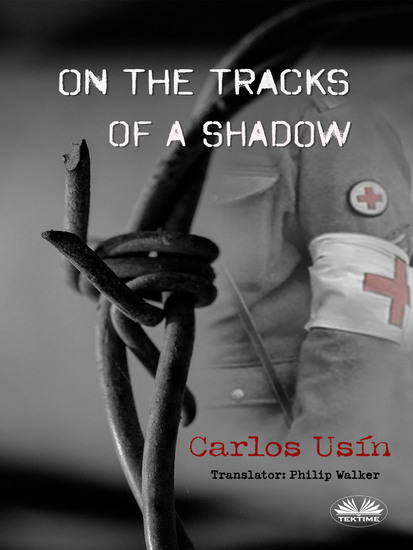
On The Tracks Of A Shadow - cover

On The Tracks Of A Shadow

Carlos Usín

Traducteur Phillip Walker

Maison d'édition: Tektime

  • 0
  • 0
  • 0

Synopsis

At the end of the Spanish Civil War, the government of the Francoist “New Spain” set in motion a complex and Machiavellian system of repression directed against all those Republican prisoners who had lost the war. From that moment on, hundreds of thousands of prisoners (Republicans or not) suffered first-hand the torture of forced labour, internment in concentration camps or in prisons or, in certain cases, death. Although in the vast majority of cases the victims of reprisals belonged to political parties, unions and other left-wing organisations, some internees were practising Catholics educated by the Piarists but were still not spared. This is the story of Enrique, one of those internees, who in 1936, shortly after his twentieth birthday, found himself obliged to take part in a civil war instead of continuing his medical studies at university. Over the following 20 years, his determination to finish his degree did not waver and although he did not fire a single shot, because he spent the war working in a hospital, he was given a Summary Military Trial, sentenced to twelve years and one day for “aiding the rebellion”, suffered internment in concentration camps and prisons and was sent to work battalions where he carried out forced labour, and all that despite being Catholic and right-wing. Quite simply, he was on the wrong side at the least opportune time.
Disponible depuis: 22/09/2022.
Longueur d'impression: 162 pages.

D'autres livres qui pourraient vous intéresser

  • Detours - Hope & Growth After Life's Hardest Turns - cover

    Detours - Hope & Growth After...

    Elizabeth Smart

    • 0
    • 0
    • 0
    In this powerful memoir of survival and healing, Elizabeth Smart empowers readers to navigate life’s detours, embrace resilience, and find healing and purpose after adversity. 
      
    In Detours, Elizabeth Smart explores how trauma can derail one’s path in life and shares her struggles with captivity, reintegration, and resilience. Using the metaphor of life as a road, Smart introduces four key “Rest Stops” for navigating life’s detours—grieving lost paths, embracing change, seeking connections, and redefining destinations. Through themes of hope, community, and self-discovery, she inspires readers to find strength in their own journeys toward healing.
    Voir livre
  • In the Shadow of the Rising Sun - Surviving a Prisoner of War Childhood - cover

    In the Shadow of the Rising Sun...

    Olga Henderson

    • 0
    • 0
    • 0
    In February 1942, nine-year-old Olga Morris and her family were in Singapore when the city fell to the Japanese Imperial Army in the biggest defeat in history of the British Forces. Turned back at an evacuation ship’s gangway as the bombs fell, Olga and her parents and siblings were forced to take their chances and hide out until, captured by Japanese soldiers, they were sent on a forced march to the notorious Changi Prison. 
     
    There’s a certain stereotype of the British in Singapore in the ‘30s and early ‘40s, which Olga Morris – Henderson as she is now – definitely did not fit. Her family was not part of the privileged Raffles Hotel set, with their big houses and servants. Her father worked in construction. Olga and her siblings grew up in Johor Bahru, a diverse part of Malaya just across the causeway from Singapore, amongst children of all faiths and cultures. It was a very happy upbringing. 
     
    All that changed in 1942. Olga was playing with her guinea pigs when a British Army officer arrived to tell her parents that the family had just 30 minutes to pack and be ready for evacuation to Singapore. The Japanese were ten miles away. Olga’s mother grabbed the family photograph album and they ran… 
     
    Days later, Singapore fell. Three years of captivity followed. Three years of disease, malnutrition, deprivation and oppression in Changi and Sime Road. 
     
    Desperate for food, Olga and her friends bravely raided the vegetable plot; “dodging the searchlights” and sometimes endured severe punishments. She stood alongside the other women and children through the ordeal of Tenko in the blazing sun. Halfway through their captivity, Olga’s ten-year-old brother was put into the men’s camp, where he suffered terrible cruelty that scarred him for life. 
     
    February 2022 marked 80 years since the Fall of Singapore and Olga is now ready to tell the story of her years as a child prisoner of war. It’s a story of great fear and deprivation; of a childhood utterly lost to conflict. It’s also a story of class prejudice and unkindness that didn’t end when Olga was freed from the camp and returned to England as a refugee. 
     
    Yet moments of humour and camaraderie also live on in Olga’s memory. There were plays and imaginary tea parties and even a secret girl guide group that held clandestine meetings, where they worked on sewing a quilt.
    Voir livre
  • D L Moody - God's Bold Messenger - cover

    D L Moody - God's Bold Messenger

    Faith Coxe Bailey

    • 0
    • 0
    • 0
    In an exciting novel form, D. L. Moody: God’s Bold Messenger tells the incredible story of one of the greatest evangelists of the nineteenth century. Deeply committed to the gospel and devoted to bringing the love of God to bear on the lives of young and old, Moody preached across America and throughout Europe. Faith Coxe Bailey brings alive the story of the bigger-than-life man who was a servant to poor communities and whose preaching and vision have an ongoing influence in the lives of many. Though his formal education ended after fifth grade, Moody became a champion of education, starting three schools, including Moody Bible Institute. From reaching out to lost children, to training women, to bridging the gap between denominations, Moody is a hero of the faith with whom all should be well acquainted. You will be encouraged by the faithful and adventurous life of Dwight Lyman Moody.  D. L. Moody dared to take up a challenge and see what God could do with a life totally committed to Him. Bailey brings to color the story of God’s Bold Messenger.
    Voir livre
  • Wild West’s Most Influential Black Men The: The Lives and Legacies of the Forgotten Mountain Men Cowboys Sheriffs and Rodeo Performers - cover

    Wild West’s Most Influential...

    Editors Charles River

    • 0
    • 0
    • 0
    Space may be the final frontier, but no frontier has ever captured the American imagination like the “Wild West”, which still evokes images of dusty cowboys, outlaws, gunfights, gamblers, and barroom brawls over 100 years after the West was settled. A constant fixture in American pop culture, the 19th century American West continues to be vividly and colorful portrayed not just as a place but as a state of mind. 
    	Almost absent in the perceptions of modern America is the comprehension of African Americans participating so prolifically in the building of the nation. Print fiction idealizing the cowboy life to Eastern readers would not depict what had ignited the war for which so many had an utter revulsion. The black man of the post-war years did not inspire the white spirit so essential for reveling in the old system. The 20th century’s television and cinematic offerings operated on the same drive, and the existence of black cattle workers was all but blotted out. Indeed, many of the modern age are barely aware that an African-American ever “stepped foot on the West bank of the Mississippi River.” No one saw the black cowboy on screen or in print, the two information industries that shaped our perception of America’s westward expansion. Therefore, a collective assumption that they must never have existed at all was nationally internalized. 
    	However, as UCLA professors Philip Durham and Everett L. Jones, authors of The Negro Cowboys, reminded readers, about 25% of cowboys working in the West were African-American. They further noted that former slaves emigrating from the South entered virtually every viable profession in the plains, mountain ranges, and on to the Pacific. Their contribution ranged from the military to mining, exploration, farming, and in the construction of the West’s first towns.
    Voir livre
  • Whatever It Took - An American Paratrooper’s Extraordinary Memoir of Escape Survival and Heroism in the Last Days of World War II - cover

    Whatever It Took - An American...

    Anonyme

    • 0
    • 0
    • 0
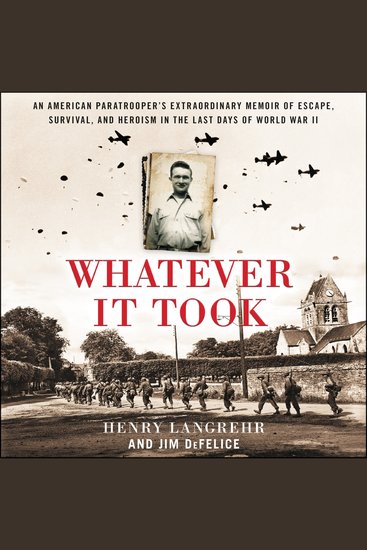
    Published to mark the 75th anniversary of VE Day, an unforgettable never-before-told first-person account of World War II: the true story of an American paratrooper who survived D-Day, was captured and imprisoned in a Nazi work camp, and made a daring escape to freedom.  
     
    Now at 95, one of the few living members of the Greatest Generation shares his experiences at last in one of the most remarkable World War II stories ever told. As the Allied Invasion of Normandy launched in the pre-dawn hours of June 6, 1944, Henry Langrehr, an American paratrooper with the 82nd Airborne, was among the thousands of Allies who parachuted into occupied France. Surviving heavy anti-aircraft fire, he crashed through the glass roof of a greenhouse in Sainte-Mère-Église. While many of the soldiers in his unit died, Henry and other surviving troops valiantly battled enemy tanks to a standstill. Then, on June 29th, Henry was captured by the Nazis. The next phase of his incredible journey was beginning. 
    Kept for a week in the outer ring of a death camp, Henry witnessed the Nazis’ unspeakable brutality—the so-called Final Solution, with people marched to their deaths, their bodies discarded like cords of wood. Transported to a work camp, he endured horrors of his own when he was forced to live in unbelievable squalor and labor in a coal mine with other POWs. Knowing they would be worked to death, he and a friend made a desperate escape. When a German soldier cornered them in a barn, the friend was fatally shot; Henry struggled with the soldier, killing him and taking his gun. Perilously traveling westward toward Allied controlled land on foot, Henry faced the great ethical and moral dilemmas of war firsthand, needing to do whatever it took to survive. Finally, after two weeks behind enemy lines, he found an American unit and was rescued. 
    Awaiting him at home was Arlene, who, like millions of other American women, went to work in factories and offices to build the armaments Henry and the Allies needed for victory. Whatever It Took is her story, too, bringing to life the hopes and fears of those on the homefront awaiting their loved ones to return. 
    A tale of heroism, hope, and survival featuring 30 photographs, Whatever It Took is a timely reminder of the human cost of freedom and a tribute to unbreakable human courage and spirit in the darkest of times.  
    Supplemental enhancement PDF accompanies the audiobook.
    Voir livre
  • The Astor Orphan - A Memoir - cover

    The Astor Orphan - A Memoir

    Anonyme

    • 0
    • 0
    • 0
    Alexandra Aldrich, a direct descendant of the famous Astor dynasty, grew up in the servants' quarters of Rokeby, the forty-three-room Hudson Valley mansion built by her ancestors. Her childhood was one of bohemian neglect and real privation. But it was fairly stable until the summer of her tenth year, when her father took up with an alluring interloper, Giselle. 
    Alexandra idolized her father, Rokeby's charismatic lord of misrule, who had attended elite private schools as a child but inherited only landed property, not money. To him, she says, "poverty was amusing, a delightful challenge." All of the family's resources—emotional and financial—went to the maintenance of the Astor house and legacy. If the family had sold the house and its 450 acres, they all would have been able to live comfortably. Instead, Alexandra and her parents lived precariously in the grand house, scavenging for the next meal. Her mother, an icy Polish artist, disguised her maternal indifference by extolling the virtues of independence. Relatives preyed on Alexandra's low status in the household. Once her father got involved with Giselle, Alexandra's only stalwart was her affectionate grandmother (whose great-great-grandfather, Nicholas Fish, was a close friend of Alexander Hamilton's and an executor of his estate). Grandma Claire held Alexandra's life together with family dinner parties, rides to violin lessons, and snacks after school. But as she grew progressively more debilitated by alcohol, she soon became too frail to provide a safe haven for her granddaughter. 
    Determined to impose order on her anarchic world and prove her worth, Alexandra awoke promptly at six thirty each morning, adhering to a strict personal regimen of exercise, grooming, and intensive violin practice. With money borrowed from the owner of the local gas station, she did the grocery shopping, occasionally setting aside four dollars to buy herself clean white socks. The betrayal of her father's flagrant affair, however, ignited a series of familial feuds that shook her hard-won stability and set her on a path toward escaping the Astor legacy. 
    Reaching back to the Gilded Age, when that legacy first began to come undone, Alexandra has written an unflinching, mordantly funny account of neglect and class anxiety amid the ruins of a once prominent family. More than an insider's look at a decaying American institution, The Astor Orphan is the debut of a thrilling new voice able to render the secret pains and glories of childhood afresh.
    Voir livre