Begleiten Sie uns auf eine literarische Weltreise!
Buch zum Bücherregal hinzufügen
Grey
Einen neuen Kommentar schreiben Default profile 50px
Grey
Jetzt das ganze Buch im Abo oder die ersten Seiten gratis lesen!
All characters reduced
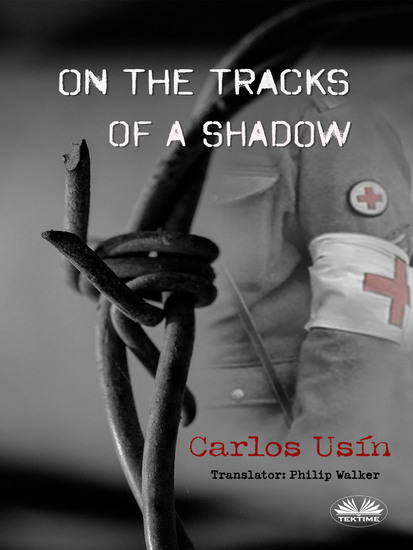
On The Tracks Of A Shadow - cover

On The Tracks Of A Shadow

Carlos Usín

Übersetzer Phillip Walker

Verlag: Tektime

  • 0
  • 0
  • 0

Beschreibung

At the end of the Spanish Civil War, the government of the Francoist “New Spain” set in motion a complex and Machiavellian system of repression directed against all those Republican prisoners who had lost the war. From that moment on, hundreds of thousands of prisoners (Republicans or not) suffered first-hand the torture of forced labour, internment in concentration camps or in prisons or, in certain cases, death. Although in the vast majority of cases the victims of reprisals belonged to political parties, unions and other left-wing organisations, some internees were practising Catholics educated by the Piarists but were still not spared. This is the story of Enrique, one of those internees, who in 1936, shortly after his twentieth birthday, found himself obliged to take part in a civil war instead of continuing his medical studies at university. Over the following 20 years, his determination to finish his degree did not waver and although he did not fire a single shot, because he spent the war working in a hospital, he was given a Summary Military Trial, sentenced to twelve years and one day for “aiding the rebellion”, suffered internment in concentration camps and prisons and was sent to work battalions where he carried out forced labour, and all that despite being Catholic and right-wing. Quite simply, he was on the wrong side at the least opportune time.
Verfügbar seit: 22.09.2022.
Drucklänge: 162 Seiten.

Weitere Bücher, die Sie mögen werden

  • Addicted to hope - cover

    Addicted to hope

    Jo Anne Mitchum, Nancy Duci Denofio

    • 0
    • 0
    • 0
    Anyone who loves somebody suffering from addiction should pick up Mitchum and Denofio's 2022 biography, Addicted to Hope: a chronicle of Michelle Mulledy's life as the wife of an addict. 
    A journey into self-discovery and self-confidence, Michelle's story gives real hope to families supporting loved ones battling addiction. 
    Watching her husband build a million-dollar business and then sink to the depths of living homeless on the streets of Boston, Michelle finds her faith and herself. 
    While supporting her loved one through recovery and coping with his relapses, Michelle learns the importance of caring for oneself. 
    Often in unexpected and wondrous ways, Michelle leaves behind the isolation of addiction to experience the warmth of her spiritual community embracing her. 
    About the Authors: 
    Jo Anne Mitchum 
    Jo Anne Mitchum, a Marriage and Family Therapist, began working in the mental health field as a crisis counselor helping clients with drug and alcohol addiction. Jo Anne now spends her time writing and helping couples achieve a deeper sense of understanding, empathy, and connectedness within their relationships. Jo Anne lives in Upstate, New York with her husband, mother and two dogs. When she's not working, she enjoys spending time with her son, daughter-in-law, and 3 grandchildren. 
    Nancy Duci Denofio 
    A writer most of her life, Nancy Duci Denofio's work is published in numerous publications in the United States and abroad such as University of Hull in England, New Hampshire Poetry Society, Hudson Valley Writer's and more. Her previous books, What Brought You Here and Grandmother's Bleeding Hearts are collections of her poetry. Nancy has worked with writers around the world on presentation and how to read their work in public. Nancy and her husband have two daughters and five grandchildren.
    Zum Buch
  • In the Shadow of the Rising Sun - Surviving a Prisoner of War Childhood - cover

    In the Shadow of the Rising Sun...

    Olga Henderson

    • 0
    • 0
    • 0
    In February 1942, nine-year-old Olga Morris and her family were in Singapore when the city fell to the Japanese Imperial Army in the biggest defeat in history of the British Forces. Turned back at an evacuation ship’s gangway as the bombs fell, Olga and her parents and siblings were forced to take their chances and hide out until, captured by Japanese soldiers, they were sent on a forced march to the notorious Changi Prison. 
     
    There’s a certain stereotype of the British in Singapore in the ‘30s and early ‘40s, which Olga Morris – Henderson as she is now – definitely did not fit. Her family was not part of the privileged Raffles Hotel set, with their big houses and servants. Her father worked in construction. Olga and her siblings grew up in Johor Bahru, a diverse part of Malaya just across the causeway from Singapore, amongst children of all faiths and cultures. It was a very happy upbringing. 
     
    All that changed in 1942. Olga was playing with her guinea pigs when a British Army officer arrived to tell her parents that the family had just 30 minutes to pack and be ready for evacuation to Singapore. The Japanese were ten miles away. Olga’s mother grabbed the family photograph album and they ran… 
     
    Days later, Singapore fell. Three years of captivity followed. Three years of disease, malnutrition, deprivation and oppression in Changi and Sime Road. 
     
    Desperate for food, Olga and her friends bravely raided the vegetable plot; “dodging the searchlights” and sometimes endured severe punishments. She stood alongside the other women and children through the ordeal of Tenko in the blazing sun. Halfway through their captivity, Olga’s ten-year-old brother was put into the men’s camp, where he suffered terrible cruelty that scarred him for life. 
     
    February 2022 marked 80 years since the Fall of Singapore and Olga is now ready to tell the story of her years as a child prisoner of war. It’s a story of great fear and deprivation; of a childhood utterly lost to conflict. It’s also a story of class prejudice and unkindness that didn’t end when Olga was freed from the camp and returned to England as a refugee. 
     
    Yet moments of humour and camaraderie also live on in Olga’s memory. There were plays and imaginary tea parties and even a secret girl guide group that held clandestine meetings, where they worked on sewing a quilt.
    Zum Buch
  • A Woman of Firsts - Margaret Heckler Political Trailblazer - cover

    A Woman of Firsts - Margaret...

    Kimberly Heckler, Jean Sinzdak

    • 0
    • 0
    • 0
    The extraordinary story of Margaret O'Shaughnessy Heckler offers a rare view into the behind-the-scenes world of American politics from the 1960s through the 1980s. 


    The daughter of Irish immigrants, Margaret Heckler represented the American dream. She served as a congresswoman, a presidential cabinet secretary, and an ambassador—all groundbreaking achievements for a woman of her era. The fiery Irish Republican (R-MA) mastered the seemingly unbeatable game of being a woman in a man's world and a Republican in a Democratic state, becoming a champion for others against all odds. 


    Heckler was the only newly elected woman appointed to Congress in 1966, entering rooms where few women were invited before. Her landmark legislation, the Equal Credit Opportunity Act, gave women the right to credit in their own names for the first time in American history. She took a lead in addressing the AIDS crisis and commissioned the Heckler Report to address the racial inequalities in health care. 


    A Woman of Firsts is a tribute to a woman who helped break the glass ceiling and fought to provide equality and justice for millions of Americans.
    Zum Buch
  • Wild West’s Most Influential Black Men The: The Lives and Legacies of the Forgotten Mountain Men Cowboys Sheriffs and Rodeo Performers - cover

    Wild West’s Most Influential...

    Editors Charles River

    • 0
    • 0
    • 0
    Space may be the final frontier, but no frontier has ever captured the American imagination like the “Wild West”, which still evokes images of dusty cowboys, outlaws, gunfights, gamblers, and barroom brawls over 100 years after the West was settled. A constant fixture in American pop culture, the 19th century American West continues to be vividly and colorful portrayed not just as a place but as a state of mind. 
    	Almost absent in the perceptions of modern America is the comprehension of African Americans participating so prolifically in the building of the nation. Print fiction idealizing the cowboy life to Eastern readers would not depict what had ignited the war for which so many had an utter revulsion. The black man of the post-war years did not inspire the white spirit so essential for reveling in the old system. The 20th century’s television and cinematic offerings operated on the same drive, and the existence of black cattle workers was all but blotted out. Indeed, many of the modern age are barely aware that an African-American ever “stepped foot on the West bank of the Mississippi River.” No one saw the black cowboy on screen or in print, the two information industries that shaped our perception of America’s westward expansion. Therefore, a collective assumption that they must never have existed at all was nationally internalized. 
    	However, as UCLA professors Philip Durham and Everett L. Jones, authors of The Negro Cowboys, reminded readers, about 25% of cowboys working in the West were African-American. They further noted that former slaves emigrating from the South entered virtually every viable profession in the plains, mountain ranges, and on to the Pacific. Their contribution ranged from the military to mining, exploration, farming, and in the construction of the West’s first towns.
    Zum Buch
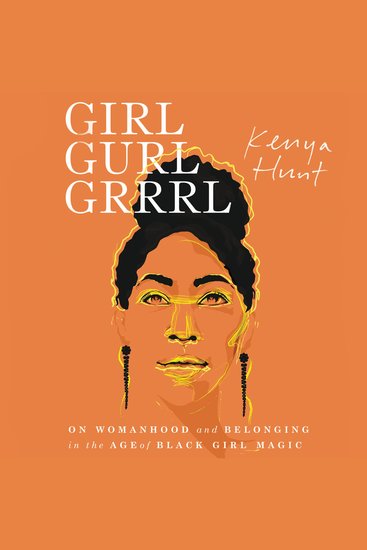
  • Girl Gurl Grrrl - On Womanhood and Belonging in the Age of Black Girl Magic - cover

    Girl Gurl Grrrl - On Womanhood...

    Anonym

    • 0
    • 0
    • 0
    “One of the year’s must-reads.” –ELLE 
    “[A] provocative, heart-breaking, and frequently hilarious collection.” –GLAMOUR 
    “Essential, vital, and urgent.” –HARPER’S BAZAAR 
    In the vein of Roxane Gay’s Bad Feminist and Issa Rae’s The Misadventures of Awkward Black Girl, but wholly its own, a provocative, humorous, and, at times, heartbreaking collection of essays on what it means to be black, a woman, a mother, and a global citizen in today's ever-changing world. 
    Black women have never been more visible or more publicly celebrated than they are now. But for every new milestone, every magazine cover, every box office record smashed, every new face elected to public office, the reality of everyday life for black women remains a complex, conflicted, contradiction-laden experience. 
     
     An American journalist who has been living and working in London for a decade, Kenya Hunt has made a career of distilling moments, movements, and cultural moods into words. Her work takes the difficult and the indefinable and makes it accessible; it is razor sharp cultural observation threaded through evocative and relatable stories. 
    Girl Gurl Grrrl both illuminates our current cultural moment and transcends it. Hunt captures the zeitgeist while also creating a timeless celebration of womanhood, of blackness, and the possibilities they both contain. She blends the popular and the personal, the frivolous and the momentous in a collection that truly reflects what it is to be living and thriving as a black woman today.  
    Zum Buch
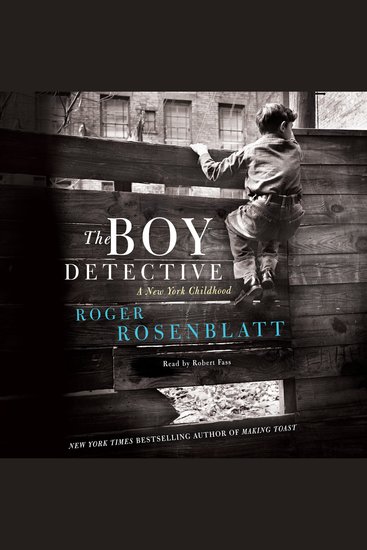
  • The Boy Detective - A New York Childhood - cover

    The Boy Detective - A New York...

    Anonym

    • 0
    • 0
    • 0
    The Washington Post hailed Roger Rosenblatt's Making Toast as "a textbook on what constitutes perfect writing," and People lauded Kayak Morning as "intimate, expansive and profoundly moving." Classic tales of love and grief, the New York Times bestselling memoirs are also original literary works that carve out new territory at the intersection of poetry and prose. Now comes The Boy Detective, a story of the author's childhood in New York City, suffused with the same mixture of acute observation and bracing humor, lyricism and wit. 
    Resisting the deadening silence of his family home in the elegant yet stiflingly safe neighborhood of Gramercy Park, nine-year-old Roger imagines himself a private eye in pursuit of criminals. With the dreamlike mystery of the city before him, he sets off alone, out into the streets of Manhattan, thrilling to a life of unsolved cases. 
    Six decades later, Rosenblatt finds himself again patrolling the territory of his youth: The writing class he teaches has just wrapped up, releasing him into the winter night and the very neighborhood in which he grew up. A grown man now, he investigates his own life and the life of the city as he walks, exploring the New York of the 1950s; the lives of the writers who walked these streets before him, such as Poe and Melville; the great detectives of fiction and the essence of detective work; and the monuments of his childhood, such as the New York Public Library, once the site of an immense reservoir that nourished the city with water before it nourished it with books, and the Empire State Building, which, in Rosenblatt's imagination, vibrates sympathetically with the oversize loneliness of King Kong: "If you must fall, fall from me." 
    As he walks, he is returned to himself, the boy detective on the case. Just as Rosenblatt invented a world for himself as a child, he creates one on this night—the writer a detective still, the chief suspect in the case of his own life, a case that discloses the shared mysteries of all our lives. A masterly evocation of the city and a meditation on memory as an act of faith, The Boy Detective treads the line between a novel and a poem, displaying a world at once dangerous and beautiful.
    Zum Buch