Rejoignez-nous pour un voyage dans le monde des livres!
Ajouter ce livre à l'électronique
Grey
Ecrivez un nouveau commentaire Default profile 50px
Grey
Abonnez-vous pour lire le livre complet ou lisez les premières pages gratuitement!
All characters reduced
We Permeate into Psychology of the Unconscious - cover

We Permeate into Psychology of the Unconscious

Carl Gustav Jung

Traducteur 박 Nomadsirius

Maison d'édition: 와이에이치파트너스

  • 0
  • 0
  • 0

Synopsis

Prologue.Carl Gustav Jung is a Swiss psychiatrist. In 1902, he received his medical doctorate from the University of Zurich. He developed complex research under the psychologist Eugen Bleuler, a professor at the university. While interacting with Freud, he began to study in-depth psychology in earnest. In 1908, at the age of 34, he and Freud formed the International Psychoanalytic Society. In 1912, after publishing \'Transformation and Symbolism of the Libido\', he broke up with Freud due to differences in his views on the unconscious. At the age of 44 in 1918, he strengthened his own in-depth psychology by using the expression of ‘the prototype of collective unconsciousness.’ For the archetype study of collective unconsciousness, a comparative work between cultural and religious history is performed. In 1930, a paper dealing with the theoretical consideration of prototypes was presented. In 1935, he led the Eranos Conference, a group of scholars, and interacted with scholars around the world. Focusing on the fact that the prototype of the collective unconscious changes the personality in relation to the self-consciousness, he immersed himself in the study of alchemy. In 1948, the Jung Institute was established in Zurich, Switzerland. In 1953, the complete English edition was published. ‘Psychology of the Unconscious’ was written in 1912 at the age of 38. Jung explores the unconscious world by analyzing Miss Miller\'s phantasy system. In the unconscious desire that transcends time and space, he seeks the identity of human conflict. Through a common bond connected to ancient times, he expands the mechanism of the unconscious to develop intellectual insight. This book is an easy condensed form of a long and difficult text in a summary format.
Disponible depuis: 09/09/2022.
Longueur d'impression: 60 pages.

D'autres livres qui pourraient vous intéresser

  • Summary of Brené Brown's Atlas of the Heart - cover

    Summary of Brené Brown's Atlas...

    Falcon Press

    • 0
    • 0
    • 0
    Buy now to get the main key ideas from Brené Brown's Atlas of the Heart 
      
    Emotions – we feel them every second of every day, yet we have such a limited vocabulary to express them. How do we go beyond happy and sad? 
    In Atlas of the Heart (2021), Brené Brown aims to equip us with all the language tools we need to map out the wide spectrum of feelings we experience. She doesn’t tell us how we’re supposed to feel, or how to deal with emotions when they come up – it’s simply an emotional encyclopedia. Brown puts emotions into related groups, then goes into the details to help us better comprehend them and communicate them to those around us. The goal is to build deeper, more authentic connections on a foundation of mutual understanding.
    Voir livre
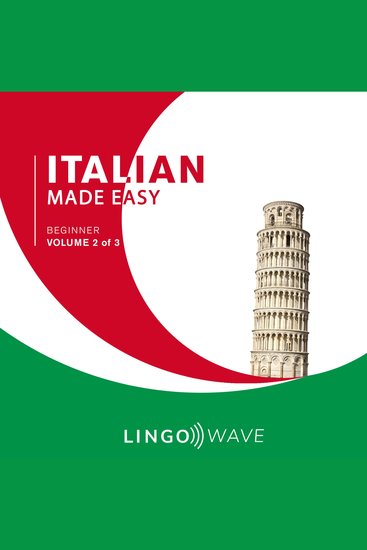
  • Italian Made Easy - Beginner - Volume 2 of 3 - cover

    Italian Made Easy - Beginner -...

    Lingo Wave

    • 0
    • 0
    • 0
    We broke our new series on learning Italian down into different learning stages. Start with the "Lower Beginner" books followed by the "Beginner" and "Upper Beginner" books. Next, progress to the "Intermediate" series, then test and reinforce your knowledge with the "Conversations" series. 
    This audiobook is divided into units.While it provides different learning patterns and accommodates various needs, this audiobook focuses on helping you improve your ability to understand, speak, and memorise Italian.  
    In Unit 1 you will hear Italian decoded with each syllable spoken very slowly and clearly with repetition. Immediately before each sentence is spoken, you will hear the translation, so you will always understand what is being said. 
    Unit 2 focuses solely on increasing your listening ability, which will improve your abilities to engage in dialogue with a native Italian speaker. This chapter requires you to listen very carefully to nuances in the language. 
    By Unit 3 you will already notice progress in your abilities to speak and understand Italian. The spoken translation is followed by two repetitions in Italian at a completely natural speed. While you are learning to process naturally spoken Italian, Units 3 and 4 will help you memorise new vocabulary and full sentences. 
    In Unit 5 you can test yourself on how much you have learned. If you are having difficulties, we suggest you revisit the listening, speaking, or memorisation section of Units 1, 2 3 or 4, according to what you need more help with. 
    Topics covered in this book: 
    1. Asking about family 
    2. Asking about relationship status 
    3. Expressing frequency 
    4. Talking about spare time activities and hobbies 
    5. Using quantifiers/determiners 
    6. Talking about preference 
    7. Talking about abilities 
    8. Talking about location of places 
    9. Describing appearance 
    10. Talking about personality 
    ...
    Voir livre
  • History of Florence and of the affairs of Italy - cover

    History of Florence and of the...

    Niccolò Machiavelli

    • 0
    • 0
    • 0
    "History of Florence and of the Affairs of Italy" by Niccolò Machiavelli is a seminal work in the realm of historical writing and political theory. It was written by Machiavelli during the early 16th century and offers a detailed account of the history of Florence and Italy during his lifetime. Machiavelli's work delves into the intricate political dynamics of Florence and Italy, chronicling the rise and fall of various rulers, factions, and states. It provides valuable insights into the political strategies, power struggles, and machinations that characterized Renaissance Italy. Machiavelli's analysis is marked by his pragmatism and keen understanding of human nature, making this book a cornerstone of political philosophy and historical scholarship.
    Voir livre
  • Re(start) - Moving from despair to defiance - cover

    Re(start) - Moving from despair...

    Tara Brabazon

    • 0
    • 0
    • 0
    How do we make change, particularly in difficult times?  How to do we transcend the confusion, anger and fear?  While cliches like quiet quitting and deaths of despair punctuate our present, why do these phrases – and these tragic realities - exist?  This book – ReStart:  moving from despair to defiance - walks with you through change.  To restart.  To return meaning to your life in a careful, embedded compassionate and way.  We build a mattering map for your life.
    Voir livre
  • The Principles of Psychology Volume 3 - cover

    The Principles of Psychology...

    William James

    • 0
    • 0
    • 0
    "The Principles of Psychology" by William James is a foundational text in the field, exploring the science of mental life. James delves into topics like consciousness, habit, memory, and emotions, blending empirical research with philosophical insight. He introduces key ideas such as the stream of consciousness and pragmatism, emphasizing the importance of understanding psychology through practical applications. His work bridges physiology and philosophy, offering an innovative perspective on how humans perceive, think, and act. A comprehensive exploration of the mind’s complexities, this book remains influential for its pioneering approach to studying human behavior and cognition.
    Voir livre
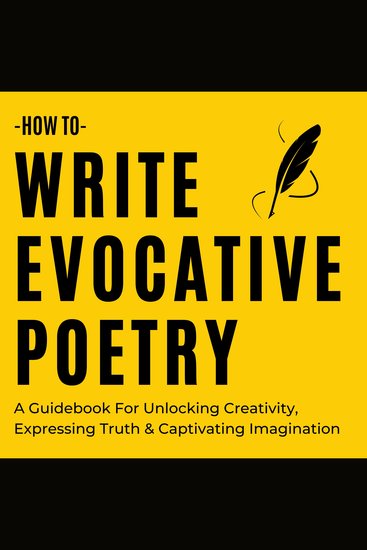
  • How To Write Evocative Poetry - A Guidebook For Unlocking Creativity Expressing Truth & Captivating Imagination - cover

    How To Write Evocative Poetry -...

    Zachary Phillips

    • 0
    • 0
    • 0
    Journey into the captivating world of poetic expression with renowned author and poet, Zachary Phillips. Whether you are an aspiring poet or a seasoned writer looking to elevate your craft, this enlightening guide is your key to unlocking the power of words and creating evocative, soul-stirring poetry. 
    Within these pages, Zachary Phillips masterfully weaves together the art of language, imagery, and emotion, presenting a comprehensive toolkit designed to ignite your creativity and help you transcend the ordinary. From crafting vivid metaphors to exploring the depths of your emotions, each section delves into the intricate process of capturing the essence of life through carefully chosen words. 
    Drawing inspiration from the natural world, personal experiences, and universal themes, Zachary Phillips provides invaluable advice on how to tap into your innermost thoughts and translate them into evocative verse. Through thought-provoking exercises and examples, you'll learn to evoke sensations, spark memories, and transport your readers to uncharted emotional landscapes. 
    But this book is more than just a practical guide—it is an invitation to discover your unique voice and unleash your poetic potential. With Zachary Phillips as your trusted guide, you'll gain the confidence to experiment with different poetic forms, play with unconventional techniques, and embrace the vulnerability of self-expression. 
    ‘How to Write Evocative Poetry’ is a transformative journey that will inspire you to breathe life into your words, infuse your poetry with depth and resonance, and leave an indelible mark on the hearts and minds of your readers. Let your imagination soar as you embark on a poetic odyssey that will forever change the way you view and create art.
    Voir livre