

Begleiten Sie uns auf eine literarische Weltreise!
Buch zum Bücherregal hinzufügen
Grey
Einen neuen Kommentar schreiben Default profile 50px
Grey
Jetzt das ganze Buch im Abo oder die ersten Seiten gratis lesen!
All characters reduced
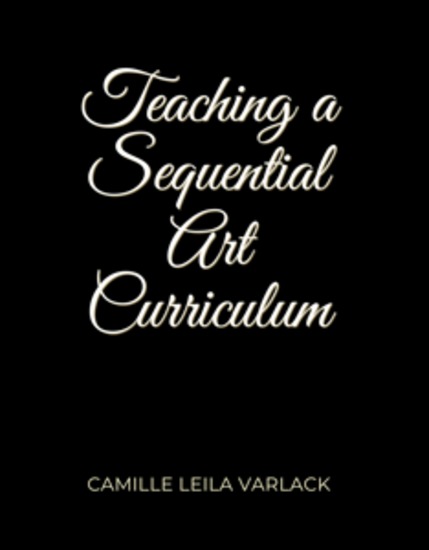
Teaching A Sequential Art Curriculum - cover

Teaching A Sequential Art Curriculum

Camille Leila Varlack

Verlag: Spines

  • 0
  • 0
  • 0

Beschreibung

The information in this paper will shed light and understanding on those who seek to know more about curriculum theory, and more specifically, Sequential Art curriculum development. May young lives transform and evolve into meaningful service to mankind as they are the product of wise men who in leadership positions sought to learn, assess, plan, organize, disseminate, and implement innovative curriculum strategies.
Verfügbar seit: 20.03.2025.
Drucklänge: 76 Seiten.


Weitere Bücher, die Sie mögen werden

  • A Pedagogy of Kindness - cover

    A Pedagogy of Kindness

    Catherine J. Denial

    • 0
    • 0
    • 0
    Academia is not, by and large, a kind place. Individualism and competition are what count. But without kindness at its core, Catherine Denial suggests, higher education fails students and instructors—and its mission—in critical ways. 


    Part manifesto, part teaching memoir, part how-to guide, A Pedagogy of Kindness urges higher education to get aggressive about instituting kindness, which Denial distinguishes from niceness. Having suffered beneath the weight of just "getting along," instructors need to shift every part of what they do to prioritizing care and compassion—for students as well as for themselves. 


    A Pedagogy of Kindness articulates a fresh vision for teaching, one that focuses on ensuring justice, believing people, and believing in people. Offering evidence-based insights and drawing from her own rich experiences as a professor, Denial offers practical tips for reshaping syllabi, assessing student performance, and creating trust and belonging in the classroom. Her suggestions for concrete, scalable actions  outline nothing less than a transformational discipline—one in which, together, we create bright new spaces, rooted in compassion, in which all engaged in teaching and learning might thrive.
    Zum Buch
  • Dark Psychology - The Art of Being in Control of Your Own and Someone Else’s Mind - cover

    Dark Psychology - The Art of...

    Wesley Felt

    • 0
    • 0
    • 0
    Influence, at its core, means having the power to affect people or situations. Subconsciously, we are constantly influenced and are influencing others through countless factors that impact our decisions. Even something as mundane as choosing toothpaste involves a myriad of external influences. Influence is a universal phenomenon, not confined by species or origin. Although the factors that contribute to influence might seem endless, social scientists have identified fewer than ten key aspects. This book will explore how to effectively influence others to achieve your desired outcomes. 
    Influence is a part of everyday interactions, whether you're a stockbroker, salesperson, manager, employee, boss, or even a housemaid. We influence others to gain various benefits: we might perform well at work to earn a day off, show affection to receive love in return, or charm a salesperson to get a discount. We influence and are influenced in every interaction. So, how can we get people to do what we truly want them to do? Let's explore this. 
      
    Regardless of whether you're trying to influence a customer, a supervisor, a coworker, or a family member, the underlying process remains consistent, and certain conditions are necessary for achieving significant success. But first, consider why you want to influence others and whether your motives are grounded in respect, integrity, compassion, or noble intentions.
    Zum Buch
  • J M Barrie and the Lost Boys - The Real Story Behind Peter Pan - cover

    J M Barrie and the Lost Boys -...

    Andrew Birkin

    • 0
    • 1
    • 0
    This literary biography is “a story of obsession and the search for pure childhood . . . Moving, charming, a revelation” (Los Angeles Times).   J. M. Barrie, Victorian novelist, playwright, and author of Peter Pan, or The Boy Who Wouldn’t Grow Up, led a life almost as interesting as his famous creation. Childless in his marriage, Barrie grew close to the five young boys of the Davies family, ultimately becoming their guardian and surrogate father when they were orphaned.   Andrew Birkin draws extensively on a vast range of material by and about Barrie, including notebooks, memoirs, and hours of recorded interviews with the family and their circle, to describe Barrie’s life, the tragedies that shaped him, and the wonderful world of imagination he created for the boys. Updated with a new preface and including photos and illustrations, this “absolutely gripping” read reveals the dramatic story behind one of the classics of children’s literature (Evening Standard).   “A psychological thriller . . . One of the year’s most complex and absorbing biographies.” —Time   “[A] fascinating story.” —The Washington Post
    Zum Buch
  • Modern China: A Captivating Guide to Modern Chinese History - cover

    Modern China: A Captivating...

    Captivating History

    • 0
    • 0
    • 0
    Let’s take a look at the past 120 years of Chinese history, from the country’s start as a backward, struggling empire in the late 19th century to a totalitarian communist superpower. 
    The radical transformation of China from a dynastic monarchy to a dominant global communist regime is very compelling for readers of all ages and interests, and this audiobook tells the history of the most important developments during this period. 
    Filled with ideological and intellectual struggles, internal divisions and civil wars, conflicts with foreign nations, and influential changes throughout the 20th century, modern Chinese history promises to be interesting to listen to. 
    Throughout the audiobook, you will learn about the following:The collapse of the Qing dynasty in early 20th-century ChinaInfluential characters from the early days of the Chinese RepublicEvents that shaped the first thirty years of the 20th century in China and eventually led to the First United FrontThe rise of communism and the formation of the CCPThe impact of World War II, Japanese occupation, and the Chinese Civil WarMao Zedong, the communist victory, and the fleeing of the Nationalist government to the island of TaiwanThe formation of the People’s Republic of China and the socioeconomic policies of the 1950sThe Great Leap Forward and its results for the Chinese peopleThe Cultural Revolution, Mao’s death, and the development of the country from the late 1970sAnd much, much more! 
    Scroll up and click the “add to cart” button to begin learning about Modern China!
    Zum Buch
  • Modern Social Problems - Analyzing Contemporary Issues through a Sociological Lens - cover

    Modern Social Problems -...

    Fred Grandsen

    • 0
    • 0
    • 0
    Social problems are complex issues that affect individuals, communities, and societies on a broad scale. They arise when a significant number of people recognize a condition as harmful and in need of change. Social problems can range from economic inequality and racial discrimination to climate change and healthcare disparities. Understanding these issues from a sociological perspective allows for a deeper analysis of their causes, consequences, and potential solutions. 
    One of the key aspects of understanding social problems is recognizing that they are socially constructed. This means that what is considered a problem can vary across different societies, cultures, and historical periods. For example, while issues like poverty and crime are widely recognized as social problems, their definitions and solutions may differ depending on cultural norms, political ideologies, and economic conditions. Sociologists examine how these definitions change over time and how power dynamics influence which issues receive public attention and policy action. 
    Another crucial factor in understanding social problems is identifying their root causes. Many social problems are not isolated incidents but rather symptoms of deeper structural issues within society. Economic inequality, for instance, is often linked to factors such as wage disparities, lack of access to education, and systemic discrimination. Similarly, crime rates may be influenced by socioeconomic conditions, community resources, and the effectiveness of law enforcement policies. By looking beyond individual behaviors and examining broader social structures, sociologists aim to uncover the fundamental reasons why these problems persist.
    Zum Buch
  • Cultivating Mentors - Sharing Wisdom in Christian Higher Education - cover

    Cultivating Mentors - Sharing...

    Todd C. Ream, Jerry Pattengale,...

    • 0
    • 0
    • 0
    Many colleges and universities informally highlight the value of mentoring among academic professionals. Yet scholars often lack clear definitions, goals, practices, and commitments that help them actually reap the benefits mentoring offers. As new faculty members from younger generations continue to face evolving challenges while also reshaping institutions, their ability to connect with more experienced mentors is critical to their vocations—and to the future of higher education.
    In Cultivating Mentors, a distinguished group of contributors explores the practice of mentoring in Christian higher education. Drawing on traditional theological understandings of the mentee-mentor relationship, they consider what goals should define such relationships and what practices make their cultivation possible among educators. With special attention to generational dynamics, they discuss how mentoring can help institutions navigate generational faculty transitions and cultivate rising leaders. Contributors include:
    
    - David Kinnaman
    - Tim Clydesdale
    - Margaret Diddams
    - Edgardo Colón-Emeric
    - Rebecca C. Hong
    - Tim Elmore
    - Beck A. Taylor
    - Stacy A. Hammons
    This book offers valuable insights and practical recommendations for faculty members, administrators, and policy makers. Whether pursuing their vocation in Christian or secular institutions, Christian scholars will benefit from the sharing of wisdom mapped out in Cultivating Mentors.
    Zum Buch
