Join us on a literary world trip!
Add this book to bookshelf
Grey
Write a new comment Default profile 50px
Grey
Subscribe to read the full book or read the first pages for free!
All characters reduced
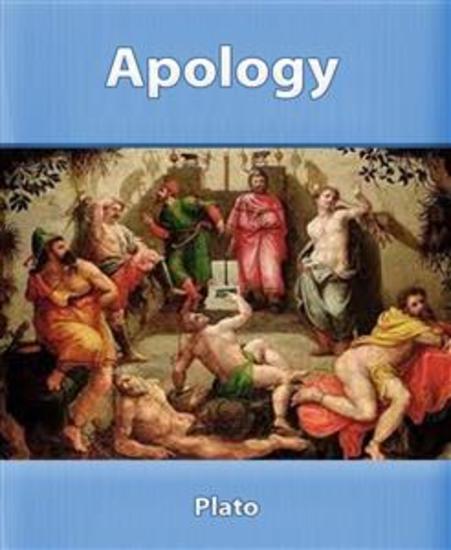
Apology - cover

Apology

By Plato

Publisher: BookRix

  • 0
  • 0
  • 0

Summary

Apology is Plato's version of the speech given by Socrates as he defended himself in 399 BC against the charges of "corrupting the young, and by not believing in the gods in whom the city believes, but in other daimonia that are novel." 

Socrates begins by telling the jury that their minds were poisoned by his enemies when they were young and impressionable. He says his reputation for sophistry comes from his enemies, all of whom are envious of him, and malicious. He says they must remain nameless, except for Aristophanes, the comic poet. He later answers the charge that he has corrupted the young by arguing that deliberate corruption is an incoherent idea. Socrates says that all these false accusations began with his obedience to the oracle at Delphi. He tells how Chaerephon went to the Oracle at Delphi, to ask if anyone was wiser than Socrates. When Chaerephon reported to Socrates that the god told him there is none wiser, Socrates took this as a riddle. He himself knew that he had no wisdom "great or small" but that he also knew that it is against the nature of the gods to lie.

Socrates then went on a "divine mission" to solve the paradox (that an ignorant man could also be the wisest of all men) and to clarify the meaning of the Oracles' words. He systematically interrogated the politicians, poets and craftsmen. Socrates determined that the politicians were imposters, and the poets did not understand even their own poetry, like prophets and seers who do not understand what they say. Craftsmen proved to be pretentious too, and Socrates says that he saw himself as a spokesman for the oracle (23e). He asked himself whether he would rather be an impostor like the people he spoke to, or be himself. Socrates tells the jury that he would rather be himself than anyone else.
Available since: 12/19/2023.
Print length: 66 pages.

Other books that might interest you

  • Dark Psychology: Discover How To Analyze People and Master Human Manipulation Using Body Language Secrets Covert NLP Mind Control Subliminal Persuasion Hypnosis and Speed Reading Techniques - cover

    Dark Psychology: Discover How To...

    Vincent McDaniel

    • 0
    • 0
    • 0
    DISCOVER THE SECRETS TO MASTER HUMAN MANIPULATION AND ANALYZE PEOPLE! 
    Are you looking for a new way to understand people? 
    Do you want to know how to read people like a book and get what you want from them? 
    Dark Psychology is a fascinating topic that can help you do just that. It’s the study of human behavior and the techniques used to influence, control, and manipulate people. 
    However, it’s not just about reading body language, it’s about understanding what makes people tick and using that knowledge to your advantage. 
    This audiobook will teach you everything from covert NLP mind control techniques, hypnosis, speed reading, and more! 
    It’s more than just an amazing listen. It’s an incredible experience that you can have every day of your life. 
    And once you understand Dark Psychology, you will have a powerful toolkit at your disposal for getting anything you want in life. 
    The possibilities are endless with Dark Psychology. Whether it’s your first time hearing about Dark Psychology, or you’re looking to expand your current knowledge, this audiobook has got something for you. 
    Reach new heights and achieve greatness! 
    SCROLL UP, GET THIS AUDIOBOOK, AND START LISTENING!
    Show book
  • ANGER MANAGEMENT FOR KIDS 5-8 - An Essential Guide to Teach Kids about Emotions and Anger Management - cover

    ANGER MANAGEMENT FOR KIDS 5-8 -...

    Rachel Jones

    • 0
    • 0
    • 0
    Every child should be able to manage their anger. Uncontrolled anger can destroy relationships and even stunt growth. You have to be deliberate when teaching your children about emotions and anger management. We have compiled beginner-friendly guides and tips in this book to assist parents in explaining emotions to their young children. The earlier children learn about their emotions, the better equipped they will be later in life. 
    Are you a guardian or parent who is unsure how to explain feelings and emotions to your children? Do you have trouble understanding and labeling your emotions? Do your children always throw tantrums? Is your child feeling left out because of a lack of emotional intelligence? Perhaps they are unaware of what triggers them or how to avoid a meltdown. This book has been written to answer all of your questions. 
    You will learn about emotions and the most basic ways to explain them to children aged 5-8. Children who struggle with their emotions, especially anger, benefit greatly from learning self- control. We have outlined simple methods for teaching children about self-control and the dangers of losing control during an angry outburst.  
    Show book
  • How to Be a Farmer - An Ancient Guide to Life on the Land - cover

    How to Be a Farmer - An Ancient...

    Tom Perkins

    • 0
    • 0
    • 0
    Whether you farm or garden, live in the country or long to move there, or simply enjoy an occasional rural retreat, you will be delighted by this cornucopia of writings about living and working on the land, harvested from the fertile fields of ancient Greek and Roman literature. An inspiring antidote to the digital age, How to Be a Farmer evokes the beauty and bounty of nature with a rich mixture of philosophy, practical advice, history, and humor. Together, these timeless reflections on what the Greeks called boukolika and the Romans res rusticate provide an entertaining and enlightening guide to a more meaningful and sustainable way of life. 


    In fresh translations by M. D. Usher, Hesiod praises the dignity of labor; Plato describes the rustic simplicity of his ideal republic; Varro dedicates a farming manual to his wife, Fundania; and Vergil idealizes farmers as residents of the Golden Age. In other selections, Horace extols the joys of simple living at his cherished country farm; Pliny the Elder explains why all culture stems from agriculture; Columella praises donkeys and tells how to choose a ram or a dog; Musonius Rufus argues that farming is the best livelihood for a philosopher; and there is much more. Proof that farming is ultimately a state of mind we should all cultivate, How to Be a Farmer will charm anyone who loves nature or its fruits.
    Show book
  • "Are You Calling Me a Racist?" - Why We Need to Stop Talking about Race and Start Making Real Antiracist Change - cover

    "Are You Calling Me a Racist?" -...

    Sarita Srivastava

    • 0
    • 0
    • 0
    Despite decades of anti-racism workshops and diversity policies in corporations, schools, and nonprofit organizations, racial conflict has only increased in recent years. "Are You Calling Me a Racist?" reveals why these efforts have failed to effectively challenge racism and offers a new way forward. 


    Drawing from her own experience, as well as extensive interviews and analyses of contemporary events, Sarita Srivastava shows that racial encounters among well-meaning people are ironically hindered by the emotional investment they have in being seen as good people. Diversity workshops devote energy to defending, recuperating, educating, and inwardly reflecting, with limited results, and often make things worse. These "Feel-Good politics of race," Srivastava explains, train our focus on the therapeutic and educational, rather than on concrete practices that could move us towards true racial equity. In this type of approach to diversity training, people are more concerned about being called a racist than they are about changing racist behavior. 


    "Are You Calling Me a Racist?" is a much-needed challenge to the status quo of diversity training, and will serve as a valuable resource for anyone dedicated to dismantling racism in their communities, educational institutions, public or private organizations, and social movements.
    Show book
  • Global Disasters - The Escalating Crisis of Natural and Man-Made Calamities - cover

    Global Disasters - The...

    Marcus Klein

    • 0
    • 0
    • 0
    The world is increasingly vulnerable to a wide array of disasters, both natural and man-made, that threaten our lives, economies, and ecosystems. These crises, which range from catastrophic earthquakes to the far-reaching impacts of climate change, have become more frequent, intense, and interconnected. While the planet has always been subject to the forces of nature, human activity has amplified many of these events, while also introducing new, unprecedented risks. Natural disasters, like hurricanes, wildfires, and floods, have become an inevitable part of the global landscape, but they are now exacerbated by the ongoing environmental degradation we’ve caused. Likewise, man-made calamities, from industrial accidents to nuclear disasters, have demonstrated how human innovation can have disastrous consequences when not properly managed. 
      
    The interwoven nature of these crises has led to a compounded sense of urgency. Events like pandemics, which have a devastating impact on public health, can be worsened by the social and economic disarray that follows a natural or political disaster. The global interconnectivity in the age of globalization means that no disaster remains confined to one region; effects ripple across borders, affecting distant countries and societies. With climate change creating new uncertainties, the boundaries between natural and man-made disasters are becoming increasingly blurred. Rising temperatures contribute to more severe weather events, droughts, and wildfires, while deforestation, industrial pollution, and resource depletion are accelerating these destructive trends.
    Show book
  • Cuando crezca quiero ser When I Grow Up I Want To Be - cover

    Cuando crezca quiero ser When I...

    Kim Mitzo Thompson, Karen Mitzo...

    • 0
    • 0
    • 0
    A los niños les encantará esta divertida historia mientras exploran diferentes opciones profesionales de una manera divertida y con la que se pueden relacionar. Disfrutarán escuchando esta adorable historia que presenta efectos de sonido y voces profesionales para ayudar a los niños a desarrollar vocabulario y mejorar sus habilidades auditivas. La historia se presenta primero en español y luego en inglés, lo que lo convierte en un recurso maravilloso para que los niños aprendan un idioma diferente. Las oraciones simples, la enunciación clara y las palabras repetitivas alentarán a los niños a enamorarse de contar historias y aprender un nuevo idioma. 
     
    Kids will love this playful story while they explore different career choices in a fun and relatable way. They will enjoy listening to this adorable story that features sound effects and professional voices to help children develop vocabulary and improve listening skills.  The story is first presented in Spanish and then in English making this a wonderful resource for children learning a different language.  Simple sentences, clear enunciation, and repetitive words will encourage children to fall in love with storytelling and learning a new language.
    Show book