Rejoignez-nous pour un voyage dans le monde des livres!
Ajouter ce livre à l'électronique
Grey
Ecrivez un nouveau commentaire Default profile 50px
Grey
Abonnez-vous pour lire le livre complet ou lisez les premières pages gratuitement!
All characters reduced
The Trial of the Chicago 7: History Legacy and Trial Transcript - Exploring the Echoes of Civil Disobedience and Legal Activism - cover

The Trial of the Chicago 7: History Legacy and Trial Transcript - Exploring the Echoes of Civil Disobedience and Legal Activism

Bruce A. Ragsdale, Federal Judicial Center

Maison d'édition: Good Press

  • 0
  • 0
  • 0

Synopsis

The Trial of the Chicago 7: History, Legacy and Trial Transcript delves into one of the most significant courtroom battles of the 20th century, capturing the tumult and spirit of a societal crossroads. The collection weaves its narrative through court transcripts, accompanying annotations, and historical analysis, immersing readers in the tumultuous political landscape of the late 1960s. With its blend of primary source material and insightful commentary, the anthology not only revisits the trial but also cements its legacy within the ongoing discourse on civil liberties and governmental authority. Uncovering themes of protest, repression, and judicial dynamics, it invites readers to reflect on the critical intersections of law and ideology. Curated by Bruce A. Ragsdale and the Federal Judicial Center, this anthology brings together an array of perspectives from distinguished historians, legal scholars, and cultural critics. These contributors share a common ambition: to illuminate the trial's enduring impact on American society and the legal system it challenged. By piercing through the fabric of a tumultuous era, the collection aligns itself with movements advocating for civil rights and free speech, providing a platform for intersecting histories and experiences under the banner of justice. This anthology invites readers to engage deeply with the multifaceted layers of historical and judicial discourse. It offers both a rigorous scholarly exploration and an accessible narrative of a pivotal moment in history, making it an invaluable resource for students, educators, and any curious mind eager to understand the dynamics of power, resistance, and legal tradition. The Trial of the Chicago 7 stands as a testament to the diverse voices and legal intricacies that define an epoch, ensuring its significance endures through time.
Disponible depuis: 14/12/2023.
Longueur d'impression: 296 pages.

D'autres livres qui pourraient vous intéresser

  • Grand Old Unraveling - The Republican Party Donald Trump and the Rise of Authoritarianism - cover

    Grand Old Unraveling - The...

    John Kenneth White

    • 0
    • 0
    • 0
    It didn't begin with Donald Trump. Since the time of FDR, the Republican Party has been home to conspiracy thinking, including a belief that lost elections were rigged. And when Republicans later won the White House, the party elevated their presidents to heroic status—a predisposition that eventually posed a threat to democracy. John Kenneth White proposes to explain why this happened—not just the election of Trump but the authoritarian shift in the party as a whole that led to the insurrection of January 6, 2021, and its aftermath. 


    White presents a clear and concise analysis of how the modern Republican Party came to be by tracing historical patterns that reach back to the 1930s. He argues that the rise of Republican authoritarianism has been decades in the making, going back to the desperation that took hold among party elites in the wake of twenty years of Democratic dominance between 1932 and 1952. The fear of losing that overtook the party during the Roosevelt period eventually led to an escalation of intrigue that included the rise of the John Birch Society in the 1950s and QAnon today. White traces the development of this culture of conspiracy theories within the GOP and explains how the emphasis on winning at any cost created a cult of personality and a willingness to seize power by any means necessary.
    Voir livre
  • Secret Societies and Subversive Movements - cover

    Secret Societies and Subversive...

    Nesta H. Webster

    • 0
    • 0
    • 0
    Nesta Helen Webster (24 August 1876 - 16 May 1960) was a controversial historian, occultist, and author who revived conspiracy theories about the Illuminati. She argued that the secret society s members were occultists, plotting communist world domination, using the idea of a Jewish cabal, the Masons and Jesuits as a smokescreen. 
    According to her, their international subversion included the French Revolution, 1848 Revolution, the First World War, the Bolshevik Revolution of 1917. In 1920, Webster was one of the contributing authors who wrote the The Jewish Peril, a series of articles in the London Morning Post, centered on the Protocols of the Elders of Zion. These articles were subsequently compiled and published in the same year, in book form under the title of the The Cause of World Unrest. She was cited respectfully by Winston Churchill, "This movement among the Jews...as Mrs. Webster, has so ably shown, [played] a definitely recognizable part in the tragedy of the French Revolution." I. THE ANCIENT SECRET TRADITIONII. THE REVOLT AGAINST ISLAMIII. THE TEMPLARSIV. THREE CENTURIES OF OCCULTISMV. THE ORIGINS OF FREEMASONRYVI. THE GRAND LODGE ERAVII. GERMAN TEMPLARISM AND FRENCH ILLUMINISMVIII. THE JEWISH CABALISTSIX. THE BAVARIAN ILLUMINATIX. THE CLIMAXXI. MODERN FREEMASONRYXII. SECRET SOCIETIES IN ENGLANDXIII. OPEN SUBVERSIVE MOVEMENTSXIV. PAN-GERMANISMXV. THE REAL JEWISH PERILCONCLUSIONI. JEWISH EVIDENCE ON THE TALMUDII. THE "PROTOCOLS" OF THE ELDERS OF ZION
    Voir livre
  • The Origins of Elected Strongmen - How Personalist Parties Destroy Democracy from Within - cover

    The Origins of Elected Strongmen...

    Erica Frantz, Andrea...

    • 0
    • 0
    • 0
    Since the end of World War II, democracies typically fell apart by coup d'état or through force. Today, however, they are increasingly eroding at the hands of democratically elected incumbents, who seize control by slowly chipping away at democratic institutions. To better understand these developments, this book examines the role of personalist political parties, or parties that exist primarily to further their leader's career as opposed to promote a specific policy platform. Using original data capturing levels of personalism in the parties of democratically elected leaders from 1991 to 2020, The Origins of Elected Strongmen shows that the rise of personalist parties around the globe is facilitating the decline of democracy. 


    Personalist parties lack both the incentive and capacity to push back against a leader's efforts to expand executive power. As such, leaders backed by personalist parties are more likely to succeed in their efforts to dismantle institutional constraints on their rule. Such attacks on state institutions, in turn, reverberate throughout society, deepening political polarization and weakening supporters' commitment to democratic norms of behavior. In these ways, ruling party personalism erodes horizontal and vertical constraints on a leader, ultimately degrading democracy and raising the risk of democratic failure.
    Voir livre
  • Gifted People - Being Aware of Gifted Children and Adults - cover

    Gifted People - Being Aware of...

    Robert Nathans

    • 0
    • 0
    • 0
    I felt compelled to share what I've recently discovered about giftedness. Personally, I wish I had been informed about this particular divergence from the average human brain earlier. However, my intention is not to attract undue attention or create a sense of superiority over others. 
      
    When I mentioned to my parents that many descriptions of gifted individuals resonated with my own experiences, they were hesitant to accept this label. The term "gifted" often carries implications of superiority, which can seem boastful. Yet, true talent or giftedness should foster humility and gratitude, coupled with a determination to navigate the challenges that come with such exceptional qualities. 
      
    Saying you are gifted often results in perceptions of being smarter than others. Yet, those who grasp these concepts usually understand that increased knowledge reveals the vast extent of what remains unknown. Even if you grasp things more quickly than others, the paradox is that those who believe they know everything are often the least knowledgeable. This can create a paradox for those trying to find self-confidence in their intelligence or creative abilities.
    Voir livre
  • Theaetetus - cover

    Theaetetus

    Plato

    • 0
    • 0
    • 0
    Dive into the philosophical depths with Plato's Theaetetus, a compelling dialogue that probes the nature of knowledge itself. As Socrates engages the young mathematician Theaetetus in a profound conversation, timeless questions arise: What is knowledge? Can we truly perceive reality? This masterful work not only challenges the intellect but also offers rich insights into human understanding, making it a cornerstone in the study of epistemology and ancient philosophy.
    Voir livre
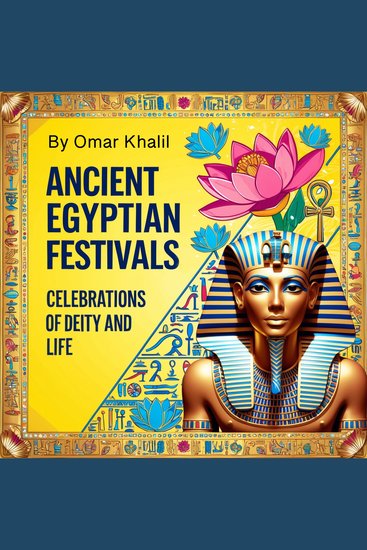
  • Ancient Egyptian Festivals - Celebrations of Deity and Life - cover

    Ancient Egyptian Festivals -...

    Omar Khalil

    • 0
    • 0
    • 0
    Festivals played a central role in the cultural and religious life of ancient Egypt. These grand celebrations were not just an occasion for communal enjoyment but were deeply tied to the spiritual and societal fabric of the civilization. They served as a means of honoring gods and goddesses, ensuring the prosperity of the land, and reinforcing the divine order, which was vital for the Egyptians. The festivals helped to maintain cosmic balance and provided a way for the people to connect with the divine. 
    The ancient Egyptians viewed the natural and spiritual worlds as intricately linked. Their gods were believed to control all aspects of life, from the annual flooding of the Nile to the harvests and the afterlife. Therefore, festivals were seen as essential in securing divine favor and maintaining order. These events allowed the people to express their devotion, offering prayers, sacrifices, and rituals to appease the gods. For instance, the Festival of Opet, one of the most significant, symbolized the renewal of the king’s power and his bond with the gods. It was an opportunity for the people to reassert their allegiance to the pharaoh, who was seen as the living deity on earth. 
    In addition to reinforcing the divine relationship, festivals also played a key role in community cohesion. The ancient Egyptians, despite the challenges of life, were brought together by shared rituals and celebrations. This unity was expressed in grand processions, feasts, music, and dance, where the people could experience a sense of collective identity. These events transcended social status and served as a reminder of the interconnectedness of all people under the divine. Festivals were not just for the elite but were a part of the communal life, extending to all citizens, from farmers to nobles.
    Voir livre