Begleiten Sie uns auf eine literarische Weltreise!
Buch zum Bücherregal hinzufügen
Grey
Einen neuen Kommentar schreiben Default profile 50px
Grey
Jetzt das ganze Buch im Abo oder die ersten Seiten gratis lesen!
All characters reduced
Avro 683 Lancaster - cover

Avro 683 Lancaster

Brown Kittel

Verlag: R.E.I. Editions

  • 0
  • 0
  • 0

Beschreibung

The Avro Lancaster was a four-engined, mid-wing heavy bomber designed and built primarily by the British company Avro (A.V. Roe and Company).Used by the RAF from 1942, along with the Handley Page Halifax, it was the primary strategic bomber of the RAF and other Commonwealth air forces.It was used primarily as a night bomber.The Lancaster, an evolution of the troublesome Avro Manchester, was designed by Roy Chadwick and was powered by four Rolls-Royce Merlin engines, or, in one version, Bristol Hercules engines.It entered service in 1942 and became the primary heavy bomber used by the RAF, the RCAF, and squadrons of other Commonwealth countries.The "Lanc", as it was affectionately known, became one of the most famous and successful aircraft of the Second World War, dropping 608,612 tons of bombs in 156,000 sorties and laying over 12,000 mines in enemy waters.In all, 7,378 Lancasters were built (excluding prototypes), 430 of which were in Canada, and 3,932 were lost in action.In addition to these, the aircraft derived from the Lancaster can be mentioned: the 202 Manchesters, the Lancastrian transports, the 253 York liners, the 604 Lincolns, which were the final derivative for bombing and the 185 Shackletons for maritime patrol. 
Verfügbar seit: 27.03.2025.
Drucklänge: 104 Seiten.

Weitere Bücher, die Sie mögen werden

  • The Evolution of Urban Planning - Historical and Contemporary Perspectives - cover

    The Evolution of Urban Planning...

    Lyric Vale

    • 0
    • 0
    • 0
    Urban planning is the process by which cities, towns, and other urban spaces are designed, organized, and managed. It is a field that encompasses various aspects of human life, from infrastructure to social dynamics, and aims to create environments that promote the well-being of residents and the sustainability of the urban ecosystem. The importance of urban planning lies in its ability to shape the physical, social, and economic structure of a community. It influences the way people interact with their environment and with each other, determining the accessibility of resources, the flow of traffic, and the availability of green spaces, among other factors. 
    The evolution of urban planning can be traced back to ancient civilizations, where early cities were often designed around central hubs of commerce, religion, or governance. In these early stages, urban planning was driven by necessity, focusing primarily on basic functions like defense, water management, and trade. Over time, as cities grew and became more complex, the need for more organized and systematic approaches to urban development emerged. This shift was marked by the introduction of formal planning principles that considered not only the practical aspects of urban life but also the aesthetic, cultural, and social needs of the inhabitants. 
    In the modern era, urban planning became an established profession, with experts tasked with the responsibility of designing and managing urban spaces to meet the growing demands of an increasingly urbanized population. The industrial revolution, for example, brought about massive shifts in population density and the structure of cities. It prompted the creation of zoning laws, housing regulations, and other planning policies that addressed new challenges such as pollution, overcrowding, and public health. These developments laid the groundwork for the more sophisticated planning techniques used in contemporary cities.
    Zum Buch
  • Ethnology - Cultural Connections: The Study of Human Groups - cover

    Ethnology - Cultural...

    Mike Crawford

    • 0
    • 0
    • 0
    Ethnology is a branch of anthropology that focuses on the systematic study and comparison of cultures. It examines the origins, development, distribution, and interrelations of different human societies. Unlike ethnography, which involves detailed, first-hand observations of a single culture, ethnology takes a broader approach, analyzing data collected from multiple ethnographic studies to identify patterns, differences, and universal traits among human groups. By studying cultural practices, languages, beliefs, social structures, and histories, ethnology seeks to understand how societies evolve and how cultural factors influence human behavior. 
    The importance of ethnology lies in its ability to foster a deeper understanding of human diversity. In an increasingly interconnected world, recognizing the complexity of cultural differences is crucial for promoting tolerance, cooperation, and peaceful coexistence. Ethnology helps dispel misconceptions and stereotypes by providing a scientific framework for understanding how cultures adapt to their environments and interact with one another. This understanding is essential not only for academic purposes but also for addressing real-world issues such as globalization, migration, and cultural preservation. 
    Ethnology also plays a vital role in tracing the historical development of societies. By comparing myths, rituals, kinship systems, and legal codes, ethnologists can reconstruct past interactions between communities, shedding light on human history beyond written records. This comparative analysis allows scholars to explore how ideas, technologies, and social institutions spread and transform across regions and time periods. Such insights contribute to a more comprehensive understanding of human civilization and its shared heritage.
    Zum Buch
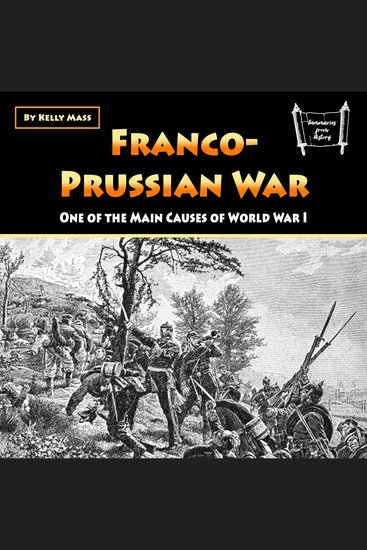
  • Franco-Prussian War - One of the Main Causes of World War I - cover

    Franco-Prussian War - One of the...

    Kelly Mass

    • 0
    • 0
    • 0
    The Franco-Prussian War, also known as the Franco-German War or, in France, the War of 1870, was a pivotal conflict between the Second French Empire and the North German Confederation, which was led by the Kingdom of Prussia. This war lasted from 19 July 1870 to 28 January 1871, and its consequences would shape European geopolitics for decades. The primary cause of the war stemmed from France's desire to reaffirm its dominance in continental Europe, which had been seriously challenged after Prussia's decisive victory over Austria in the Austro-Prussian War of 1866. This defeat shifted the balance of power in Europe, making France anxious about its standing. 
    Historians have debated the exact motivations behind the war, particularly regarding the role of Otto von Bismarck, the Prussian chancellor. Some argue that Bismarck intentionally provoked France into declaring war to unite the southern German states—Baden, Württemberg, Bavaria, and Hesse-Darmstadt—under the North German Confederation. Other historians maintain that Bismarck exploited the situation as it developed, recognizing the potential for new alliances but not necessarily seeking war. Regardless of the intent, Bismarck saw the war as an opportunity to strengthen German unity. 
    The war officially began when France mobilized its army on 15 July 1870, prompting the North German Confederation to follow suit with its own mobilization the same day. On 16 July, the French parliament declared war on Prussia, and by 2 August, France had invaded German territory. The German coalition responded swiftly and efficiently, invading northeastern France on 4 August. The Germans had several advantages: superior numbers, better training, more effective leadership, and access to advanced military technology, especially in railways and artillery.
    Zum Buch
  • As a Man Thinketh & From Poverty to Power - The Life-Changing Power of Positive Thinking and Self-Mastery - A Modern Translation - Adapted for the Contemporary Reader - cover

    As a Man Thinketh & From Poverty...

    James Allen, Tim Zengerink

    • 0
    • 0
    • 0
    What if you could transform your life by mastering your mind, changing your thoughts, and unlocking your full potential? 
    As a Man Thinketh & From Poverty to Power: The Life-Changing Power of Positive Thinking and Self-Mastery combines two of James Allen’s most profound works, thoughtfully adapted for today’s listeners. 
    For over a century, Allen’s teachings on the power of thought, self-discipline, and inner growth have inspired countless individuals to achieve success and fulfillment. These works reveal how your thoughts shape your reality, empowering you to overcome challenges and master your life. 
    This isn’t just a collection of classic texts—it’s a practical guide to positive thinking, personal growth, and purposeful living. 
    What You’ll Discover: 
    - The Power of Your Thoughts: Learn how mindset influences your success and happiness. 
    - Self-Mastery and Discipline: Gain tools to build resilience, control emotions, and achieve your goals. 
    - A Path From Struggle to Success: Break free from limitations and unlock your potential. 
    - Modernized for Today’s Listeners: Enjoy Allen’s timeless wisdom in accessible, actionable language. 
    Included in This Audiobook: 
    - As a Man Thinketh: A guide to how your thoughts create your reality. 
    - From Poverty to Power: Insights on rising above adversity through self-discipline and positivity. 
    James Allen’s works provide timeless wisdom for creating a meaningful, purpose-driven life. 
    Download your copy today and discover how to transform your thoughts—and your life.
    Zum Buch
  • New Perspective A: When the Help Becomes the Observer - "Elevate your journey with impactful audio lessons that turn help into transformative observation!" - cover

    New Perspective A: When the Help...

    Cyrus Eldridge

    • 0
    • 0
    • 0
    A New Perspective: When the Help Becomes the Observer 
    ⭐⭐ Simplified Audio Guide with Explanations ⭐⭐ 
    Are you looking to enhance your career while gaining a deeper understanding of loyalty and the intricate dynamics of support and observation? 
    Searching for a complete guide that encompasses everything you need to shift your perspective on loyalty and support? 
    Your quest ends here! 
    This audiobook serves as your essential companion for expanding your insights, applying key concepts, and engaging in practical reflections. With this resource, you're well-prepared for transformation. 
    Updated for 2024-2025 Insights on Loyalty and Support Dynamics. 
    Key features of this insightful guide: 
    - In-depth analysis of loyalty and the role of the observer 
    - Comprehensive exploration of the concept of support versus observation 
    - Effective strategies for understanding and navigating relationships 
    Our guide stands out with its thorough approach, which is crucial for your personal and professional growth. Concepts are not merely touched upon; they are explored in depth with clarity and precision. 
    Crafted with an organized format and straightforward language, our guide provides seamless transitions between discussions. Say goodbye to complex jargon and welcome clear, precise, and technically accurate insights. 
    So, why hesitate? Click the BUY NOW button, secure your guide, and embark on your journey toward a profound understanding of loyalty and observation dynamics! 
    Experience suspense that transforms your perspective on loyalty.
    Zum Buch
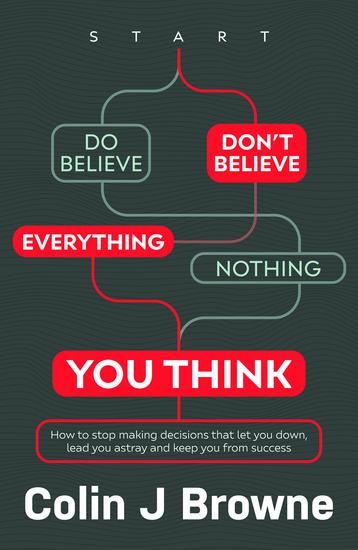
  • Don't Believe Everything You Think - How to stop making decisions that let you down lead you astray and keep you from success - cover

    Don't Believe Everything You...

    Colin J Browne

    • 0
    • 0
    • 0
    When it comes to making great decisions, the way you think about things is usually a lot more influential than what you actually think.
    If you ever hired a person who 'looks the part', dated someone who 'gives you a good feeling', voted for the party that 'speaks the most sense' or got into an investment that 'cannot be missed', only to realise you made a horrible mistake, you might have wondered how you ever talked yourself into it.
    Yet, still bearing the bruises, you're likely to make exactly the same decision the next time.
    The beliefs that guide your ideas and the instincts that drive your actions, are all informed by your unconscious biases, and literally every single one of us has them, which irrationally tell us one thing is good and another is bad, one thing is absolutely true and another is utterly false, and make you act less smartly than you should.
    But the good news is that you can learn to see them, to manage them and ultimately overcome them.
    In Don't Believe Everything You Think, Colin J Browne shows you how biases work, why they matter, and how to reframe your thinking to make well-founded decisions about life and work, relationships and investing, and much else in between, to vastly improve your chances of success.
    Zum Buch