Junte-se a nós em uma viagem ao mundo dos livros!
Adicionar este livro à prateleira
Grey
Deixe um novo comentário Default profile 50px
Grey
Assine para ler o livro completo ou leia as primeiras páginas de graça!
All characters reduced
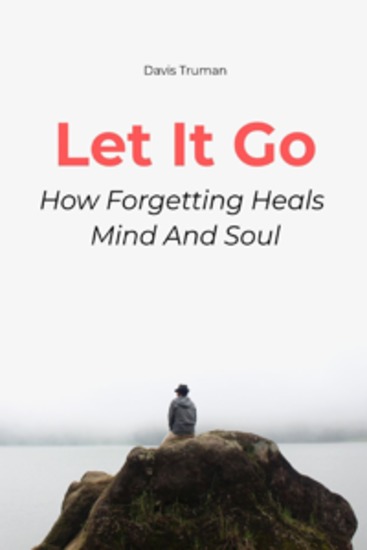
Let It Go - How Forgetting Heals Mind And Soul - cover
LER

Let It Go - How Forgetting Heals Mind And Soul

Brian Gibson

Editora: Brian Gibson

  • 0
  • 0
  • 0

Sinopse

Let It Go: How Forgetting Heals Mind and Soul is a groundbreaking exploration of one of the most overlooked yet powerful tools of emotional well-being: the ability to forget.Blending psychological insight, neuroscience, and emotional depth, this book takes readers on a transformative journey through the science and soul of forgetting. Each chapter unpacks how intentionally and selectively letting go of certain memories can pave the way to healing, clarity, and inner peace.Discover the psychological and emotional rationale for forgetting and how it supports mental resilience.Selective Retrieval of Memory and Think/No-Think. Techniques explore the mechanisms that allow us to shape what we remember and what we choose to leave behind.Gain insight into Control Over Memories, learning how to regulate the intrusive thoughts that hold us back.Understand the deep links between memory and mood in Depressive Disorders and how forgetting becomes a vital ally in recovery.Explore how the brain uses Top-Down Control to influence what we recall and how that process can be optimized for healing.Rooted in science yet rich with emotional intelligence, Let It Go provides readers with information, practical frameworks, and empowering strategies. Whether you're seeking to overcome past trauma, manage mental clutter, or simply find peace in the present, this book offers a compassionate, research-backed roadmap to a lighter, freer mind. If you've ever felt trapped by your memories, Let It Go is your invitation to heal—not by holding on, but by learning the art and science of letting go.
Disponível desde: 20/07/2025.

Outros livros que poderiam interessá-lo

  • Recognizing the Stranger - On Palestine and Narrative - cover

    Recognizing the Stranger - On...

    Isabella Hammad

    • 0
    • 0
    • 0
    Nine days before October 7, 2023, award-winning author Isabella Hammad delivered the Edward W. Said Memorial Lecture at Columbia University. The text of Hammad’s seminal speech and her afterword, written in the early weeks of 2024, together make up a searing appraisal of the war on Palestine during what seems a turning point in the narrative of human history. Profound and moving, Hammad writes from within the moment, shedding light on the Palestinian struggle for freedom. Recognizing the Stranger is a brilliant melding of literary and cultural analysis by one of Granta’s Best of Young British Novelists and a foremost writer of fiction in the world today. 
     
    “An urgent work for a devastating time … Isabella Hammad is as fine a critic as she is a novelist. It is hardly a surprise that she is one of our most astute writers when it comes to Palestine.”—Viet Thanh Nguyen 
     
    Includes bonus audio read by the author
    Ver livro
  • Lacan Sucks and So Do You - A Friendly Guide to Language Desire and Political Helplessness - cover

    Lacan Sucks and So Do You - A...

    Sophia Blackwell

    • 0
    • 0
    • 0
    What if your political identity, your core beliefs, and even your taste in snack food weren’t really yours? What if they were built out of language, hijacked by desire, and quietly manipulated by slogans, myths, and a Symbolic Order you didn’t ask to be born into? 
    Welcome to the world of Jacques Lacan, where nothing means what it seems, and everything is your unconscious acting out. 
    Lacan Sucks is your brutally sarcastic, surprisingly accurate guide to Lacan’s theory of language, power, and why you keep voting against your own interests. From signifiers that never shut up to unconscious desires that vote without you, this book breaks down how politics doesn’t just use language—it is language. 
    Through roast-level commentary, existential side-eye, and actual philosophical insight (yes, really), this book unpacks: 
    How language doesn’t reflect reality—it constructs it 
    Why you’re not an individual, you’re a pre-written script with anxiety 
    How politicians weaponize your desires with slogans and symbols 
    What the hell Lacan meant by “the unconscious is structured like a language” 
    And how to fight back using the one weapon they fear: your own damn voice 
    If you’ve ever felt manipulated by political discourse, confused by your own identity, or just wanted to scream into a pillow while reading Écrits, this is the book for you. 
    No degree in psychoanalysis or philosophy required. Just a sense of humor and a lingering suspicion that reality might be rigged.
    Ver livro
  • The Essential Jean-Paul Sartre - The Emotions and Essays in Aesthetics - cover

    The Essential Jean-Paul Sartre -...

    Jean-Paul Sartre

    • 1
    • 1
    • 0
    The renowned French philosopher lays the foundation for an Existentialist approach to psychology and aesthetics in this pair of classic works.   In The Emotions: Outline of a Theory, Jean-Paul Sartre explores the role of emotions in the human psyche, presenting a phenomenological approach to psychology. Analyzing the universal, yet subjective, experiences of fear, lust, anguish, and melancholy, Sartre asserts that human beings develop their emotional capabilities from a very early age, which helps them identify and understand the names and qualities of their feelings later in life.  Essays in Aesthetics is a provocative collection that explores the nature of art and its meaning. Sartre considers the artist’s “function,” and the relation between art and the human condition. Engaging with the works of Tintoretto, Calder, Lapoujade, Titian, Raphael, and Michaelangelo, Sartre offers a fascinating analysis of the creative process. The result is a vibrant manifesto of existentialist aesthetics.
    Ver livro
  • Napoleon Bonaparte’s Most Decisive Land Battles: The History of Austerlitz the French Invasion of Russia Leipzig and Waterloo - cover

    Napoleon Bonaparte’s Most...

    Editors Charles River

    • 0
    • 0
    • 0
    Nearly 50 years after Napoleon met his Waterloo, generals across the West continued to study his tactics and engage their armies the same way armies fought during the Napoleonic Era. Despite advances in military technology and the advent of railroads for transportation, all of which made defensive warfare more effective, acclaimed military geniuses like Robert E. Lee used flank attacks and infantry charges against superior numbers in an effort to win decisive victories, and it would not be until World War I that concepts of modern warfare made the Napoleonic Era of the early 19th century outdated. 
    For those questioning why generals continued using tactics from the Napoleonic Era even as technology changed the battlefield, the Battle of Austerlitz may provide the best answer. Napoleon is regarded as one of history’s greatest generals, and Austerlitz was his greatest victory. In 1805, Britain, Austria, and Russia allied together to form the Third Coalition against the French, and the Third Coalition’s forces consisted of armies from Austria and Russia, with Britain providing naval support as well as its financial powers. Napoleon had already defeated and mostly destroyed an Austrian army in October at Ulm before it could link up with the Russians, setting the stage for the Battle of Austerlitz to be the culmination of the war against the Third Coalition as a whole in early December. Despite the smashing victory at Ulm, Napoleon’s French army would still be well outnumbered at Austerlitz by a joint Russo-Austrian army in a battle that would also come to be known as the Battle of Three Emperors.  
    At Waterloo, however, it would end disastrously, as Napoleon’s armies were unable to dislodge Wellington and unable to keep the Prussians from linking up with the British. The battle would end with the French suffering nearly 60% casualties, the end of Napoleon’s reign, and the restructuring of the European map.
    Ver livro
  • Why So Many Jobs Feel Useless in Today’s World - Discover why so many jobs feel useless today! Unleash captivating audio insights for profound understanding - cover

    Why So Many Jobs Feel Useless in...

    Bastian Cresswell

    • 0
    • 0
    • 0
    Why So Many Jobs Feel Useless in Today’s World:  
    ⭐⭐ Simplified Audio Guide with Explanations ⭐⭐ 
    Are you seeking to advance in understanding the modern job landscape and find purpose in your work? 
    Looking for a comprehensive resource that provides all the insights you need to navigate today's work environment? 
    Look no further! 
    This guide is your ultimate companion for deepening your understanding, applying your skills, and engaging in practical reflections on the modern job market. With this, you're prepared for a fulfilling professional journey. 
    Updated to reflect current work trends and dynamics. 
    Key features of this enriched guide: 
    - Profound insights about discovering purpose and connection in today's work landscape. 
    - Detailed explanation of the modern workplace environment. 
    - Effective strategies for finding meaning and engagement in your career. 
    Our guide stands out with comprehensive coverage, crucial for unlocking your potential in the work world. Concepts are explored with depth and precision. 
    Please note that this guide is an independent resource intended solely for your benefit. 
    Designed with a structured format and easy-to-understand language, our guide ensures smooth transitions between topics. Say goodbye to complex jargon and embrace clear, precise, and insightful content. 
    Ready to explore the depths of meaningful work? Click the BUY NOW button, secure your guide, and embark on your journey to understanding why so many jobs feel useless in today's world! 
    Why wait? Start your journey towards a more meaningful career today!
    Ver livro
  • Sea State - A Memoir - cover

    Sea State - A Memoir

    Tabitha Lasley

    • 0
    • 0
    • 0
    A Recommended Read from: Vogue * USA Today * The Los Angeles Times * Publishers Weekly * The Week * Alma * Lit Hub 
    A stunning and brutally honest memoir that shines a light on what happens when female desire conflicts with a culture of masculinity in crisis 
    In her midthirties and newly free from a terrible relationship, Tabitha Lasley quit her job at a London magazine, packed her bags, and poured her savings into a six-month lease on an apartment in Aberdeen, Scotland. She decided to make good on a long-deferred idea for a book about oil rigs and the men who work on them. Why oil rigs? She wanted to see what men were like with no women around. 
    In Aberdeen, Tabitha became deeply entrenched in the world of roughnecks, a teeming subculture rich with brawls, hard labor, and competition. The longer she stayed, the more she found her presence had a destabilizing effect on the men—and her. 
    Sea State is on the one hand a portrait of an overlooked industry: “offshore” is a way of life for generations of primarily working-class men and also a potent metaphor for those parts of life we keep at bay—class, masculinity, the transactions of desire, and the awful slipperiness of a ladder that could, if we tried hard enough, lead us to security. 
    Sea State is on the other hand the story of a journalist whose professional distance from her subject becomes perilously thin. In Aberdeen, Tabitha gets high and dances with abandon, reliving her youth, when the music was good and the boys were bad. Twenty years on, there is Caden: a married rig worker who spends three weeks on and three weeks off. Alone and in an increasingly precarious state, Tabitha dives into their growing attraction. The relationship, reckless and explosive, will lay them both bare.
    Ver livro