Begleiten Sie uns auf eine literarische Weltreise!
Buch zum Bücherregal hinzufügen
Grey
Einen neuen Kommentar schreiben Default profile 50px
Grey
Jetzt das ganze Buch im Abo oder die ersten Seiten gratis lesen!
All characters reduced
Drakula - cover

Drakula

Bram Stoker

Verlag: E-Kitap Projesi & Cheapest Books

  • 0
  • 0
  • 0

Beschreibung

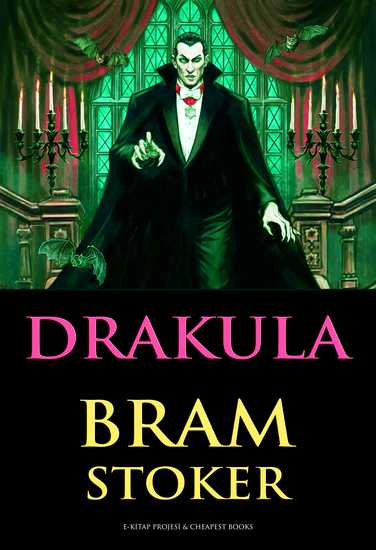
Dracula is an 1897 Gothic horror novel by Irish author Bram Stoker. Famous for introducing the character of the vampire Count Dracula, the novel tells the story of Dracula's attempt to move from Transylvania to England, and the battle between Dracula and a small group of men and women led by Professor Abraham Van Helsing.

Dracula has been assigned to many literary genres including vampire literature, horror fiction, the gothic novel and invasion literature. The novel touches on themes such as the role of women in Victorian culture, sexual conventions, immigration, colonialism, and post-colonialism. Although Stoker did not invent the vampire, he defined its modern form, and the novel has spawned numerous theatrical, film and television interpretations.

Characters:

• Jonathan Harker: A solicitor sent to do business with Count Dracula; Mina's fiancé and prisoner in Dracula's castle.
• Count Dracula: A Transylvanian noble who bought a house in London and asked Jonathan Harker to come to his castle to do business with him.
• Wilhelmina "Mina" Harker (née Murray): A schoolteacher and Jonathan Harker's fiancée.
• Lucy Westenra: A 19-year-old aristocrat; Mina's best friend; Arthur's fiancée and Dracula's first victim.
• Arthur Holmwood: Lucy's suitor and later fiancé.
• Jack Seward: A doctor; one of Lucy's suitors and a former student of Dr Abraham Van Helsing.
• Abraham Van Helsing: A Dutch professor; Jack Seward's teacher and vampire hunter.
• Quincey Morris: An American cowboy and explorer; and one of Lucy's suitors.
• Renfield: A lawyer whom Dracula turned mad.
• Brides of Dracula: Three siren-like vampire women who serve Dracula. Although they are popularly known as "The Brides of Dracula", the novel never calls them this.
Verfügbar seit: 25.01.2024.
Drucklänge: 666 Seiten.
Weitere Bücher, die Sie mögen werden

  • Pride and Prejudice - A timeless battle of wits wealth and the stubborn nature of the human heart - cover

    Pride and Prejudice - A timeless...

    Jane Austen

    • 0
    • 0
    • 0
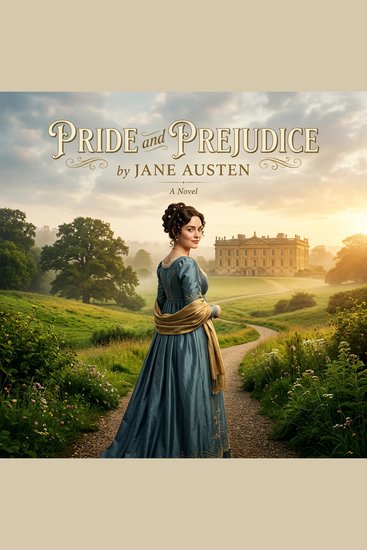
    It is a truth universally acknowledged that Pride and Prejudice remains one of the most beloved romances in the history of literature. 
    When the wealthy and amiable Mr. Bingley rents the sprawling Netherfield Park, the quiet countryside village of Longbourn is sent into a flurry of breathless anticipation. For Mrs. Bennet, a frantic mother of five unwed daughters, his arrival is the answer to her most fervent prayers. But it is the introduction of Bingley's formidable friend, the haughty and unfathomably rich Mr. Darcy, that truly upends the Bennet household. 
    Sparks fly and societal expectations shatter when Darcy's proud, aloof demeanor clashes with the razor-sharp wit and fierce independence of Elizabeth Bennet. What begins as mutual disdain soon tangles into a complicated web of stolen glances, scandalous family drama, and unspoken desires. 
    Jane Austen's masterpiece is far more than a simple romance—it is a brilliant, biting satire of class, marriage, and the foolish assumptions we make about one another. Will Elizabeth's prejudice and Darcy's pride keep them forever apart, or will they surrender to a love that defies all odds? 
    Brought elegantly to life by narrator Andre Reaves, this audiobook invites you to step into the ballrooms of 19th-century England and fall in love with the Bennet sisters all over again.
    Zum Buch
  • Pickwick Papers The - Audiobook - cover

    Pickwick Papers The - Audiobook

    Charles Dickens, Classic...

    • 0
    • 0
    • 0
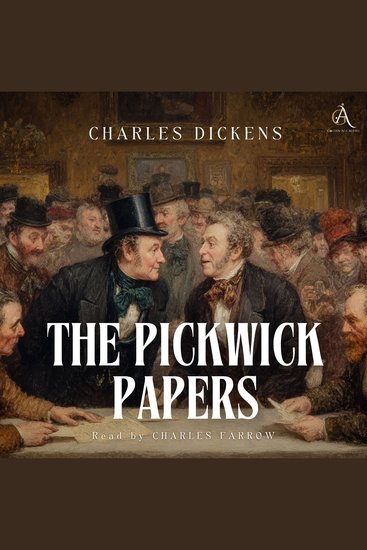
    Charles Dickens' The Pickwick Papers is a lively, humorous chronicle of the adventures and misadventures of Samuel Pickwick and his fellow club members. Originally published in serial form, it captures the everyday quirks and follies of early 19th-century English society with a warmth and satire that became Dickens' trademark. From comic duels and courtroom scenes to absurd journeys through the countryside, each episode paints a vivid picture of the joys and eccentricities of life.What makes the novel enduring is not only its humor but also its compassion. Behind the laughter lies a gentle critique of social injustices, the follies of pride, and the resilience of friendship. It is Dickens at his most playful, yet even here he reveals the depth of observation that would define his later, more serious works.
    Zum Buch
  • Frankenstein - cover

    Frankenstein

    Mary Shelley

    • 0
    • 0
    • 0
    A POWERFUL FULL-CAST DRAMATIC MARATHON “Beware; for I am fearless, and therefore powerful.” Mary Shelley was an English novelist who wrote the Gothic novel Frankenstein; or, The Modern Prometheus in 1818, which is considered an early example of science fiction. She also edited and promoted the works of her husband, the Romantic poet, and philosopher Percy Bysshe Shelley. Her father was the political philosopher William Godwin and her mother the philosopher and feminist activist Mary Wollstonecraft.Shelley's mother died less than a month after giving birth to her. She was raised by her father, who provided her with a rich if informal education, encouraging her to adhere to his own anarchist political theories. When she was four, her father married a neighbor, Mary Jane Clairmont, with whom Shelley came to have a troubled relationship.In 1814, Shelley began a romance with one of her father's political followers, Percy Bysshe Shelley, who was already married. Together with her stepsister, Claire Clairmont, she and Percy left for France and traveled through Europe. Upon their return to England, Shelley was pregnant with Percy's child. Over the next two years, she and Percy faced ostracism, constant debt, and the death of their prematurely born daughter. They married in late 1816, after the suicide of Percy Shelley's first wife, Harriet.In 1816, the couple and her stepsister famously spent a summer with Lord Byron and John William Polidori near Geneva, Switzerland, where Shelley conceived the idea for her novel Frankenstein. The Shelleys left Britain in 1818 for Italy, where their second and third children died before Shelley gave birth to her last and only surviving child, Percy Florence Shelley.
    Zum Buch
  • Tales of Mean Streets - Lizerunt - From their pens to your ears genius in every story - cover

    Tales of Mean Streets - Lizerunt...

    Arthur Morrison

    • 0
    • 0
    • 0
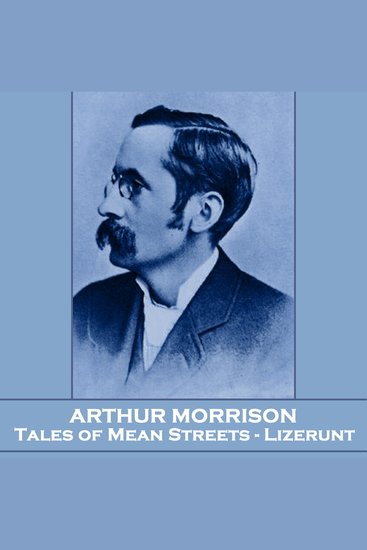
    Arthur Morrison was born on November 1st, 1863, in Poplar, in the East End of London. From the age of 8, after the death of his father, he was brought up, along with two siblings, by his mother, Jane. 
    Morrison spent his youth in the East End. In 1879 he began as an office boy in the Architect's Department of the London School Board and, in his spare time, visited used bookstores in Whitechapel Road. He first published, a humorous poem, in the magazine Cycling in 1880. 
    In 1885 Morrison began writing for The Globe newspaper. In 1886, he switched to the People's Palace, in Mile End and, in 1888, published the Cockney Corner collection, about life in Soho, Whitechapel, Bow Street and other areas of London.  
    By 1889 he was an editor at the Palace Journal, reprinting some earlier sketches, and writing commentaries on books and articles on the life of the London poor. 
    By 1890 he was back at The Globe and published ‘The Shadows Around Us’, a supernatural collection of stories.  Also at this time he began to develop a keen interest in Japanese Art. 
    In October 1891 his short story A Street appeared in Macmillan's Magazine. The following year he married Elizabeth Thatcher and then befriended publisher and poet William Ernest Henley for whom he wrote stories of working-class life in Henley's National Observer between 1892-94.  
    In 1894 came his first detective story featuring Martin Hewitt, described as "a low-key, realistic, lower-class answer to Sherlock Holmes”. 
    Morrison published A Child of the Jago in 1896 swiftly followed by The Adventures of Martin Hewitt. 
    In 1897 Morrison wrote seven stories about Horace Dorrington, a deeply corrupt private detective, described as "a cheerfully unrepentant sociopath who is willing to stoop to theft, blackmail, fraud or cold-blooded murder to make a dishonest penny."  
    To London Town, the final part of a trilogy including Tales of Mean Streets and A Child of the Jago was published in 1899. Following on came a wide spectrum of works, including novels, short stories and one act plays.  
    In 1911 he published his authoritative work Japanese Painters, illustrated with art from his own collection.  
    Although he retired from journalistic work in 1913 he continued to write about Art.  
    In his last decades Morrison served as a special constable, and reported on the first Zeppelin raid on London. Tragically in 1921 his son, Guy, who had survived the war, died of malaria.  
    The Royal Society of Literature elected him as a member in 1924 and to its Council in 1935.   
    In 1930 he moved to Chalfont St Peter, Buckinghamshire. Here he wrote the short story collection Fiddle o' Dreams and More. 
    Arthur Morrison died on the 4th December 1945.  He was 82 years.
    Zum Buch
  • The Magic Mountain - cover

    The Magic Mountain

    Thomas Mann

    • 0
    • 0
    • 0
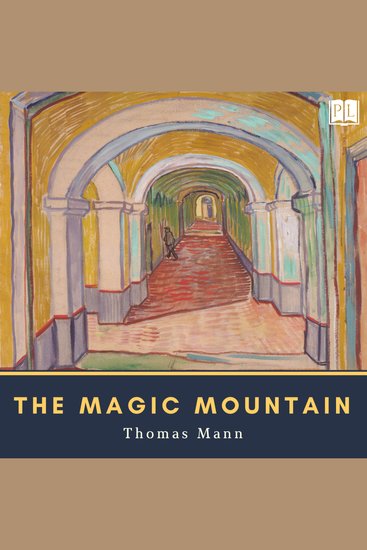
    Hans Castorp is a young man ready to start a career in shipbuilding - but before he does, he decides to visit his cousin Joachim, a patient residing at a tuberculosis sanatorium in the mountains of Switzerland. Castorp enjoys meeting and chatting with the wide array of colorful personalities living at the sanatorium, until its director delivers some bad news: Castorp, too, has symptoms of disease, and must remain at the sanatorium indefinitely. Thus begins a black comedy spanning years, in which he lives and learns in this self-contained world in the mountains.
    The Magic Mountain is a bildungsroman and an allegory of the years surrounding World War I, in which Castorp, a naive blank slate symbolizing the Weimar Republic, spends time with the motley crew in the sanatorium, who each represent the nations and ideologies of Europe vying for his attention. World War I broke out and concluded as Mann was writing the novel; at first, he was opposed to the Weimar Republic, but he later changed his mind, and this development in his personal philosophy is reflected in how Castorp and the patients interact over the years, and in Castorp's ultimate fate.
    Adding to the novel's staying power are its many layers of allegory and allusion, including Greek mythology, European fable, music, opera, and theater, literature, mysticism, numerology, medicine, and philosophy. Above these layers is Mann's overarching message of illness and death as necessary struggles to overcome before reaching a fulfilled life, a theme from his earlier novella, "Death in Venice," that he explicitly wished to revisit and expand upon.
    Zum Buch
  • The Blithedale Romance - cover

    The Blithedale Romance

    Nathaniel Hawthorne

    • 0
    • 0
    • 0
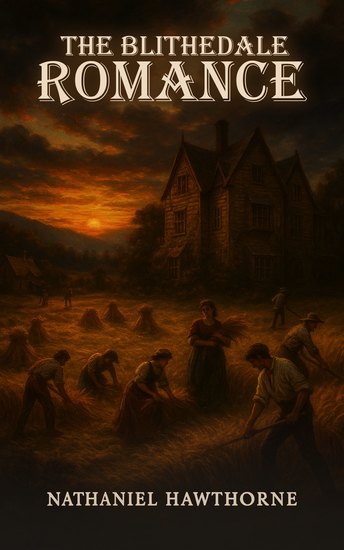
    The Blithedale Romance is a compelling and introspective novel by Nathaniel Hawthorne that explores idealism, social reform, and the complexities of human relationships. Inspired by Hawthorne's own brief experience at the Brook Farm utopian community, the novel offers a nuanced and often critical examination of nineteenth-century efforts to create a perfect society.
    
    Narrated by Miles Coverdale, a poet and observer, the story follows a group of individuals who come together at Blithedale, a rural communal experiment founded on principles of equality, cooperation, and moral improvement. Among them are the enigmatic Zenobia, the fragile yet mysterious Priscilla, and the brooding reformer Hollingsworth. As personal ambitions, hidden motives, and emotional entanglements emerge, the dream of utopia gradually gives way to disillusionment and tragedy.
    
    Hawthorne masterfully blends realism with symbolic romance, using the communal setting as a stage on which deeper psychological and moral conflicts unfold. The novel probes themes of idealism versus reality, the dangers of fanaticism, the nature of freedom, and the tension between individual desire and social responsibility. Through Coverdale's reflective narration, readers are invited to question not only the viability of utopian reform but also the reliability of human perception and judgment.
    
    Dark, thoughtful, and richly symbolic, The Blithedale Romance stands alongside The Scarlet Letter and The House of the Seven Gables as one of Hawthorne's major works. Its subtle critique of reform movements and its penetrating study of character make it a lasting and relevant exploration of social ideals and human limitations.
    
    The Blithedale Romance is an essential read for lovers of classic American literature, offering a powerful meditation on hope, disillusionment, and the enduring complexity of the human heart.
    Zum Buch