Unisciti a noi in un viaggio nel mondo dei libri!
Aggiungi questo libro allo scaffale
Grey
Scrivi un nuovo commento Default profile 50px
Grey
Iscriviti per leggere l'intero libro o leggi le prime pagine gratuitamente!
All characters reduced
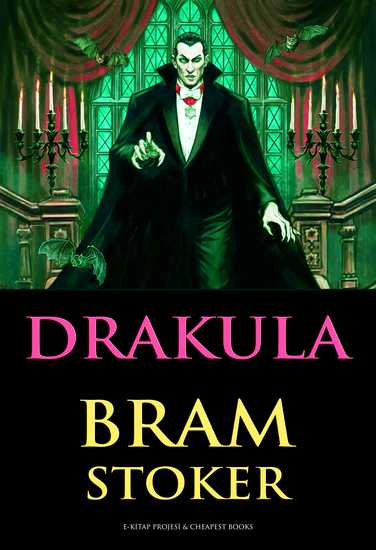
Drakula - cover

Drakula

Bram Stoker

Casa editrice: E-Kitap Projesi & Cheapest Books

  • 0
  • 0
  • 0

Sinossi

Dracula is an 1897 Gothic horror novel by Irish author Bram Stoker. Famous for introducing the character of the vampire Count Dracula, the novel tells the story of Dracula's attempt to move from Transylvania to England, and the battle between Dracula and a small group of men and women led by Professor Abraham Van Helsing.

Dracula has been assigned to many literary genres including vampire literature, horror fiction, the gothic novel and invasion literature. The novel touches on themes such as the role of women in Victorian culture, sexual conventions, immigration, colonialism, and post-colonialism. Although Stoker did not invent the vampire, he defined its modern form, and the novel has spawned numerous theatrical, film and television interpretations.

Characters:

• Jonathan Harker: A solicitor sent to do business with Count Dracula; Mina's fiancé and prisoner in Dracula's castle.
• Count Dracula: A Transylvanian noble who bought a house in London and asked Jonathan Harker to come to his castle to do business with him.
• Wilhelmina "Mina" Harker (née Murray): A schoolteacher and Jonathan Harker's fiancée.
• Lucy Westenra: A 19-year-old aristocrat; Mina's best friend; Arthur's fiancée and Dracula's first victim.
• Arthur Holmwood: Lucy's suitor and later fiancé.
• Jack Seward: A doctor; one of Lucy's suitors and a former student of Dr Abraham Van Helsing.
• Abraham Van Helsing: A Dutch professor; Jack Seward's teacher and vampire hunter.
• Quincey Morris: An American cowboy and explorer; and one of Lucy's suitors.
• Renfield: A lawyer whom Dracula turned mad.
• Brides of Dracula: Three siren-like vampire women who serve Dracula. Although they are popularly known as "The Brides of Dracula", the novel never calls them this.
Disponibile da: 25/01/2024.
Lunghezza di stampa: 666 pagine.
Altri libri che potrebbero interessarti

  • The Princess of Cleves - A Tale of the French Court - cover

    The Princess of Cleves - A Tale...

    Madame de La Fayette

    • 0
    • 0
    • 0
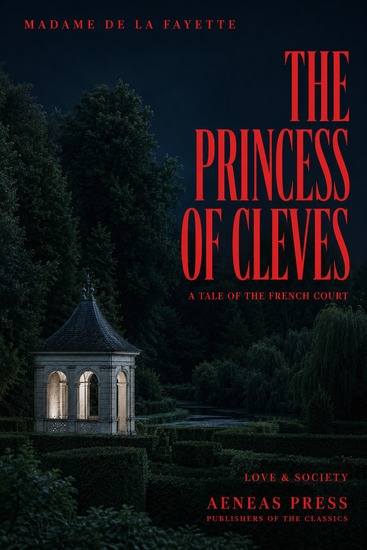
    A young woman married to a man she respects and does not love meets, at a court ball, the one man she does — and decides to tell her husband. Madame de La Fayette wrote it anonymously in 1678 with La Rochefoucauld reading over her shoulder; it is often called the first modern French novel, and no one since has written a more chilling confession scene. Forty-four court portraits from 1412 to 1648, by painters including François Clouet and Antoine Caron, give faces to the kings, queens and nobles who move through this story of the French court.
    Mostra libro
  • Heart of Darkness - A Steamer Up the Congo to Fetch Kurtz - cover

    Heart of Darkness - A Steamer Up...

    Joseph Conrad

    • 0
    • 0
    • 0
    A steamer captain tells, over a slack tide on the Thames, how he took a ship up a river in Africa to fetch out an agent who had stopped sending ivory and started sending nothing. Conrad had commanded such a steamer on the Congo in 1890 and came back with the fever that dogged him for life. What the company calls trade the book calls plunder, and the man at the end of the river is the company's best man. Ninety-six river and harbour plates, from Turner's sunsets to Whistler's Nocturnes, follow the current of Conrad's tale from the Thames to the Congo.
    Mostra libro
  • No More Parades - cover

    No More Parades

    Madox Ford

    • 0
    • 0
    • 0
    There are not many English novels which deserve to be called great: Parade's End is one of them. — W. H. Auden  
    No More Parades is the second of four in Ford Madox Ford's Parade's End tetralogy, a work that Ford hoped would contribute to the obviating of all future wars. The novel follows Christopher Tietjens, a wealthy British landowner and the last British Tory; his unfaithful wife, Sylvia; and his mistress, Valentine Wannop. Highlighting the tension between traditional values and the new reality of a world marred by war, the novel details Tietjens' turmoils in both his personal life and on the warfront—and what follows when those struggles become one and the same.  
    The Parade's End tetralogy privileges not the conflict of World War I itself, but the impact the war had on its participants and upon society writ large. It is often referred to as one of the greatest 20th century novels, and one of the best depictions of war in literature. The 2012 television adaptation, written by Tom Stoppard and starring Benedict Cumberbatch and Rebecca Hall, was nominated for two Primetime Emmy Awards and seven BAFTA Television Awards.
    Mostra libro
  • Two Looks - Short story from a Nobel Prize winning author - cover

    Two Looks - Short story from a...

    John Galsworthy

    • 0
    • 0
    • 0
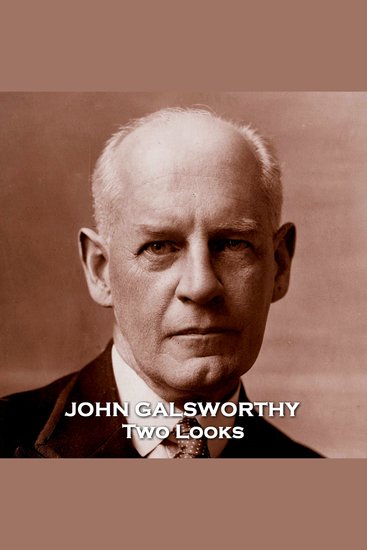
    John Galsworthy was born on the 14th August 1867 on the family estate, Parkfield, in Kingston-upon-Thames.  His family’s wealth came from the shipping industry 
    At age nine he began his education at Saugeen, a Bournemouth preparatory school, before moving to Harrow school in 1881, distinguishing himself as an athlete.  
    Galsworthy attended New College, Oxford to read law and left with a second-class degree with honours in 1889. The bar called him in 1890 but Galsworthy decided he would rather run the family’s shipping business. This also meant travelling to destinations such as Vancouver, South Africa and Australia. 
    In 1895 Galsworthy began a decade long affair with Ada Nemesis Pearson Cooper, the wife of his first cousin. It was only when, in 1905, she divorced and married Galsworthy that their affair became known. 
    His literary career began in 1897 with a short story volume, ‘From the Four Winds’, with the pseudonym John Sinjohn as were three further works. Under his own name, in 1904, came ‘The Island Pharisees’, a novel of social observation, seasoned with flashes of satire and propaganda. He also switched from small, independent publishers to the larger Heinemann and to whom he remained for the duration of his career. 
    1906 saw first major play, ‘The Silver Box’, and the novel ‘The Man of Property’. Each to considerable acclaim. The latter was the first in ‘The Forsyte Saga’ trilogy written between 1906 and 1921. It dealt with the questions of status, class and materialism through Soames Forsyte, who is acutely aware of his ‘new money’ status. Jealous of his wife, his machinations drive her into the arms of another. Soames engages in a terrible revenge with terrible consequences.  
    His social agenda was enlightened particularly in his condemnation over the use of solitary confinement in prisons, his attacks on theatrical censorship and campaigning for animal rights. 
    Galsworthy, having been passed over for active service, spent much of the First World War working as an orderly in a field hospital in France. 
    Despite his it was only in 1920 that he had his first blockbuster play ‘The Skin Game’, a melodrama dealing with ethics, property and class.  
    In 1920 ‘In Chancery’ also arrived with further discourse on the marital disharmony between Soames Forsyte and his wife.  
    The appreciation of his work gradually shifted from plays to novels, particularly through his detailing English social difference, tension and pretension with the Forsytes.  A second trilogy, ‘A Modern Comedy’, followed, examining his love for his daughter Fleur and the English commercial upper-middle class, its ideologies and Soames’ poisonous materialism.  
    Having rejected a knighthood in 1918 he was appointed, in 1929, to the Order of Merit. Galsworthy spent his last years writing a third Forsythe trilogy, ‘End of the Chapter’.   
    In 1932 he was awarded the Nobel Prize, but by now failing health meant he was too ill to attend the ceremony. 
    John Galsworthy died at his Hampstead home of a brain tumour on 31st January, 1933. He was cremated and his ashes scattered from an aeroplane over the South Downs.
    Mostra libro
  • Gargantua and Pantagruel - cover

    Gargantua and Pantagruel

    François Rabelais

    • 0
    • 0
    • 0
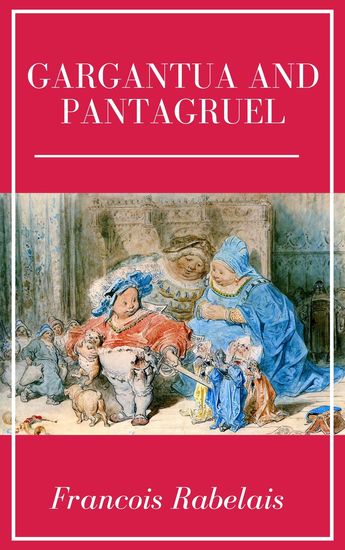
    Gargantua and Pantagruel by Francois Rabelais, was first published in the mid sixteenth century. A work of satirical and fantasy fiction, it tells the story, over 5 books, of two giants; Gargantua and his son Pantagruel as they travel through various lands. On their travels, they meet people on Tool Island, who are so fat, they slit their skin to let the fat puff out; the sexually prolific Semiquavers; the Furred Law-Cats, who imprison them; and, the Chitterlings, who attack them. Containing much vulgarity and wordplay, it was viewed as obscene by some, and treated with suspicion during a social age of religious oppression.
    Mostra libro
  • The Gold Hunters - A Story of Life and Adventure in the Hudson Bay Wilds - cover

    The Gold Hunters - A Story of...

    James Oliver Curwood

    • 0
    • 0
    • 0
    "The Gold Hunters: A Story of Life and Adventure in the Hudson Bay Wilds" by James Oliver Curwood is a gripping tale of peril and fortune in the Canadian wilderness. Set against the backdrop of the harsh Hudson Bay region, it follows the lives of brave gold prospectors. Led by the determined Thorpe, they embark on a treacherous journey to seek their fortune in the uncharted wilds. Along the way, they confront unforgiving nature, hostile encounters, and the lure of gold that tests their loyalty and courage. This thrilling adventure explores the human spirit's resilience and the pursuit of dreams in one of the most unforgiving landscapes on Earth.
    Mostra libro