Rejoignez-nous pour un voyage dans le monde des livres!
Ajouter ce livre à l'électronique
Grey
Ecrivez un nouveau commentaire Default profile 50px
Grey
Abonnez-vous pour lire le livre complet ou lisez les premières pages gratuitement!
All characters reduced
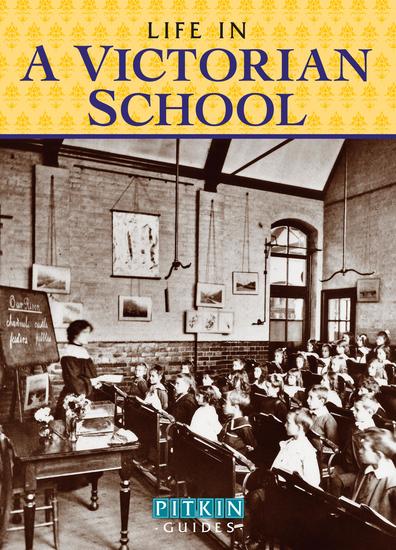
Life in a Victorian School - cover

Life in a Victorian School

Bob Mealing

Maison d'édition: Pitkin

  • 0
  • 0
  • 0

Synopsis

Education in Britain can be traced back to Roman times, but it was not until Victorian times that provision was made in England and Wales for every child to have an elementary school place, whatever their background.
After new buildings were constructed and changes made in educational administration, British schooling saw a revolution. Literacy rates soared, taking over from the limited success of Sunday Schools previously. This colourful and entertaining guide traces the development of schools in Britain in the 19th century, from the initial religious intervention in education to state intervention later on.
What was a pupil's day like in a Victorian school? How did teachers discipline children? Was schooling different for girls? Learn all about the school day, public schools and even the buildings children attended in this guide filled with contemporary photographs of students, teachers and their lives.
Look out for more Pitking guides on social history and heritage, and the 'Life in' series this title is a part of.
Disponible depuis: 01/04/2013.
Longueur d'impression: 32 pages.

D'autres livres qui pourraient vous intéresser

  • Uncle Tom's Cabin: The Icon Black Lives Matter Series - cover

    Uncle Tom's Cabin: The Icon...

    Harriet Beecher Stowe

    • 0
    • 0
    • 0
    Uncle Tom's Cabin is an antislavery novel by American author Harriet Beecher Stowe. Published in two volumes in 1852, the novel had a profound effect on attitudes toward African Americans and slavery in the U.S., and is said to have "helped lay the groundwork for the [American] Civil War". 
      
    Stowe, a Connecticutborn woman of English descent, was part of the religious Beecher family and an active abolitionist. She wrote the sentimental novel to depict the reality of slavery while also asserting that Christian love could overcome slavery. The novel focuses on the character of Uncle Tom, a longsuffering black slave around whom the stories of the other characters revolve. 
      
    Uncle Tom's Cabin was the bestselling novel and the second bestselling book of the 19th century, following the Bible, and is credited with helping fuel the abolitionist cause in the 1850s. The impact attributed to the book was so great that a likely apocryphal story arose of Abraham Lincoln meeting Stowe at the start of the Civil War and declaring, "So this is the little lady who started this great war." 
      
    The book and the plays it inspired helped popularize a number of negative stereotypes about black people including that of the namesake character "Uncle Tom", with the term now used to describe an excessively subservient person. These associations with Uncle Tom's Cabin have, to an extent, overshadowed the historical impact of the book as a "vital antislavery tool". However, the novel stands as a "landmark" in protest literature with later books such as The Jungle by Upton Sinclair and Silent Spring by Rachel Carson owing a large debt to it A oneofakind audio encounter for lovers of history, literature, spiritual texts, and inspirational writing. 
      
     
    Voir livre
  • Zeus Grants Stupid Wishes - A No-Bullshit Guide to World Mythology - cover

    Zeus Grants Stupid Wishes - A...

    Cory O'Brien

    • 0
    • 0
    • 0
    Get this: Cronus liked to eat babies. 


    Narcissus probably should have just learned to masturbate. 


    Odin got construction discounts with bestiality. 


    Ganesh was the very definition of an unplanned pregnancy. 


    And Abraham was totally cool about stabbing his kid in the face. 


    All our lives, we've been fed watered-down versions of the classic myths. In reality, mythology is more screwed up than a schizophrenic shaman doing hits of unidentified . . . wait, it all makes sense now. In Zeus Grants Stupid Wishes, Cory O'Brien, creator of Myths RETOLD!, sets the stories straight. These are rude, crude, totally sacred texts told the way they were meant to be told. 


    Here are a few more gems to consider: Zeus once stuffed an unborn fetus inside his thigh to save its life after he exploded its mother by being too good in bed; the Egyptian universe was saved because Sekhmet got too hammered to keep murdering everyone; the Hindu universe is run by a married couple who only stop murdering in order to throw dance parties on the corpses of their enemies; the Norse goddess Freyja once consented to a four-dwarf gangbang in exchange; and there's more dysfunctional goodness where that came from.
    Voir livre
  • Jena 1800 - The Republic of Free Spirits - cover

    Jena 1800 - The Republic of Free...

    Peter Neumann

    • 0
    • 0
    • 0
    Around the turn of the nineteenth century, a steady stream of young German poets and thinkers coursed to the town of Jena to make history. The French Revolution and the Napoleonic Wars had dealt a one-two punch to the dynastic system. Confidence in traditional social, political, and religious norms had been replaced by a profound uncertainty that was as terrifying for some as it was exhilarating for others. Nowhere was the excitement more palpable than among the extraordinary group of poets, philosophers, translators, and socialites who gathered in this Thuringian village. 


    Jena became the place for the young and intellectually curious, the site of a new departure, of philosophical disruption. Influenced by Johann Wolfgang von Goethe, then an elder statesman and artistic eminence, the leading figures among the disruptors—the translator August Wilhelm Schlegel; the philosophers Friedrich "Fritz" Schlegel and Friedrich Schelling; the dazzling, controversial intellectual Caroline Schlegel, married to August; Dorothea Schlegel, a poet and translator, married to Fritz; and the poets Ludwig Tieck and Novalis—resolved to rethink the world, to establish a republic of free spirits. They didn't just question inherited societal traditions; with their provocative views of the individual and of nature, they revolutionized our understanding of freedom and reality.
    Voir livre
  • The Aitareya Upanishad 101 - an original translation in modern language made plain and simple - cover

    The Aitareya Upanishad 101 - an...

    Matthew Barnes

    • 0
    • 0
    • 0
    Do you believe in evolution, but do not see this belief as necessarily negating the existence of an advanced Intelligence?  
    If so, you may find comfort, inspiration, and perhaps even proof for your beliefs within this ancient Hindu work.  
    The Aitareya Upanishad, which dates back to somewhere around 600-500 BCE, takes us through a journey … the journey of creation. It then leads us through the evolutionary changes that have brought us into this day and age and beyond, into the stage of existence that the ancient Hindus believed would come next. We were all created, the Hindus tell us, for a reason, and we are all evolving towards a particular state of beingness.  
    How can the Hindus be so sure that evolution is fact, and how can they be so sure that there is some sort of Intelligence behind it all? The Hindu religion is the oldest on earth. Their ancestors claim to have actually witnessed a small portion of evolution in action, and through their experiences, also claim to have discovered the underlying intent of life (both in the general and the individual sense). This work goes into these experiences and the insights the Hindus claim to have gained from them. 
    Also included in this narrative is an early Hindu concept of time and space that is extremely difficult to wrapt the human mind around. These concepts, however, coincide very closely with the findings of modern physics. 
    This work is my interpretation of the Aitareya Upanishad. I have endeavored to simplify its teachings, expand where needed, and include modern concepts, discoveries, and quotes to make the central concepts found within it more digestible to modern seekers, especially beginners.  
    Would you like to know more? 
    If so, scroll up and dive in now!
    Voir livre
  • Social Studies Matters - Teaching and Learning with Authenticity - cover

    Social Studies Matters -...

    Dr. Emily Schell

    • 0
    • 0
    • 0
    We must immediately move past the “Sage on the stage” yammering on about this battle and that President, then handing out a bubble-sheet test to certify learning. This title explores the philosophical underpinnings of the modern Social Studies classroom and adds practicality to the narrative that can be employed today for your students!
    Voir livre
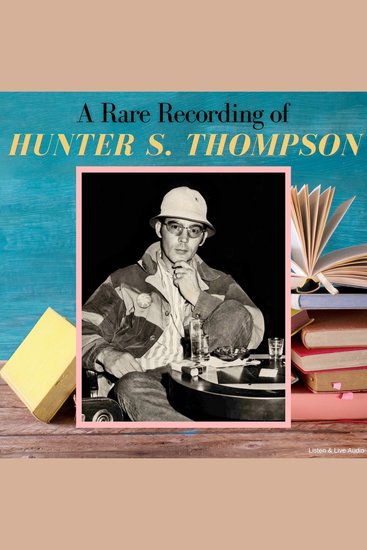
  • A Rare Recording of Hunter S Thompson - cover

    A Rare Recording of Hunter S...

    Hunter S. Thompson

    • 0
    • 0
    • 0
    Hunter Stockton Thompson (July 18, 1937 - February 20, 2005) was an American journalist and author who founded the gonzo journalism movement, a style in which the writer becomes a central figure and participant in the events of the narrative. He rose to prominence with the publication of Hell's Angels (1967) and Fear and Loathing in Las Vegas (1972). The following is from a 1975 interview on gonzo journalism.
    Voir livre