Rejoignez-nous pour un voyage dans le monde des livres!
Ajouter ce livre à l'électronique
Grey
Ecrivez un nouveau commentaire Default profile 50px
Grey
Abonnez-vous pour lire le livre complet ou lisez les premières pages gratuitement!
All characters reduced
Native American Studies (22 Book Collection) - History Books Mythology Culture & Linguistic Studies - cover

Native American Studies (22 Book Collection) - History Books Mythology Culture & Linguistic Studies

Black Hawk, John Stevens Cabot Abbott, Frank Hamilton Cushing, Washington Matthews, John Wesley Powell, James Mooney, Lewis Spence, Franz Boas, John G. Bourke, Charles M. Scanlan, Charles C. Royce, Erminnie A. Smith, William John McGee, Clay MacCauley, James Owen Dorsey, Cyrus Thomas, Garrick Mallery, Alexander Scott Withers, Joseph Kossuth Dixon, Edward S. Curtis, John Heckewelder, William C. Reichel, Elias Johnson

Maison d'édition: DigiCat

  • 0
  • 0
  • 0

Synopsis

This meticulously curated anthology, 'Native American Studies (22 Book Collection)', offers an expansive exploration into the rich tapestry of Native American history, culture, and lore through a diverse range of literary styles. From ethnographic accounts and historical narratives to insightful anthropological studies, the collection stands as a testament to the multifaceted nature of Native American experiences and scholarly endeavours surrounding them. Each contribution offers a unique lens into the myriad living traditions, spiritual beliefs, and societal structures that define Native American life, providing a comprehensive reflection on both historical and modern contexts. The collective works of renowned authors such as Franz Boas, James Owen Dorsey, and Edward S. Curtis are brought together, showcasing their landmark contributions to the field of Native American studies. These authors, among others, delve into linguistic complexities, spiritual practices, and cultural phenomena, drawing from both firsthand experience and meticulously gathered oral traditions. This anthology aligns with pivotal anthropological and historical movements, offering profound insights into how each author's perspective and methodology converge to elucidate the intricate dynamics of Native American societies. Ideal for both scholars and general readers alike, this collection invites readers to immerse themselves in a rich confluence of perspectives. An essential compendium for those seeking a deeper understanding of the Native American experience, it offers a rare opportunity to engage with a significant scholarly discourse and appreciate the depth of cultural insights contained within. The anthology not only serves as an educational resource but also as a bridge to foster dialogue and reflection on the diverse narratives it encompasses.
Disponible depuis: 13/11/2022.
Longueur d'impression: 5841 pages.
D'autres livres qui pourraient vous intéresser

  • Nero and Paul - How the Gospel of Grace Defeated the Ruler of Rome - cover

    Nero and Paul - How the Gospel...

    Kathie Lee Gifford, Bryan M. Litfin

    • 0
    • 0
    • 0
    Read by the authors. 
    Does gaining power, possessions, and popularity lead to happiness and fulfillment? Or does inner transformation and self-sacrificial love bring the most joy and satisfaction? New York Times bestselling author Kathie Lee Gifford and scholar Bryan Litfin dive into these questions by bringing the stories of Nero and Paul to life in this creative nonfiction tale and identifying how these moral questions can be applied to modern Christian life. 
    Centuries ago, against the backdrop of Roman domination and decadence, a rabbi-turned-evangelist challenged the ideology of an immoral emperor. Two competing messages clashed—and they were messages that echo into our modern world. 
    One voice says, Do what feels good. Gain more influence. Focus on yourself and build your own kingdom. Another says, Live for something beyond yourself—something eternal. Carry out your God-given mission, no matter the cost. Follow your King to the end of the world if you must . Only then will you truly live. 
    Combining historical accuracy with narrative imagination, Nero and Paul drops you into the drama of human pride and divine destiny that unfolded on the stage of imperial Rome. 
    You'll travel with Paul as he ventured from Jerusalem all the way to Spain, making friends, winning converts, and persisting through grueling opposition. You'll see up close Nero's kingdom of wealth, glamour, sex, and power—the proud trappings of a self-proclaimed god. In contrast, Paul boldly offered what the world desperately needed: the Messiah's life-giving good news of God's presence indwelling his people. 
    Though this epic clash of worldviews led to bloodshed and death, the crown of eternal life triumphed over the laurel wreaths of Rome—just as the light of Jesus triumphs over the darkness of the world in every age. 
    Don't miss this ancient story with a timeless message that reverberates across the centuries and will light the fire of your faith today. 
    The chronology, family tree, and maps can be found in the audiobook companion PDF download. 
    Voir livre
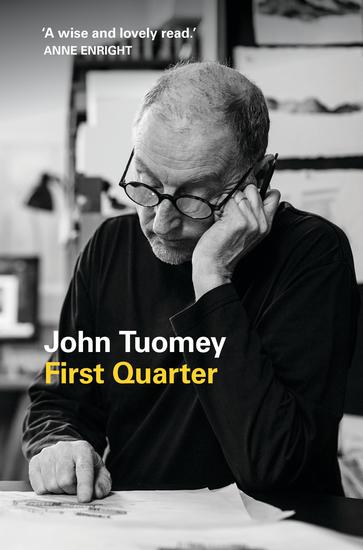
  • First Quarter - cover

    First Quarter

    John Tuomey

    • 0
    • 0
    • 0
    In this reflective and enriching memoir, John Tuomey navigates the places and memories of his life over the scope of twenty-five years. First recognised for the urban regeneration of Dublin's Temple Bar, which included the construction of the Irish Film Institute, the National Photographic Archive and Gallery of Photography, his life in architecture led him to design social and cultural spaces such as the Lyric Theatre in Belfast, the Glucksman Gallery in UCC and the Victoria & Albert East Museum in London.
    
    Imbued with many inter-textual references to poetry, drama and literature and written in limpid prose, this memoir is inherently literary in nature. Tuomey looks back to his early life where he was born in Tralee and lived in different counties around Ireland, from small towns to country landscapes, from schooldays in Dundalk to student activism at University College Dublin. He traces the pathways that led to his formation as an architect, reflecting on the many cultural and social influences on his life. He excels in capturing the social landscape of Dublin in the 1980s and pays particular attention to the many buildings and social hubs of the inner city. His transient years of moving from Dublin to London, and subsequently working in places like Nairobi and Milan, chronicle the international influences on his outlook. The key relationships in his life, including meeting his future wife, Sheila – a fellow student of architecture in UCD – and his pivotal employment by James Stirling in 1976, form the backbone of his personal and professional life.
    
    Tuomey's expertise in his field is unsurpassed, with meticulous detail given to the finer aspects of design and architecture. His thoughts on the challenges facing the encroaching erasure of city life in Dublin are essential reading for anyone with an interest in the future of building in the city.
    Voir livre
  • Editor Missing - The Media in Today's India - cover

    Editor Missing - The Media in...

    Ruben Banerjee, Anuj Datta

    • 0
    • 0
    • 0
    This is a time when the space for free speech is shrinking in India, along with a growing intolerance of contrarian views. The right to dissent, which should be the bedrock of any democracy, is seriously endangered. There is widespread belief that we are in an undeclared emergency. Not everyone agrees with this, though, and the jury is out on the state of play in the world's largest democracy. As charges and countercharges fly, with no unanimity in sight, India's national discourse, particularly its news media, is becoming increasingly divided and polarized. 
    In Editor Missing, veteran journalist Ruben Banerjee attempts to provide clarity on the state of Indian media at a time when there is consensus only on the lack of it. The media mirrors society, and Banerjee is best placed to tell its contested story in contemporary India. As a top editor for various publications, he has had a ringside view for years of the decline in its standards, quality and objectivity. His own experiences reflect the time we live in. The book provides rare insights into the minefield that an editor today runs into - from pressures that are exerted to the risks of upsetting the powers that be. At the end of it, the reader is left with a chilling realization that defending the truth can come at a huge personal cost in present-day India.
    Voir livre
  • James Joyce's The Dead - Unabridged - cover

    James Joyce's The Dead - Unabridged

    James Joyce

    • 0
    • 0
    • 0
    The final (and longest) story in James Joyce's short story collection "The Dubliners," "The Dead" is one of Joyce's most beloved works of short fiction.    Taking place at Christmastime, the tale revolves around Gabriel Conroy and his wife Gretta, who are attending a holiday party hosted by Gabriel's elderly aunts. In typical Joycean style, this seemingly mundane setting hides many of the guests' secrets and mysteries, not the least of which is shielded by Gretta herself. When her great secret finally spills forth, it has a profound and immediate effect on Gabriel.   A powerful and elegiac examination of life, love and the very nature of the Irish identity, this volume is presented in its original and unabridged format.
    Voir livre
  • We Were Blackwater - Life death and madness in the killing fields of Iraq – an SAS veteran's explosive true story - cover

    We Were Blackwater - Life death...

    Barrie "Baz" Rice

    • 0
    • 0
    • 0
    "A raw, riveting look into the hidden frontlines of the Iraq War and an indispensable first-person account of the secret lives of the mercenaries and contractors who fought and died overseas … Rice does something few have attempted, taking us on an emotional journey that is at once unsettling and revelatory. Excellent." – Mark Boal, Oscar-winning screenwriter and producer of The Hurt Locker and Zero Dark Thirty
    "A riveting tale of a brotherhood of warriors and their descent into hell. Visceral, brutal, raw and very real, We Were Blackwater is a rollercoaster ride of combat on the frontline of death and bloodshed. Unputdownable. Unforgettable. The untold true story." – Damien Lewis, author of SAS Ghost Patrol and Churchill's Secret Warriors
    "We Were Blackwater puts your boots right on the ground – in a place you'd never want to be, except in the safety of a book. Barrie Rice is a natural storyteller: clear-eyed, funny, wise, honest and humble. Reading this book feels like making a new friend. Fresh and exhilarating." – Hugo Lindgren, former editor of the New York Times Magazine
    ***
    The aftermath of the 2003 Iraq invasion is a story that has yet to be told by those who fought their own war against a brutal insurgency: the private security contractors. Risking life and limb, often side by side with the US military but far more exposed, they were never to receive a hero's homecoming. They remained in the shadows, often with good cause, but that would change for ever on 31 March 2004, when a security convoy was ambushed in Fallujah and the charred bodies of two American operators were strung from a road bridge. Those events would ensure notoriety for the company involved: Blackwater.
    This is the untold story of the security industry and its private war, recounted by a man who witnessed it first hand: SAS veteran and New Zealand national Barrie Rice. His visceral, no-holds-barred account of his time with Blackwater is brought to life in scenes that lead to a reckoning with both the war and himself. This gripping account delivers a compelling slice of reality – the inside story of the private contractor's war.
    Voir livre
  • Twenty-Six Men and a Girl - From their pens to your ears genius in every story - cover

    Twenty-Six Men and a Girl - From...

    Maxim Gorky

    • 0
    • 0
    • 0
    Alexei Maximovich Peshkov was born on 28th March 1868, in Nizhny Novgorod, Russia. 
    Better known as Maxim Gorky he was orphaned at 11 and ran away from home at 12.  At 19 he had already attempted suicide and thereafter travelled, by foot, across the Russian Empire for 5 years. 
    His first book ‘Essays & Stories’ in 1898 was a sensation and so began a long career as an author of short stories, novels and plays.  Gorky saw writing as a moral and political act that would help to change the unjust world around him.  He was an ardent early advocate of the emerging Marxist movement and publicly opposed the Tsarist regime leading several times to his arrest.  
    In 1904 he began his own theatre but the censor banned every play and Gorky was forced to abandon the project. 
    But Gorky was a financially successful author, editor, and playwright and gave monies to political parties as well as for civil rights and social reform.  The brutal shooting of workers, which set in motion the Revolution of 1905, pushed Gorky more decisively toward radical solutions.  
    In 1906 he went to the United States to raise funds for the Bolsheviks. Those experiences including a scandal over travelling with his lover and not his wife deepened his contempt for the ‘bourgeois soul.’ 
    Gorky now moved to Capri in Italy, both for health reasons and to escape the increasingly repressive times in Russia.  
    An amnesty for the 300th anniversary of the Romanov dynasty saw him return to Russia in 1914. His politics remained close to the Bolshevik cause.  But soon, after the 1918 revolution, his essays referred to Lenin as a tyrant for his senseless arrests and repression.  He was soon appealing to the outside world for food aid after the catastrophic crop failure. 
    In October 1921 Gorky returned to Italy, now in Fascist hands, and settled in Sorrento until 1932.  His health worsened with the onset of tuberculosis. 
    He wrote several successful books there but now decided to find an understanding with the communist regime. Stalin invited him home and his return was hailed as a major propaganda victory.  He was decorated with the Order of Lenin, and a province, a park, and various streets re-named in his honour. 
    But he had his faults too.  In 1933, Gorky co-edited a book on the White Sea-Baltic Canal and denied even a single prisoner died during its construction, but thousands had. As well, knowing that some Nazis were homosexual, a phrase was attributed to him that said ‘exterminate all homosexuals and fascism will vanish’.  Although he was himself was quoting another he was decidedly homophobic. 
    With the increase of Stalinist repression in 1935 Gorky was placed under unannounced house arrest. 
    Maxim Gorky died on the 18th June 1936 from pneumonia.  He was 68. 
    Stalin and Molotov were among those who carried Gorky's urn of ashes at his funeral.
    Voir livre