Begleiten Sie uns auf eine literarische Weltreise!
Buch zum Bücherregal hinzufügen
Grey
Einen neuen Kommentar schreiben Default profile 50px
Grey
Jetzt das ganze Buch im Abo oder die ersten Seiten gratis lesen!
All characters reduced
Why is the CCP on the Verge of Collapsing? - Does God Have a Plan? - cover

Why is the CCP on the Verge of Collapsing? - Does God Have a Plan?

Bill Stone

Verlag: RWG Publishing

  • 0
  • 0
  • 0

Beschreibung

This has been a difficult week for America. Seeing Goodman get trampled as the bad guys win. I don't know about you, but it makes me feel nauseous. We'll be fighting this battle for a long time. We've exhausted all possibilities. And all hope seems to have vanished. But I'm starting to feel better. And, once again, I have hope, which is wonderful. And after doing so, I said to myself, "Let me check what I've been doing to find hope." How can I maintain the mentality and energy to keep moving forward, and how can I share that with you? Maybe it will assist you, maybe it won't, but it's worth a go. So I'm just going to spend a little more informal time with you talking about how I've found a way forward and how I'm now looking forward to the future and even a little bit eager for what's to come. I'd like to share that with you right now. Now, this may seem paradoxical, but China offers me a great deal of hope. You can see that I have strong feelings regarding China's part in what's going on, which is why you might ask. I believe China is responsible for much of what we see in the media. I believe they are behind a lot of what we see in Washington, DC, and I believe they are behind a lot of what has happened with the virus as well. It wasn't an accident, in my opinion. That's an other story altogether. But I am convinced that what we are witnessing in our country is fundamentally, as I have stated, all roads lead to China. So, if you look at the CCP, the Chinese Communist Party, and understand where they are in history, they may appear to be extremely strong right now - art of war, if you're strong, act weak, if you're weak and strong, etc. Well, I believe that, despite the fact that they look to be incredibly powerful with our military and all of the things they're doing. I believe that within the next year to two years, the Chinese Communist Party will fall; there are a few indicators that indicate this, and the reason that gives me optimism is because, as I've stated, I believe that so much of what is occurring in our country is linked to them. And if they collapse, many of the power structures they established will crumble as well. And I believe we would see a major transformation in what is happening in our country very fast. It's as if the puppet master has died and the puppets have run amok. That's one point of view. So, when I think of China, the first thing that comes to me is the virus. China, I believe, has done an excellent job of covering up what's going on with the virus in their country from the beginning. And it's a pretty frequent thing under communism; if you look back at what was dubbed the Great Leap Forward with Mao, when I believe tens of millions of Chinese died from a tremendous famine, what they did was make demands for grain output, to different villages, and all kinds of city structures. As a result, people were required to report their output levels to higher levels. And, in general, if they reported numbers that were incorrect, they were killed, replaced, or imprisoned by local authority.
 
Verfügbar seit: 13.06.2022.
Drucklänge: 20 Seiten.

Weitere Bücher, die Sie mögen werden

  • Jealousy and Attachment Theory - Unraveling the Psychology of Insecurity and Possessiveness - cover

    Jealousy and Attachment Theory -...

    Jules Lacroix

    • 0
    • 0
    • 0
    Jealousy and Attachment Theory: Unraveling the Psychology of Insecurity and Possessiveness 
    Jealousy, often seen as the shadow of love, has intrigued scholars, poets, and individuals alike for centuries. In this audiobook, we delve deep into the realms of psychology to understand the roots of jealousy and how it intertwines with our attachment patterns. 
    Drawing from the rich tapestry of attachment theory, we explore the profound connections between the ways we bond with others and the emotions that often hold us hostage. With clarity and empathy, we reveal the mechanisms that fuel feelings of insecurity and possessiveness in our relationships. 
    Through insightful analysis and real-world examples, 'Jealousy and Attachment Theory' equips you with the knowledge and self-awareness needed to navigate the complexities of human connections. Whether you're seeking to unravel your own emotional struggles or gain a deeper understanding of the jealousy that may touch your life, this audiobook provides a roadmap to untangle the threads of attachment, love, and fear. Join us in exploring the fascinating landscape of emotions and the psychology behind jealousy, and learn how to build healthier, more secure relationships.
    Zum Buch
  • Dream States - Smart Cities and the Pursuit of Utopian Urbanism - cover

    Dream States - Smart Cities and...

    John Lorinc

    • 0
    • 0
    • 0
    John Lorinc is the Toronto nonfiction editor at Coach House. He is also the recipient of the 2020 Fellowship from the Atkinson Foundation, a prestigious honor from an organization working for social and economic justice.
    Zum Buch
  • Collected Articles of Frederick Douglass - The Tract Of The Quiet Way - cover

    Collected Articles of Frederick...

    Frederick Douglass

    • 0
    • 0
    • 0
    Frederick Douglass's 'Collected Articles' compiles powerful writings from the iconic abolitionist and statesman. From poignant narratives on slavery to impassioned calls for justice, Douglass's eloquent prose captures the essence of his tireless advocacy for freedom, equality, and human rights. This anthology stands as a testament to Douglass's indomitable spirit and enduring impact on the fight against oppression, making it a timeless repository of wisdom and activism. Read in English, unabridged.
    Zum Buch
  • A Rare Recording of Poet John Ciardi Reading His Own Writing - cover

    A Rare Recording of Poet John...

    John Ciardi

    • 0
    • 0
    • 0
    John Anthony Ciardi (June 24, 1916 - March 30, 1986) was an American poet, translator, and etymologist. While primarily known as a poet, Ciardi pursued etymology, contributed to the Saturday Review as a columnist and long-time poetry editor, directed the Bread Loaf Writers' Conference in Vermont, and recorded commentaries for National Public Radio. In 1959, Ciardi published a book on how to read, write, and teach poetry, How Does a Poem Mean?, which has proven to be among the most-used books of its kind. In the following recordings, Ciardi reads "And They Lived Happily Ever After For Awhile," “To Judith, I,” “Happiness,” and “The Lamb.”
    Zum Buch
  • 21 Things You Need to Know About Indigenous Self-Government - A Conversation About Dismantling the Indian Act - cover

    21 Things You Need to Know About...

    Bob Joseph

    • 0
    • 0
    • 0
    From the bestselling author of 21 Things™ You May Not Know About the Indian Act comes a powerful new book on dismantling the Indian Act and advancing Indigenous self-governance.Bob Joseph’s 21 Things™ You May Not Know About the Indian Act captured the attention of hundreds of thousands of Canadians by shining a light on the Indian Act and the problems associated with it. In that book, readers learned that the Consolidated Indian Act of 1876 has controlled the lives of Indigenous Peoples in Canada for generations, and despite its objective to assimilate Indians into the economic and political mainstream, it has had the opposite effect: segregation. They live under different laws and on different lands.People came away from that book with questions such as "Can we get rid of the Indian Act?" and "What would that look like? Would self-government work?" These are timely questions, given that 2026 will mark 150 years since the Consolidated Indian Act of 1876. The short answer to these questions is, yes, we can dismantle the Act, and there are current examples of self-government arrangements that are working.With his trademark wisdom, humility, and deep understanding, Bob Joseph shows us the path forward in 21 Things™ You Need to Know About Indigenous Self-Government: A Conversation About Dismantling the Indian Act, in which Indigenous self-governance is already happening and not to be feared—and negotiating more such arrangements, sooner rather than later, is an absolute necessity.21 Things™ You Need to Know About Indigenous Self-Government: A Conversation About Dismantling the Indian Act is a call to action. Join the conversation now.
    Zum Buch
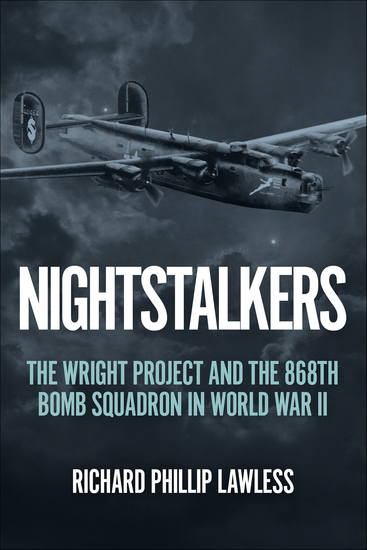
  • Nightstalkers - The Wright Project and the 868th Bomb Squadron in World War II - cover

    Nightstalkers - The Wright...

    Richard Phillip Lawless

    • 0
    • 0
    • 0
    “Takes the reader into the Pacific war and offers a front-row seat to the exploits of the Wright Project and their highly innovative technology.” —War History Network 
     
    In August 1943, a highly classified US Army Air Force unit, code-named the “Wright Project,” departed Langley Field for Guadalcanal in the South Pacific to join the fight against the Empire of Japan. Operating independently, under sealed orders drafted at the highest levels of Army Air Force, the Wright Project was unique, both in terms of the war-fighting capabilities provided by classified systems the ten B-24 Liberators of this small group of airmen brought to the war, and in the success these “crash-built” technologies allowed. The Wright airmen would fly only at night, usually as lone hunters of enemy ships. In so doing they would pave the way for the United States to enter and dominate a new dimension of war in the air for generations to come.  
     
    This is their story, from humble beginnings at MIT’s Radiation Lab and hunting U-boats off America’s eastern shore, through to the campaigns of the war in the Pacific in their two-year march toward Tokyo. The Wright Project would prove itself to be a combat leader many times over and an outstanding technology innovator, evolving to become the 868th Bomb Squadron.  
     
    Comprehensive and highly personal, this story can now be revealed for the very first time, based on official sources, and interviews with the young men who flew into the night. 
     
    “A limber romp across the world of electronics and into the history of World War II.” —ARGunners.com
    Zum Buch