Rejoignez-nous pour un voyage dans le monde des livres!
Ajouter ce livre à l'électronique
Grey
Ecrivez un nouveau commentaire Default profile 50px
Grey
Abonnez-vous pour lire le livre complet ou lisez les premières pages gratuitement!
All characters reduced
The Cord - cover

The Cord

Bijan Sheibani

Maison d'édition: Nick Hern Books

  • 0
  • 0
  • 0

Synopsis

Ash and Anya were happy, just the two of them. Then the baby came.
Ash has spent the first two weeks of his son's life trying to work out where he fits. He watches his mother holding her grandchild for the first time, mesmerised by the mystery and delight of a new life. After she leaves, Ash watches Anya feeding their son – so close, almost intertwined.
As sleepless nights, relentless crying and hushed arguments take their toll, a storm starts to grow as a chasm widens between Ash and his son, his wife and even his own mother.
Lifting the roof off one family's home, The Cord is a brutally honest and moving insight into the challenging truths of family dynamics. It premiered at the Bush Theatre, London, in 2024, written and directed by Bijan Sheibani.
Disponible depuis: 24/04/2024.
Longueur d'impression: 88 pages.
D'autres livres qui pourraient vous intéresser

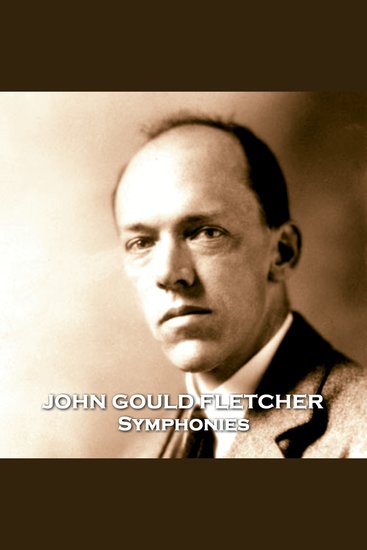
  • Symphonies - The first Southern poet to win the Pulitzer Prize - cover

    Symphonies - The first Southern...

    John Gould Fletcher

    • 0
    • 0
    • 0
    John Gould Fletcher was born in Little Rock, Arkansas on the 3rd of January 1886 to a socially prominent family.  
     
    He was educated at Phillips Academy, Andover before advancing to Harvard University, which he attended from 1903 to 1907, before dropping out after his father's death. 
     
    As a young man Fletcher spent many years in England where he became part of the influential Imagist group of poets together with Amy Lowell and Ezra Pound.   
     
    His first marriage came from a resumed relationship with the now married Florence Emily ‘Daisy’ Arbuthnot.  Her adultery with Fletcher was the grounds for her divorce.  They married on 5th July 1916 but later divorced.  
     
    Fletcher first published in 1912, with ‘The Dominant City’ to much praise and admiration and followed this with other well-regarded volumes such as ‘Irradiations: Sand and Spray’, and ‘Goblins and Pagodas’. 
     
    In the late 1920s and 1930s Fletcher became increasingly active with a group of Southern writers and poets known as the Southern Agrarians. They published the classic ‘I'll Take My Stand: The South and the Agrarian Tradition’. 
     
    Although he was highly regarded as a poet, he was not very prolific.  However, such was the undoubted quality that in 1939 he received the Pulitzer Prize for his work ‘Selected Poems’.  He was the first poet from the south to receive such an accolade.  Fletcher’s other passion and pursuit was as an authority on modern painting, a subject on which he also published. 
     
    A second marriage followed in 1936 to the children’s author, Charlie May Simon.  They built ‘Johnswood’, a residence on the bluffs of the Arkansas River and travelled frequently to New York for shots of modern culture and intellectual stimulation as well as to the American West and South for the climate after Fletcher developed chronic arthritis. 
     
    In 1937 he wrote his autobiography, ‘Life is My Song’. 
     
    His developing passion for his roots and background resulted in the writing of a history of his State and published in 1947; ‘Arkansas’. 
     
    By now Fletcher was suffering from bouts of depression and on 10th May 1950, he committed suicide by drowning himself in a pond near his home in Little Rock, Arkansas.  He was 64.
    Voir livre
  • The Ugandan Tales - cover

    The Ugandan Tales

    Victor Rumanyika

    • 0
    • 0
    • 0
    "The Ugandan Tales" is set in Uganda and about the struggles of ordinary Africans against post independence African rulers that preach freedom and emancipation but have turned into oppressors.  This collection of poetry dives deep into topics of police brutality, social injustices, and oppression through the landscape of the tortured cities. Ordinary people seek to reassert their rights against an intransigent regime that is determined to keep them oppressed. The poems chronicle everyday struggles that are faced at the hands of fellow Africans masquerading as Pan Africanists. Through peaceful and non violent means, a new generation of people is now taking a stand against social, political and economic segregation.
    Voir livre
  • Encyclopaedia - cover

    Encyclopaedia

    Chloe Elliott

    • 0
    • 0
    • 0
    Chloe Elliott's Encyclopaedia is playful and visceral, exploring boundaries of identity and the search for meaning in poems that delight with richly tactile language. Formally varied, these poems are unflinching in their physicality.
    Voir livre
  • Dance of Death The (Part 1 & 2) - cover

    Dance of Death The (Part 1 & 2)

    August Strindberg

    • 0
    • 0
    • 0
    Come join me as we enter the scene of a remote military outpost where we'll experience the tumultuous relationship between two embittered souls as they confront the harsh realities of their disintegrating marriage. Oh how lives of others can be so easily dismantled by the whims of the few. 
    "I have lived a life of quiet desperation, clinging to the illusion of happiness. But now, as I stand on the precipice of oblivion, I see the truth with startling clarity. We are all prisoners of our own making, trapped in cages of our own design. And yet, even in the darkest of times, there is a flicker of light. A spark of hope that refuses to be extinguished. I may be flawed, imperfect, but I am still alive. And as long as there is life, there is the possibility of change."
    Voir livre
  • Heroic Stanzas - The Age of Dryden' is a fitting marker for why he stood above all the others of his age - cover

    Heroic Stanzas - The Age of...

    John Dryden

    • 0
    • 0
    • 0
    John Dryden was born on August 9th, 1631 in the village rectory of Aldwincle near Thrapston in Northamptonshire. As a boy Dryden lived in the nearby village of Titchmarsh, Northamptonshire. In 1644 he was sent to Westminster School as a King's Scholar.  
    Dryden obtained his BA in 1654, graduating top of the list for Trinity College, Cambridge that year.  
    Returning to London during The Protectorate, Dryden now obtained work with Cromwell's Secretary of State, John Thurloe. 
     At Cromwell's funeral on 23 November 1658 Dryden was in the company of the Puritan poets John Milton and Andrew Marvell.  The setting was to be a sea change in English history. From Republic to Monarchy and from one set of lauded poets to what would soon become the Age of Dryden. 
    The start began later that year when Dryden published the first of his great poems, Heroic Stanzas (1658), a eulogy on Cromwell's death.  
    With the Restoration of the Monarchy in 1660 Dryden celebrated in verse with Astraea Redux, an authentic royalist panegyric. 
     With the re-opening of the theatres after the Puritan ban, Dryden began to also write plays. His first play, The Wild Gallant, appeared in 1663 but was not successful. From 1668 on he was contracted to produce three plays a year for the King's Company, in which he became a shareholder. During the 1660s and '70s, theatrical writing was his main source of income.  
    In 1667, he published Annus Mirabilis, a lengthy historical poem which described the English defeat of the Dutch naval fleet and the Great Fire of London in 1666. It established him as the pre-eminent poet of his generation, and was crucial in his attaining the posts of Poet Laureate (1668) and then historiographer royal (1670). 
    This was truly the Age of Dryden, he was the foremost English Literary figure in Poetry, Plays, translations and other forms. 
    In 1694 he began work on what would be his most ambitious and defining work as translator, The Works of Virgil (1697), which was published by subscription. It was a national event.  
    John Dryden died on May 12th, 1700, and was initially buried in St. Anne's cemetery in Soho, before being exhumed and reburied in Westminster Abbey ten days later.
    Voir livre
  • Female Poets of the Nineteenth Century The - Volume 2 - Beautiful collection of poems from women who struggled to get the credit they deserved at the time - cover

    Female Poets of the Nineteenth...

    Ella Wheeler Wilcox

    • 0
    • 0
    • 0
    For much of history women have been seen rather than heard. Their thoughts, their views have lain too long in the shadows of our culture.  Whilst this traditional view has some merit it is not entirely accurate. 
    Here, gathered together in these volumes, we can, through their words, experience their lives; we can hear their voices, their thoughts, joys, loves and losses. 
    For the Female Poet there was always the confining hand of men to instruct that their time was perhaps spent more productively elsewhere.  These lines, these gilded verses often protest otherwise. 
    The contribution of women in these earlier centuries is immense and in this series we bring together poets who have created some of the most beautiful and expressive verses ever written.  And remember these words, these telling lines, have been written against the grain of society's male bias.  With their remembered words these female poets have given us a history that we can all now share. 
    This volume comes to you from Portable Poetry, a specialized imprint from Deadtree Publishing.  Our range is large and growing and covers single poets, themes, and many compilations.
    Voir livre