Begleiten Sie uns auf eine literarische Weltreise!
Buch zum Bücherregal hinzufügen
Grey
Einen neuen Kommentar schreiben Default profile 50px
Grey
Jetzt das ganze Buch im Abo oder die ersten Seiten gratis lesen!
All characters reduced
Waldfried - A Novel - cover

Waldfried - A Novel

Berthold Auerbach

Übersetzer Simon Adler Stern

Verlag: Good Press

  • 0
  • 0
  • 0

Beschreibung

In "Waldfried," Berthold Auerbach weaves a poignant narrative that explores themes of love, loss, and the sublime beauty of nature. Set against the rich backdrop of the German countryside, the novel employs a romantic literary style characterized by lush descriptions and an introspective voice. Auerbach's vivid prose captures the essence of rural life and the complexities of human relationships, inviting readers to reflect on the interplay between man and nature within the context of 19th-century German Romanticism, a movement known for its emphasis on emotion and individualism. Berthold Auerbach, a prominent figure in 19th-century literature, hailed from a Jewish background that informed his worldview and literary themes. His experiences growing up in a small village and later embracing the wider literary and cultural currents of his time allowed him to craft a narrative that resonates on multiple levels. Auerbach's dedication to portraying societal challenges and intricacies is evident throughout "Waldfried," making it not only a tale of personal relationships but also a reflection on broader human experiences. For readers seeking a rich exploration of nature and the human condition, "Waldfried" stands as a compelling tribute to both the beauty of the natural world and the trials of the human spirit. Auerbach'Äôs ability to evoke deep emotional responses ensures that this novel is not merely a story, but an invitation to engage with our own innermost feelings and connections to the world around us.
Verfügbar seit: 04.10.2023.
Drucklänge: 345 Seiten.

Weitere Bücher, die Sie mögen werden

  • The Masque of the Red Death - cover

    The Masque of the Red Death

    Edgar Allan Poe

    • 0
    • 0
    • 0
    A plague known as the Red Death has swept through the country, killing half the kingdom. Prince Prospero hides away in his castle with his favorite courtiers, unconcerned. One night he throws a lavish masquerade ball, but the party goes south when a mysterious guest appears dressed as a plague victim. Dive into this chilling Gothic tale for yourself to see what has entranced readers since its publication in 1842.  
    Zum Buch
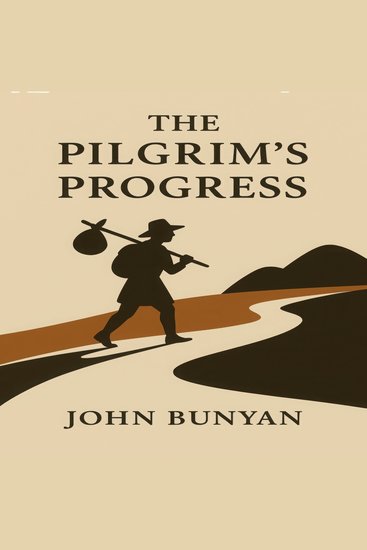
  • The Pilgrim's Progress - cover

    The Pilgrim's Progress

    John Bunyan

    • 0
    • 0
    • 0
    The Pilgrim's Progress from This World to That Which Is to Come is a Christian allegory written by John Bunyan. First published in 1678, it is considered one of the most significant works of English literature and Protestant theology.  
    The story follows Christian, a character representing everyman, as he journeys from the City of Destruction to the Celestial City, which symbolizes Heaven. Burdened by the awareness of his sins, depicted by a physical weight on his back, Christian seeks salvation. He is guided by Evangelist, who directs him to the Wicket Gate. Along his journey, Christian encounters various allegorical characters who either assist or impede his progress. Christian, an everyman character, journeys from the City of Destruction to the Celestial City (representing Heaven). Burdened by the knowledge of his sin (represented by a physical burden on his back), Christian seeks salvation. He is guided by Evangelist, who directs him to the Wicket-gate. Along his path, Christian encounters various allegorical characters who either help or hinder his progress.
    Zum Buch
  • Colonel Benyon's Entanglement - A prime example of weird fiction from one of Victorian Englands most prominent female authors - cover

    Colonel Benyon's Entanglement -...

    Mary Elizabeth Braddon

    • 0
    • 0
    • 0
    Mary Elizabeth Braddon was born in London on the 4th October 1835. 
     
    At age 5 her parents separated but her ambition to succeed was not daunted.  After being privately educated she took to acting, and the minor roles she obtained where enough to support both her and her mother.  This potential career waned as soon as she began writing and secured an income from it. 
     
    In 1860, she met John Maxwell, a publisher of periodicals, and moved in with him the following year.  At the time Maxwell was already married with five children but his wife was confined to an Irish mental asylum.  On her death they married and she had six children by him. 
     
    Braddon was prolific and wrote over 80 novels, perhaps the most famous is ‘Lady Audley's Secret’ (1862), which won her both sales and a fortune as a bestseller.  She also wrote a number of historical fiction novels which again increased her reputation. 
     
    She was equally prolific as a short story writer, primarily supernatural and ghost stories, all of which continue to be anthologized to this day, such is the high regard they are kept in. 
     
    Braddon founded Belgravia magazine in 1866, its fare being serialised sensation novels, poems, travel narratives and biographies, along with essays on fashion, history and science, all lavishly illustrated.  She also edited Temple Bar magazine. 
     
    Mary Elizabeth Braddon died on 4th February 1915 and is buried in Richmond Cemetery. 
     
    In this story Colonel Benyon returns from service abroad on sick leave to find that England is very much changed.  He accepts a friend’s invitation to take a short recuperation at his home in Cornwall, which has lain empty for some time.  The Colonel takes up the offer, but things do not go quite as planned.
    Zum Buch
  • The Ministry of Fear - cover

    The Ministry of Fear

    Graham Greene

    • 0
    • 0
    • 0
    In London during the Blitz, an amnesiac must outwit a twisted Nazi plot in this "master thriller" of espionage, murder, and deception (Time). 


    On a peaceful Sunday afternoon, Arthur Rowe comes upon a charity fete in the gardens of a Cambridgeshire vicarage where he wins a game of chance. If only this were an ordinary day. Britain is under threat by Germany, and the air raid sirens that bring the bazaar to a halt expose Rowe as no ordinary man. Recently released from a psychiatric prison for the mercy killing of his wife, he is burdened by guilt, and now, in possession of a seemingly innocuous prize, on the run from a nest of Nazi spies who want him dead. 


    Pursued on a dark odyssey through the bombed-out streets of London, he becomes enmeshed in a tangle of secrets that reach into the dark recesses of his own forgotten past. And there isn't a soul he can trust, not even himself. Because Arthur Rowe doesn't even know who he really is.
    Zum Buch
  • The Flayed Hand - cover

    The Flayed Hand

    Guy de Maupassant

    • 0
    • 0
    • 0
    Title: The Flayed Hand 
    Author: Guy de Maupassant 
    Narrator: Jonathan Dunne 
    Original Publication: 1875 
    Public Domain: Yes 
    Series Placement: Number 25 in the Timeless Terrors series 
    Description: 
    The Flayed Hand by Guy de Maupassant is a macabre tale of obsession, vengeance, and the supernatural — a chilling exploration of how the dead may reach back to punish the living. When a collector acquires a mummified human hand, said to have belonged to a murderer, he regards it as a mere curiosity. But when the relic’s gruesome history begins to manifest in reality, terror takes hold, and reason gives way to horror. 
    Maupassant’s sharp realism and psychological insight lend the story a disturbing plausibility, transforming a simple ghost tale into a meditation on guilt, possession, and the price of curiosity. 
    Narrated by Amazon bestselling horror author Jonathan Dunne, this performance captures the story’s eerie tension and mounting dread — the quiet unease of an ordinary setting pierced by the inexplicable. While the text itself resides in the public domain, this narration is an original work and copyright © 2025 Jonathan Dunne. 
    This audiobook is part of Timeless Terrors, a series devoted to reviving the dark classics of horror and the uncanny — timeless stories that still chill the blood, rendered in haunting new performances for a modern audience. 
    Listeners should prepare for a tale where curiosity becomes curse, where relics of the past refuse to rest, and where the hand of the dead may yet reach for the living.
    Zum Buch
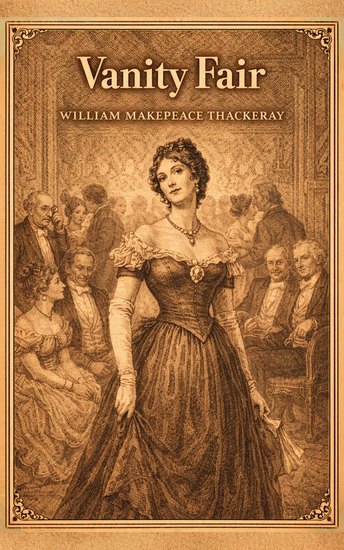
  • Vanity Fair - cover

    Vanity Fair

    William Makepeace Thackeray

    • 0
    • 0
    • 0
    Vanity Fair by William Makepeace Thackeray is a sweeping satirical masterpiece that offers a brilliant and unflinching portrait of ambition, greed, love, and social climbing in nineteenth-century England. First published in 1847–1848, this classic novel subtitled A Novel Without a Hero presents a vivid panorama of society, exposing its hypocrisies and moral contradictions with wit, irony, and sharp social observation.
    
    Set against the backdrop of the Napoleonic Wars and the rigid class structures of Victorian Britain, the story follows two contrasting women: the cunning and resourceful Becky Sharp and the gentle, kind-hearted Amelia Sedley. From their school days together to their entanglements in marriage, fortune, and scandal, their lives unfold in dramatically different ways. Through their journeys, Thackeray explores the complexities of character, revealing both virtue and vice in equal measure.
    
    Becky Sharp, one of literature's most unforgettable anti-heroines, is intelligent, charming, and fiercely determined to rise above her modest origins. With sharp wit and calculated ambition, she navigates the drawing rooms of high society, manipulating situations to secure wealth and status. Amelia, by contrast, embodies loyalty and devotion, often to her own detriment. The contrast between these two women forms the emotional and moral center of the novel.
    
    Thackeray's narrative voice is distinctive and playful, frequently addressing the reader directly and reminding us that society itself is a grand performance—a "vanity fair" where people chase wealth, prestige, and admiration. Through humor and biting satire, the novel critiques the shallow values of a world driven by appearances and self-interest.
    
    Richly populated with memorable characters—from dashing officers and aristocrats to scheming relatives and social climbers—the novel paints a detailed portrait of a society obsessed with status and success. Yet beneath the satire lies a deeper meditation on human nature, moral compromise, and the illusions people create to sustain their ambitions.
    
    Both entertaining and thought-provoking, Vanity Fair remains one of the great novels of English literature. Its enduring appeal lies in its lively storytelling, complex characters, and timeless insight into the pursuit of wealth and recognition. Thackeray's keen observations remind readers that while society may change, the human desire for admiration and advancement remains constant.
    Zum Buch