Rejoignez-nous pour un voyage dans le monde des livres!
Ajouter ce livre à l'électronique
Grey
Ecrivez un nouveau commentaire Default profile 50px
Grey
Abonnez-vous pour lire le livre complet ou lisez les premières pages gratuitement!
All characters reduced
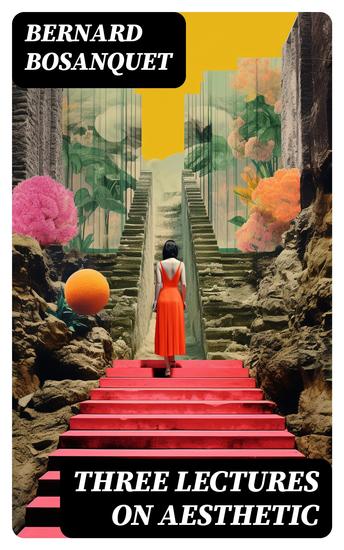
Three Lectures on Aesthetic - cover

Three Lectures on Aesthetic

Bernard Bosanquet

Maison d'édition: DigiCat

  • 0
  • 0
  • 0

Synopsis

In "Three Lectures on Aesthetic," Bernard Bosanquet embarks on an exploration of the nature of aesthetics as a philosophical discipline, deftly situating his analysis within the broader context of idealist philosophy. Bosanquet's lectures elucidate the complex interplay between beauty, art, and human perception, emphasizing the role of the observer as an active participant in experiencing art. His literary style is marked by a nuanced sophistication, reflective of the late 19th and early 20th-century aesthetic discourse, engaging with contemporaries such as Tolstoy and Ruskin, while arguing crisply against their more simplistic interpretations of art's purpose and value. Bosanquet, an influential figure in British idealism, was deeply interested in the intersection of philosophy and art, informed by his extensive education and close associations with the London School of Philosophy. His background in logic and ethics contributes richly to his arguments, enabling him to approach aesthetics not just as an artistic phenomenon but as a vital element of comprehensive human experience. This intellectual milieu, characterized by a lingering Romantic sensibility, undoubtedly shaped his innovative perspectives on artistic expression. "Three Lectures on Aesthetic" is a compelling read for anyone interested in the philosophical underpinnings of art and beauty. Bosanquet's incisive insights challenge readers to reconsider their perceptions of aesthetics, making it a vital resource for students and scholars alike. This book not only enriches the field of aesthetics but also serves as a profound reflection on the human condition through the lens of art.
Disponible depuis: 18/11/2023.
Longueur d'impression: 47 pages.
D'autres livres qui pourraient vous intéresser

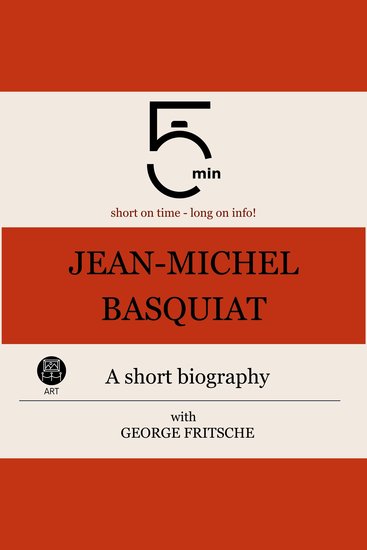
  • Jean-Michel Basquiat: A short biography - 5 Minutes: Short on time – long on info! - cover

    Jean-Michel Basquiat: A short...

    5 Minutes, 5 Minute Biographies,...

    • 0
    • 0
    • 0
    Jean-Michel Basquiat, American artist extraordinaire: Life and work in a short biography! Everything you need to know, brief and concise. Infotainment, education and entertainment at its best!
    Voir livre
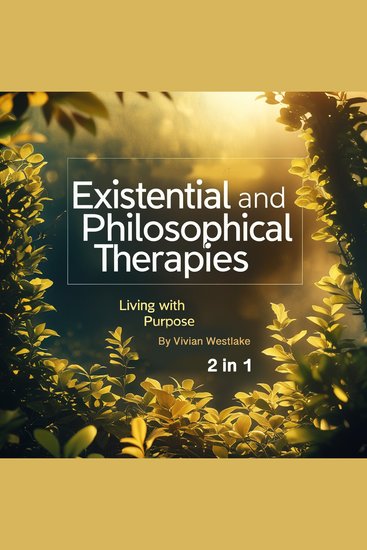
  • Existential and Philosophical Therapies - Living with Purpose (2 in 1) - cover

    Existential and Philosophical...

    Vivian Westlake

    • 0
    • 0
    • 0
    This book contains these two titles: 
    Existential Therapy - Existential therapy is a deeply philosophical approach to psychotherapy, grounded in the belief that life’s greatest challenge is navigating its inherent uncertainties while striving to create meaning. At its core, this approach invites individuals to confront the universal dilemmas of existence: freedom, responsibility, isolation, mortality, and the search for purpose. These existential concerns, though often unsettling, are also the catalysts for personal growth and transformation. 
    Reality Therapy - Reality Therapy is a therapeutic approach that emphasizes personal responsibility and focuses on the present moment, encouraging individuals to make choices that align with their true desires and values. Developed by Dr. William Glasser in the 1960s, it diverges from traditional therapeutic methods by centering on the idea that behavior is a choice and that people can gain control of their lives through conscious decisions. At the core of Reality Therapy is the concept that all behavior is purposeful and is driven by an individual's attempt to fulfill basic needs. These needs include survival, love and belonging, power, freedom, and fun. When people feel that these needs are unmet, they often engage in behaviors that are designed to satisfy them, even if those behaviors are not helpful or productive. Reality Therapy challenges individuals to evaluate whether their current behaviors are effective in meeting these needs and whether they are serving their long-term goals.
    Voir livre
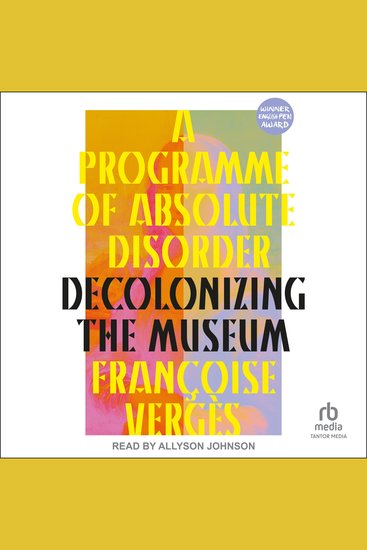
  • A Programme of Absolute Disorder - Decolonizing the Museum - cover

    A Programme of Absolute Disorder...

    Françoise Vergès, Paul Gilroy

    • 0
    • 0
    • 0
    "A complete overhaul of the Western museum tradition" —Publishers Weekly 


    "An impressive critique of the universal museum as complicit in the damages inflicted by colonial power" —Isaac Julien, artist and filmmaker 


    "Should fascinate anyone interested in social justice, post-colonialism and the arts" —Euronews 


    "Powerful and so relevant" —Diacritik 


    The Western museum is a battleground—a terrain of ideological, political, and economic contestation. Almost everyone today wants to rethink the museum, but how many have the audacity to question the idea of the universal museum itself? 


    In A Programme of Absolute Disorder, Françoise Vergès puts the museum in its place. Exploring the Louvre's history, she uncovers the context in which the universal museum emerged: as a product of colonialism, and of Europe's self-appointed claim to be the guardian of global heritage. 


    Vergès outlines a radical horizon: to truly decolonize the museum is to implement a "programme of absolute disorder", inventing other ways of apprehending the human and non-human world that nourish collective creativity and bring justice and dignity to the dispossessed.
    Voir livre
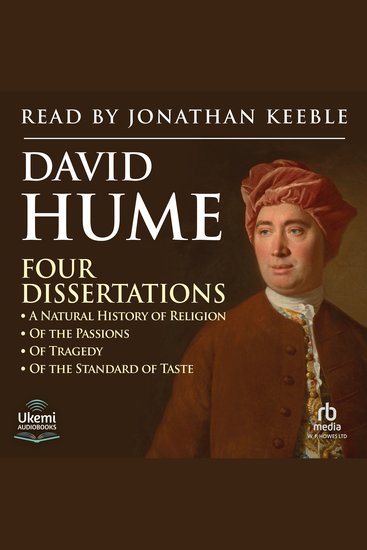
  • Four Dissertations - A Natural History of Religion Of the Passions Of Tragedy Of the Standard of Taste - cover

    Four Dissertations - A Natural...

    David Hume

    • 0
    • 0
    • 0
    David Hume (1711-1776) remains one of the most stimulating and entertaining writers in the English essay tradition. Though primarily known for long-form writings, he was adept at taking one subject and looking at it in a more concise but accessible manner. 
    Hume devoted his life to study – across a wide range of his personal interests, reflecting his background in philosophy, history, economics, and many other subjects. This can be clearly seen in Four Dissertations (1757) and the topics he chose to consider. 
     
    Of these, The Natural History of Religion is the most well-known and widely quoted. Hume’s views, shaped by empiricism and scepticism, enables him to offer a perspective unusual for his age, though naturally it is embedded in the prevailing view ‘The whole frame of nature bespeaks an intelligent author’. Nevertheless, this does not restrict his thinking as he examines the psychological and sociological factors that shape religious sentiment. 
     
    The other three Dissertations are no less fascinating. Fittingly, in Of The Passions, Hume delves into the complex realm of human emotions. Investigating the nature of desire, love, fear, and more, he presents a wide-ranging study of how passions influence our actions and shape our experiences. 
     
    Of Tragedy, explores the aesthetics of dramatic art. Hume looks into the power of tragedy to elicit a passionate response and provoke contemplation. He examines the mechanisms by which tragedies captivate audiences and evoke a range of sentiments, shedding light on the profound impact of art on human consciousness. 
     
    In Of the Standard of Taste, Hume takes the viewpoint of the beholder, rather than the object. Declaring ‘We are apt to call barbarous whatever departs widely from our own taste and apprehension,’ he proposes that two elements, sentiment and critical faculty form a major part in decisions on taste. For “Beauty is no quality in things themselves: It exists merely in the mind which contemplates them; and each mind perceives a different beauty.” But such a subjective view cannot deny a certain consensus on beauty, which leads Hume to examine the matter of aesthetics in the light of judgements of established critics. 
     
    This recording concludes with Hume’s two short autobiographies, written at different times in his life and with differing characteristics. The first, A Kind of Life (1734) is a letter written to a doctor and the second, My Own Life (1776) was written shortly before his death.
    Voir livre
  • Epic Wins for ADHD Kids - 77 Playful Games and Tasks to Sharpen the Minds of ADHD Children Help Them Thrive! - cover

    Epic Wins for ADHD Kids - 77...

    Henrietta Shepard

    • 0
    • 0
    • 0
    From Clueless to Carefree:  
    Essential Strategies for Kids with ADHD! 
    Wondering what are the telltale signs that a child has ADHD?  
    Got a kid often bouncing off the walls, can't focus and you didn't know what to do?  
    Needs some guidance about ADHD and a modern take on how to manage it?  
    Having a child with ADHD can be a handful, and sometimes troublesome if not handled with extra care. But don't fret, Having this condition is not a life sentence. With proper care and guidance, having to deal with ADHD is just a walk in the park!  
    Let Henrietta Shepard be your companion in this energy-packed journey. In her latest book, "Epic Wins for ADHD Kids”, she will tackle the everyday struggles of having a child with ADHD, providing proven tips and strategies derived from her personal experience. Buckle up, you're up to a wild ride!  
    Having ADHD is not a bad thing. Let "Epic Wins for ADHD Kids" be your trusty sidekick for this awesome journey. Sure there will be bumps ahead of the road, but with proper guidance and lots of encouragement, having ADHD is nothing but an extra title. Embrace it with ease!  
    Get Yours Today! 
    Voir livre
  • The Soviet Famine of 1932-1933 - Stalin's Harvest of Despair - cover

    The Soviet Famine of 1932-1933 -...

    Sarah Willards

    • 0
    • 0
    • 0
    The Soviet famine of 1932-1933, one of the most devastating events in Soviet history, can be traced back to the aggressive agricultural policies enforced under Joseph Stalin’s leadership. The roots of the famine lay in the drastic changes to agriculture during the late 1920s and early 1930s, particularly the forced collectivization campaign, which aimed to reshape the entire agricultural sector to fit the needs of the Soviet state. This chapter explores the key policies that set the stage for the disaster that would unfold in the early 1930s. 
    The first step towards the famine was the rise of collectivization, a policy introduced by Stalin to consolidate individual farms into large, state-controlled collective farms. The goal was to increase agricultural productivity and provide the state with a surplus of grain to fuel industrialization. However, this policy met with widespread resistance from peasants who feared losing their land and livelihood. In response, the Soviet government resorted to violent measures to force peasants to join collective farms, including the execution or deportation of so-called "kulaks"—wealthier peasants—whom the regime labeled as class enemies. 
    Alongside collectivization, Stalin’s government implemented harsh grain procurement quotas. These quotas demanded that peasants surrender large portions of their harvest to the state at low prices, which were often below the cost of production. The policy was particularly detrimental to regions with fertile land, where the government set even higher quotas to maximize exports, often at the expense of local populations. The pressure to meet these quotas, combined with the challenges of collectivized farming, led to a dramatic reduction in food available for local consumption.
    Voir livre