Begleiten Sie uns auf eine literarische Weltreise!
Buch zum Bücherregal hinzufügen
Grey
Einen neuen Kommentar schreiben Default profile 50px
Grey
Jetzt das ganze Buch im Abo oder die ersten Seiten gratis lesen!
All characters reduced
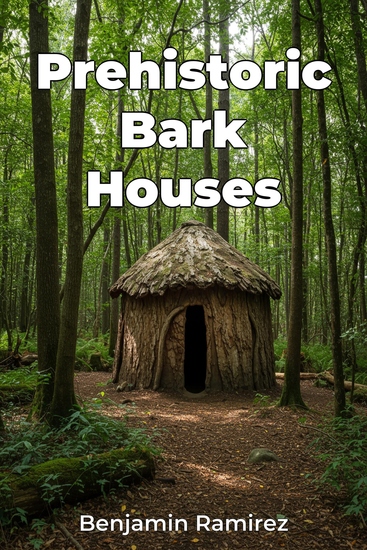
Prehistoric Bark Houses - cover

Prehistoric Bark Houses

Benjamin Ramirez

Übersetzer A AI

Verlag: Publifye

  • 0
  • 0
  • 0

Beschreibung

Prehistoric Bark Houses explores the ingenious architecture of bark dwellings crafted by indigenous communities worldwide. These structures, far from being primitive, showcase a deep understanding of resource management and environmental adaptation. For example, bark's use as an insulator demonstrates ancient knowledge of thermal regulation, predating modern insulation techniques. These dwellings also functioned as portable habitats, adaptable to various climates and needs, displaying an impressive mastery of sustainable housing.

 
The book examines the diverse designs and materials employed in bark house construction across different geographic regions, from temperate forests to coastal areas. It reveals how indigenous building practices adapted to specific environments, offering valuable insights into human-environment relationships. Through archaeological evidence, ethnographic accounts, and architectural analysis, the book demonstrates how these bark houses represent a sophisticated building tradition worthy of recognition.

 
By integrating knowledge from anthropology, archaeology, and sustainable design, Prehistoric Bark Houses challenges conventional notions of architectural progress. The book unfolds by first introducing fundamental construction principles, then delving into case studies. Finally, it synthesizes findings to highlight the broader implications of bark house architecture for sustainable building, making a compelling case for the relevance of indigenous knowledge in contemporary architectural discourse and cultural preservation.
Verfügbar seit: 29.03.2025.
Drucklänge: 55 Seiten.

Weitere Bücher, die Sie mögen werden

  • Co-writing a Book - Collaboration and Co-creation for Authors - cover

    Co-writing a Book -...

    Joanna Penn, J. Thorn

    • 0
    • 0
    • 0
    This recording has been digitally produced by DeepZen Limited, using a synthesized version of an audiobook narrator’s voice under license. DeepZen uses Emotive Speech Technology to create digital narrations that offer a similar listening experience to human narration.  
     
    Co-writing can be an amazing experience when two minds come together to create something new in the world. Or it can be a painful process that ends in disaster! In this short book, bestselling authors J. Thorn and Joanna Penn share tips on how to successfully co-write a book and avoid the pitfalls along the way. It includes excerpts from their private co-writing diary, honest notes written every day on a fiction project that will help you on your own journey, and a sample co-writing agreement. 
     
    In this book, you will discover:  
    What is co-writing? 
    Benefits of co-writing 
    The difficulties of co-writing 
    Finding the right person to co-write with 
     
    Before you start:  
    Written legal agreement 
    Practicalities and process of co-writing and co-creation 
    Excerpts from Risen Gods co-writing diary 
    What happens if it goes wrong? 
    Other types of collaboration and co-creation 
    Tips for multi-author boxsets 
    Tips for managing a multi-author collaboration 
     
    Thoughts on a four author collaboration:  
    Authors on a Train from Chicago to New Orleans 
     
    Appendix 1:  
    Example agreement 
     
    If you want to improve your writing skills and your productivity, co-writing might be the right thing for you. Download a sample and try the book now.
    Zum Buch
  • The Secret History - cover

    The Secret History

    Procopius

    • 0
    • 0
    • 0
    Procopius appeared to be a loyal part of the Byzantine establishment, his official writing glorifying the deeds of the Emperor Justinian (d. AD 565). However, he also produced a work that he knew could never be published within the Emperor’s lifetime: The Secret History, a vitriolic indictment of the rule of Justinian and his wife Theodora.In The Secret History, the general Belisarius is presented as an idiot who is manipulated by his conniving wife Antonina, while the Emperor is depicted as a demon king, a dishonest and autocratic destroyer of established institutions. The Empress Theodora doesn’t escape Procopius’ invective – she is portrayed as the antithesis of the traditional Roman matron: depraved, brutal and bloodthirsty.
    Zum Buch
  • Nerva-Antonine Dynasty The: The History and Legacy of the Emperors Who Ruled the Roman Empire at Its Peak - cover

    Nerva-Antonine Dynasty The: The...

    Editors Charles River

    • 0
    • 0
    • 0
    “The Five Good Emperors,” a reference to the five emperors who ruled the Roman Empire between 96 and 180 CE (Nerva, Trajan, Hadrian, Antoninus Pius, and Marcus Aurelius), was a term first coined by Machiavelli and later adopted and popularized by historian Edward Gibbon, who said that under these men, the Roman Empire “was governed by absolute power under the guidance of wisdom and virtue.”  
    	This period of 84 years is generally regarded as the high point of the Roman Empire, at least after Augustus, but what is uncertain and a matter of ongoing debate is whether the five emperors were personally responsible for the situation and the accompanying prosperity enjoyed throughout the empire at the time or if they were simply the beneficiaries of the Pax Romana, inaugurated by Augustus in the early part of the 1st century CE. In other words, historians have wondered whether anyone in power during those years would have enjoyed the same rewards.  
    	The description of these rulers as “good” is also a matter of interpretation, with some scholars suggesting they were only “good” in comparison to the preceding emperor (Domitian) and the emperor who followed Marcus Aurelius (Commodus). Both of them were horrible rulers in every aspect, making their near contemporaries look all the better.  
    	Regardless, it is clear that the era of the Five Good Emperors was one of unparalleled success and wealth, and the reasons Rome reached its zenith at this time are worthy of scrutiny. Perhaps most noteworthy is that none of these five emperors were blood relatives - while the final two are often referred to as the Antonines, they were not, in fact, related except by adoption, a practice that may in itself provide at least part of the answer to the question as to why this particular period was so magnificent.
    Zum Buch
  • Holding Onto Air - The Art and Science of Building a Resilient Spirit - cover

    Holding Onto Air - The Art and...

    Michele DeMarco

    • 0
    • 0
    • 0
    A top mental health writer, trauma researcher, and survivor illuminates the dual nature of loss-the science behind it and art of transforming it with a breakthrough book and truly holistic approach. 
     
    After experiencing two rare heart attacks at the age of 33-and a third a decade later, DeMarco knows trauma intimately. Trauma breaks your relationship with time by upending your expectations, fracturing your memories and identity, and destroying your innocence. 
     
    With poignant wisdom and refreshing insight DeMarco explodes traditional myths of resilience and shows what it takes to thrive through any of life's challenges. DeMarco situates meaningful challenge and loss specifically in the context of "lost innocence," and challenges common notions that we can think our way out of despair and back to a "normal" happy life when the unimaginable shatters it. 
     
    Leveraging advances in emotion science, somatic psychology, neuroscience, and trauma, Holding Onto Air brings the body and spirit into the solution, as much as the mind, and so presents a truly integrated, "whole person" approach to recovering from lost innocence and building resilience. It also makes spirit accessible for anyone of any background or belief-or no aligned belief. 
     
    More than a rudimentary map for navigating grief and loss' rocky terrain (with tired tropes and shop-worn strategies), DeMarco offers a unique and trusted guide for an arduous journey every human being will have to face-the realization of evil, pain, or mortality that occurs after a person experiences trauma.
    Zum Buch
  • Stranger Things Psychology - Life Upside Down - cover

    Stranger Things Psychology -...

    Travis Langley

    • 0
    • 0
    • 0
    Monsters of the Upside Down, beware! Travis Langley (author of the acclaimed Batman and Psychology) returns with a group of expert contributors to explore these and other questions to shine a light on true human nature through the Netflix series and cultural phenomenon Stranger Things. When do feelings of grief, guilt, depression, fear, and isolation tear us down, and how do we transform them into hope, inspiration, forgiveness, acceptance, and motivation to do what's right? Growing up is hard enough without metaphors for the dangers that lurk in life's shadows springing to life in the form of monsters, villains, conspiracies, and enemy soldiers. Stranger Things Psychology: Life Upside Down descends into the dark side of adolescence to find the light on the other side of the ultimate coming-of-age story.
    Zum Buch
  • Foundational Existential Thinkers - Early Reflections on Freedom Existence and Meaning (2 in 1) - cover

    Foundational Existential...

    Hector Davidson

    • 0
    • 0
    • 0
    This book contains these titles: 
    Kierkegaard - Søren Kierkegaard, often regarded as the father of existentialism, was born on May 5, 1813, in Copenhagen, Denmark. His early life was marked by tragedy, as his mother died when he was just a child, and his father, a deeply religious man, instilled in him a sense of guilt and the weight of existential questioning. Kierkegaard’s relationship with his father deeply influenced his philosophical development, particularly in his exploration of faith, despair, and the individual's relationship with God. 
    Jean-Paul Sartre - Jean-Paul Sartre, a towering figure in 20th-century philosophy, is perhaps best known for his development of existentialism, a school of thought that emphasizes individual freedom, choice, and the creation of meaning in an otherwise indifferent universe. Sartre’s philosophy arises from the existentialist tradition but distinguishes itself through its rigorous approach to human freedom and responsibility. At the heart of Sartre's thought is the idea that human beings are condemned to be free, burdened with the constant task of making choices without any external justification or predetermined essence.
    Zum Buch