Begleiten Sie uns auf eine literarische Weltreise!
Buch zum Bücherregal hinzufügen
Grey
Einen neuen Kommentar schreiben Default profile 50px
Grey
Jetzt das ganze Buch im Abo oder die ersten Seiten gratis lesen!
All characters reduced
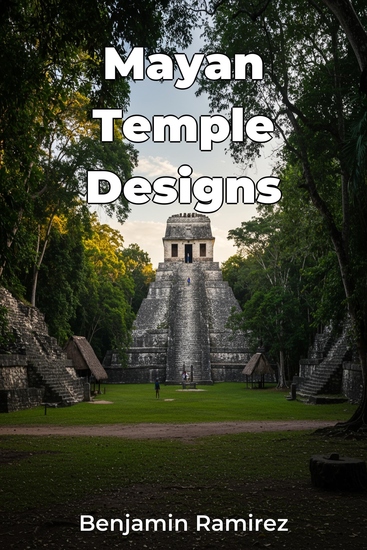
Mayan Temple Designs - cover

Mayan Temple Designs

Benjamin Ramirez

Übersetzer A AI

Verlag: Publifye

  • 0
  • 0
  • 0

Beschreibung

Mayan Temple Designs explores the sophisticated mathematical and astronomical knowledge embedded within Mayan temples, revealing how these structures were more than just places of worship. 

 
The book uncovers the meticulous planning that allowed the Maya to align their temples with celestial events, demonstrating their deep understanding of calendars, cycles, and the cosmos. 

 
Intriguingly, the Maya achieved astonishing precision in their architecture despite lacking metal tools or the wheel. 

 
The book examines specific temple designs at sites like Palenque, Tikal, and Chichen Itza, revealing how mathematical ratios and geometric shapes were incorporated. 

 
It begins with Mayan mathematics, then analyzes temple designs and culminates with the implications of Mayan architectural precision in their society. This approach highlights the Maya's ability to integrate science, religion, and artistic expression.
Verfügbar seit: 04.03.2025.
Drucklänge: 63 Seiten.

Weitere Bücher, die Sie mögen werden

  • Ways of Eating - Exploring Food through History and Culture - cover

    Ways of Eating - Exploring Food...

    Merry White, Benjamin Aldes Wurgaft

    • 0
    • 0
    • 0
    What we learn when an anthropologist and a historian talk about food. 


    From the origins of agriculture to contemporary debates over culinary authenticity, Ways of Eating introduces listeners to world food history and food anthropology. Through engaging stories and historical deep dives, Benjamin A. Wurgaft and Merry I. White offer new ways to understand food in relation to its natural and cultural histories and the social rules that shape our meals. 


    Wurgaft and White use vivid storytelling to bring food practices to life, weaving stories of Panamanian coffee growers, medieval women beer makers, and Japanese knife forgers. From the Venetian spice trade to the Columbian Exchange, from Roman garum to Vietnamese nuoc cham, Ways of Eating provides an absorbing account of world food history and anthropology. Migration, politics, and the dynamics of group identity all shape what we eat, and we can learn to trace these social forces from the plate to the kitchen, the factory, and the field.
    Zum Buch
  • Existentialism: Philosophical and Literary Works - Notes from Underground Fear and Trembling Ecce Homo The Metamorphosis and others - cover

    Existentialism: Philosophical...

    Fyodor Dostoevsky, Søren...

    • 0
    • 0
    • 0
    "Existentialism: Philosophical and Literary Works" is a compelling anthology that delves into the realm of existentialist thought, exploring the profound philosophical and literary works that have shaped this influential movement. From the psychological depths of Fyodor Dostoevsky's "Notes from Underground" to the existential dilemmas of Søren Kierkegaard's "Fear and Trembling," and the introspective reflections of Friedrich Nietzsche's "Ecce Homo," this collection encompasses a wide range of existentialist voices.Through thought-provoking narratives and philosophical musings, the selected works explore fundamental existential themes such as individuality, freedom, authenticity, despair, and the search for meaning in an uncertain world. Franz Kafka's "The Metamorphosis" takes readers on a surreal journey through the absurdity of existence.Spanning across different literary styles and historical periods, these works offer readers an immersive experience into the complexities of existentialism. They challenge conventional norms, question the nature of reality, and invite readers to grapple with existential questions that lie at the core of human existence. "Existentialism: Philosophical and Literary Works" serves as a valuable resource for students, scholars, and enthusiasts seeking a comprehensive understanding of existentialist philosophy and its interplay with literature. It provides a nuanced exploration of existentialism's key ideas through diverse voices, encouraging readers to engage with the philosophical and existential dilemmas that shape our understanding of self, society, and the human condition.Contents:Fyodor Dostoevsky. Notes from UndergroundSoren Kierkegaard. Fear and TremblingSoren Kierkegaard. Philosophical FragmentsSoren Kierkegaard. Sickness Unto DeathFriedrich Nietzsche. Ecce Homo: How One Becomes What One IsRainer Maria Rilke. PoemsFranz Kafka. The Metamorphosis
    Zum Buch
  • Onigamiising - Seasons of an Ojibwe Year - cover

    Onigamiising - Seasons of an...

    Linda LeGarde Grover

    • 0
    • 0
    • 0
    Long before it came to be known as Duluth, the land at the western tip of Lake Superior was known to the Ojibwe as Onigamiising, "the place of the small portage." There the Ojibwe lived in keeping with the seasons, moving among different camps for hunting and fishing, for cultivating and gathering, for harvesting wild rice and maple sugar. In Onigamiising Linda LeGarde Grover accompanies us through this cycle of the seasons, one year in a lifelong journey on the path to Mino Bimaadiziwin, the living of a good life. 


    In fifty short essays, Grover reflects on the spiritual beliefs and everyday practices that carry the Ojibwe through the year and connect them to this northern land of rugged splendor. As the four seasons unfold—from Ziigwan (Spring) through Niibin and Dagwaagin to the silent, snowy promise of Biboon—the award-winning author writes eloquently of the landscape and the weather, work and play, ceremony and tradition and family ways, from the homey moments shared over meals to the celebrations that mark life's great events. Now a grandmother, a Nokomis, beginning the fourth season of her life, Grover draws on a wealth of stories and knowledge accumulated over the years to evoke the Ojibwe experience of Onigamiising, past and present, for all time.
    Zum Buch
  • Glossy - The inside story of Vogue - cover

    Glossy - The inside story of Vogue

    Nina-Sophia Miralles

    • 0
    • 0
    • 0
    Vogue magazine started, like so many great things do, in the spare room of someone's house. But unlike other such makeshift projects that flare up then fizzle away, Vogue burnt itself onto our cultural consciousness. 


    Today, 128 years later, Vogue spans twenty-two countries, has an international print readership upwards of twelve million, and nets over sixty-seven million monthly online users. Uncontested market leader for a century, it is one of the most recognizable brands in the world and a multi-million dollar money-making machine. It is not just a fashion magazine, it is the establishment. But what—and more importantly who—made Vogue such an enduring success? 


    Glossy will answer this question and more by tracing the previously untold history of the magazine, from its inception as a New York gossip rag, to the sleek, corporate behemoth we know now. This will be a biography of Vogue in every sense of the word, taking the listener through three centuries, two world wars, plunging failures, and blinding successes, as it charts the story of the magazine and those who ran it.
    Zum Buch
  • Australian Frontier Wars The: The History of the Conflicts Between Indigenous Groups and Colonists across Australia - cover

    Australian Frontier Wars The:...

    Editors Charles River

    • 0
    • 0
    • 0
    A land of almost 3 million square miles has lain since time immemorial on the southern flank of the planet, so isolated that it remained entirely outside of European knowledge until 1770. However, the first human footprints on this vast territory were felt 70,000 years earlier, as people began to cross the periodic land bridges and the short sea crossings from Southeast Asia. 
    The history of the indigenous inhabitants of Australia, known in contemporary anthropology as the “Aboriginal and Torres Strait Islander people of Australia,” is a complex and continually evolving field of study, and it has been colored by politics. For generations after the arrival of whites in Australia, the Aboriginal people were disregarded and marginalized, largely because they offered little in the way of a labor resource, and they occupied land required for European settlement. 
    At the same time, it is a misconception that indigenous Australians meekly accepted the invasion of their country by the British, for they did not. They certainly resisted, but as far as colonial wars during that era went, the frontier conflicts of Australia did not warrant a great deal of attention. Indigenous Australians were hardly a warlike people, and without central organization, or political cohesion beyond scattered family groups, they succumbed to the orchestrated advance of white settlement with passionate, but futile resistance. In many instances, aggressive clashes between the two groups simply gave the white colonists reasonable cause to inflict a style of genocide on the Aborigines that stood in the way of progress. 
    Zum Buch
  • The Emerald Tablets of Thoth the Atlantean - cover

    The Emerald Tablets of Thoth the...

    Doreal

    • 0
    • 0
    • 0
    The history of the tablets translated in the following pages is strange and beyond modern scientists' comprehension. Their age is astounding, dating back 36,000 years B.C. Thoth is an Atlantean Priest-King who established a colony in ancient Egypt after the mother country was sunk. He was the builder of the Great Pyramid of Giza, which has been incorrectly attributed to Cheops. He included his knowledge of ancient wisdom as well as securely hidden records and instruments from ancient Atlantis. 
    From approximately 50,000 B.C. to 36.000 B.C., he ruled the ancient race of Egypt for approximately 16,000 years. The ancient barbarous race among which he and his followers had settled had advanced to a high level of civilization at the time. Thoth was immortal, that is, he had defeated death, passing only when he wished and not through death. His vast knowledge elevated him to the throne of the various Atlantean colonies, including those in South and Central America. 
    When the time came for him to leave Egypt, he built the Great Pyramid over the entrance to the Great Halls of Amenti, placed his records inside, and appointed guards from among the highest of his people to guard his secrets. The descendants of these guards later became the pyramid priests, through whom Thoth was deified as the God of Wisdom, The Recorder, by those living in the age of darkness that followed his death. The halls of Amenti were transformed into the underworld, the Halls of the Gods, where the soul passed after death for judgment. 
    The ego of Thoth passed into the bodies of men in later ages, as described in the tablets. As a result, he incarnated three times, the last time as Hermes, the thrice-born. In this incarnation, he left the Emerald Tablets, a later and far less complete exposition of the ancient mysteries.
    Zum Buch