Rejoignez-nous pour un voyage dans le monde des livres!
Ajouter ce livre à l'électronique
Grey
Ecrivez un nouveau commentaire Default profile 50px
Grey
Abonnez-vous pour lire le livre complet ou lisez les premières pages gratuitement!
All characters reduced
Fashion Industry Revolts - cover

Fashion Industry Revolts

Benjamin Ramirez

Traducteur A AI

Maison d'édition: Publifye

  • 0
  • 0
  • 0

Synopsis

Fashion Industry Revolts uncovers the untold stories of dissent and upheaval that have shaped the fashion industry. Examining moments of protest, the book reveals how garment workers, counter-cultural movements, and advocates for ethical fashion have challenged the status quo. Did you know that the Industrial Revolution significantly impacted clothing styles and labor practices? Or that movements like punk rock directly influenced alternative aesthetics and social rebellion in fashion? This book offers a fresh perspective on fashion history, moving beyond designer biographies to explore the broader social, economic, and political forces at play.

 
The book's unique value lies in its focus on collective action and bottom-up change, rather than solely on individual designers. It begins by introducing key concepts like fast fashion and labor exploitation. Then, it progresses through historical protests by garment workers, the impact of counter-cultural movements, and the rise of sustainable fashion. Drawing on archival research, primary sources, and interviews, it demonstrates that genuine change arises from challenging established norms.

 
Ultimately, Fashion Industry Revolts connects fashion to labor history, sociology, and environmental studies, empowering readers to become active participants in creating a more just and sustainable fashion future. By understanding the revolts that have already occurred, consumers, designers, and policymakers can contribute to positive change within the fashion industry.
Disponible depuis: 24/02/2025.
Longueur d'impression: 64 pages.


D'autres livres qui pourraient vous intéresser

  • Dome of the Rock The: The History of the Oldest Islamic Shrine in Jerusalem - cover

    Dome of the Rock The: The...

    Charles River Editors

    • 0
    • 0
    • 0
    Among the world’s most recognizable man-made structures, the Dome of the Rock – known in Arabic as the Qubbat as-Sakara – is also one of its most mysterious. Although much of the Dome’s construction, reconstruction, and later additions are well-known from historical texts and archeological work, what it represents, why it was built where it was, and even its use remain the subject of scholarly controversy. Known for its immense size and beauty, and also for being located in the middle of Jerusalem, one of the world’s holiest cities, the Dome of the Rock has been the focus of political leaders who wished to legitimize their rule, religious warriors who believed that it empowered their weapons, and pilgrims who thought it was a site of salvation and enlightenment. As it drew these often diverse and sometimes disparate people to it, it has served the purposes of devout Jews, Muslims, and Christians, who -- although often not peacefully sharing the site -- seem to recognize its spiritual importance. 
    The Dome of the Rock has been many things to many people over the centuries, and historians, art historians, and archaeologists have studied the Dome of the Rock and its background extensively. Academics have created an accurate chronology of its life, as well as details about how the monument was built, including the construction and artistic techniques that were used. The dome was built on the site of what is believed to have been the Solomonic Temple that the Israelites built to worship their god, Yahweh, setting the stage for the entire area to be a holy site for the Abrahamic religions over the following centuries. Historians believe that the Umayyad Muslims saw this background as a prime location to build one of the greatest religious complexes in the Islamic world.
    Voir livre
  • Artificial Intelligence - Opportunities and Challenges in the Age of Intelligent Technology - cover

    Artificial Intelligence -...

    J.C.Lesko

    • 0
    • 0
    • 0
    Artificial intelligence has been a cornerstone of human imagination for decades. Once a concept limited to the realms of science fiction, it has now become a pervasive reality. From the devices in our homes to the algorithms shaping industries, AI is redefining what is possible, often faster than we can adapt. It is a technology that excites, inspires, and sometimes unnerves us – capturing the promise of innovation and the challenges of profound change. 
    As the author of this book, my journey into the world of AI began with a simple question: What does it mean for humanity to coexist with intelligent technology? This question led me down a path of discovery, one that revealed not only the fascinating mechanics of AI but also the intricate interplay between technology and society. 
    This book is not an argument for or against artificial intelligence. It is an exploration – a chance to understand how AI emerged, how it works, and what its presence means for our world.  
    Whether you are a curious learner, a technology enthusiast, or someone navigating AI’s growing presence in everyday life, this book is for you.
    Voir livre
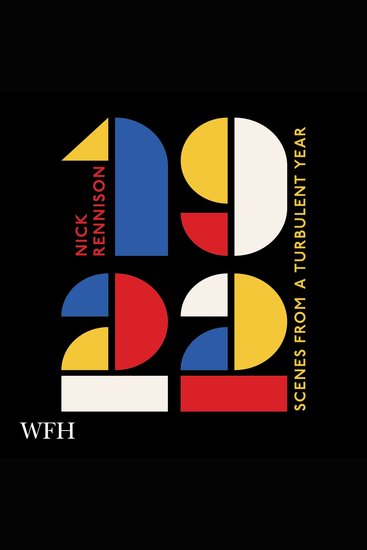
  • 1922: Scenes from a Turbulent Year - Scenes from a Turbulent Year - cover

    1922: Scenes from a Turbulent...

    Nick Rennison

    • 0
    • 0
    • 0
    1922 was a year of great turbulence and upheaval. Its events reverberated throughout the rest of the twentieth century and still affect us today, 100 years later. 
     
    Empires fell. The Ottoman Empire collapsed after more than six centuries. The British Empire had reached its greatest extent but its heyday was over. The Irish Free State was declared and demands for independence in India grew. New nations and new politics came into existence. The Soviet Union was officially created and Mussolini's Italy became the first Fascist state. 
     
    In the USA, Prohibition was at its height. The Hollywood film industry, although rocked by a series of scandals, continued to grow. A new mass medium - radio - was making its presence felt and, in Britain, the BBC was founded. In literature it was the year of peak modernism. Both T. S. Eliot's The Waste Land and James Joyce's Ulysses were first published in full. 
     
    In society, already changed by the trauma of war and pandemic, the morals of the past seemed increasingly outmoded; new ways of behaving were making their appearance. The Roaring Twenties had begun to roar and the Jazz Age had arrived. 
     
    1922 also saw the discovery of Tutankhamun's tomb, the arrest of Mahatma Gandhi, the death of Marcel Proust, the election of a new pope, the release of the first major vampire movie, and the brief imprisonment in Munich of an obscure right-wing demagogue named Adolf Hitler. 
     
    In a sequence of vivid sketches, Nick Rennison conjures up all the drama and diversity of an extraordinary year. 
     
    "Its eclecticism worked brilliantly... tremendous, beguiling." WILLIAM BOYD
    Voir livre
  • The American Imperative - Reclaiming Global Leadership through Soft Power - cover

    The American Imperative -...

    Daniel F. Runde

    • 0
    • 0
    • 0
    It's time for America to get back in the international leadership game. 


    What should our global strategy look like in an age of renewed great power competition? And what must America offer to a newly empowered developing world when we're no longer the only major player? 


    In The American Imperative, international development expert Daniel Runde makes the case for building a new global consensus through vigorous internationalism and the judicious use of soft power. Runde maps out many of the steps that we need to take—primarily in the non-military sphere—to ensure an alliance of stable and secure, like-minded, self-reliant partner nations in order to prevent rising authoritarian powers such as China from running the world.
    Voir livre
  • Stories on lord Shiva series 26 - From various sources of Shiva Purana - cover

    Stories on lord Shiva series 26...

    Anusha HS

    • 0
    • 0
    • 0
    Lord shiva is adi and he is only the anthya. He is the sole reason for the happenings in both the movable and immovable worlds. Therefore, it is said that not even a spring of grass will move without his permission. He is the one who has given life to all the creatures. He is also the one who takes away the lives of all the creatures. Sadhus sages and aghoraas practice severe penance without minding day and night on Lord Shiva. 
    He blesses his devotees with boons. He is called Bole Shankar. All recite his five syllabled mantra or panchakshari mantra " om Namah Shivaya" which is the most popular one among all the other mantras. Lord Shiva who is also called Parameswara is the one who has got no birth and death. He is only the beginning and he is the end. Nandi which happens to be the vehicle of Lord Shiva is a bull.
    Voir livre
  • River of Lakes - A Journey on Florida's St Johns River - cover

    River of Lakes - A Journey on...

    Bill Belleville

    • 0
    • 0
    • 0
    First explored by naturalist William Bartram in the 1760s, the St. Johns River stretches 310 miles along Florida's east coast, making it the longest river in the state. The first "highway" through the once wild interior of Florida, the St. Johns may appear ordinary, but within its banks are some of the most fascinating natural phenomena and historic mysteries in the state. The river, no longer the commercial resource it once was, is now largely ignored by Florida's residents and visitors alike. 


    In the first contemporary book about this American Heritage River, Bill Belleville describes his journey down the length of the St. Johns, kayaking, boating, hiking its riverbanks, diving its springs, and exploring its underwater caves. He rediscovers the natural Florida and establishes his connection with a place once loved for its untamed beauty. Belleville involves scientists, environmentalists, fishermen, cave divers, and folk historians in his journey, soliciting their companionship and their expertise. River of Lakes weaves together the biological, cultural, anthropological, archaeological, and ecological aspects of the St. Johns, capturing the essence of its remarkable history and intrinsic value as a natural wonder.
    Voir livre