Begleiten Sie uns auf eine literarische Weltreise!
Buch zum Bücherregal hinzufügen
Grey
Einen neuen Kommentar schreiben Default profile 50px
Grey
Jetzt das ganze Buch im Abo oder die ersten Seiten gratis lesen!
All characters reduced
Comb Grooming Tool - cover

Comb Grooming Tool

Benjamin Ramirez

Übersetzer A AI

Verlag: Publifye

  • 0
  • 0
  • 0

Beschreibung

Comb Grooming Tool explores the surprisingly rich history of the comb, revealing its evolution from ancient times to the present day. More than just a hair grooming implement, the comb provides insights into cultural values, technological innovation, and our enduring fascination with self-presentation. For example, early combs made from bone and shell demonstrate resourcefulness, while the shift to mass-produced plastic combs reflects industrial advancements and changing social norms.

 
The book examines the comb's journey across different eras, beginning with ancient civilizations and progressing through the medieval period, the Renaissance, and the Industrial Revolution. It analyzes how the design, materials, and cultural significance of combs have transformed over time, mirroring shifts in societal values and technological capabilities.

 
The book adopts an interdisciplinary approach, drawing from archaeology, anthropology, material science, and design studies to provide a holistic understanding of this everyday object.
Verfügbar seit: 27.02.2025.
Drucklänge: 56 Seiten.

Weitere Bücher, die Sie mögen werden

  • Liberty and Crisis: The History of the American Revolution during 1776 - cover

    Liberty and Crisis: The History...

    Editors Charles River

    • 0
    • 0
    • 0
    Although the Declaration of Independence is now considered one of the most important political documents in history, the men that drafted it did not initially favor such a move at the start of the American Revolution. Despite its assumption of governing duties, the Second Continental Congress never intended, at least initially, to become the governing body of a new nation. Instead, it merely hoped to transform the relationship between Britain and her colonies to allow for greater self-government on their side of the Atlantic. Separation between the two was rarely favored, and this initial sentiment coalesced into the Olive Branch Petition, which sought a reasonable motion of reconciliation between George III and the colonies. It was drafted by one of Virginia’s delegates, Thomas Jefferson.  
    	By April of 1776, talk had heated up concerning independence, and a consensus was quickly growing in Congress. However, one problem was in the way: did the Congress have the authority to declare independence for its 13 member colonies? The process was riddled with confusion across the colonies. independence. And of course, simply declaring independence did not mean the British were going to grant it, and during that time, things were looking quite dire for the cause. After the siege of Boston forced the British to evacuate that city in March 1776, Continental Army commander George Washington suspected that the British would move by sea to New York City, the next logical target in an attempt to end a colonial insurrection. He thus rushed his army south to defend the city. 
    In the summer of 1776, the British conducted the largest amphibious expedition in North America’s history at the time, landing over 20,000 troops on Long Island. They easily captured Staten Island, which Washington was incapable of defending without a proper navy. Washington’s army attempted to fight, but Washington was badly outmaneuvered, and his army was nearly cut off from escape. 
    Zum Buch
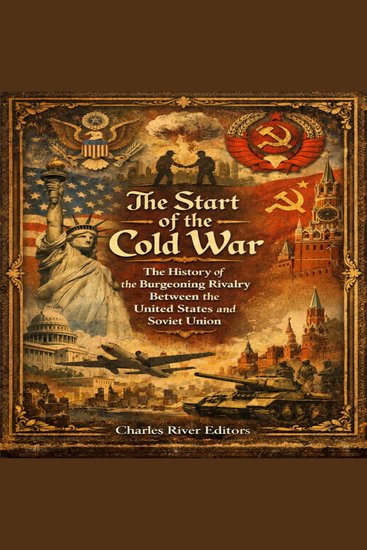
  • Start of the Cold War The: The History of the Burgeoning Rivalry Between the United States and Soviet Union - cover

    Start of the Cold War The: The...

    Charles River Editors

    • 0
    • 0
    • 0
    In the wake of World War II, the European continent was devastated, and the conflict left the Soviet Union and the United States as uncontested superpowers. This ushered in over 45 years of the Cold War, and a political alignment of Western democracies against the Communist Soviet bloc that produced conflicts pitting allies on each sides fighting, even as the American and Soviet militaries never engaged each other. Though it never got “hot” between the two superpowers, the Cold War was a tense era until the dissolution of the USSR, and nothing symbolized the split more than the division of Berlin. Berlin had been a flashpoint even before World War II ended, and the city was occupied by the different Allies even as the close of the war turned them into adversaries.  
    If anyone wondered whether the Cold War would dominate geopolitics, any hopes that it wouldn’t were dashed by the Soviets’ blockade of West Berlin in April 1948, ostensibly to protest the currency being used in West Berlin but unquestionably aiming to extend their control over Germany’s capital. By cutting off all access via roads, rail, and water, the Soviets hoped to force the Allies out, and at the same time, Stalin’s action would force a tense showdown that would test their mettle.  
    Stalin ruled with an iron fist for nearly 30 years before his death in 1953, which may or may not have been murder, just as Stalin was preparing to conduct another purge. With his death, Soviet strongman and long-time Stalinist Nikita Khrushchev became the Soviet premier. A barely known figure outside of the Eastern bloc, Khrushchev was derided as a buffoon by one Western diplomat and mocked for his physical appearance by others, but any Western hopes that he would prove a more conciliatory figure than Stalin were quickly snuffed out as the hard-line Khrushchev embraced confrontational stances, ensuring the Cold War was here to stay.
    Zum Buch
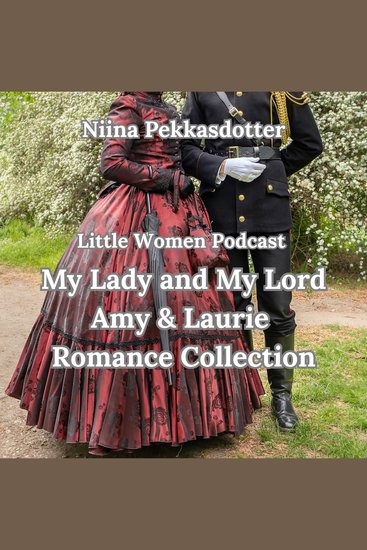
  • My Lady and My Lord: Amy and Laurie Romance Collection - cover

    My Lady and My Lord: Amy and...

    Niina Pekkasdotter

    • 0
    • 0
    • 0
    Discover the love story that was always meant to be. My Lady and My Lord: Amy and Laurie Romance Collection brings together the most beloved episodes from the popular podcast exploring one of literature's most enduring romances, Amy March and Theodore "Laurie" Laurence from Louisa May Alcott's Little Women. 
    This comprehensive collection offers fresh perspectives on a relationship often overshadowed by adaptations' fixation on Jo and Laurie. Through thoughtful analysis and passionate discussion, listeners will gain a deeper appreciation for the emotional complexity and genuine compatibility of Amy and Laurie's union. 
    Featured Content Includes:"Amy and Laurie Romance vs. Filmmakers' Jo and Laurie Obsession" – An exploration of how screen adaptations have consistently overlooked the author's true romantic vision"Laurie's Proposal to Amy" – A detailed examination of one of literature's most romantic moments"All About Amy" – An in-depth character study celebrating Amy March's growth, artistry, and misunderstood strengthsAnalysis of "Calls" – Close readings of pivotal social interactions that reveal character development"Laurie's Apology to Jo in 'Surprises'" Understanding the evolution of friendship and the path to true loveUnadapted Scenes – Fascinating discussions of Amy and Laurie moments from the novels that have never made it to screen 
    Perfect for Little Women enthusiasts, romance readers, and anyone who believes Amy March deserves her happily ever after, this collection celebrates a partnership built on mutual respect, shared values, and genuine affection, a love story for the ages.
    Zum Buch
  • Manners Customs and Dress During the Middle Ages and During the Renaissance Period - cover

    Manners Customs and Dress During...

    Paul Lacroix

    • 0
    • 0
    • 0
    A comprehensive and detailed account of medieval life and culture in France, with reference to other parts of Europe, including chapters on private life, food, hunting, games and pastimes, costume, privileges and rights, justice, commerce, finance, and punishments. The online text of the book has over 400 contemporary illustrations. Warning: Sections 27 and 28, Punishments, may be disturbing to those of a sensitive disposition. (Summary by Ruth Golding)
    Zum Buch
  • Feeling the Waves - A Gentle Guide to Emotional Regulation and Self-Compassion - cover

    Feeling the Waves - A Gentle...

    Swati Bansal

    • 0
    • 0
    • 0
    Do your emotions sometimes feel like too much—rising and crashing without warning? Or not enough—leaving you feeling numb, stuck, or disconnected? You’re not alone. We’ve all been taught to suppress, avoid, or power through our feelings. But what if emotional strength wasn’t about being unaffected, but about learning to navigate the waves? 
    Feeling the Waves is a tender invitation to come home to yourself through the art of emotional regulation and self-compassion. 
    Drawing from her own healing journey through depression and emotional overwhelm, Dr. Swati offers practical tools, relatable insights, and the profound comfort of knowing you are not broken. 
    Whether you’re navigating anxiety, burnout, heartbreak, or simply longing for a more authentic connection with yourself, Feeling the Waves will help you build emotional resilience and live with greater peace, presence, and purpose.
    Zum Buch
  • The History of England - cover

    The History of England

    Jane Austen

    • 0
    • 0
    • 0
    The History of England from Henry IV to Charles I, by a partial, prejudiced, and ignorant historian.  N.B. There will be very few dates in this History! Jane Austen wrote The History of England in 1791, at the age of just 15, as a satirical parody of 18th-century historical textbooks.  It pokes fun at the apparent impartiality of contemporary historians and contains more opinions about the monarchs' relative characters than any facts or dates. The History of England was not published until 1922, more than a century after Austen's death.
    Zum Buch