Join us on a literary world trip!
Add this book to bookshelf
Grey
Write a new comment Default profile 50px
Grey
Subscribe to read the full book or read the first pages for free!
All characters reduced
Assyrian Cities - cover

Assyrian Cities

Benjamin Ramirez

Translator A AI

Publisher: Publifye

  • 0
  • 0
  • 0

Summary

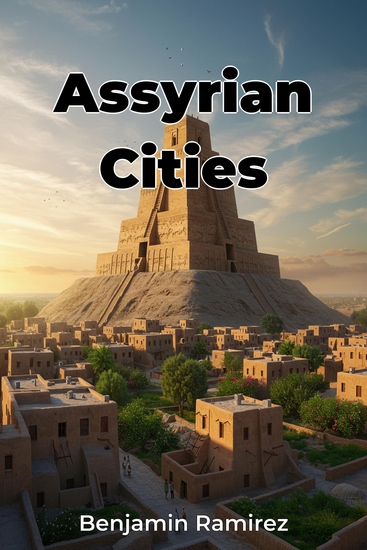
Assyrian Cities explores how urban centers in the Assyrian Empire served as strategic tools for imperial power, cultural expression, and innovation. The book examines the architectural history of cities like Nineveh, Assur, and Nimrud, revealing advanced urban planning and construction techniques. These ancient Mesopotamian cities were not just residential areas; their design reflected a sophisticated understanding of irrigation, defense, and social hierarchy. The book argues that the layout and infrastructure of Assyrian cities directly supported the empire's centralized authority and expansionist goals. By studying palaces, temples, and administrative buildings, one gains insight into the empire's social order and governance. The book progresses thematically, first introducing the materials and techniques used in construction, then exploring the social and political dimensions of urban life, and finally analyzing the legacy of Assyrian urbanism on subsequent civilizations in the Ancient Near East.
Available since: 03/29/2025.
Print length: 60 pages.

Other books that might interest you

  • Dome of the Rock The: The History of the Oldest Islamic Shrine in Jerusalem - cover

    Dome of the Rock The: The...

    Charles River Editors

    • 0
    • 0
    • 0
    Among the world’s most recognizable man-made structures, the Dome of the Rock – known in Arabic as the Qubbat as-Sakara – is also one of its most mysterious. Although much of the Dome’s construction, reconstruction, and later additions are well-known from historical texts and archeological work, what it represents, why it was built where it was, and even its use remain the subject of scholarly controversy. Known for its immense size and beauty, and also for being located in the middle of Jerusalem, one of the world’s holiest cities, the Dome of the Rock has been the focus of political leaders who wished to legitimize their rule, religious warriors who believed that it empowered their weapons, and pilgrims who thought it was a site of salvation and enlightenment. As it drew these often diverse and sometimes disparate people to it, it has served the purposes of devout Jews, Muslims, and Christians, who -- although often not peacefully sharing the site -- seem to recognize its spiritual importance. 
    The Dome of the Rock has been many things to many people over the centuries, and historians, art historians, and archaeologists have studied the Dome of the Rock and its background extensively. Academics have created an accurate chronology of its life, as well as details about how the monument was built, including the construction and artistic techniques that were used. The dome was built on the site of what is believed to have been the Solomonic Temple that the Israelites built to worship their god, Yahweh, setting the stage for the entire area to be a holy site for the Abrahamic religions over the following centuries. Historians believe that the Umayyad Muslims saw this background as a prime location to build one of the greatest religious complexes in the Islamic world.
    Show book
  • The VESPA Handbook - 40 new activities to boost student commitment motivation and productivity - cover

    The VESPA Handbook - 40 new...

    Martin Griffin, Steve Oakes

    • 0
    • 0
    • 0
    Offers 40 concrete, practical tools and activities that will supercharge learners' ambition, organisation, persistence and determination. Where some education books focus on how individual teachers might sequence and deliver pieces of information in the clearest, most helpful and supportive way, engaging as many learners as possible, this one is different. This book looks at how you can help learners manage their workload and take control of their own knowledge and skills. It explores the characteristics, qualities and habits of successful students and shares forty replicable tools and tactics that all students can use immediately, both in and out of the classroom – activities that will help them to set goals, work more efficiently, organise their resources, revise more effectively and solve problems. This book is a perfect introduction to the VESPA approach, as well as being a practical addition to previous resources. The VESPA Handbook will help teachers develop the five key characteristics and behaviours that students need to be successful: vision, effort, systems, practice and attitude. When it comes to achieving academic success, these characteristics are crucial. Suitable for teachers, tutors and parents who want to boost academic outcomes in 14–18-year-olds and equip them with powerful tools and techniques in preparation for further education and employment.
    Show book
  • The Kubark Counterintelligence Interrogation Manual - cover

    The Kubark Counterintelligence...

    Central Intelligence Agency

    • 0
    • 0
    • 0
    Released by the Freedom of Information Act. This document is a thorough description of how the CIA recommends interrogating a subject. To get the information that is needed there is nothing withheld short of torture. For example in "Threats and Fears," the CIA authors note that "the threat of coercion usually weakens or destroys resistance more effectively than coercion itself. The threat to inflict pain, for example, can trigger fears more damaging than the immediate sensation of pain." Under the subheading "Pain," the guidelines discuss the theories behind various thresholds of pain, and recommend that a subject's "resistance is likelier to be sapped by pain which he seems to inflict upon himself" such rather than by direct torture. The report suggests forcing the detainee to stand at attention for long periods of time. A section on sensory deprivations suggests imprisoning detainees in rooms without sensory stimuli of any kind, "in a cell which has no light," for example.
    Show book
  • Plato's Greater Hippias - cover

    Plato's Greater Hippias

    Plato

    • 0
    • 0
    • 0
    Hippias of Elis travels throughout the Greek world practicing and teaching the art of making beautiful speeches. On a rare visit to Athens, he meets Socrates who questions him about the nature of his art. Socrates is especially curious about how Hippias would define beauty. They agree that “beauty makes all beautiful things beautiful,” but when Socrates presses him to say precisely what he means, Hippias is unable to deliver such a definition.
     
    The more Socrates probes, the more absurd the responses from Hippias become. This is one of Plato’s best comedies and one of his finest efforts at posing the philosophical problem of the difference between particular things and universal qualities.
    Show book
  • Paging God - Religion in the Halls of Medicine - cover

    Paging God - Religion in the...

    Wendy Cadge

    • 0
    • 0
    • 0
    While the modern science of medicine often seems nothing short of miraculous, religion still plays an important role in the past and present of many hospitals. When three-quarters of Americans believe that God can cure people who have been given little or no chance of survival by their doctors, how do today’s technologically sophisticated health care organizations address spirituality and faith? 
      
    Through a combination of interviews with nurses, doctors, and chaplains across the United States and close observation of their daily routines, Wendy Cadge takes readers inside major academic medical institutions to explore how today’s doctors and hospitals address prayer and other forms of religion and spirituality. From chapels to intensive care units to the morgue, hospital caregivers speak directly in these pages about how religion is part of their daily work in visible and invisible ways. In Paging God: Religion in the Halls of Medicine, Cadge shifts attention away from the ongoing controversy about whether faith and spirituality should play a role in health care and back to the many ways that these powerful forces already function in healthcare today.
    Show book
  • Sociology of Youth and Development - Youth Society and Transformation (3 in 1) - cover

    Sociology of Youth and...

    Fred Grandsen

    • 0
    • 0
    • 0
    This 3-in-1 volume investigates how identity, social interaction, and constructed realities influence the development of youth within a constantly evolving world. 
    The first section, Youth and Society, examines the social roles, challenges, and transitions that young people face as they grow into adulthood. It explores how education, culture, media, and institutions affect youth identity, opportunity, and social mobility. 
    The second section, The Social Animal, delves into human social behavior with a special focus on youth. Drawing from psychology and sociology, it analyzes group behavior, conformity, interpersonal connection, and the deep need for belonging during formative years. 
    The third section, The Social Construction of Reality, explores how our perceptions of the world—including concepts like adolescence, success, and rebellion—are not just discovered, but socially constructed. This section helps readers understand how youth experiences are shaped by societal narratives and expectations. 
    Together, these three volumes offer an interdisciplinary lens on the transformation of youth and the broader changes shaping society.
    Show book