Begleiten Sie uns auf eine literarische Weltreise!
Buch zum Bücherregal hinzufügen
Grey
Einen neuen Kommentar schreiben Default profile 50px
Grey
Jetzt das ganze Buch im Abo oder die ersten Seiten gratis lesen!
All characters reduced
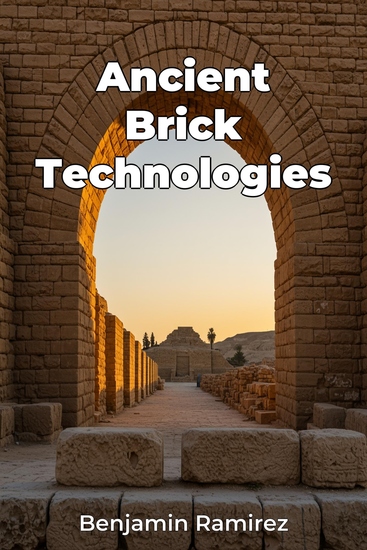
Ancient Brick Technologies - cover

Ancient Brick Technologies

Benjamin Ramirez

Übersetzer A AI

Verlag: Publifye

  • 0
  • 0
  • 0

Beschreibung

Ancient Brick Technologies explores the history of brick production and its profound influence on architecture and society in ancient civilizations. It argues that brick-making evolved alongside technological advancements and environmental adaptations. The book highlights intriguing facts, such as how the Roman Empire standardized brick sizes for efficient construction and territorial expansion, and how Mesopotamians used sun-baked bricks in early urban development.

 
The book examines the evolution of brick-making techniques, from clay selection to firing, and how they varied across cultures like Mesopotamia, Egypt, and the Roman Empire. It emphasizes the resourcefulness of ancient civilizations and their sustainable building practices, connecting archaeology, materials science, and architectural history. Through archaeological findings and comparative analyses, the book illustrates diverse approaches to optimizing brick production.

 
Ancient Brick Technologies begins by establishing a historical context, tracing the earliest evidence of brick usage and detailing the fundamental principles of brick production. It then delves into specific case studies, such as the sophisticated Roman brick industry and the use of adobe bricks in the Americas. The book progresses by examining how brick-making evolved independently in different regions, offering insights into the social, economic, and environmental factors that shaped their development.
Verfügbar seit: 04.03.2025.
Drucklänge: 65 Seiten.

Weitere Bücher, die Sie mögen werden

  • Harriet Tubman - Military Scout and Tenacious Visionary: From Her Roots in Ghana to Her Legacy on the Eastern Shore - cover

    Harriet Tubman - Military Scout...

    Rita Daniels, Jean Marie Wiesen,...

    • 0
    • 0
    • 0
    Harriet Tubman is one of the most iconic figures in American history, yet much of her true story has long been fragmented, misunderstood, or incomplete. While countless books recount her courage on the Underground Railroad, few explore the full scope of her strategic brilliance, military service, and lifelong leadership.Harriet Tubman sets out to correct the record. Drawing on research and rare family oral history, authors Jean Marie Wiesen and Rita Daniels—Tubman's great-great-great-grandniece—present the first biography to involve a Tubman family member since Harriet herself was interviewed in 1886.This groundbreaking work reveals how Harriet's childhood head injury limited her ability to complete early biographical interviews, leading to omissions that persisted for generations. It also uncovers her ancestral roots in Ghana, her role as a Union Army scout, spy, and strategist during the Civil War, and her tireless postwar activism as a suffragist, community leader, and founder of the Harriet Tubman Home for the Aged.This book offers a nuanced portrait of a woman whose intelligence, resilience, and moral clarity shaped American history—and whose legacy continues to resonate today.
    Zum Buch
  • Climate Action for Busy People - cover

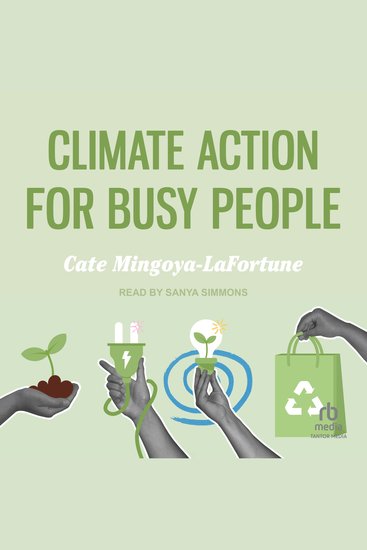
    Climate Action for Busy People

    Cate Mingoya-LaFortune

    • 0
    • 0
    • 0
    As unprecedented heat waves, storms of the century, and devastating fires impact cities across the country, the time to create climate resilient communities is now. While large-scale innovations in policy and technology are necessary to preserve the planet, the wisest and most lasting adaptation solutions originate at the local level. However, with something as large as the climate crisis, it can be hard to know where to begin. 


    Climate Action for Busy People is a hopeful and realistic roadmap for individuals and groups who want to boost climate preparedness and move the needle towards environmental justice. Drawing from her professional and personal success in climate adaptation and community organizing, Cate Mingoya-LaFortune begins with a brief history of why our communities look the way they do and how that affects how vulnerable we are to climate risks. Each chapter will help listeners scale up their actions, from identifying climate solutions that an individual or small group can pull off in a handful of weekends to advocating for change at the municipal level. It's not too late for people of all ages and skill levels to create climate safe neighborhoods. 


    Climate Action for Busy People is an invaluable guide for anyone who wants to make lasting and equitable improvements that will make their communities climate resilient.
    Zum Buch
  • The Constitution of Athens - cover

    The Constitution of Athens

    Aristotle

    • 0
    • 0
    • 0
    The Constitution of Athens was written by Aristotle or his student. The text was lost until discovered in the late 19th century in Egypt. Topics discussed include Solon's legislative reforms abolishing debt slavery and the rise and decline of democracy and tyranny in Athens. (Summary by Geoffrey Edwards)
    Zum Buch
  • Witches - A Compendium - cover

    Witches - A Compendium

    Judika Illes

    • 0
    • 0
    • 0
    “Witches: A Compendium maps the landscape of witchcraft and occult practices, past and present. Within these pages, you’ll find clear descriptions of magical practices and tools, animal familiars, inspirational witch figures . . . and even witch-related sites around the world to star on your Google Maps. This book will serve as reference, guide, and inspiration to anyone curious about the magical arts.”—from the foreword by Frances F. DennyWitches explores what a witch is and the different ways to be one. Judika Illes presents the history, mysteries, and diverse natures of witches from around the world. Featuring a who’s who ranging from famous—or infamous—historical witches such as Tituba, Sybil Leek, Aleister Crowley, Isobel Gowdie, and Countess Erzsebet Báthory (widely known as the Blood Countess) to popular literary, cinematic, and TV witches such as Endora, the Scarlet Witch, Melisandre, Storm, Agatha Harkness, and the Wicked Witch of the West, Witches also offers travel tips for witches and a guide to the tools of the trade such as brooms, wands, cauldrons, and mirrors.This celebration of witches and witchcraft also features:Sacred witches such as Baba Yaga, Lilith, Isis, Hekate, Diana, Circe, and Yemaya Familiars and creatures closely associated with witchcraft including cats, bats, crows, owls, and foxes Art witches like Moina Mathers, Vali Myers, Rosaleen Norton, Leonora Carrington, and Cameron Different schools of witchcraft including green witchery, kitchen witchery, Wicca, and Hekatean Witchcraft The various things witches do from divination to spirit working to spell-casting 
    Zum Buch
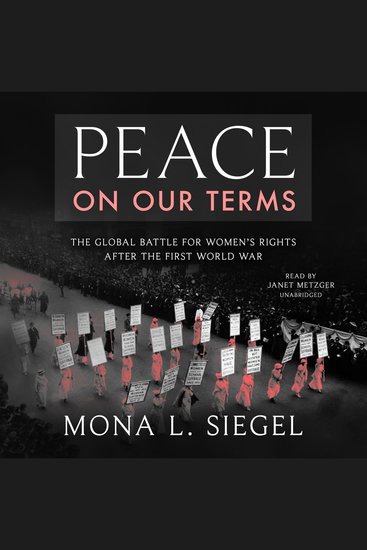
  • Peace on Our Terms - The Global Battle for Women’s Rights After the First World War - cover

    Peace on Our Terms - The Global...

    Mona L. Siegel

    • 0
    • 0
    • 0
    In the watershed year of 1919, world leaders met in Paris, promising to build a new international order rooted in democracy and social justice. Female activists demanded that statesmen live up to their word. Excluded from the negotiating table, women met separately, crafted their own agendas, and captured global headlines with a message that was both straightforward and revolutionary: enduring peace depended as much on recognition of the fundamental humanity and equality of all people—regardless of sex, race, class, or creed—as on respect for the sovereignty of independent states. 
    Peace on Our Terms follows dozens of remarkable women from Europe, the Middle East, North America, and Asia as they crossed oceans and continents; commanded meeting halls in Paris, Zurich, and Washington; and marched in the streets of Cairo and Beijing. Mona L. Siegel’s sweeping global account of international organizing highlights how Egyptian and Chinese nationalists, Western and Japanese labor feminists, white Western suffragists, and African American civil rights advocates worked in tandem to advance women’s rights. Despite significant resistance, these pathbreaking women left their mark on emerging democratic constitutions and new institutions of global governance. Drawing on a wide range of sources, Peace on Our Terms is the first book to demonstrate the centrality of women’s activism to the Paris Peace Conference and the critical diplomatic events of 1919. Siegel tells the timely story of how female activists transformed women’s rights into a global rallying cry, laying a foundation for generations to come.
    Zum Buch
  • The Meaning of Surah Al-Araf (The Heights Border Between Hell & Paradise) From Noble Quran Bilingual Edition English & Spanish - cover

    The Meaning of Surah Al-Araf...

    Muhammad Vandestra

    • 0
    • 0
    • 0
    Surah al-Araf (The Heights Border Between Hell & Paradise) is the seventh surah of the Qur'an, with 206 verses. It is a Meccan sura. Its final verse, verse 206, requires a sajdah, or prostration.Al-Araf is one of the most detailing Surah about the origins of creation and revealing prophecies about the judgment day, it starts by telling us how Satan made our ancestors Adam and Eve to leave heaven and all of the three came down to earth and from that point Satan became the number one enemy for humanity, and how he refused to obey God and asked him to keep him alive to show him the vulnerability of this new creature the Human being, the Surah then starts by telling us how Satan misled thousands of populations over time and gives us examples of some prophets who suffered in order to gain their lost companions to the right path, cited in this surah: 
     
    Story of Nuh/Noah, which begins with the prophet warning his people and then the community rejecting the message and facing a punishment, the Grand Deluge.Story of Hud: Hud lived with his people Aad, Aad were not ignorant of the existence of Allah, nor did they refuse to worship Him. What they did refuse was to worship Allah alone. They worshipped other gods, also, including idols. This is one sin Allah does not forgive. The Prophet Hud said to his people: "He created you, He provides for you and He is the One Who will cause you to die. He gave you wonderful physiques and blessed you in many ways. So believe in Him and do not be blind to His favors, or the same fate that destroyed Noah's people will overtake you." 
     
    Story of Saleh: Saleh (meaning the good one in Arabic) was sent to an Arab tribe called Thamud, who were reported to be descendants of Noah. They were vain people who took great pride in their fertile farmland and grand architecture. Prophet Saleh tried to call his people to the worship of One God, to Whom they should give thanks for all their bounties. He called upon the rich to stop oppressing the poor, and for an end to all mischief and evil. 
     
    Story of Shuaib: His people were greedy people who did not believe that Allah existed and who led wicked lives. Most of them were merchandisers and they gave short measure, praised their goods beyond their worth, and hid their defects. They lied to their customers, thereby cheating them. Allah (God) sent his prophet Shu'aib armed with many miracles. Shu'aib preached to them, begging them to be mindful of Allah's favors and warning them of the consequences of their evil ways, but they only mocked him. Shu'aib remained calm as he reminded them of his kinship to them and that what he was doing was not for his personal gain. 
     
    Story of Musa/Moses and Haroon/Aaron: The pharaoh who ruled Egypt was a tyrant who oppressed the children of Israel (Bani Israel). He used every means to demean and disgrace them. They were kept in bondage and forced to work for him. Under this system the people obeyed and worshipped the pharaoh, and the ruling class carried out his orders, thereby authorizing his tyranny and crazy whims. Allah (God) sent his prophet Moses to save the Children of Israel from the pharaoh, he gave him great power to face the pharaoh and win over him. He succeeded and saved his people. And as soon as he went to listen to God's orders, they rejected his message even when Haroon/Aaron was present among them, this made Moses very mad about his brother but later he asked for mercy from the Almighty for him, his brother and those people, Allah accepted.  
     
    Then the Surah says that every community or people that will come on earth will think that they are better than those before and thus better the examples cited above, but in fact those who will not believe in God, or got misled by Satan from the right path will have the same punishment, Hell, a
    Zum Buch