Rejoignez-nous pour un voyage dans le monde des livres!
Ajouter ce livre à l'électronique
Grey
Ecrivez un nouveau commentaire Default profile 50px
Grey
Abonnez-vous pour lire le livre complet ou lisez les premières pages gratuitement!
All characters reduced
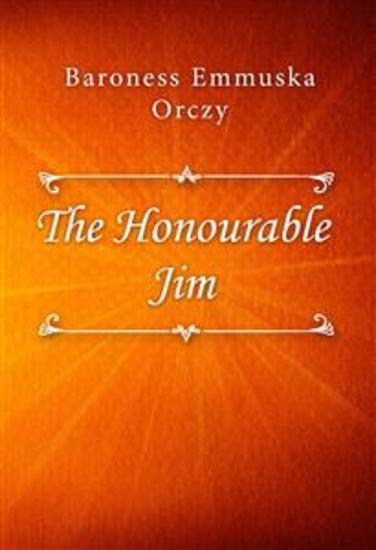
The Honourable Jim - cover

The Honourable Jim

Baroness Emmuska Orczy

Maison d'édition: Classica Libris

  • 0
  • 0
  • 0

Synopsis

The Honourable Jim is an historical novel by Baroness Orczy and can be thought of as The Scarlet Pimpernel of England.
Orczy tells of those three—the woman, and the two men-playmates, enemies, lovers in turn. It seemed well-nigh impossible to attempt the isolation of the one sentimental thread from the tangled skein of passions and of hate which seventeenth century England hath flung to us out of the whirlpool of civil war and of bitter strife. In the midst of the modernisms and aggressive realism of today the life and doings of James Fiennes appear intangible, ununderstandable, a mere creation of fancy. But at Broughton Castle where he lived, it is different. There between the splendid grey walls in the stately halls, and along the labyrinthine passages, the intriguing personality of the Honourable Jim at once loses its dream-like quality. In his own old home James Fiennes at once becomes Jim—a real Jim-alive! Oh! Very much alive.
Disponible depuis: 07/10/2022.
D'autres livres qui pourraient vous intéresser

  • The Tenant of Wildfell Hall - cover

    The Tenant of Wildfell Hall

    Anne Brontë

    • 0
    • 0
    • 0
    "The Tenant of Wildfell Hall" is a novel written by Anne Brontë, which was first published in 1848. The book is considered a classic of Victorian literature and is known for its exploration of social issues and the portrayal of a strong, independent female protagonist. The novel is presented in the form of letters and diary entries, revealing the story of Helen Graham, a mysterious woman who takes up residence at Wildfell Hall. As the narrative unfolds, readers discover the dark secrets of Helen's past and the reasons behind her desire for solitude. The novel addresses themes such as marriage, alcoholism, and women's independence, making it a significant work in the context of 19th-century literature.
    Voir livre
  • Mansfield Park - cover

    Mansfield Park

    Jane Austen

    • 0
    • 0
    • 0
    "Mansfield Park" is a novel by Jane Austen, published in 1814. It centers on Fanny Price, a young woman from a poor family who is sent to live with her wealthy relatives at Mansfield Park. Unlike other Austen heroines, Fanny is shy and reserved, and she struggles with the ethical and social dilemmas presented to her. As she navigates love, betrayal, and moral complexity within the confines of upper-class society, Fanny grows into her own person. The novel delves into themes of social class, morality, and the complexities of human relationships.
    Voir livre
  • The Tenant of Wildfell Hall - cover

    The Tenant of Wildfell Hall

    Anne Brontë

    • 0
    • 0
    • 0
    "The Tenant of Wildfell Hall" by Anne Brontë is a novel written in the mid-19th century. The book explores themes of social customs, morality, and the struggles of women in a patriarchal society through its main character, Helen Graham, who is introduced as the mysterious tenant of Wildfell Hall.  
    At the beginning of the novel, we meet Gilbert Markham, who narrates his life as a farmer in the early 1820s, offering insights into his family dynamics and social interactions within the village. The arrival of a new tenant, Mrs. Graham, sparks curiosity and speculation among the local residents.  
    Gilbert's interactions with his family and his reflections on Mrs. Graham's character lay the groundwork for a deeper exploration of her backstory, suggesting that she is a significant woman with a troubled past. The narrative creates a strong sense of intrigue surrounding Mrs. Graham, hinting at the drama that will unfold as she navigates her choices and the judgments of society.
    Voir livre
  • A Journey from This World to the Next - cover

    A Journey from This World to the...

    Henry Fielding

    • 0
    • 0
    • 0
    "A Journey from This World to the Next" by Henry Fielding is a satirical and philosophical work presenting a fictional journey of the protagonist, Mr. Everyman, through the afterlife. Written as a dialogue between characters in the underworld, the narrative explores moral and ethical themes while providing a humorous critique of 18th-century society. Fielding cleverly uses the allegorical journey to comment on human behavior, societal norms, and the consequences of one's actions, offering readers a thought-provoking and entertaining exploration of life's complexities and moral choices.
    Voir livre
  • A Doll's House - cover

    A Doll's House

    Henrik Ibsen

    • 0
    • 0
    • 0
    Ibsen's "A Doll's House," written two years after "The Pillars of Society," became a sensation and is now widely considered his most famous play. Required reading in many secondary schools and universities, the play was highly controversial upon its release due to its sharp criticism of 19th Century marriage norms. Despite following the structure of a traditional well-made play, the play breaks convention by ending with a discussion instead of an unraveling in its final act. Although Ibsen himself denied it, "A Doll's House" is often referred to as the first true feminist play.
    Voir livre
  • Blood - From their pens to your ears genius in every story - cover

    Blood - From their pens to your...

    Hanns Heinz Ewers

    • 0
    • 0
    • 0
    Hanns Heinz Ewers was born on 3rd November 1871 in Düsseldorf, Germany. 
    His first published poem was at 17 on the death, after a reign of only 99 days, of the German Emperor Frederick III. 
    A stint in the German military was cut short after only 44 days because of his myopia.  Writing was to be the way forward for him with a book of satiric verse published in 1901. At the same time he co-founded a literary vaudeville troupe that toured central and eastern Europe before censors and expenses forced its closure.  An inveterate traveller he was in South America when the Great War enveloped Europe and he relocated to New York. 
    From here his story darkens. Although by now a successful and admired author he was arrested in the U S in 1918 as a German Agent on the pretext of his travels and a falsified Swiss passport. Interned, he was released in 1921 and returned to Germany.  He claimed only to be raising money for the German Red Cross. 
    His literary fame is decidedly easier to clarify. His novels beginning with ‘The Sorcerer’s Apprentice’ in 1910 are dark, they bristle with evil intent and are littered with characters who have a dubious moral compass and yet, along with his short stories, are brazen, brilliant feats of literary narrative. 
    He also wrote and published plays, fairy tales, opera librettos, critical essays and lectured for many years on ‘The Religion of Satan’ and was one of the first to write scripts for the cinema, which he considered a legitimate art form. 
    As the Weimar republic began its chaotic death throes Ewers became attracted to the rising Nazi Party.  At first he was warmly received despite disagreeing with its anti-semitism (his most famed literary character had a Jewish mistress) and he was even commissioned by Hitler to write a biography of the Nazi martyr Horst Wessel.  This together with his own homosexuality culminated with his works being banned in 1934 and his assets and property seized.  It took him many years to have the ban lifted.  This association rightfully clouds his personal reputation but has meant his literary contributions are also overlooked and neglected. 
    Hanns Heinz Ewers died of tuberculosis on 12th June 1943 in his Berlin apartment.
    Voir livre