


Nicolette
Baroness Emmuska Orczy
Verlag: Classica Libris
Beschreibung
Nicolette is a re-telling of the medieval French story Aucassin and Nicolette.
Verfügbar seit: 15.01.2019.

Verlag: Classica Libris
Nicolette is a re-telling of the medieval French story Aucassin and Nicolette.

"Allan Quatermain" is an 1887 novel by H. Rider Haggard, featuring his recurring character Allan Quatermain. This adventure novel serves as the sequel to Haggard's earlier work, "King Solomon's Mines". Let's delve into the plot of this captivating tale: Background: Haggard wrote "Allan Quatermain" during his summer holiday in 1885, immediately after completing "King Solomon's Mines". The novel was first serialized in Longman's Magazine before being published as a complete work. Plot Summary: At the beginning of the book, Allan Quatermain mourns the loss of his only son and longs to return to the wilderness. He persuades his friends—Sir Henry Curtis, Captain John Good, and the Zulu chief Umslopogaas—to accompany him on an expedition. Their journey takes them from the east coast of Africa into the territory of the Maasai. While staying with a Scottish missionary named Mr. Mackenzie, they encounter a group of Maasai who kidnap Mr. Mackenzie's daughter. The Maasai demand a life as ransom, but instead, the group launches a surprise attack, defeating the Maasai. The adventurers then travel by canoe along an underground river to a sacred lake in the kingdom of Zu-Vendis. In Zu-Vendis, they encounter a warlike race of white-skinned people ruled by two sisters, Nyleptha and Sorais. Both sisters fall in love with Sir Henry Curtis, leading to a civil war. After a victorious battle, Queen Nyleptha becomes the ruler, while Quatermain dies from a wound sustained in the fight. Reception: "Allan Quatermain" is considered one of Haggard's most successful works. It exemplifies the lost-race novel genre, setting the stage for many subsequent works in this subgenre. In this thrilling adventure, Allan Quatermain's courage and loyalty are put to the test as he navigates treacherous lands and encounters powerful queens. "Zum Buch
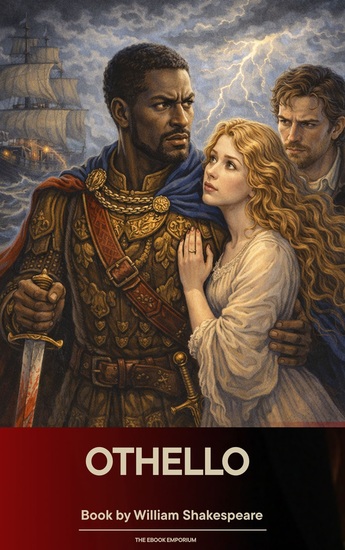
What happens when trust is poisoned by jealousy?

Othello is one of William Shakespeare's most powerful and emotionally devastating tragedies. Set against the backdrop of war and political intrigue, the play tells the story of Othello, a respected general whose deep love for his wife Desdemona is slowly destroyed by deception and doubt.

At the center of the drama is Iago, one of literature's most chilling villains, whose calculated lies manipulate emotions and unravel lives. As suspicion replaces reason, Shakespeare exposes how jealousy, insecurity, and racism can corrupt judgment and lead to irreversible tragedy.

This timeless play explores love, honor, betrayal, and the destructive power of false belief.

Inside this eBook, you'll experience:

A gripping psychological tragedy driven by manipulation

One of Shakespeare's most complex heroes and villains

Themes of jealousy, trust, and moral collapse

A haunting examination of human vulnerability

Widely studied and performed across the world, Othello remains essential reading for anyone interested in classic drama and the darker sides of human nature.

Witness the tragedy born from deception. Buy now and experience one of Shakespeare's most intense plays.
Zum Buch
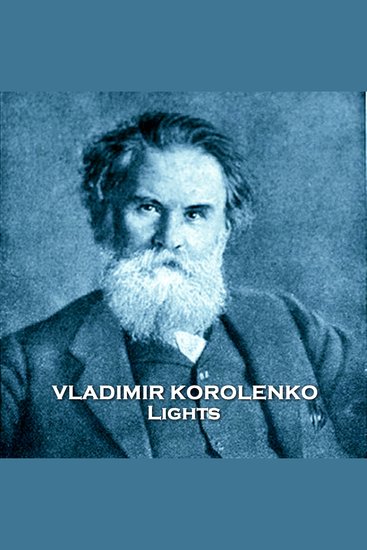
Vladimir Galaktionovich Korolenko was born in Zhytomyr, Ukraine, then part of the Russian Empire on 27th July 1853.
His father died when he was 13 and life was then often struck with bouts of poverty, which resulted in his education being somewhat erratic.   A spell in exile at 23 was followed by another as the politics of the times opposed his volatile but heart-felt passions.
Writing was also coming to the fore and in 1879 his debut short story telling of a young Narodnik searching for social and spiritual identity, was published.
In 1881, Korolenko refused to swear allegiance to the new Russian Tsar and was again exiled, this time much farther afield.  He spent the next three years doing manual work, but took time to study local customs and history.  These impressions in exile provided rich material for his writings.
In 1885 he was allowed to settle in Nizhny, where again he repeatedly questioned the authorities.  That same year ‘Makar's Dream’ established his literary reputation and was part of his first collection ‘Sketches and Stories’, the following year.
In the early 1890’s when famine struck Central Russia, he went to work on relief missions, collecting donations, supervising the delivery and distribution of food, opening 45 free canteens, all this while writing the graphic reports that would later be published as ‘In the Year of Famine’ in 1893.
By 1896 despite some psychological disorders, he was well regarded amongst Russian writers and was even a member of the Russian Academy of Sciences.  Throughout his writing career Korolenko was a staunch advocate of human rights, putting that sacred activity above what he called his 'part-time-writing'.
In the Revolutionary year of 1905, under his editorship, Russkoye Bogatstvo published the Manifest by the Petersburg Soviet of the Workers' deputies. Korolenko was now repeatedly harassed by the authorities, had his flat raided many times and materials confiscated.
As a lifetime opponent of Tsarism, he guardedly welcomed the Revolution of 1917.  Once the nature of Bolshevism was established, he soon started to criticize it. During the Russian Civil War that ensued, he condemned both the Red Terror and the White Terror.
Despite suffering from a progressive heart disorder, he collected food packages for children in famine-stricken Moscow and Petrograd as well as organised orphanages and shelters for the homeless.
Vladimir Korolenko died in Poltava, Ukraine, of the complications of pneumonia on 25th December 1921.  He was 68.
Zum Buch
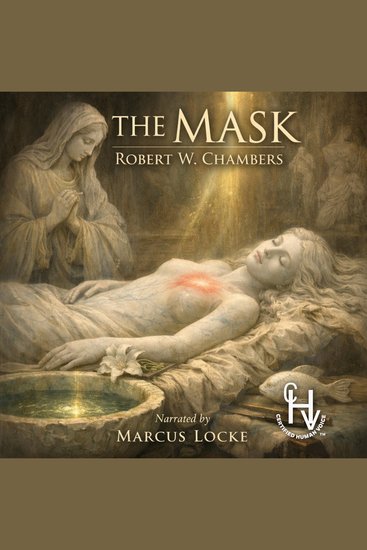
In a quiet Paris studio, art, love, and discovery collide in a way no one could have foreseen.
When the brilliant sculptor Boris Yvain unveils a mysterious chemical solution capable of transforming living matter into flawless marble, what begins as a marvel of artistic preservation soon reveals something far more unsettling. Flowers, fish—even the fragile beauty of life itself—can be frozen into eternal perfection. But at what cost?
As Alec, Boris, and the enchanting Geneviève navigate a delicate web of friendship and unspoken love, the line between creation and destruction begins to blur. What is preserved may not truly be saved—and what appears beautiful may conceal irreversible loss.
Haunting, elegant, and deeply tragic, The Mask is one of Robert W. Chambers’ most unforgettable tales from The King in Yellow—a story of art, obsession, and the terrifying price of perfection.
Narrated by Marcus Locke, this timeless work unfolds with quiet intensity, drawing you into a world where beauty is eternal… and nothing is as it seems.
Zum Buch

Edgar Allan Poe's short story "Four Beasts in One - The Homo-Cameloopard" tells the story of Antiochus Epiphanes, an extravagant monarch who parades a bizarre being through the streets of Antioch, reflecting on the nature of humanity and monstrosity.Zum Buch
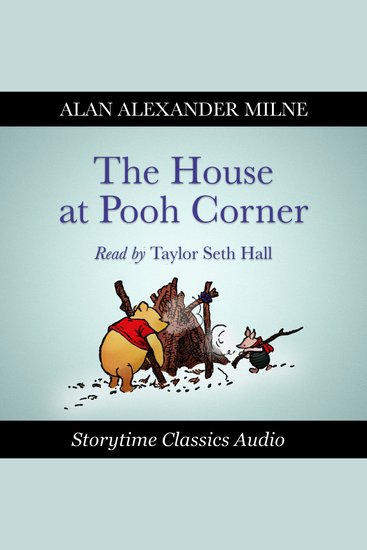
Enjoy the sequel to A A Milne's "Winnie-the-Pooh", where we are introduced to Tigger! Join the Pooh, Piglet, Eeyore, and the rest for delightful mishaps and adventures filled with Warmth, Whimsy, and Honey. Rediscover the charming tales that have captured hearts for generations.Zum Buch





