Begleiten Sie uns auf eine literarische Weltreise!
Buch zum Bücherregal hinzufügen
Grey
Einen neuen Kommentar schreiben Default profile 50px
Grey
Jetzt das ganze Buch im Abo oder die ersten Seiten gratis lesen!
All characters reduced
A Joyous Adventure - cover

A Joyous Adventure

Baroness Emmuska Orczy

Verlag: Classica Libris

  • 0
  • 0
  • 0

Beschreibung

“Warned by an anonymous friend of the imminence of arrest on a trumped-up charge of treason, Monsieur le Marquis de Marillac de la Villorée on one evening seven years ago packed hastily together a few necessities, and at dead of night was luckily able to make the coast and there embark on an English ship which took him safely across the Channel. Since then he had lived in exile partly in England, partly in Belgium. A few scattered bits of his once colossal fortune being invested in foreign countries, he was able to render a few minor financial services to his exiled King, and more than one small debt owing by the French royal family to tradespeople in England was paid by Monsieur le Marquis de Marillac.”
Verfügbar seit: 30.01.2019.

Weitere Bücher, die Sie mögen werden

  • The Complete Novels of Jane Austen (Ribbon Classics) - All Major Works of Regency Era Romance and Social Satire - cover

    The Complete Novels of Jane...

    Jane Austen

    • 0
    • 0
    • 0
    This comprehensive collection brings together the complete longer fiction of Jane Austen, including her six finished novels, her early epistolary novella, and her unfinished works.
    
    Spanning the Regency period, these works explore courtship, inheritance, social ambition, moral growth, and the delicate balance between emotion and reason. With wit, irony, and psychological precision, they portray the intimate dramas of family life and the quiet tensions of English country society.
    
    Included in this volume:
    
    Sense and Sensibility (1811)
    
    Pride and Prejudice (1813)
    
    Mansfield Park (1814)
    
    Emma (1816)
    
    Northanger Abbey (1818, posthumous)
    
    Persuasion (1818, posthumous)
    
    Lady Susan (1871, posthumous)
    
    The Watsons (unfinished)
    
    Sanditon (unfinished)
    
    From sparkling social satire to more mature meditations on regret and second chances, this collection reveals the full arc of Austen's artistic development. The inclusion of the unfinished works offers readers a rare glimpse into her creative process and evolving narrative voice.
    
    Presented in a single, carefully formatted volume, this edition is ideal for students, scholars, and readers who wish to experience the complete range of Austen's fiction in one place.
    Zum Buch
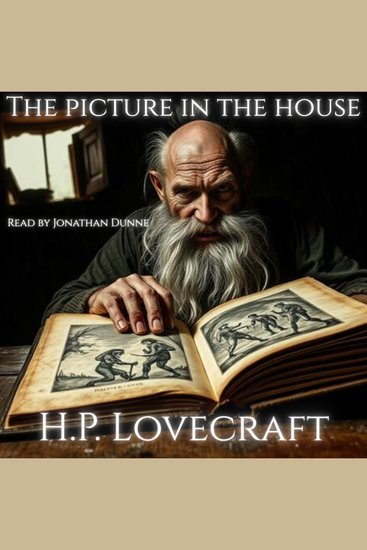
  • The Picture in the House - cover

    The Picture in the House

    H. P. Lovecraft

    • 0
    • 0
    • 0
    Title: The Picture in the House 
    Author: H. P. Lovecraft 
    Narrator: Jonathan Dunne 
    Original Publication: 1921 
    Public Domain: Yes 
    Series Placement: Timeless Terrors #58 
    Description: 
    The Picture in the House is a masterclass in creeping dread — a tense, claustrophobic story where isolation and obsession blur the line between horror and fascination. 
    The tale begins with a traveler seeking shelter from a storm in an ancient, decaying New England farmhouse. Inside, he encounters a gaunt, ancient man whose fascination with a grotesque, centuries-old illustration depicting cannibalism quickly becomes unsettling. Every creak, flicker of candlelight, and shadow heightens the traveler’s growing unease as he realizes the horror he has stumbled upon may be closer than he ever imagined. 
    Lovecraft’s story relies on atmosphere, suspense, and human curiosity rather than gore or spectacle. The terror is subtle, intimate, and lingering. 
    Narrated by Amazon-bestselling horror author Jonathan Dunne, this performance brings Lovecraft’s chilling tale of dread and lurking menace vividly to life. While the text is firmly in the public domain, this narration is an original performance and copyright © 2025 Jonathan Dunne. 
    Part of Timeless Terrors, a series dedicated to resurrecting the masters of the macabre, The Picture in the House reminds us that sometimes the most terrifying thing isn’t what’s on the page, but the dark intentions of the mind that studies it.
    Zum Buch
  • The Alteration in Mr Kershaw - From their pens to your ears genius in every story - cover

    The Alteration in Mr Kershaw -...

    William Pett Ridge

    • 0
    • 0
    • 0
    William Pett Ridge was born at Chartham, near Canterbury, Kent, on 22nd April 1859. 
    His family’s resources were certainly limited. His father was a railway porter, and the young Pett Ridge, after schooling in Marden, Kent became a clerk in a railway clearing-house. The hours were long and arduous, but self-improvement was Pett Ridge’s goal.  After working from nine until seven o’clock he would attend evening classes at Birkbeck Literary and Scientific Institute and then to follow his passion; the ambition to write.  He was heavily influenced by Dickens and several critics thought he had the capability to be his successor. 
    From 1891 many of his humourous sketches were published in the St James's Gazette, the Idler, Windsor Magazine and other literary periodicals of the day. 
    Pett Ridge published his first novel in 1895, A Clever Wife. By the advent of his fifth novel, Mord Em'ly, a mere three years later in 1898, his success was obvious.  His writing was written from the perspective of those born with no privilege and relied on his great talent to find humour and sympathy in his portrayal of working class life. 
    Today Pett Ridge and other East End novelists including Arthur Nevinson, Arthur Morrison and Edwin Pugh are being grouped together as the Cockney Novelists.   
    In 1924, Pugh set out his recollections of Pett Ridge from the 1890s: “I see him most clearly, as he was in those days, through a blue haze of tobacco smoke. We used sometimes to travel together from Waterloo to Worcester Park on our way to spend a Saturday afternoon and evening with H. G. Wells. Pett Ridge does not know it, but it was through watching him fill his pipe, as he sat opposite me in a stuffy little railway compartment, that I completed my own education as a smoker... Pett Ridge had a small, dark, rather spiky moustache in those days, and thick, dark, sleek hair which is perhaps not quite so thick or dark, though hardly less sleek nowadays than it was then”. 
    With his success, on the back of his prolific output and commercial success, Pett Ridge gave generously of both time and money to charity. In 1907 he founded the Babies Home at Hoxton.  This was one of several organisations that he supported that had the welfare of children as their mission.  
    His circle considered Pett Ridge to be one of life's natural bachelors. In 1909 they were rather surprised therefore when he married Olga Hentschel.  
    As the 1920’s arrived Pett Ridge added to his popularity with the movies. Four of his books were adapted into films.  
    Pett Ridge now found the peak of his fame had passed. Although he still managed to produce a book a year he was falling out of fashion and favour with the reading public and his popularity declined rapidly.  His canon runs to over sixty novels and short-story collections as well as many pieces for magazines and periodicals. 
    William Pett Ridge died, on 29th September 1930, at his home, Ampthill, Willow Grove, Chislehurst, at the age of 71. 
    He was cremated at West Norwood on 2nd October 1930.
    Zum Buch

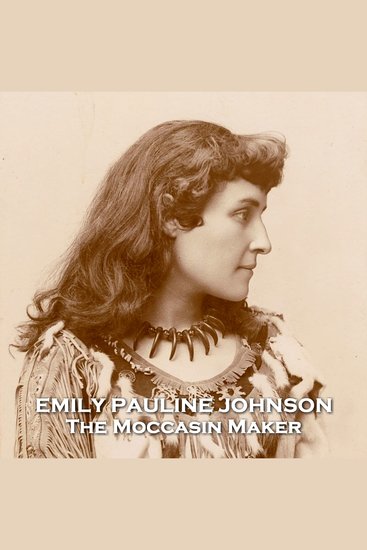
  • The Moccasin Maker - From their pens to your ears genius in every story - cover

    The Moccasin Maker - From their...

    Emily Pauline Johnson

    • 0
    • 0
    • 0
    The bookshelves of Canadian literature are incredible collections that have gathered together centuries of very talented authors.  From this continent their fame spread and whilst among their number many are now forgotten or neglected their talents endure.  Among them is Emily Pauline Johnson.
    Zum Buch
  • Luck - From their pens to your ears genius in every story - cover

    Luck - From their pens to your...

    Mark Twain

    • 0
    • 0
    • 0
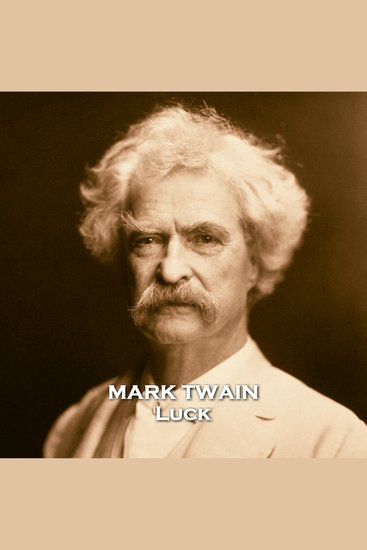
    Samuel Langhorne Clemens was born in Florida, Missouri on the 30th November 1835 and is far better known by his pen name of Mark Twain.  An American writer and humorist of the first order he is perhaps best known for his novels ‘The Adventures of Tom Sawyer’ and its sequel ‘The Adventures of Huckleberry Finn’ which are often described with that mythic line The Great American Novel. 
    Twain grew up in Hannibal, Missouri which would later provide the backdrop to these great novels.  Apprenticed to a printer he also became a typesetter and then a master riverboat pilot on the Mississippi.  Later, heading west with his brother Orion to make his fortune, he failed at gold mining and instead turned to journalism and thence his true calling as a writer of humorous stories where his wit and humor sparkled from every paragraph, his craft evident with every page and punctured target. 
    A staunch supporter of copyright protections this helped him keep much of the wealth his writing created, though much money was also lost on investments that he pursued in his love for science and technology as well as investing in his own inventions. 
    Twain was born during a visit by Halley’s comet, and he predicted that he would go out with it as well.  He died the day after its subsequent return on 21st April 1910, at his house, Stormfield, located in Redding, Connecticut.
    Zum Buch
  • How to Write a Blackwood Article - cover

    How to Write a Blackwood Article

    Edgar Allan Poe

    • 0
    • 0
    • 0
    Let me introduce you to Signora Psyche Zenobia. An adopted name of course, but for someone so flamboyant, appropriate.
    The good signora has aspirations. She would like to be a writer. At present she is the corresponding secretary to an interesting group of notables in Philadelphia which goes by a lengthy name with the initials of P.R.E.T.T.Y. B.L.U.E. B.A.T.C.H.!
    But how to get published? She travels to Edinburgh to meet with the esteemed proprietor and editor of 'Blackwood Magazine.' A real publication of the 1830s. He proceeds to tell her about the kinds of articles that catch the attention of readers in Blackwood's.
    Zum Buch