¡Acompáñanos a viajar por el mundo de los libros!
Añadir este libro a la estantería
Grey
Escribe un nuevo comentario Default profile 50px
Grey
Suscríbete para leer el libro completo o lee las primeras páginas gratis.
All characters reduced
We permeate into The Diamond Sutra - cover

We permeate into The Diamond Sutra

박 Nomadsirius

Editorial: YH Partners

  • 0
  • 0
  • 0

Sinopsis

Prologue.The Diamond that cuts through illusion is the last sutra of World-Honored One. It contains so much valuable wisdom. Staying in Anathapindika’s garden in the Jeta Grove near Sravasti, the Buddha awakens the Great Integrity. He teaches to get out of ignorance and agony to find the original nature. He urges to stop rational thinking with serene sensibility and wisdom. All composed world is like a dream or an illusion, like dew drops or lightning flashes.
Disponible desde: 01/12/2022.
Longitud de impresión: 107 páginas.

Otros libros que te pueden interesar

  • Life 30: Book Summary & Analysis - cover

    Life 30: Book Summary & Analysis

    Alexander Pike

    • 0
    • 0
    • 0
    This content is an independent and unofficial summary created for informational and educational purposes only. It is not affiliated with, authorized, approved, licensed, or endorsed by the original author or publisher. All rights to the original work belong to its respective copyright holders. This summary is not intended to substitute the original book, but to offer a concise overview and interpretation of its main ideas. 
    “Life 3.0” takes you on an exhilarating journey to the frontier of artificial intelligence, where the next form of life learns not only to write its own code but to design its own hardware and destiny. From the first sparks of self-improving algorithms to global governance frameworks and cosmic-scale scenarios, you’ll explore the six pathways to superintelligence and the high-stakes dilemmas of aligning powerful AI with human values. Through vivid thought experiments, case studies, and forward-looking strategies, this dynamic narrative equips productivity-focused adults with a dual mandate: accelerate your impact by mastering interdisciplinary collaboration and robust engineering practices, and safeguard our shared future by embedding ethics, transparency, and adaptable governance into every project. Prepare to reshape your professional vision—because the decisions you make today will reverberate through millennia.
    Ver libro
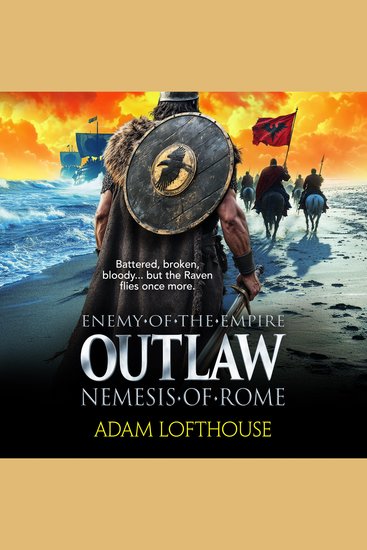
  • Outlaw: Nemesis of Rome - Discover the next action-packed thriller from Adam Lofthouse - cover

    Outlaw: Nemesis of Rome -...

    Adam Lofthouse

    • 0
    • 0
    • 0
    An epic action-packed adventure set outside the boundaries of Ancient Rome 🛡️ Must-read for fans of Conn Iggulden, Simon Scarrow and Ben Kane ⚔️ 
    'Highly recommended!' - M J Porter ⭐️⭐️⭐️⭐️⭐️ 
    It takes years to build a legend. 
    It takes mere heartbeats to shatter it to dust. 
    150 AD. Alaric, once lord of the Ravensworn is no longer feared nor revered. It has been six long years since his great defeat. He now lives life in the shadows. All hopes of glory and eternal rest in the Heroes Hall are gone. Alaric is alone. An outlaw to his land. 
    When a band of horsemen appear on the horizon, eager to recruit the man they still believe to be a lord of war. And so Alaric is pulled back to a life he thought had forsaken him. For in the far north of Germania lies a tribe in desperate need of aid. 
    In the far reaches of the land, for a cause not his own, Alaric will fly the Raven banner once more. In doing so, he will show both man and Gods that his story is not yet over. 
    *Title previously published as Ravensworn 
    Praise for Adam Lofthouse: 
    'Blood, guts and glory - the life of a German renegade and outlaw during the Roman occupation - fabulous!' Michael Jecks 
    'The characters are full of the life of the period, their flaws, their doubts, their abilities all on display; a feast for the readers' Hoover Book Review 
    'No holds barred, vivid Roman entertainment, probably the next best thing to actually being there' Speesh Reads 
    'A great mix of legion comradery with a personal plot you can get invested in, add in a couple of big twists along the way and you’ve got a smashing read' David's Book Blurg 
    'An absolute roller coaster.' ⭐⭐⭐⭐⭐ reader review 
    'It's a thoroughly un-put-down-able book!' ⭐⭐⭐⭐⭐ reader review 
    'A very, very good book from a very, very good new, young writer.' ⭐⭐⭐⭐⭐ reader review 
    'Brilliant!' ⭐⭐⭐⭐⭐Reader review
    Ver libro
  • Family Theory - cover

    Family Theory

    Introbooks Team

    • 0
    • 0
    • 0
    Way back in 1967 when Murray Bowen first publically proposed the idea of family theory or family therapy system he was not appreciated but his ideas are now being used by therapists with families. Any individual is inseparable from its network of relationships and all therapists who faced problems with the family of origin of the patients found this theory helpful as the awareness helped them to normalize the human behaviour of the people who were being treated.  
    Participants of the arrangement are anticipated to react to each other in a definite fashion conferring to their character, which is determined by relationship pacts. Within the confines of the structure, forms cultivate as definite family member's actions is instigated by and causes other family member's activities in expectable behaviours. Retaining the similar design of actions within a structure might lead to stability in the family system, but also to dysfunction. For instance in a family if the wife is depressed then the husband needs to take up the duties. This change in the job roles will help in stabilizing the relationship and will help in pushing the family in a diverse stability. This new stability attained may not last long as the husband may not be able to maintain his undertaken duties for a long time.  
    Murray Bowen has introduced eight such different concepts in his theory which have been discussed in this book.
    Ver libro
  • 100 Facts About Critical Thinking - English to Spanish - cover

    100 Facts About Critical...

    Science-Based Language Learning Lab

    • 0
    • 0
    • 0
    Introduction to the 100 Somethings Language Learning Series 
     
    Welcome to a revolutionary approach to language learning! This series helps you master Spanish by intertwining it with compelling topics like Critical Thinking. Each book centers on a theme (art, science, history) and presents 100 carefully chosen facts in both English and Spanish. 
     
    How It Works: 
     
    - Each fact is first introduced in Spanish, encouraging you to interpret it. 
     
    - The following page provides the fact in English and then repeats it in Spanish, aiding comprehension and memorization. 
     
    - The second half flips this order—English first, then Spanish, and English again—helping you practice translation in both directions for better mastery. 
     
    Benefits: 
     
    - Concise Learning: Focuses on one-sentence facts to ensure every word learned is impactful and directly related to your interests, making them easier to remember. 
     
    - Reinforcement: Alternating languages for each fact naturally strengthens vocabulary and grammar. 
     
    - Engagement: Learning vocabulary through topics you're passionate about keeps the process dynamic and relevant. 
     
    - Dual Knowledge: You enrich your understanding of a specific subject while learning a new language. 
     
    This series is tailored for learners who thrive on clear, targeted information, making it both educational and enjoyable. Whether you’re a beginner or expanding your linguistic skills, this series promises an effective and engaging educational journey. Embrace these 100 facts and let your passions drive your progress in mastering a new language!
    Ver libro
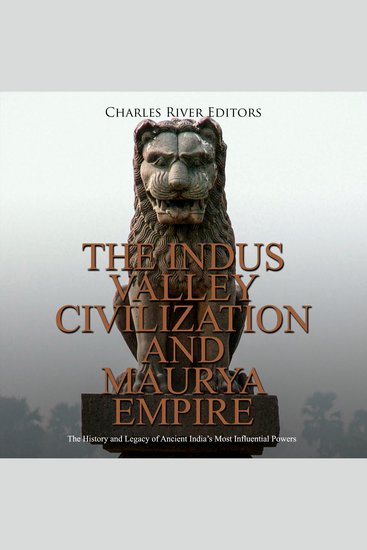
  • Indus Valley Civilization and Maurya Empire The: The History and Legacy of Ancient India’s Most Influential Powers - cover

    Indus Valley Civilization and...

    Editors Charles River

    • 0
    • 0
    • 0
    India’s oldest civilization, known as the Indus Valley Civilization or the Harappan Civilization, was contemporary with ancient Mesopotamia and ancient Egypt and had extensive contacts with the former, making it one of the most important early civilizations in the world. Spread out along the rivers of the Indus River Valley, hundreds of settlements began forming around 3300 BCE, eventually coalescing into a society that had all of the hallmarks of a true civilization, including writing, well-developed cities, a complex social structure, and long-distance trade. 
    During the last centuries of the first millennium BCE, most of the Mediterranean basin and the Near East were either directly or indirectly under the influence of Hellenism. The Greeks spread their ideas to Egypt, Mesopotamia, and Persia and attempted to unify all of the peoples of those regions under one government. Although some of the Hellenistic kingdoms proved to be powerful in their own rights – especially Ptolemaic Egypt and the Seleucid Empire, which encompassed all of Mesopotamia, most of the Levant, and much of Persia during its height – no single kingdom ever proved to be dominant. The Hellenic kingdoms battled each other for supremacy and even attempted to claim new lands, especially to the east, past the Indus River in lands that the Greeks referred to generally as India. But as the Hellenistic Greeks turned their eyes to the riches of India, a dynasty came to power that put most of the Indian subcontinent under the rule of one king. The dynasty that came to power in the late 4th century BCE is known today as the Mauryan Dynasty, and although the ruling family was short-lived and their power was ephemeral, its influence resonated for several subsequent centuries and spread as far east as China and into the Hellenistic west.
    Ver libro
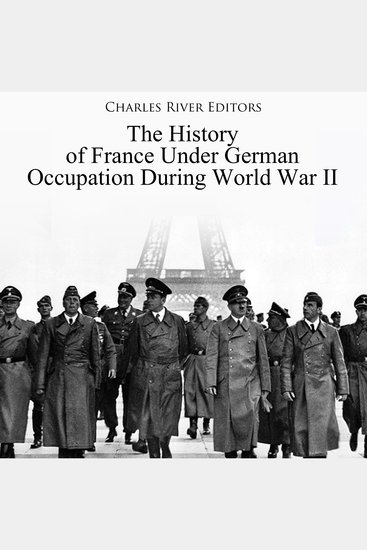
  • The History of France Under German Occupation During World War II - cover

    The History of France Under...

    Editors Charles River

    • 0
    • 0
    • 0
    Emerging from France's catastrophic 1940 defeat like a bedraggled and rather sinister phoenix, the French State – better known to history as “Vichy France” or the “Vichy Regime” after its spa-town capital – stands in history as a unique and bizarre creation of German Fuhrer Adolf Hitler's European conquests. A patchwork of paradoxes and contradictions, the Vichy Regime maintained a quasi-independent French nation for some time after the Third Reich invasion until the Germans decided to include it in their occupation zone. Headed by a French war hero of World War I, Marshal Philippe Petain, and his later Prime Minister Pierre Laval, Vichy France displayed strong right-wing, conservative, and authoritarian tendencies, though it never lapsed fully into fascism until the Germans arrived to reduce its role to little more than a mask over their own dominion. Petain carried out several major initiatives in an effort to counteract the alleged “decadence” of modern life and to restore the strength and “virtues” of the French “race.” Accordingly, he received willing support from more conservative elements of society, even some factions within the Catholic Church.  
    Of course, not all French people proved willing to surrender to the Nazi invaders, however. While large numbers “collaborated” – working for German or Vichy companies to provide for themselves or their families – and some wholeheartedly backed the new regime out of opportunism, fascist conviction, or other motivations, many courageous French resisted the Nazis and the quisling Vichy state. At the same time, despite the legends, the French Resistance never grew into a single unified organization. Rather, it remained divided in several major and numerous minor factions, each with their own philosophy and agenda. While these factions all shared the same goal – opposition to the Germans their Vichy pawns – they viewed each other with some suspicion and sometimes cooperated only grudgingly.
    Ver libro