Rejoignez-nous pour un voyage dans le monde des livres!
Ajouter ce livre à l'électronique
Grey
Ecrivez un nouveau commentaire Default profile 50px
Grey
Abonnez-vous pour lire le livre complet ou lisez les premières pages gratuitement!
All characters reduced
We delve into The Function of Reason - cover

We delve into The Function of Reason

박 Nomadsirius

Maison d'édition: YH Partners

  • 0
  • 0
  • 0

Synopsis

We delve into The Function of Reason(In English, 2023 Revision).Prologue.Whitehead (1861-1947) is a philosopher from England. He asserts that reason is an impulse toward empty concreteness. That impulse is not empty. It is a fundamental force that can give birth to something. This impulse of mind is appetition, which is an inherent agent of transcendental goals. Therefore, empty concreteness is embodied as material enjoyment. Whitehead\'s reason cannot exist without appetition. Jeong Yi-cheon of the Northern Song Dynasty, who developed Neo-Confucianism, also believed that the main body cannot be separated from the phenomenon. Whitehead advocates Plato, stating that all of Western philosophy is just a footnote to Plato\'s philosophy. However, he overcomes Plato by creating his own organic philosophy. Nietzsche, Marx, and Freud are also critics of the Platonic system. Plato\'s original sin is his ideology that isolates humans from the world and alienates them for 2000 years. Idea corresponds to all phenomena in a monolithic and organic manner. Whitehead can be seen as a Copernican Übermensch. ‘The Function of Reason’ is a lecture given at Princeton University in 1929. This book provides an easy and condensed summary of a long and difficult text.
Disponible depuis: 21/07/2023.
Longueur d'impression: 242 pages.

D'autres livres qui pourraient vous intéresser

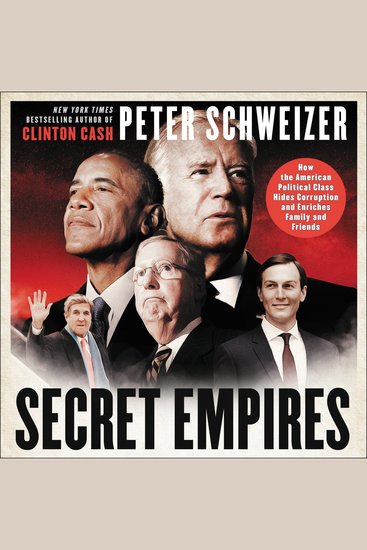
  • Secret Empires - How the American Political Class Hides Corruption and Enriches Family and Friends - cover

    Secret Empires - How the...

    Peter Schweizer

    • 0
    • 0
    • 0
    #1 New York Times Bestseller! 
    America's top politicians have discovered the scam to end all scams.  
    Peter Schweizer has been fighting corruption—and winning—for years. In Throw Them All Out, he exposed insider trading by members of Congress, leading to the passage of the STOCK Act. In Extortion, he uncovered how politicians use mafia-like tactics to enrich themselves. And in Clinton Cash, he revealed the Clintons’ massive money machine and sparked an FBI investigation. 
    Now he explains how a new corruption has taken hold, involving larger sums of money than ever before. Stuffing tens of thousands of dollars into a freezer has morphed into multibillion-dollar equity deals done in the dark corners of the world. 
    An American bank opening in China would be prohibited by US law from hiring a slew of family members of top Chinese politicians. However, a Chinese bank opening in America can hire anyone it wants. It can even invite the friends and families of American politicians to invest in can’t-lose deals. 
    President Donald Trump’s children have made front pages across the world for their dicey transactions. However, the media has barely looked into questionable deals made by those close to Barack Obama, Joe Biden, John Kerry, Mitch McConnell, and lesser-known politicians who have been in the game longer. 
    In many parts of the world, the children of powerful political figures go into business and profit handsomely, not necessarily because they are good at it, but because people want to curry favor with their influential parents. This is a relatively new phenomenon in the United States. But for relatives of some prominent political families, we may already be talking about hundreds of millions of dollars. 
    Deeply researched and packed with shocking revelations, Secret Empires identifies public servants who cannot be trusted and provides a path toward a more accountable government.
    Voir livre
  • Hind Swaraj or Indian Home Rule - cover

    Hind Swaraj or Indian Home Rule

    Mohandas Karamchand Gandhi

    • 0
    • 0
    • 0
    First written in Gandhi's native language Gujarati, this booklet advocates for Indian non-violent self-rule during the struggle for Indian independence against the British Empire. It is written as a dialogue between two characters. In it, the "Reader" serves as a typical Indian countryman (the targeted audience for Hind Swaraj), who voices common beliefs and arguments of the time concerning Indian independence, while Gandhi, the "Editor," explains why those arguments are flawed and interjects his own valuable arguments of self-reliance, passive resistance and the Indian identity.The Gujarati-language publication was banned from publication by the British in India, causing Gandhi to translate it to English himself to evade the British authorities, as well as rally support from English-speaking Indians and international supporters of independence. It is now considered the intellectual blueprint of India's independence movement. (Mary Kay and Wikipedia)
    Voir livre
  • History of Holland - cover

    History of Holland

    George Edmundson

    • 0
    • 0
    • 0
    The title, "History of Holland," given to this volume is fully justified by the predominant part which the great maritime province of Holland took in the War of Independence and throughout the whole of the subsequent history of the Dutch state and people.(Summary from book prologue)
    Voir livre
  • The Spanish Wars - cover

    The Spanish Wars

    Julius Caesar

    • 0
    • 0
    • 0
    The Spanish Wars, a series of military campaigns led by Julius Caesar, encompassed a breadth of engagements in the Iberian Peninsula between 59 and 45 BC. These wars are notable for their significant contribution to Roman imperial expansion, as they enabled the subjugation and conquest of Hispania under Roman authority. Furthermore, the Spanish Wars were preeminent in Caesar's career as a general, providing ample opportunities to demonstrate his tactical acumen and superior leadership capabilities. Read in English, unabridged.
    Voir livre
  • The Woman's Prize or the Tamer Tamed - cover

    The Woman's Prize or the Tamer...

    John Fletcher

    • 0
    • 0
    • 0
    John Fletcher's comedy (probably written and performed around 1611) is a sequel to Shakespeare's The Taming of the Shrew, in which, as the title suggests, the tamer will be tamed. Petruchio, the shrew-tamer, has been widowed, and marries a second wife, Maria, a "chaste witty lady." At the instigation of her cousin Bianca, and with the fellowship of her sister Livia, Maria decides to go on strike for equal rights, refusing to behave as a proper 17th century wife.  Fletcher's play addresses the issue of men and women's roles within marriage, a controversial issue for his day. (Summary by Elizabeth Klett) 
     
    CastNarrator/Bianca: Elizabeth KlettMoroso: Leonard WilsonTranio: mbSophocles: DublinGothicJaques: Cliff ThompsonRowland: Libby GohnLivia: Charlotte DuckettMaria: Arielle LipshawPetruchio: Kevin GreenPetronius: Algy PugPedro: Timothy FergusonFirst Maid/Country Wife/Doctor: Caprisha PageSecond Maid/City Wife/Second Watch: Amanda FridayThird Maid/First Watch/Servant: Grace GarrettAudio edited by Elizabeth Klett
    Voir livre
  • Survival of the Virtuous - The Evolution of Moral Psychology - cover

    Survival of the Virtuous - The...

    Dennis L. Krebs

    • 0
    • 0
    • 0
    Do good guys finish last? Did we evolve to look out for number one? Are we bad by nature? At first glance, the theory of evolution seems to imply that all organisms are evolved to be selfish. 


    In this book, evolutionary psychologist Dennis Krebs explains how virtuous behaviors such as altruism, justice, honesty, loyalty, self-control, purity, and respect for authority, have evolved in humans and other species. He argues that the key to solving puzzles of morality—such as what it is, how we acquire moral traits, why we sometimes behave badly, and how we make moral decisions—lies in figuring out what adaptive functions moral traits served in early human environments and how they are influenced by social learning, culture, and strategic social interactions in the modern world. Arguing that the primary function of virtuous behaviors is to enable individuals to advance their own interests and examining the moral decision-making mechanisms that evolved to serve these functions, this book considers the "new brain" mechanisms that are unique to humans and "old brain" mechanisms that we share with other species, illuminating how these work in conjunction with each other to guide our moral choices.
    Voir livre