Begleiten Sie uns auf eine literarische Weltreise!
Buch zum Bücherregal hinzufügen
Grey
Einen neuen Kommentar schreiben Default profile 50px
Grey
Jetzt das ganze Buch im Abo oder die ersten Seiten gratis lesen!
All characters reduced
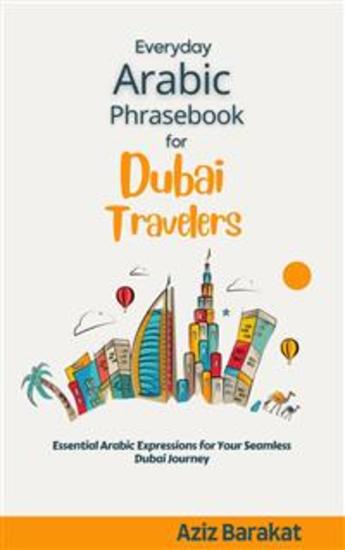
Everyday Arabic Phrasebook for Dubai Travelers - Essential Arabic Expressions for Your Seamless Dubai Journey - cover

Everyday Arabic Phrasebook for Dubai Travelers - Essential Arabic Expressions for Your Seamless Dubai Journey

Aziz Barakat

Verlag: Klish T. Kinderman

  • 0
  • 0
  • 0

Beschreibung

Are you ready to embark on an unforgettable journey to the dazzling city of Dubai? Prepare to immerse yourself in the vibrant culture, explore breathtaking landmarks, and connect with the warm-hearted people of this bustling metropolis.

To make your Dubai adventure truly exceptional, arm yourself with the "Everyday Arabic Phrasebook for Dubai Travelers."

Unlock a World of Opportunities:
Dubai is a city of contrasts where traditional Arabian charm meets modern luxury. While English is widely spoken, there's no better way to show respect for the local culture than by speaking a few words in Arabic.
Our phrasebook empowers you with essential Arabic phrases, ensuring that you can engage confidently with locals, navigate the city effortlessly, and create memorable connections.
 
Explore with Confidence:
Picture yourself strolling through the historic Al Fahidi neighborhood, bargaining at the bustling markets of Deira, or savoring traditional Emirati cuisine in a local eatery.

With our carefully curated phrases, you'll effortlessly order your favorite dishes, ask for directions, and engage in meaningful conversations with newfound friends. Say goodbye to language barriers and hello to authentic Dubai experiences!

Tailored for Tourists:
Designed with the traveler in mind, our phrasebook is compact, easy to use, and organized for quick reference. Whether you're a first-time visitor or returning for more Dubai adventures, you'll find the perfect phrase for every situation.

From greetings and dining etiquette to shopping and emergencies, we've got you covered.
 
What You'll Discover Inside:

	A comprehensive guide to Arabic pronunciation and basics.
	Over 200 practical phrases and expressions for daily use.
	Cultural insights to help you connect on a deeper level.
	Tips for respectful and polite interactions with locals.

 Get Your Copy Now:
Make the most of your Dubai journey by breaking down language barriers and embracing the local culture. The "Everyday Arabic Phrasebook for Dubai Travelers" is your ticket to unforgettable experiences and authentic connections in the heart of the Arabian Peninsula.
Don't miss out on the opportunity to enrich your Dubai adventure. Get your copy today and embark on a voyage that will leave you with cherished memories, lasting friendships, and a deep appreciation for the magic of Dubai!


Verfügbar seit: 19.09.2023.

Weitere Bücher, die Sie mögen werden

  • Edo Period - Tokugawa Rule Isolation and the Samurai Code - cover

    Edo Period - Tokugawa Rule...

    Rolf Hedger

    • 0
    • 0
    • 0
    The Edo period in Japan began with the dramatic rise of Tokugawa Ieyasu and the establishment of the Tokugawa Shogunate, which would bring over two centuries of relative peace and stability to the country. This transformation was not immediate but was set into motion by the pivotal Battle of Sekigahara in 1600. Ieyasu, a powerful daimyo and skilled strategist, emerged victorious in this decisive conflict, defeating rival factions and securing his dominance over the fractured Japanese landscape. This battle marked the end of the Warring States period, a time of nearly constant civil war, and laid the foundation for a new era of centralized feudal rule. 
    In 1603, Ieyasu was granted the title of shogun by the emperor, officially establishing the Tokugawa Shogunate. Although the emperor remained a symbolic figurehead, true political power rested with the shogun. Ieyasu’s government was based in Edo, a small fishing village that quickly developed into a sprawling political and economic center—modern-day Tokyo. From here, the Tokugawa clan implemented a system of governance that emphasized strict control, social hierarchy, and regional oversight. The shogunate devised a complex administrative structure that allowed it to maintain authority over hundreds of semi-autonomous domains ruled by daimyo, while ensuring loyalty through a combination of military strength, economic policy, and social regulation. 
    One of the key strategies used by Tokugawa Ieyasu to solidify his power was the creation of the han system. Under this arrangement, each daimyo governed a specific territory but was subject to strict oversight from the shogunate. The policy of sankin-kotai, or alternate attendance, required daimyo to spend alternating years in Edo, effectively draining their resources and keeping them under close surveillance. Their families were often kept in Edo as virtual hostages, ensuring obedience and discouraging rebellion.
    Zum Buch
  • Walking with Nomads - cover

    Walking with Nomads

    Alice Morrison

    • 0
    • 0
    • 0
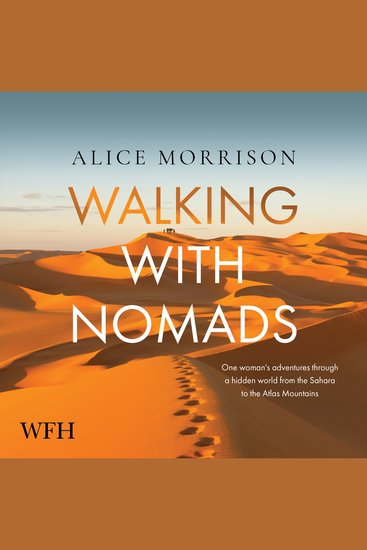
    Adventurer and TV presenter Alice Morrison takes the reader on tAdventurer and TV presenter Alice Morrison takes the reader on three remarkable and inspirational journeys across Morocco, from the Sahara to the Atlas Mountains, to reveal the growing challenges faced by our planet.  
     
    Accompanied only by three Amazigh Muslim men and their camels, Scottish explorer Alice Morrison set off to find a hidden world. During her journey along the Draa river, she encountered dinosaur footprints and discovered a lost city, as well as what looked like a map of an ancient spaceship, all the while trying to avoid landmines, quicksand and the deadly horned viper.  
     
    Walking with Nomads reveals the transformative richness of the desert and the mountains, providing a total escape from everyday concerns, but it also shows how the ancient world of the nomad is under threat as never before…
    Zum Buch
  • When Echoes Speak - A Memoir - cover

    When Echoes Speak - A Memoir

    Dag Scheer

    • 0
    • 0
    • 0
    Through atmospheric descriptions and vivid portraits, When Echoes Speak offers glimpses into exotic worlds, taking the reader from a drab displaced persons camp, to the throbbing rhythms of Rio’s frenzied Carnival, to heartrending encounters in Ethiopia. In looking back, Dag Scheer discovers intricate and rich patterns in her life and weaves together the connecting threads.A blend of memoir and cultural exploration, When Echoes Speak distills the defining moments of an unusual life. In August of 1944, when Dag was five, she and her family fled Latvia to escape Soviet occupation. After five harsh years in a displaced persons camp in Germany, the family settled in Cleveland, Ohio. Growing up, Dag was caught in a painful pull between her Latvian roots and her new life in America.Determined to find her own path, she left home to teach in Libya where she met Stuart Scheer, a young charismatic doctor. They explored Libya’s scorching desert terrain together, and their intense relationship deepened. After they married, Stuart’s work took them to eight different countries across the globe. In recounting the frustrations and delights of each new location and its unique culture, Dag probes her inner transformations. Ultimately, the shifting perspective of being perpetually out of place helped her find a sense of self.
    Zum Buch
  • The Evolution of Peru's Economy - A Historical Perspective - cover

    The Evolution of Peru's Economy...

    Anya Solace

    • 0
    • 0
    • 0
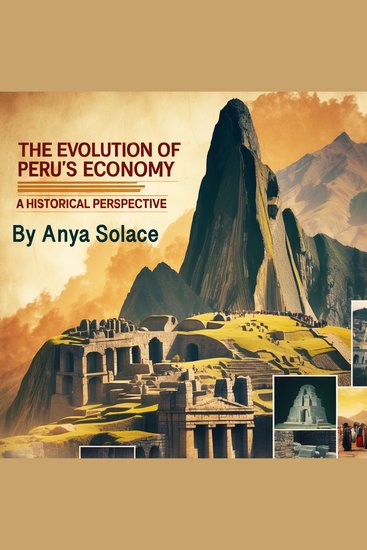
    Peru’s economy has undergone a remarkable transformation over the centuries, shaped by geography, cultural heritage, and global economic forces. From the highly organized economic structures of pre-Colonial civilizations to the challenges of modern globalization, Peru’s development reflects a complex interplay of resource management, foreign influence, and domestic policies. Understanding the evolution of Peru’s economy requires a historical perspective that highlights the fundamental shifts in trade, industry, and governance that have defined the nation’s financial landscape.  
      
    The economic foundations of Peru were deeply influenced by its diverse geography and rich natural resources. The Andes, Amazon rainforest, and coastal plains provided a variety of ecosystems that supported agriculture, mining, and trade. Long before Spanish colonization, the Andean civilizations, particularly the Incas, developed sophisticated economic systems that relied on communal labor, redistribution networks, and agricultural innovations. These early economic structures created a foundation for productivity and social organization that persisted even after European intervention.  
      
    The arrival of the Spanish in the 16th century drastically altered Peru’s economic trajectory. The colonial period introduced extractive systems, such as the encomienda and mita, which forced indigenous populations into labor-intensive industries, particularly silver mining. This period established Peru as a key contributor to the Spanish Empire’s wealth but also entrenched an economic model centered on resource extraction and dependency on European markets. The restrictions imposed by Spain limited Peru’s economic autonomy, setting the stage for struggles following independence. 
    Zum Buch
  • We Love Toa Payoh - cover

    We Love Toa Payoh

    Singapore Urban Sketchers

    • 0
    • 1
    • 0
    Admire beautiful sketches of well-loved places in Toa Payoh—the grand old dame that is the Toa Payoh Swimming Complex; the lovely Toa Payoh Town Park; the famous Lian Shan Shuang Lin Monastery…. Or reminisce over the smaller nooks and crannies, such as the old-timer Bugs Bunny barber shop and the bird singing pavilion at Lorong 4.  
     
    By artists from Urban Sketchers Singapore, the drawings  in this little time capsule of a book bring to you all that  is quintessentially ‘Toa Payoh’.
    Zum Buch
  • Fitness Tracking and Measurement - Optimizing Results Through Data and Analysis (2 in 1) - cover

    Fitness Tracking and Measurement...

    Zane Ryder

    • 0
    • 0
    • 0
    This book contains 2 titles, which are: 
    - Fitness Tracking: The concept of tracking fitness isn’t entirely new—athletes have long relied on basic tools like stopwatches and pedometers to monitor their performance. However, the digital age has elevated this practice to unprecedented levels. Modern fitness trackers, ranging from wearable devices to smartphone apps, provide comprehensive insights into various aspects of health, including heart rate, activity levels, sleep quality, and calorie consumption. These technologies have become accessible to the average person, democratizing fitness knowledge and enabling users to make informed decisions about their health. 
    - Fitness on the Go: Traveling can often disrupt our usual routines, and one of the first things many people sacrifice while on the go is fitness. However, staying active during your travels is not only possible, but it can also be incredibly rewarding. Fitness on the go is about making small adjustments to your routine that allow you to maintain your health, improve your energy, and help you stay balanced no matter where you are. This chapter will explore the benefits of staying fit while traveling, how to overcome common barriers, and how to set realistic fitness goals while on the move. 
    Fitness during travel is not just about physical health; it’s also about mental well-being. Engaging in regular exercise can help reduce the stress and anxiety that often accompany travel, especially with tight schedules, time zone changes, or unfamiliar environments. Staying active releases endorphins, the body’s natural stress relievers, helping you stay relaxed and focused. Moreover, travel workouts can improve your sleep quality and keep your energy levels high, making your trip more enjoyable and productive.
    Zum Buch