Join us on a literary world trip!
Add this book to bookshelf
Grey
Write a new comment Default profile 50px
Grey
Subscribe to read the full book or read the first pages for free!
All characters reduced
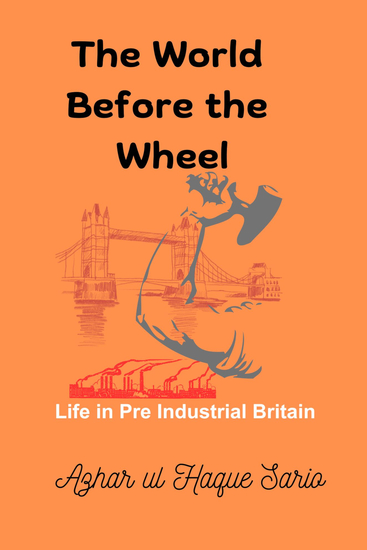
The World Before the Wheel - Life in Pre Industrial Britain - cover

The World Before the Wheel - Life in Pre Industrial Britain

Azhar ul Haque Sario

Publisher: Azhar Sario Hungary

  • 0
  • 0
  • 0

Summary

Have you ever thought about how people lived before factories started operating and steam engines became common? "The World Before the Wheel: The book "Life in Pre-Industrial Britain" guides readers through a historical exploration of our forebears' intriguing existence. Our journey will take us through their living spaces ranging from modest cottages to luxurious estates to explore their diets, clothing choices, and beliefs. Our exploration will cover the daily routines of their lives including field work and visits to energetic markets and entertaining fairs.


This book explores the lives of ordinary people rather than just kings and queens. Our journey will include meetings with farmers, weavers, blacksmiths, and merchants to learn about their lifestyles and work interactions. We'll explore a range of difficulties they encountered which included both disease and famine as well as crime and poverty. Our exploration will reveal their resilience and ingenuity as well as their rich cultural traditions. "The World Before the Wheel" explores the critical era in a new way by shedding light on daily life beyond traditional economic or political history narratives. This course will provide you with a comprehensive understanding of the key elements that defined pre-industrial Britain while revealing how these elements created the basis for today's world.
Available since: 06/15/2025.
Print length: 148 pages.

Other books that might interest you

  • The Rule of Law - A Very Short Introduction - cover

    The Rule of Law - A Very Short...

    Aziz Z. Huq

    • 0
    • 0
    • 0
    Politicians, judges, and citizens commonly use the phrase "rule of law" to describe some good that flows from a legal system. But what precisely is that good? Even in Aristotle's time, there was no agreement on either its nature, and on whether it counted as an unqualified good. Even now, a core rule-of-law aspiration is that law can constrain how power is flexed. But how or when? Disagreement persists as to whether the rule of law is a matter of how law is used or why it is deployed. In consequence, the World Bank, the leaders of Singapore's one-party state, and the Communist Party in China can all offer their own spins on the concept. 


    By charting these disagreements and showing the overlap and the conflicts between different understandings of the concept, Aziz Z. Huq shows how the rule of law can still be used as an important tool for framing and evaluating the goals and functions of a legal system. He traces the idea's historical origins from ancient Greece to the constitutional theorist Albert Venn Dicey to the economist and political philosopher Friedrich Hayek. And he explores how that value is coming under pressure from terrorist threats, macroeconomic crisis, pandemics, autocratic populism, and climate change.
    Show book
  • Jack Kerouac: A short biography - 5 Minutes: Short on time - long on info! - cover

    Jack Kerouac: A short biography...

    5 Minutes, 5 Minute Biographies,...

    • 0
    • 0
    • 0
    Jack Kerouac, American writer and voice of the beat generation: Life and work in a short biography! Everything you need to know, brief and concise. Infotainment, education and entertainment at its best!
    Show book
  • Climate Optimism - Celebrating Systemic Change Around the World - cover

    Climate Optimism - Celebrating...

    Zahra Biabani

    • 0
    • 0
    • 0
    Change the way you think about the future. The fate of humanity can be daunting, but we don't need to live in that space. First, we need to change our attitude in order to implement nature-based solutions to deal with climate change. Good news: there are environmental trends and examples to change the way you think about how we can protect the planet. 


    Get to know Zahra Biabani, a climate activist, influencer, CEO, and writer. After unexpectedly establishing a career as an online sustainability educator and influencer, Zahra decided to jump headfirst into the waters of entrepreneurship and authorship. Climate Optimism is her way to spread hope. 


    Inside, you'll find: 


    ● Real stories on environmental sustainability in other countries that are working 


    ● A mix of unique solutions and practical advice on how to face climate change 


    ● Good news on how to change the way you think and feel about the climate crisis 


    If you're looking for a sustainable living book or books for activists centered on environmentalism like A Field Guide to Climate Anxiety, The Intersectional Environmentalist, or Sustainable Badass, you'll love Climate Optimism.
    Show book
  • The Complete Guide to Parenting Your Child with ADHD - Proven Stress-Free Solutions to Build Confidence Connection and Consistency at Home and School - cover

    The Complete Guide to Parenting...

    Dr. Victoria Barclay-Timmis

    • 0
    • 0
    • 0
    ADHD gives your child a unique way of experiencing the world… and this means you need a unique approach to parenting. 
    Your child has a whole host of strengths and positive characteristics that, when nurtured and harnessed, will give them all they need to thrive. 
    What you need is clear advice for supporting those strengths while helping them navigate a world that makes life difficult for them—at the same time as taking care of yourself. 
    This practical guide for parents contains what you need to know to support your child, celebrate their strengths, and help them carve out a path to success… while simultaneously equipping you with the survival tips you need as you face the daily challenges ADHD brings with it.  
    Inside, you’ll discover: 
    ●	A deeper understanding of ADHD and its symptoms… and the changes you can expect as your child grows up 
    ●	How to create an emotionally safe environment for your child and connect with them on a deeper level 
    ●	What you can do to develop your child’s empathy and emotional regulation skills  
    ●	Why routines are your secret superpower—and how to use them to make both you and your child feel calmer 
    ●	Effective techniques for navigating your child’s emotional triggers and sensory overload 
    ●	Budget-friendly ways to help your child with time management and give them the sensory stimulation that will help them thrive 
    ●	Exactly what you need to know in order to advocate for your child within the education system 
    ●	Why a support network is such a valuable tool… and how to build yours 
    ●	How you can get ahead of the game and plan for the challenges your child will face later on in their development 
    ●	Bonus content designed exclusively to help you prepare for an ADHD assessment—and feel confident talking to your child about their diagnosis.
    Show book
  • Crime and Punishment in Ancient Egypt: The History and Legacy of the Egyptians’ Concepts of Justice - cover

    Crime and Punishment in Ancient...

    Editors Charles River

    • 0
    • 0
    • 0
    In ancient Egypt, the underpinning concept in law, in theory, was that rich and poor citizens should be treated equally, but this was an aspiration that was rarely fulfilled in practice. At the same time, the types of treatment delivered to those deemed guilty could also be harsh - common punishments included confiscation of property, slavery, beatings, and mutilation. During both the Old Kingdom (c. 2700 BCE – 2200 BCE) and Middle Kingdom (c. 2030 BCE – 1650 BCE), crime was dealt with by local officials using their own private police forces. However, during the New Kingdom (c. 1539 BCE – 1075 BCE) a centralized police force emerged, consisting of Nubian tribesmen under an Egyptian supervisor, who were armed with staffs and used specially trained dogs. 
    	In extreme cases, the death penalty was invoked, sometimes with the additional punishment of ensuring that the convicted were refused a burial or were buried but without full rituals. Based on the Egyptians’ religious beliefs, both situations resulted in the guilty being denied entry to the afterlife. 
    	Perhaps not surprisingly, not all laws related directly to criminal activity. Civil disputes were common, and suits by a plaintiff against a defendant provide another major source about the Egyptian legal system, as do the copies of the many legal transactions and contracts that date from the 7th century BCE onwards when the popular form of the written language (Demotic) started to become more widely used. Indeed, it is often difficult to distinguish between civil and criminal cases in the available records. Following the introduction of writing, however, written deeds or contracts quickly replaced traditional oral agreements, and many of these extant documents reveal considerable detail about the laws of ancient Egypt.
    Show book
  • Who Do We Choose to Be? Second Edition - Facing Reality Claiming Leadership Restoring Sanity - cover

    Who Do We Choose to Be? Second...

    Margaret J. Wheatley

    • 0
    • 0
    • 0
    In a world we cannot recognize, how do we find a way forward? In this world we do not understand, how do we know what to do? When so little is comprehensible, what is meaningful work? What is genuine contribution? 
     
    Bestselling author Margaret Wheatley has summoned us to be courageous leaders who strengthen community and rely on fully engaged people since her 1992 classic book, Leadership and the New Science, and eight subsequent books. In response to how quickly society is changing and the exponential increase in leadership challenges, this second edition of her latest bestseller is 80% new material. 
     
    How do we see clearly so that we can act wisely? Wheatley brings present reality into clear and troubling focus using multiple lenses of Western and Indigenous sciences, and the historic patterns of collapse in complex civilizations. With gentle but insistent guidance to face reality, she offers us the path and practices to be sane leaders who know how to evoke people's inherent generosity, creativity, and kindness. 
     
    Skillfully weaving science, history, exemplars, poetry, and quotes with stories and practices, Wheatley asks us to be Warriors for the Human Spirit, leaders and citizens who stay engaged, choose service over self, stand steadfast in the midst of crises, and offer our reliable presence of compassion and insight no matter what.
    Show book