Begleiten Sie uns auf eine literarische Weltreise!
Buch zum Bücherregal hinzufügen
Grey
Einen neuen Kommentar schreiben Default profile 50px
Grey
Jetzt das ganze Buch im Abo oder die ersten Seiten gratis lesen!
All characters reduced
The Billion-Dollar Skill - A Guide to Thriving in the Tech-Driven World - cover

The Billion-Dollar Skill - A Guide to Thriving in the Tech-Driven World

Azamat Yestay

Übersetzer Azamat Yestay

Verlag: Azamat Yestayev

  • 0
  • 0
  • 0

Beschreibung

In today’s tech-driven world, success depends on your ability to adapt and leverage digital tools effectively. "The Billion-Dollar Skill: A Guide to Thriving in the Tech-Driven World" is a practical roadmap for turning your expertise into real income using modern technology. Its primary goal is to simplify the use of technology by offering tools and step-by-step guidance that help you turn your professional knowledge into tangible income.
 
At its core, the book introduces the Billion-Dollar Skill—a structured approach to simplifying technology and applying it to your domain expertise. Whether you’re an entrepreneur, a professional, or someone looking to gain more control over your career, this guide provides clear, actionable steps to help you stay competitive in the digital economy. 
 
Whether you're an entrepreneur, a professional, or someone ready to take control of your future, "The Billion-Dollar Skill" offers actionable insights, cutting-edge strategies, and transformative tools to help you thrive in a world shaped by technology.
 
You’ll learn how to:
 
Turn your ideas into profitable projects without needing a large team or technical background;
 
Build a personal brand, market your skills, and create sustainable income streams;
 
Use AI, automation, and no-code platforms to streamline work and improve efficiency.
 
This book isn’t about vague motivation—it’s a hands-on guide to making technology work for you. If you're ready to take practical steps toward career growth and financial independence, The Billion-Dollar Skill will show you how. 
 
Success isn’t reserved for a select few — it’s within reach for anyone willing to take the first step. Your future is waiting. The only question is: will you take the leap?
Verfügbar seit: 21.03.2025.
Drucklänge: 350 Seiten.

Weitere Bücher, die Sie mögen werden

  • OnlyFans Marketing Secrets - The Only Guide You'll Need to Become a Top 1% Earner - cover

    OnlyFans Marketing Secrets - The...

    Benjamin Juice

    • 0
    • 0
    • 0
    Learn untraditional online marketing strategies to become a top earner on OnlyFans.
    Zum Buch
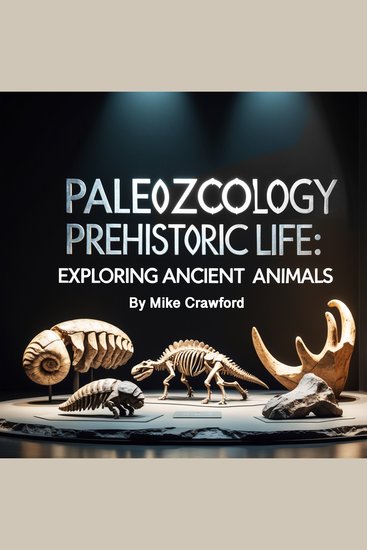
  • Paleozoology - Prehistoric Life: Exploring Ancient Animals - cover

    Paleozoology - Prehistoric Life:...

    Mike Crawford

    • 0
    • 0
    • 0
    Paleozoology is the study of ancient animals, examining their evolution, behavior, and interactions within prehistoric ecosystems. As a subfield of paleontology, it focuses specifically on the fossilized remains of animals, reconstructing their lives and understanding their role in the history of life on Earth. By analyzing fossilized bones, shells, footprints, and even traces of ancient DNA, paleozoologists uncover details about species that lived millions of years ago. 
    The significance of paleozoology extends beyond mere curiosity about prehistoric creatures. It provides crucial insights into how life evolved, how ecosystems changed over time, and how past extinctions shaped the modern world. Studying ancient animals helps scientists recognize patterns in evolution and extinction, offering valuable knowledge about biodiversity and climate change. These lessons are particularly relevant today as humanity faces environmental challenges that threaten species survival. 
    Paleozoologists employ various methods to study prehistoric life. Fossil excavation is a fundamental aspect, requiring careful digging and preservation techniques to recover delicate remains. Once fossils are collected, researchers use radiometric dating to determine their age, comparing them with geological layers for context. Comparative anatomy is another essential tool, allowing scientists to reconstruct ancient creatures by comparing their fossils to modern animals with similar structures. In recent years, advanced imaging technology, such as CT scans, has enabled paleozoologists to examine fossils in greater detail, even uncovering soft tissues that rarely fossilize.
    Zum Buch
  • Evolution Is Wrong - A Radical Approach to the Origin and Transformation of Life - cover

    Evolution Is Wrong - A Radical...

    Erich von Däniken

    • 0
    • 0
    • 0
    A Fascinating Exploration on Why the Darwinists’ Theory No Longer Explains EverythingThere was once a set of ideas called the theory of evolution, conceived by clever people and confirmed by countless scientists. Then people discovered the electron microscope. This made it possible to make the molecules within the cell visible, and suddenly questions about evolution arose that were not possible before. Which force actually bundles the atoms in the right order? What moves the molecular chains into the correct position? How did the first living unit within the cell actually come about? How does inheritance work, how does information pass on to the next generation? Did humans descend only and exclusively from primates—as Charles Darwin and countless other great minds assumed—or did additional “engines” intervene in evolution? Today it is clear: countless questions can no longer be answered with the previous theory of evolution. There is a form of life called “Blob” (Physarum polycephalum). The “thing” has neither eyes nor ears, neither a mouth nor a nose or even a brain. Nevertheless, it takes in food, overcomes obstacles by the shortest route and exchanges information with other “blobs.” The “blob” contradicts any evolutionary thought that one develops from the other. Or the “gastric-brooding frogs” (Rheobatrachus) found in Australia. They hatch their young in the stomach. Impossible in a slow, evolutionary process. Everywhere there are characteristics of animals that do not want to fit into the theory of evolution anywhere. And man? Are we really the most adapted life-form on this planet? Today, more and more scientists who contradict the previous theory of evolution speak out. The theory fits the changes within the species, but it can no longer be reconciled with the inner workings of the cell. Some other influence that has so far escaped us is affecting evolution. It is called “Intelligent Design.” Intelligent planning is suspected behind this. Anyone or anything—a spirit of the universe? Aliens?—could be behind this planning. Erich von Däniken uses countless examples to demonstrate the impossibility of the previous evolutionary idea. He quotes scientists who argue against the previous teaching, but also those who defend it. Unfortunately, established science still refuses to look at discrepancies and holes in the theory of evolution, even though it is quite obvious that there is more going on with regard to the development of all species, as well as human culture, than could be explained by the theory of evolution alone.
    Zum Buch
  • Urban Poverty and Inequality - Analysis and Solutions - cover

    Urban Poverty and Inequality -...

    Lyric Vale

    • 0
    • 0
    • 0
    Urban poverty is a pervasive issue that affects millions of people living in cities worldwide. As cities continue to grow at an unprecedented rate, the number of urban poor continues to rise, with large portions of the population living in conditions of extreme deprivation. The term "urban poverty" refers to the situation where individuals and families in urban areas experience a lack of access to basic resources, such as adequate housing, healthcare, education, and employment opportunities. Despite being situated in areas of economic activity and growth, urban poor populations face numerous challenges that contribute to their ongoing struggle for survival and upward mobility. 
    The growth of cities and urban centers has been accompanied by an increasing divide between the wealthy and the poor. While urban areas are often seen as hubs of opportunity, economic growth, and development, they also tend to highlight social and economic inequalities. Rapid urbanization, coupled with limited resources, leads to overcrowded slums, informal settlements, and a lack of infrastructure in many parts of cities. In such environments, the poor face challenges such as high unemployment rates, limited access to education, and poor healthcare services. These conditions create a cycle of poverty that is difficult to escape. 
    In addition, the urban poor are often excluded from key economic and social systems that would help alleviate their poverty. The concentration of wealth in urban centers disproportionately benefits the middle and upper classes, while marginalized communities remain on the periphery, unable to fully participate in the economic, political, and social life of the city. This growing inequality between different social classes exacerbates poverty and leaves the urban poor trapped in a cycle of disadvantage.
    Zum Buch
  • Mountain Breeze: Baby Sleep White Noise - For a Quality Baby Sleep Rountine - cover

    Mountain Breeze: Baby Sleep...

    Baby Sleep

    • 0
    • 0
    • 0
    Soothe your baby with the refreshing calm of Mountain Breeze: Baby Sleep White Noise. 
    This audiobook captures the peaceful sound of a gentle mountain breeze, creating a serene environment for your baby’s sleep. The soft white noise mimics the natural flow of air in the mountains, helping your little one relax and drift into deep, peaceful sleep. 
    Imagine your baby sleeping soundly, cradled by the soothing whisper of a mountain breeze. The calming white noise helps block out distractions and creates a peaceful atmosphere, ensuring restful and undisturbed sleep. 
    Bring the serenity of the mountains to your baby’s bedtime. Download Mountain Breeze: Baby Sleep White Noise and let the gentle breeze carry your baby into a restful slumber.
    Zum Buch
  • Pollution - The Environmental Crisis That Threatens Our Health - cover

    Pollution - The Environmental...

    Marcus Klein

    • 0
    • 0
    • 0
    Pollution is a pervasive and urgent global issue that affects every corner of the planet, from the air we breathe to the water we drink and the land we depend on for survival. Over the past century, the rapid pace of industrialization, urbanization, and population growth has contributed significantly to environmental degradation. What was once seen as the price of progress has now become a formidable challenge that threatens the health of humans, animals, and ecosystems alike.  
      
    The scope of pollution is vast and multifaceted. It encompasses a wide range of pollutants, including chemicals, plastics, heavy metals, and greenhouse gases, which infiltrate the air, water, and soil. While air pollution from vehicle emissions and industrial activities poses immediate health risks, water pollution contaminates vital freshwater resources, threatening marine ecosystems and human livelihoods. Land pollution, driven by improper waste disposal and deforestation, further exacerbates the crisis by depleting soil fertility and destroying habitats. Together, these forms of pollution create a complex web of environmental and health hazards that demand immediate attention.  
      
    Human health is intricately tied to the environment, making pollution a direct and indirect cause of numerous diseases and conditions. Respiratory ailments, cardiovascular issues, and neurological disorders are increasingly linked to exposure to polluted air and toxic chemicals. Vulnerable populations, such as children and low-income communities, bear a disproportionate burden of these impacts, amplifying social inequalities. Beyond physical health, the psychological toll of living in a degraded environment adds another layer of complexity to the crisis. 
    Zum Buch