Begleiten Sie uns auf eine literarische Weltreise!
Buch zum Bücherregal hinzufügen
Grey
Einen neuen Kommentar schreiben Default profile 50px
Grey
Jetzt das ganze Buch im Abo oder die ersten Seiten gratis lesen!
All characters reduced
Chess Evolution - cover

Chess Evolution

Ava Thompson

Übersetzer A Ai

Verlag: Publifye

  • 0
  • 0
  • 0

Beschreibung

Chess Evolution explores the fascinating history of chess, tracing its origins from ancient India to its modern form as a complex game of strategy dominated by grandmasters and artificial intelligence. The book highlights how chess has evolved through different eras, reflecting cultural, social, and technological changes.

 
One intriguing fact is that early chess strategy focused on aggressive attacks, while modern play emphasizes positional mastery. Furthermore, the advent of AI has revolutionized chess, offering new insights into the game.

 
The book delves into the game's development from Chaturanga, the ancient Indian game, through its spread across Persia, the Arab world, and Europe. It analyzes the evolution of chess strategy, showcasing key players and their contributions.

 
Chess Evolution also examines the impact of computer technology, from early chess programs to the dominance of AI, providing a complete understanding of the game and its enduring appeal as a reflection of human intellectual history. Ultimately, the book connects chess to broader themes in history, mathematics, and computer science.
Verfügbar seit: 12.02.2025.
Drucklänge: 67 Seiten.

Weitere Bücher, die Sie mögen werden

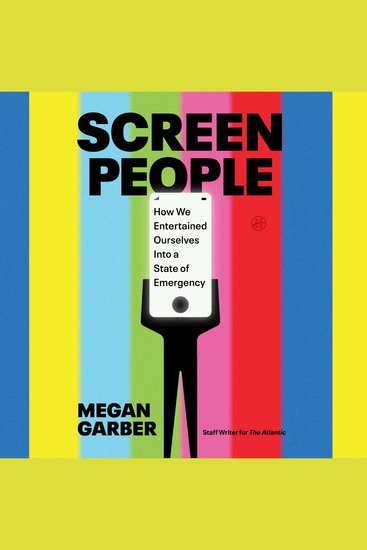
  • Screen People - How We Entertained Ourselves into a State of Emergency - cover

    Screen People - How We...

    Megan Garber

    • 0
    • 0
    • 0
    An eye-opening look at how the current media landscape has incentivized us to see our fellow citizens as characters in an ongoing entertainment—and how we can fight back, from the popular and award-winning staff writer for The Atlantic. 
    Whether it’s our reality-television-star President or our expertly curated Instagram feeds, the line between fact and fiction—between what’s real and what’s fabricated for entertainment—has never been more blurred. Screen People explores what happens when we cede our reality to spectacle. Megan Garber explains how today’s internet-inflected culture conditions us to see one another not as people but as characters in an ongoing show, and how some of our most chronic and harmful social conditions—loneliness, depression, mistrust, misinformation, cynicism—stem from our demand for diversion. 
    In ten chapters, each themed around an element of entertainment—from “The Producers,” who edit our reality, to “The Extras,” the strangers we turn into objects of our amusement, to “the Haters,” the worshipful Qanon-types who expect the prophecies of their anonymous leader to play out on live television—Garber argues that this comedy of our daily lives is quickly becoming tragedy. And we can’t understand our politics without first understanding our culture. 
    Like The Anxious Generation but about our media diet, Screen People shows why Megan Garber is one of the most respected and widely-read journalists of our day. It is an urgent, page-turning, and dazzling look at how we entertained ourselves into our current predicament, and how we might find our way out of the maze of misinformation and chaos.
    Zum Buch
  • Life After Suicide - Finding Courage Comfort & Community After Unthinkable Loss - cover

    Life After Suicide - Finding...

    Jennifer Ashton

    • 0
    • 0
    • 0
    From the chief medical correspondent of ABC News, an eloquent, heartbreaking, yet hopeful memoir of surviving the suicide of a loved one, examining this dangerous epidemic and offering first-hand knowledge and advice to help family and friends find peace. 
     
    Jennifer Ashton, M.D., has witnessed firsthand the impact of a loved one’s suicide. When her ex-husband killed himself soon after their divorce, her world—and that of her children—was shattered. Though she held a very public position with one of the world’s largest media companies, she was hesitant to speak about the personal trauma that she and her family experienced following his death. A woman who addresses the public regularly on intimate health topics, she was uncertain of revealing her devastating loss—the most painful thing she’d ever experienced. But with the high-profile suicides of Kate Spade and Anthony Bourdain, Dr. Ashton recognized the importance of talking about her experience and the power of giving voice to her grief. She shared her story with her Good Morning America family on air—an honest, heartbreaking revelation that provided comfort and solace to others, like her and her family, who have been left behind.  
    In Life After Suicide, she opens up completely for the first time, hoping that her experience and words can inspire those faced with the unthinkable to persevere. Part memoir and part comforting guide that incorporates the latest insights from researchers and health professionals, Life After Suicide is both a call to arms against this dangerous, devastating epidemic, and an affecting story of personal grief and loss. In addition, Dr. Ashton includes stories from others who have survived the death of a loved one by their own hand, showing how they survived the unthinkable and demonstrating the vital roles that conversation and community play in recovering from the suicide of a loved one. The end result is a raw and revealing exploration of a subject that’s been taboo for far too long, providing support, information, and comfort for those attempting to make sense of their loss and find a way to heal. 
    Zum Buch
  • Democracy in America - cover

    Democracy in America

    Alexis de Toqueville

    • 0
    • 0
    • 0
    Explore the timeless insights of Alexis de Tocqueville in his masterpiece, Democracy in America. This profound work, originally published in the 19th century, remains a cornerstone of political philosophy and social science, offering a detailed examination of the American democratic system, its principles, and its implications for liberty and equality.
     
    Through keen observations and eloquent analysis, Tocqueville explores the unique strengths and challenges of democracy. He delves into topics such as the balance between individual freedom and social equality, the role of religion in public life, the impact of a free press, and the dynamics of civil society.
     
    The audiobook offers a captivating journey through the mind of one of history’s greatest political thinkers, examining the foundations of democracy and its relevance to contemporary society. With a tone that is both reflective and motivational, this audiobook will engage listeners who are curious about governance, civic engagement, and the enduring quest for a just society.
     
    Perfect for leaders, scholars, and anyone passionate about understanding the roots of modern democratic values, Democracy in America is a vital resource for navigating the complexities of politics and culture today.
    Zum Buch
  • Death Has Very Little Meaning - Ojai 1980 - Dialogue 7 - cover

    Death Has Very Little Meaning -...

    Jiddu Krishnamurti

    • 0
    • 0
    • 0
    Death has very little meaning - 17 April 1980 
    • Is there a totally different way of approaching the whole turmoil of life? 
    • As long as the centre is creating darkness, and thought is operating in that dark 
    ness, there must be disorder, there must be everything as society now is. To 
    move away from that you must have insight. 
    • Insight can only come about when there is a flash which abolishes not only the 
    darkness but the creator of darkness. 
    • Human beings have been acting according to one pattern, responding to 
    hatred by hatred and so on. There are those few, perhaps many, who did not. 
    Why has this division taken place? 
    • The man who is living in darkness can move away at any time to the other. That 
    is the point: at any time. 
    • What happens to a mind that has no conflict?
    Zum Buch
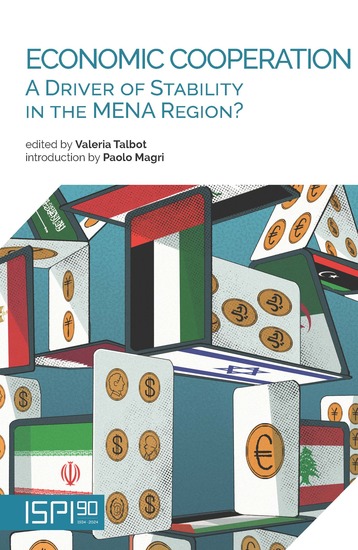
  • Economic Cooperation: A Driver of Stability in the MENA Region? - cover

    Economic Cooperation: A Driver...

    Valeria Talbot

    • 0
    • 0
    • 0
    The Middle East and North Africa (MENA) region faces a complex landscape where economic cooperation is increasingly linked to regional stability. For decades, economic factors have influenced the foreign policy of MENA countries. However, since 2020, shared economic challenges – exacerbated by the COVID-19 pandemic, oil market fluctuations and the global repercussions of Russia's invasion of Ukraine – have spurred initiatives for diplomatic rapprochement. The October 7 attacks and subsequent Gaza and Lebanon conflicts pose a threat to such progresses.
    Can economic partnerships serve as a basis for lasting peace in MENA region? What forms of collaboration could enhance stability in the face of persistent security challenges? What are the primary constraints and challenges that limit the potential of economic cooperation as a stabilising force in the MENA region?
    Zum Buch
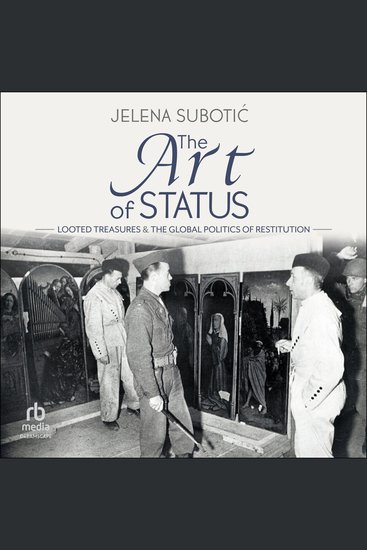
  • The Art of Status - Looted Treasures and the Global Politics of Restitution - cover

    The Art of Status - Looted...

    Jelena Subotić

    • 0
    • 0
    • 0
    An illuminating exploration of the relationship between the restitution of looted art, global status, and the international construction of national cultural heritage.Why is art restitution a matter of politics? How does the artwork displayed in national museums reflect the international status of the state that owns it? Why do some states agree to return looted art and others resist?National art collections have long been a way for states to compete with each other for status, prestige, and cultural worth in international society. In many former imperial nations, however, these collections include art looted during imperial expansions and colonial occupations. While this was once a sign of high international standing, the markers of such status, particularly in the context of art, have since significantly changed. A new international legal and normative architecture governing art provenance developed after World War II and became institutionalized in the 1990s and 2000s. Since then, there have been national and global social movements demanding the return of looted art. This shift has established not only that looting is wrong but, more importantly, that restitution is morally right. As a result of this reframing of what it means to own art, an artifact's historical provenance has become a core element of its value and the search for provenance and demands for restitution have become a direct threat to state status. The same objects that granted states high international status now threaten to provoke status decline. In The Art of Status, Jelena Subotić illustrates the larger questions of how national cultural heritage is internationally constructed and how it serves states' desire for international status and prestige.
    Zum Buch