Rejoignez-nous pour un voyage dans le monde des livres!
Ajouter ce livre à l'électronique
Grey
Ecrivez un nouveau commentaire Default profile 50px
Grey
Abonnez-vous pour lire le livre complet ou lisez les premières pages gratuitement!
All characters reduced
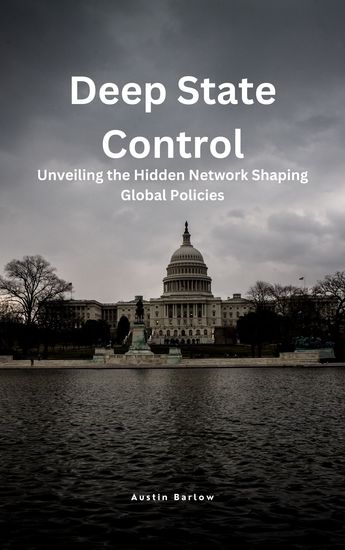
Deep State Control - Unveiling the Hidden Network Shaping Global Policies - cover

Deep State Control - Unveiling the Hidden Network Shaping Global Policies

Austin Barlow

Maison d'édition: ArcanaVerse Books

  • 0
  • 0
  • 0

Synopsis

"Deep State Control: Unveiling the Hidden Network Shaping Global Policies" delves into the controversial theory that a clandestine network of unelected officials, intelligence agencies, and powerful entities secretly manipulates national and global policies. This comprehensive exploration covers the origins of the Deep State theory, key players and institutions, mechanisms of control, and significant case studies such as the JFK assassination, Watergate scandal, and the Iran-Contra affair. The book also examines the global reach of the Deep State, its impact on public perception and political discourse, and the role of technological advancements and surveillance. Through critical analysis and alternative explanations, "Deep State Control" provides a balanced perspective on this complex and often misunderstood topic. Whether you are a skeptic or a believer, this book offers valuable insights into the dynamics of power, governance, and the future of democracy.
Disponible depuis: 27/03/2025.
Longueur d'impression: 140 pages.


D'autres livres qui pourraient vous intéresser

  • Operation Northwoods: The History of the Controversial Government Plan to Stage False Flag Attacks on Americans and Blame Cuba - cover

    Operation Northwoods: The...

    Editors Charles River

    • 0
    • 0
    • 0
    Throughout the history of warfare, the practice of placing blame on innocent parties in order to justify attacking them has been a constant feature. In the 20th century, this practice began to be commonly referred to as a “false flag” operation. The essence of a false flag scenario is that it is conducted by one party or government and “made to appear as though another party sponsored it.”[1] In informal legal terminology, the practice is commonly referred to as a “stitch up”[2] or “setup.”[3] The modern use of this action based on deceit originated in the 16th century, typically when ships displayed the flags of a neutral or enemy country to hide their identities. 
    	The severity of false flag operations moves in tandem with the perceived danger. In the late 20th century, the Soviet Union constituted an ongoing threat to the United States, ideologically and militarily. When Fidel Castro, a Soviet sympathizer, came to power in Cuba in 1959, the presence of a communist extension of Soviet influence so near American shores caused great discomfort to the U.S. government. 
    	Some of the Cold War’s tensest moments involved Cuba, including the Bay of Pigs invasion and the Cuban Missile Crisis, amply demonstrating that throughout the early 1960s, alarmed individuals within the American government believed that the only way to handle Castro was by immediate elimination and a takeover of Cuba. They were pitted against more nuanced points of view held by others within the Kennedy administration. The Pentagon was of the general mind that in such a perilous environment, military decision-making should come to the front and civilians should withdraw, even the White House. Diplomacy was seen as being of little use by the Joint Chiefs of Staff against an encroaching Soviet superpower led by a political street fighter and his puppet situated just off the coast of Florida. 	This charged atmosphere would lead to one of the most controversial proposals in history.
    Voir livre
  • Oceans Rise Empires Fall - Why Geopolitics Hastens Climate Catastrophe - cover

    Oceans Rise Empires Fall - Why...

    Gerard Toal

    • 0
    • 0
    • 0
    In the last few years, it has become abundantly clear that the effects of accelerating climate change will be catastrophic, from rising seas to more violent storms to desertification. Yet why do nation-states find it so difficult to implement transnational policies that can reduce carbon output and slow global warming? In Oceans Rise, Empires Fall, Gerard Toal identifies geopolitics as the culprit. States would prefer to reduce emissions in the abstract, but in the great global competition for geopolitical power, states always prioritize access to carbon-based fuels necessary for generating the sort of economic growth that helps them compete with rival states. 


    The Ukraine conflict in particular exposes our priorities. To escape reliance on Russia's vast oil and gas reserves, states have expanded fossil fuel production that necessarily increases the amount of carbon in the atmosphere. Competitive territorial, resource, and technological dramas across the geopolitical chessboard currently obscure the deterioration of the planet's life support systems. In the contest between geopolitics and sustainable climate policies, the former takes precedence—especially when competition shifts to outright conflict. In this book, Toal interrogates that relationship and its stakes for the ongoing acceleration of climate change.
    Voir livre
  • Thank You For Voting - The Maddening Enlightening Inspiring Truth About Voting in America - cover

    Thank You For Voting - The...

    Anonyme

    • 0
    • 0
    • 0
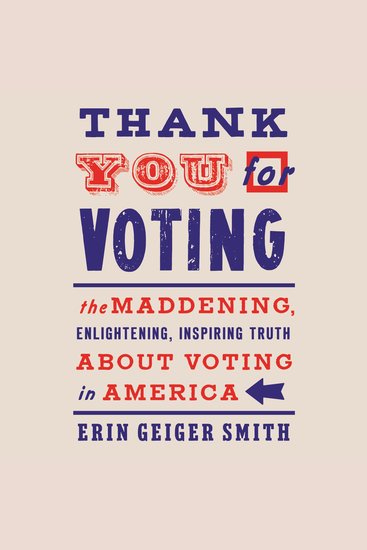
    In this concise, lively look at the past, present, and future of voting, a journalist examines the long and continuing fight for voting equality, why so few Americans today vote, and innovative ways to educate and motivate them; included are checklists of what to do before election day to prepare to vote and encourage others. 
    Voting is a prized American right and a topic of debate from the earliest days of the country. Yet in the 2016 presidential election, about 40 percent of Americans—and half of the country’s young adults – didn’t vote. Why do so many Americans choose not to vote, and what can we do about it?  
     
    The problem, Erin Geiger Smith contends, is a lack of understanding about our electoral system and a need to make voting more accessible. Thank You for Voting is her eye-opening look at the voting process, starting with the Framers’ perspective, through the Equal Protection amendment and the Voting Rights Act, to the present and simple actions individuals can take to increase civic participation in local, state, and national elections. 
    Geiger Smith expands our knowledge about our democracy—including women’s long fight to win the vote, attempts to suppress newly enfranchised voters' impact, state prohibitions against felons voting, charges of voter fraud and voter suppression, and other vital issues. In a conversational tone, she explains topics that can confuse even the most informed voters: polling, news literacy, gerrymandering and the Electoral College. She also explores how age, race, and socioeconomic factors influence turnout. 
    Ultimately, Thank You for Voting offers hope. Geiger Smith challenges corporations to promote voting, and offers examples of how companies like Patagonia and Walmart have taken up the task in a non-partisan way. And she reveals how get-out-the-vote movements—such as television star Yara Shahidi’s voting organization, Michelle Obama’s When We All Vote campaign, and on-the-ground young activists—innovatively use technology and grassroots techniques to energize first-time voters.  
    Supplemental enhancement PDF accompanies the audiobook.
    Voir livre
  • The Mind of the Minister - Restoring trust between ministers and civil servants - cover

    The Mind of the Minister -...

    Tom Browne

    • 0
    • 0
    • 0
    Britain's most important relationship, between civil servants and ministers, has reached breaking point. Drawing on interviews with former government ministers and Permanent Secretaries – including Vince Cable, Caroline Flint, Rory Stewart, Philip Rutnam, Simon McDonald and Una O'Brien – The Mind of the Minister provides expert guidance and recommendations for how this vital relationship can improve.
    Centuries of carefully built trust and mutual understanding have been undermined and strained in recent years, not least by mismanagement at the highest level, a scorched-earth approach to constitutional norms and the testing of civil service integrity. This relationship now needs urgent attention.
    Ministers, famously, begin the job with an hour's notice and often know little about the department they've landed in. They bring energy, drive and optimism for change, but over time, these ambitions can be drowned by reality, accountability and crises, as well as the distractions of promotion, demotion or a changing political landscape.
    Civil servants, on the other hand, serve the government of the day and remain in post while ministers come and go. They must be ready to adjust and impartially support a minister of any political persuasion or personality.
    How does this partnership really work in practice? How do both sides adjust to the different chapters in a ministerial lifespan? What happens if rule makers become rule breakers without repercussions? This compelling book lifts the curtain on the minister–civil servant partnership, highlighting that this crucial relationship must improve – for the sake of our democracy.
    Voir livre
  • Liberalism - Individual Liberty and the Modern State - cover

    Liberalism - Individual Liberty...

    Hector Davidson

    • 0
    • 0
    • 0
    Liberalism is a political and philosophical ideology rooted in the principles of individual liberty, equality, and limited government. At its core, liberalism emphasizes the autonomy of the individual, arguing that each person has the right to pursue their own life and happiness, free from unnecessary interference by the state or society. Emerging in the Enlightenment period, liberalism challenged the traditional structures of monarchies and feudal systems, advocating for the rights of the individual and the importance of reason, tolerance, and democratic participation. 
    The roots of liberal thought can be traced back to the works of early modern philosophers such as John Locke, whose ideas on natural rights and government by consent laid the foundation for liberal political theory. Locke’s assertion that individuals possess inherent rights to life, liberty, and property formed the basis for much of liberal thought, influencing the development of constitutionalism and democratic governance. Over time, thinkers like Montesquieu, Rousseau, and later John Stuart Mill contributed to the evolution of liberalism, expanding its focus to issues of civil liberties, political freedoms, and social equality. 
    A defining characteristic of liberalism is its emphasis on individual freedom. This includes both personal liberty—the freedom to make choices about one’s own life—and political liberty—the right to participate in the democratic process and have a say in the laws and policies that govern society. Classical liberals advocated for minimal government interference in the economy and individual affairs, emphasizing free markets, private property, and limited state power. The role of the state, in this view, is to protect the rights of individuals and maintain social order, but not to intervene in the private lives or economic transactions of citizens.
    Voir livre
  • A Space for Us - A Guide for Leading Black Indigenous and People of Color Affinity Groups - cover

    A Space for Us - A Guide for...

    Michelle Cassandra Johnson

    • 0
    • 0
    • 0
    The first comprehensive guide for leading BIPOC affinity groups for challenging white supremacy, healing racial trauma, and taking collective action 


    Meeting in racial affinity groups is a common practice in anti-racist, social justice, diversity, and similar educational endeavors. These groups provide a structured space in which participants can explore how racism personally impacts them, process specific experiences of racism, receive validation and support from their peers, heal, and strategize next steps for challenging racism, white supremacy, and internalized racial oppression. 


    In A Space for Us, Michelle Cassandra Johnson brings her over twenty years of experience leading dismantling-racism work to provide the first affinity-group guide made for BIPOC communities. This essential guide will: provide an understanding of the racial hierarchy and how it has impacted Black people, Indigenous people, and People of Color differently; define and share common manifestations of internalized racial oppression; define anti-Blackness and provide skills to interrupt and address it; share rituals, practices, and sample agendas for affinity groups; provide rituals and tools for healing in BIPOC affinity groups; and provide information about how to come back together as BIPOC and white people to strategize and take collective action.
    Voir livre