Begleiten Sie uns auf eine literarische Weltreise!
Buch zum Bücherregal hinzufügen
Grey
Einen neuen Kommentar schreiben Default profile 50px
Grey
Jetzt das ganze Buch im Abo oder die ersten Seiten gratis lesen!
All characters reduced
The Sacrifices and Rewards of Being a Working Dad - cover

The Sacrifices and Rewards of Being a Working Dad

Aurora Brooks

Verlag: Shuttle Systems

  • 0
  • 0
  • 0

Beschreibung

The Ultimate Guide for Working Dads: Achieving Work-Life BalanceAre you a working dad struggling to find the perfect balance between your career and family life? Look no further! The Ultimate Guide for Working Dads is here to help you achieve the work-life balance you've always dreamed of.Understanding the Importance of Work-Life BalanceIn this chapter, you will learn why work-life balance is crucial for your overall well-being and how it can positively impact your relationships with your family, friends, and colleagues.Identifying Priorities and Setting BoundariesDiscover how to identify your priorities and set boundaries to ensure that you are dedicating enough time and energy to both your work and your family.Assessing Personal and Professional GoalsLearn how to assess your personal and professional goals and align them with your work-life balance objectives. This chapter will guide you in creating a roadmap for success.Establishing Healthy BoundariesDiscover effective strategies for establishing healthy boundaries between your work and personal life, allowing you to be fully present in both areas.Building a Supportive NetworkExplore the importance of building a supportive network of friends, family, and colleagues who understand and respect your work-life balance goals.Engaging in Open CommunicationLearn how to communicate openly and effectively with your employer, colleagues, and family members about your work-life balance needs and expectations.Seeking Support from EmployersDiscover how to approach your employer and seek support in achieving a healthy work-life balance, including flexible work arrangements and parental leave options.Sharing Parenting and Household ResponsibilitiesExplore strategies for sharing parenting and household responsibilities with your partner, ensuring that both of you have equal opportunities to thrive in your careers and personal lives.Practicing Self-CareLearn the importance of self-care and discover practical tips for prioritizing your physical and mental health amidst your busy schedule.Prioritizing Physical and Mental HealthDiscover the benefits of prioritizing your physical and mental health and learn how to incorporate exercise, healthy eating, and stress management techniques into your daily routine.Engaging in Hobbies and Leisure ActivitiesExplore the importance of engaging in hobbies and leisure activities that bring you joy and help you recharge, allowing you to be more present and engaged with your family.Being Present and Engaged with FamilyDiscover strategies for being fully present and engaged with your family, creating meaningful connections and memories that will last a lifetime.Quality Time with ChildrenLearn how to make the most of your time with your children, creating special moments andThis title is a short read. A Short Read is a type of book that is designed to be read in one quick sitting.These no fluff books are perfect for people who want an overview about a subject in a short period of time.
Verfügbar seit: 13.09.2023.
Drucklänge: 35 Seiten.
Weitere Bücher, die Sie mögen werden

  • Carlist Wars and the Spanish Civil War The: The History of the Conflicts that Divided Spain in the Last 200 Years - cover

    Carlist Wars and the Spanish...

    Editors Charles River

    • 0
    • 0
    • 0
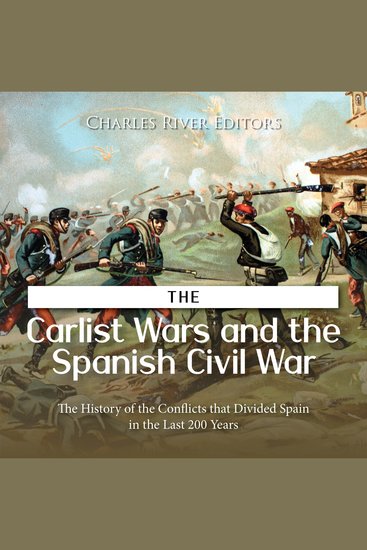
    Thinking of Spain as a modern nation state today distorts the complicated reality that the Iberian Peninsula faced in the past. Spain was a nation in progress, consisting of regions united under the Spanish crown, but with strong regional identities based on different historical and cultural experiences. The largest entities were the kingdoms of León and Castile, but Spain also included the kingdoms of Navarre, Andalusia, Granada, Jaén, Aragon, and Valencia. There were also the principalities of Asturias and Catalonia, the lordship of Vizcaya, and both Guipúzcoa and Alava were “exempted provinces.” Navarre, Aragon, and Catalonia had separate Cortes, which were versions of parliaments (Parker 18-19). This complex system of entities granted privilege to local power structures over the concept of a unified nation and made administration difficult, because there were few standards that applied to all of Spain. Many of the regions had special laws that respected and allowed traditional institutions, administrative patterns, and cultural patterns. These local and regional rights were called fueros and were fiercely defended against centralization. 
    	The Spanish Civil War has exerted a powerful impact on the historical imagination. Without question, the conflict was a key moment in the 20th century, a precursor to World War II, and an encapsulation of the rise of extremist movements in the 1930s, but it was also a complex narrative in and of itself, even as it offered a truly international theatre of war. It marked one of the seminal moments, along with the 1929 Wall Street Crash, between the two apocalyptic wars of the early 20th century, and since it occurred between 1936 and 1939, Spain proved to be a testing ground of tactics, weaponry, and ideology ahead of World War II. 
    Zum Buch
  • Rise and Fall of the Third Reich The: The History and Legacy of Nazi Germany under Adolf Hitler - cover

    Rise and Fall of the Third Reich...

    Editors Charles River

    • 0
    • 0
    • 0
    The early 1930s were a tumultuous period for German politics, even in comparison to the ongoing transition to the modern era that caused various forms of chaos throughout the rest of the world. In the United States, reliance on the outdated gold standard and an absurdly parsimonious monetary policy helped bring about the Great Depression. Meanwhile, the Empire of Japan began its ultimately fatal adventurism with the invasion of Manchuria, alienating the rest of the world with the atrocities it committed. Around the same time, Gandhi began his drive for the peaceful independence of India through nonviolent protests against the British. 
    	It was in Germany, however, that the strongest seeds of future tragedy were sown. The struggling Weimar Republic had become a breeding ground for extremist politics, including two opposed and powerful authoritarian entities: the right-wing National Socialists and the left-wing KPD Communist Party. As the 1930s dawned, these two totalitarian groups held one another in a temporary stalemate, enabling the fragile ghost of democracy to continue a largely illusory survival for a few more years.  
    	That stalemate was broken in dramatic fashion on a bitterly cold night in late February 1933, and it was the Nazis who emerged decisively as the victors. A single act of arson against the famous Reichstag building proved to be the catalyst that propelled Adolf Hitler to victory in the elections of March 1933, which set the German nation irrevocably on the path towards World War II. That war would plunge much of the planet into an existential battle that ultimately cost an estimated 60 million lives. 
    Zum Buch
  • Dutch East India Company and British East India Company The: The History and Legacy of the World’s Most Famous Colonial Trade Companies - cover

    Dutch East India Company and...

    Editors Charles River

    • 0
    • 0
    • 0
    To many, the mention of maritime merchants evokes an imagery of growling pirates donned in their stereotypical hats and a colorful parrot perched upon their shoulders. These nautical rascals wander the high seas in search of treasure and adventure. Though that imagery may be inaccurate, the real life companies that once dominated international waters operated on a similar thirst for conquest and riches. 
    	Perhaps the most famous – or as many would put it, infamous – of these naval corporations was the Dutch East India Company, also known as V O C. Established around the beginning of the 17th century, this nautical behemoth of a corporation was determined to squeeze everyone else out of the market. Vested with the power to wage war and exterminate any who dared stand in their way, the rest of the world stood by as the unstoppable force took over the whole of international maritime trade. The company would crush its opponents on the way to the top, establishing a monopoly on the global spice trade that would not only rock the world but forever change the course of modern business history.  
    	Likewise, the British East India Company served as one of the key players in the formation of the British Empire. From its origins as a trading company struggling to keep up with its superior Dutch, Portuguese, and Spanish competitors to its tenure as the ruling authority of the Indian subcontinent to its eventual hubristic downfall, the East India Company serves as a lens through which to explore the much larger economic and social forces that shaped the formation of a global British Empire. As a private company that became a non-state global power in its own right, the East India Company also serves as a cautionary tale all too relevant to the modern world’s current political and economic situation.
    Zum Buch
  • How Not To F*CK UP in Medical School - cover

    How Not To F*CK UP in Medical...

    Aleksander Shur

    • 0
    • 0
    • 0
    Going to get higher education may be stressful, especially when you want to go to medical field. So, us, as medical students have gathered some ideas, recommendations, tips and lifehacks on how to ace you medical school without too much stress. So consider this your book your mentor into medical field, and wish you all the best in medicine!
    Zum Buch
  • The Hindu Pantheon - Myths Gods and Rituals of Ancient India - cover

    The Hindu Pantheon - Myths Gods...

    Odessa Nightshade

    • 0
    • 0
    • 0
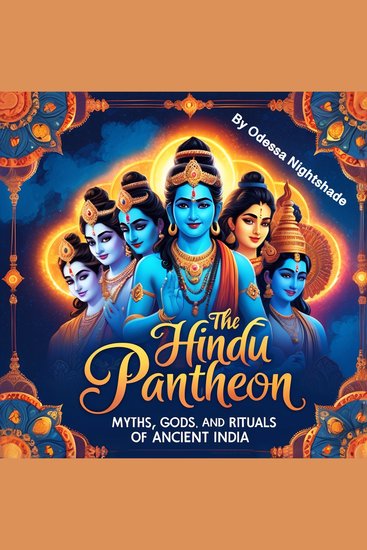
    Hindu mythology is one of the oldest and most complex religious traditions in the world. With a vast pantheon of gods, goddesses, and celestial beings, it weaves together myths, legends, and philosophical concepts that have shaped the spiritual landscape of India for thousands of years. Unlike many monotheistic traditions, Hinduism does not center around a single deity but instead embraces a diverse array of divine figures, each representing different aspects of existence. These deities are not merely supernatural beings but embodiments of cosmic principles, making Hindu mythology a unique fusion of religion, philosophy, and storytelling.  
      
    The foundation of Hindu mythology lies in its sacred texts, particularly the Vedas and Puranas. The Vedas, composed over 3,000 years ago, contain hymns and rituals dedicated to early Vedic deities, forming the spiritual bedrock of Hindu belief. The Puranas, written centuries later, expanded upon these traditions, introducing detailed narratives about the lives, battles, and divine exploits of gods like Vishnu, Shiva, and Devi. Together, these texts provide an extensive mythological framework that continues to influence Hindu practices and beliefs to this day.  
      
    One of the central themes in Hindu mythology is the concept of dharma, or cosmic order. The gods play a crucial role in maintaining balance in the universe, ensuring that righteousness prevails over chaos. Myths often depict the eternal struggle between good and evil, with divine beings intervening in the world through incarnations known as avatars. The most well-known avatars belong to Vishnu, who manifests as Rama, Krishna, and other heroic figures to restore harmony when disorder threatens creation. This belief in divine intervention reinforces the idea that morality and duty must be upheld in human life, as they are reflections of the cosmic law. 
    Zum Buch
  • The art of winning The Startup Guide - cover

    The art of winning The Startup...

    Yury Yavorsky

    • 0
    • 0
    • 0
    This book is about setting up your own business and what is the best way to start if you have made up your mind.Multiple tips from the author are illustrated by 25 years of experience and urge the reader to perform gap analysis if you are in business and contain recommendations on avoiding typical mistakes or misconceptions found in American books, and dispel the myths that armchair business wizards create.
    Zum Buch