Rejoignez-nous pour un voyage dans le monde des livres!
Ajouter ce livre à l'électronique
Grey
Ecrivez un nouveau commentaire Default profile 50px
Grey
Abonnez-vous pour lire le livre complet ou lisez les premières pages gratuitement!
All characters reduced
UiPath Administration and Support Guide - Learn industry-standard practices for UiPath program support and administration activities - cover

UiPath Administration and Support Guide - Learn industry-standard practices for UiPath program support and administration activities

Arun Kumar Asokan

Maison d'édition: Packt Publishing

  • 0
  • 0
  • 0

Synopsis

UiPath administration, support, maintenance, monitoring, and deployment activities are mandatory and more challenging than developing bots. This is a major issue for many firms that are looking to scale their RPA programs.
This book will help in training new UiPath users/resources involved in administration and support tasks to address existing skill gaps in RPA market. The book starts with an introduction to the UiPath Platform. You'll learn how to set up UiPath Platform administration, support, monitoring, reporting, deployment, and maintenance. After that, you’ll cover advanced topics, such as, using the orchestrator API for support operations, security, and risk management. In addition to this, best practices for each of the topics will be covered.
By the end of this book, you will have the knowledge you need to work on the support and monitoring of UiPath programs of any size.
Disponible depuis: 23/09/2022.
Longueur d'impression: 286 pages.
D'autres livres qui pourraient vous intéresser

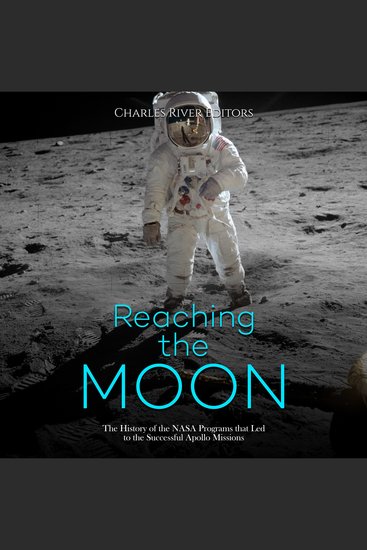
  • Reaching the Moon: The History of the NASA Programs that Led to the Successful Apollo Missions - cover

    Reaching the Moon: The History...

    Editors Charles River

    • 0
    • 0
    • 0
    The Apollo Program is the most famous and celebrated in American history, but the first successful landing of men on the Moon during Apollo 11 had complicated roots dating back over a decade, and it also involved one of NASA’s most infamous tragedies. From 1959-1963, the United States worked toward putting satellites and humans into orbit via the Mercury program, but Eisenhower’s administration was already designing plans for the Apollo program by 1960, a year before the first Russian orbited the Earth and two years before John Glenn became the first American to orbit the Earth. 
    At the same time, America would begin missions to the Moon as early as 1958. On March 27, 1958, Secretary of Defense Neil McElroy announced a lunar project for the International Geophysical Year, consisting of three Air Force launches followed by two Army launches of a JPL-designed lunar probe. ARPA directed the Air Force to launch its probes "as soon as possible consistent with the requirement that a minimal amount of useful data concerning the Moon be obtained." 
    Throughout the 1960s, NASA would spend tens of billions on missions to the Moon, the most expensive peacetime program in American history to that point, and Apollo was only made possible by the tests conducted through earlier missions, including the historic Ranger Program. Conceived as an early part of the attempt to land a man on the Moon, Ranger was designed to photograph the lunar surface in preparation for future landings. Until Ranger, images of the Moon were only available through Earth-based telescopes, which lacked the detail necessary to determine safe sites for landing a spacecraft. Ranger aimed to fill in that gap of knowledge, and like many of NASA’s missions during the 1960s, the program exemplified both the successes and the failures of the agency’s early years.
    Voir livre
  • Does Coffee Cause Cancer? - And 8 More Myths about the Food We Eat - cover

    Does Coffee Cause Cancer? - And...

    Dr. Christopher Labos

    • 0
    • 0
    • 0
    In this fascinating, refreshingly clarifying book about food, food myths, and how sloppy science perpetuates misconceptions about food, a medical doctor on his way to a conference gets drawn into conversations that answer the following questions:
    		
    		Does vitamin C prevent the common cold? And if it works, why does it only work in Canadian soldiers, ultramarathon runners, and skiers?
    		Was red meat really declared a carcinogen by the WHO? Does that mean I should become a vegetarian? And who decides what gets labeled as red meat and white meat?
    		Is salt really not that bad for you and did a group of researchers really want to experiment on prisoners to prove the point?
    		Does coffee cause cancer or heart attacks? Why did a California court say coffee needed a warning label?
    		Is red wine really good for your heart, and what makes the French Paradox such a paradox?
    		Why did the New England Journal of Medicine link eating chocolate with winning a Nobel Prize?
    		Why were eggs once bad for you but now good for you again? Does that mean I don’t need to worry about cholesterol?
    		Should I be taking vitamin D?
    Voir livre
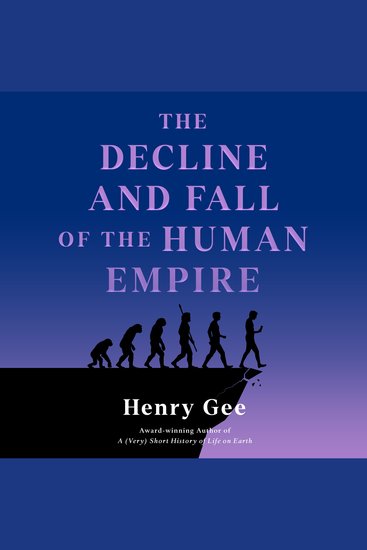
  • The Decline and Fall of the Human Empire - Why Our Species Is on the Edge of Extinction - cover

    The Decline and Fall of the...

    Henry Gee

    • 0
    • 0
    • 0
    "Henry Gee presents a pithy, fascinating account of the stages of biological evolution. ... a meditative and friendly listening experience. —AudioFile on A (Very) Short History of Life on EarthWritten and read by the award-winning author of A (Very) Short History of Life on Earth: a history of humanity on the brink of decline.A Next Big Idea Club Must-Read SelectionWe are living through a period that is unique in human history. For the first time in more than ten thousand years, the rate of human population growth is slowing down. In the middle of this century population growth will stop, and the number of people on Earth will start to decline—fast. In this provocative book, award-winning science writer Henry Gee offers a concise, brilliantly-told history of our species—and argues that we are on a rapid, one-way trip to extinction. The Decline and Fall of the Human Empire narrates the dramatic rise of humanity, how a scattered range of small groups across several continents eventually inbred, interacted, fought, established stable communities and food supplies, and began the process of dominating the planet. The human story is relatively brief—the oldest fossils of H. Sapiens date to approximately 300,000 years ago—yet the spread of our species has been unstoppable…until recently. As Gee demonstrates, our population has peaked, and is declining; our environment is becoming inimical to human life in many locations; our core resources of water, arable land, and air are diminishing; and new diseases, simmering conflicts, and ambiguous technologies threaten our collective health. Can we still change our course? Or is our own extinction inevitable?There could be a way out, but the launch window is narrow.Unless Homo sapiens establishes successful colonies in space within the next two centuries, our species is likely to stay earthbound and will have vanished entirely within another ten thousand years, bringing the seven-million-year story of the human lineage to an end.With assured narration, dramatic stories, and his signature sprightly humor, Henry Gee envisions new opportunities for the future of humanity—a future that will reward facing challenges with ingenuity, foresight, and cooperation.A Macmillan Audio production from St. Martin’s Press.
    Voir livre
  • Sustainability in Software Engineering - Harnessing Eco-Efficient Techniques for Modern Development - cover

    Sustainability in Software...

    Steve Abrams

    • 0
    • 0
    • 0
    In "Sustainability in Software Engineering: Harnessing Eco-Efficient Techniques for Modern Development," readers are invited into the evolving world of sustainable software practices where innovation meets environmental responsibility. This book equips software engineers, tech leaders, and sustainability advocates with the essential knowledge and tools needed to integrate eco-efficiency into every stage of software development. 
    From foundational concepts and principles of sustainability to advanced techniques and strategies, the book provides a thorough exploration of how software engineering can contribute positively to the environment. Readers will discover how to optimize code for energy efficiency, select the right tools and technologies that reduce environmental impact, and implement green algorithms and architectures that promote sustainability. 
    Each chapter is enriched with real-world case studies, practical examples, and actionable insights that illuminate the path toward more sustainable software practices. Metrics and measurement tools are discussed in detail, providing readers with the means to assess their progress and impact. 
    "Sustainability in Software Engineering" is more than just a guide—it's a call to action for software professionals to lead the charge in creating a more sustainable future through thoughtful, responsible, and innovative engineering practices. Whether you're a developer, a project manager, or a CTO, this book will inspire and challenge you to make sustainability a core part of your professional projects and products. 
     
    Voir livre
  • Get Smart with Social Media - Unlock Proven Tips for Building a Powerful Online Presence - cover

    Get Smart with Social Media -...

    Lexi Primuth

    • 0
    • 0
    • 0
    Get Smart with Social Media: Unlock Proven Tips for Building a Powerful Online PresenceIn today's digital world, mastering social media is essential for building a powerful online presence. Get Smart with Social Media: Unlock Proven Tips for Building a Powerful Online Presence provides you with the insights and strategies needed to stand out, grow your brand, and engage your audience across various platforms. From optimizing your profiles and creating compelling content to leveraging analytics and boosting engagement, this guide offers practical tips and expert advice for maximizing your impact on social media.Whether you're a business owner, influencer, or just starting your social media journey, this resource will equip you with the tools to succeed in the competitive online landscape. Elevate your digital game and start building a presence that gets noticed!
    Voir livre
  • Fatal Abstraction - Why the Managerial Class Loses Control of Software - cover

    Fatal Abstraction - Why the...

    Darryl Campbell

    • 0
    • 0
    • 0
    Software was supposed to radically improve society. Outdated mechanical systems would be easily replaced; social media platforms like Facebook would bring people together; and generative AI would solve the world’s greatest ills. Yet in practice, few of the systems we looked to with such high hopes have lived up to their fundamental mandate. In fact, in too many cases they've made things worse. How did we get to this point? 


    In Fatal Abstraction, Darryl Campbell explains that the problem is "managerial software": programs created and overseen not by engineers but by professional managers with only the most superficial knowledge of technology itself. 


    A former tech worker himself, Campbell shows how managerial software fails, and when it does what sorts of disastrous consequences ensue, from the Boeing 737 MAX crashes to a deadly self-driving car to PowerPoint propaganda, and beyond. Yet just because the tech industry is currently breaking its core promise does not mean the industry cannot change. Campbell argues that the solution is tech workers with actual expertise establishing industry-wide principles of ethics and safety that corporations would be forced to follow. Fatal Abstraction is a stirring rebuke of the tech industry's current managerial excesses, and also a hopeful glimpse of what a world shaped by good software can offer.
    Voir livre