Rejoignez-nous pour un voyage dans le monde des livres!
Ajouter ce livre à l'électronique
Grey
Ecrivez un nouveau commentaire Default profile 50px
Grey
Abonnez-vous pour lire le livre complet ou lisez les premières pages gratuitement!
All characters reduced
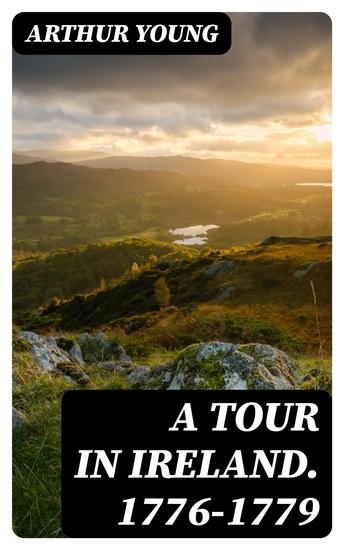
A Tour in Ireland 1776-1779 - cover

A Tour in Ireland 1776-1779

Arthur Young

Maison d'édition: DigiCat

  • 0
  • 0
  • 0

Synopsis

In "A Tour in Ireland, 1776-1779," Arthur Young presents a vivid and meticulous account of his travels across the Emerald Isle during a tumultuous period in its history. Combining keen observations with detailed descriptions, Young captures the landscape, social conditions, and economic practices of Ireland. His literary style balances empiricism with a reflective narrative, heralding the burgeoning genre of travel literature in the 18th century. Within the context of the Enlightenment, Young's work not only serves as a personal travelogue but also as an essential commentary on agricultural advancements and the socio-political landscape of Ireland, paving the way for later studies in both travel and socio-economic analysis. Arthur Young, an influential English writer and agronomist, was deeply committed to improving agricultural practices and the quality of life in rural communities. His extensive travels were propelled by a desire to observe and document the conditions he found, often advocating for reform based on his findings. Young's background in agriculture and his role as a member of the Board of Agriculture inherently informed his perspectives and priorities, ultimately shaping this comprehensive portrayal of Ireland during a time of change. "A Tour in Ireland" is a must-read for those interested in historical travel accounts, socio-economic conditions, and the development of agricultural practices in the 18th century. Young's insightful observations paired with his engaging prose make this book a significant contribution to both literary and historical scholarship. Readers will find an authentic glimpse into a pivotal era, enriched by Young's intellectual curiosity and commitment to understanding the world around him.
Disponible depuis: 28/05/2022.
Longueur d'impression: 114 pages.

D'autres livres qui pourraient vous intéresser

  • Edgar A Poe: The True Story of the Life & Time of the Great Author - cover

    Edgar A Poe: The True Story of...

    Liam Dale

    • 0
    • 0
    • 0
    “Once upon a midnight dreary, while I pondered, weak and weary, 
    Over many a quaint and curious volume of forgotten lore, 
    While I nodded, nearly napping, suddenly there came a tapping, 
    As of some one gently rapping, rapping at my chamber door. 
    "'Tis some visitor," I muttered, "tapping at my chamber door - 
    Only this, and nothing more." 
     
    Ah, distinctly I remember it was in the bleak December, 
    And each separate dying ember wrought its ghost upon the floor. 
    Eagerly I wished the morrow; vainly I had tried to borrow 
    From my books surcease of sorrow - sorrow for the lost Lenore - 
    For the rare and radiant maiden whom the angels name Lenore, 
    Nameless here for evermore.” 
     
    These are the first two verses of ‘The Raven’, a poem full of dark and disturbing images, rife with tension, fear, paranoia, terror and a yearning for a lost love that has returned to this earth as a ghost. As a poem ‘The Raven’ is without doubt more famous and widely known than the troubled author who penned it. His name was Edgar Allan Poe, and his work was directly responsible for shaping the modern horror industry as we know it. He was the Godfather of Gore, the Father of Fear, the Master of the Macabre, and the Guardian of the Gruesome. Poe was also one of the best mystery writers of all time, however the most fascinating puzzle he left us was that of his own life, and in this journal, we will follow in the great man’s footsteps to turn detective. 
     
    Edgar Allan Poe was born early in the 19th Century, yet still his legacy lives on. Throughout this celebration of his life and work, you’ll also get the opportunity to read extracts from his poetry and prose, some of which will be very familiar but just as terrifying all the same!
    Voir livre
  • Nothing Like a Dane - A real-life search for hygge in Denmark - cover

    Nothing Like a Dane - A...

    Keri Bloomfield

    • 0
    • 0
    • 0
    The Danish concept of hygge is a wonderful thing. Even if most fail miserably when they try to pronounce or explain its true essence. Unless you’re a Viking of course. 
    As Keri stood in the departure lounge of Auckland International Airport with her four-month-old baby, searching for her flight on the board, hygge wasn’t on her radar. In hindsight she agrees it probably should have been. 
    But she’d never imagined a chance encounter with a Dane in a crowded bar in her home city of Wellington would lead her here, a mother, about to circle the globe, with no knowledge of when she'd return home. 
    Eighteen thousand kilometres away a new life awaited her in Denmark. A country where babies sleep outside, the word for bread is seemingly impossible to pronounce and a country in which immigration challenges abound. 
    A witty observer of cultural nuances, Keri reveals the day-to-day realities of a New Zealander living her best life in Denmark. From integration interrogations to rye bread misdemeanors, Nothing Like a Dane provides a humorous and heartfelt insight into creating a new life in a faraway land. 
    And what did she learn? That it’s not all hygge and pastries. Even in Denmark.
    Voir livre
  • Hidden Demons - Evil Visits A Small New England Town - cover

    Hidden Demons - Evil Visits A...

    Margery B. Metzger

    • 0
    • 0
    • 0
    A New England community is rocked by a serial killer, a mass shooter, and a sexual predator—all in a single day—in this true crime chronicle. On January 7, 1994, residents of Berkshire Hills woke up to a typical winter day in the majestic woods of Western Massachusetts. But as that fateful day unfolded, three separate crimes—each unsettling in its own way—would converge in this quaint corner of New England. That day, a trial began for college student, Wayne Lo, who celebrated his 18th birthday by purchasing an assault rifle and opening fire on campus—killing two and wounding four others. Elsewhere, two young girls were accosted in the changing room at the local pool. And another young girl narrowly escaped being abducted at gunpoint on her way to school. Her quick thinking later resulted in profound repercussions regarding another case—that of a young boy who vanished from a strip mall. Though these events appeared unrelated, it seemed as though the world had suddenly gone mad. In Hidden Demons, Margery B. Metzger details these events and reveals a savage serial killer, Lewis Lent, Jr., who lurked in the shadows. It was the bravery of a father and daughter, and the remarkable work of law enforcement officers, that would see justice done.
    Voir livre
  • Psychopath Killers - Cold-Hearted Murderers Like Pablo Escobar and Edmund Kemper - cover

    Psychopath Killers -...

    Kelly Mass

    • 0
    • 0
    • 0
    This bundle has the following titles:  
    One of the big lords of the drug cartels in Colombia is Pablo Escobar, a criminal who became a leader and expanded his influence on organized crime throughout the North and South American continents. With billions in his bank account, in cash, and in other assents, it’s not easy to ignore his name and the power he gained. In 1976, Escobar established the Medellín Cartel, which dispersed powder cocaine, and developed the first smuggling paths into the United States. In the 1982 Colombian parliamentary election, Escobar was chosen as an alternate member of the Chamber of Representatives as part of the Liberal Alternative movement. 
    Initially diagnosed with paranoid schizophrenia, and after a separation of his parents, Edmund Kemper already showed his twisted mind at 15 years old, when he murdered both his grandparents, who were taking care of him. Whether through nature or nurture, this man didn’t show a promising future from the get-go. But perhaps nobody could have suspected the horrors he would inflict on his many victims later in his life. Edmund Kemper, born in 1948, has become a notorious serial killer. He is known for having raped, mutilated, and murdered young women and especially hitchhikers. Being labelled with being a necrophile and a cannibal, his crimes have been exposed, partially by himself, and even though he has requested the death penalty, he is still locked up for life.
    Voir livre
  • Around the World in Eighty Days - cover

    Around the World in Eighty Days

    Jules Verne

    • 0
    • 0
    • 0
    Around the World in Eighty Days (French: Le tour du monde en quatre-vingts jours) is an adventure novel by the French writer Jules Verne, first published in French in 1872. In the story, Phileas Fogg of London and his newly employed French valet Passepartout attempt to circumnavigate the world in 80 days on a wager of £20,000 set by his friends at the Reform Club. It is one of Verne's most acclaimed works
    Voir livre
  • A Journey of Little Profit - From their pens to your ears genius in every story - cover

    A Journey of Little Profit -...

    John Buchan

    • 0
    • 0
    • 0
    The Scottish novelist John Buchan enjoyed a remarkable career as politician, historian and Governor General. He was born John Buchan on 26th August 1875 and later added 1st Baron Tweedsmuir PC GCMG GCVO CH to his name.  
    Buchan studied at Hutchesons’ Grammar School, Glasgow and at seventeen won a scholarship to the University of Glasgow to study classics. There he began to write poetry. In 1895 he transferred to Oxford to continue his study of Classics and in 1896 ‘Sir Quixote of the Moors’ was published followed by the non-fiction ‘Scholar-Gipsies’. His prolific literary output now hardly faltered. 
    He graduated in 1900 and became the private secretary to Alfred Milner, the High Commissioner for Southern Africa and other colonies. Buchan found the same inspiration in the African landscape as he had in the Scottish Borders, and would later set many works here. Returning to London he became a partner in a publishing house, and garnered an editorial role at The Spectator. He also completed his law studies. He was called to the bar in 1901 but never practiced.  
    On 15th July 1907 Buchan married Susan Charlotte Grosvenor, the cousin of the Duke of Westminster. In 1910 he wrote ‘Prester John’, the first of a series set in South Africa.  
    In 1911 Buchan entered politics as a Unionist candidate in the Scottish Borders advocating the support of free trade, women’s suffrage, national insurance, and reducing the power of the House of Lords.  
    The Great War saw Buchan writing for the War Propaganda Bureau and as Times correspondent in France. In 1915, he published ‘The Thirty-Nine Steps’, his most famous book and a follow-up Richard Hannay novel, ‘Greenmantle’, in 1916.  
    In 1916 Buchan enlisted in the Intelligence Corps which included writing speeches for Sir Douglas Haig. By 1917 he was Director of Information under Lord Beaverbrook. Buchan called it “the toughest job he ever took on”. He somehow found time to assist in a history of the war magazine. This was later published in 24 volumes: Nelson’s History of the War. 
    After the war his writing focused on historical studies. In 1927 Buchan became the Unionist Party Member of Parliament for the Combined Scottish Universities. In a speech to Parliament he said “I believe every Scotsman should be a Scottish nationalist. If it could be proved that a Scottish parliament were desirable… Scotsmen should support it.”  
    Over the next decade he continued to distinguish himself politically and in literature.  On the 1st June 1935 he became 1st Baron Tweedsmuir of Elsfield in the County of Oxford.  
    He was now also given the position of Governor General in Canada and resolved to travel all over Canada to gain a better insight of the country. Having crossed both length and breadth he saw the cultural shift between areas and their common ground and helped bring about a clear national Canadian identity. 
    On the 6th February 1940 he collapsed from a stroke and sustained a very serious head injury in falling. Two rounds of surgery to stabilise his condition were unsuccessful and Buchan died on the 11th February. After a state funeral in Ottawa his ashes were returned to his estate in Oxfordshire.
    Voir livre