Begleiten Sie uns auf eine literarische Weltreise!
Buch zum Bücherregal hinzufügen
Grey
Einen neuen Kommentar schreiben Default profile 50px
Grey
Jetzt das ganze Buch im Abo oder die ersten Seiten gratis lesen!
All characters reduced
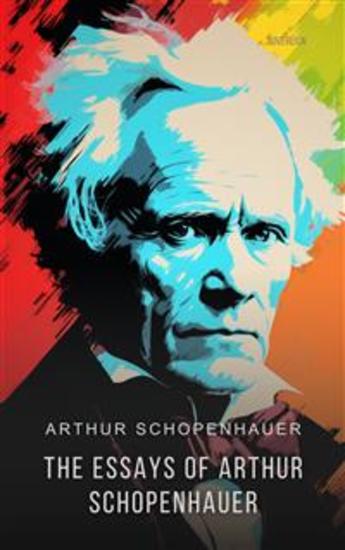
The Essays of Arthur Schopenhauer - The Wisdom of Life - cover

The Essays of Arthur Schopenhauer - The Wisdom of Life

Arthur Schopenhauer

Verlag: Interactive Media

  • 0
  • 0
  • 0

Beschreibung

"The Essays of Arthur Schopenhauer: The Wisdom of Life" is a collection of thought-provoking essays by the renowned philosopher Arthur Schopenhauer. In this captivating compilation, Schopenhauer offers profound insights into the human condition, the pursuit of happiness, and the quest for meaning in life. Drawing upon his keen observations and introspective analysis, Schopenhauer explores various aspects of human existence, shedding light on the complexities of life's challenges and the search for fulfillment. He delves into the nature of desires, the importance of self-awareness, and the ways in which we can navigate the inevitable hardships of existence.
Verfügbar seit: 14.07.2023.
Drucklänge: 102 Seiten.
Weitere Bücher, die Sie mögen werden

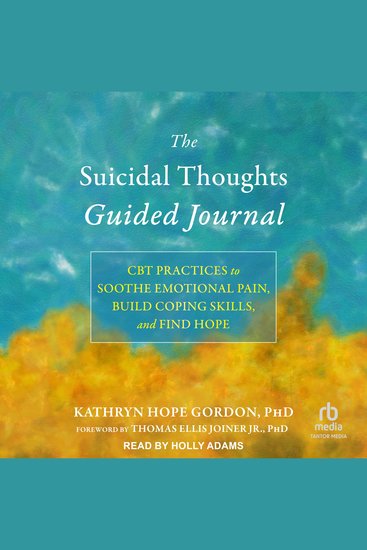
  • The Suicidal Thoughts Guided Journal - CBT Practices to Soothe Emotional Pain Build Coping Skills and Find Hope - cover

    The Suicidal Thoughts Guided...

    PhD Kathryn Hope Gordon, Jr....

    • 0
    • 0
    • 0
    If you or someone you love is dealing with a crisis right now, please call 988 or go to 988lifeline.org to reach the Suicide & Crisis Lifeline. 


    A compassionate guided journal to help you to manage suicidal thoughts and find renewed hope. 


    If you're struggling with suicidal thoughts, please know that you are not alone. When you're suffering, life can feel overwhelming and even insurmountable. This guided journal offers a safe space to help you process these difficult thoughts, soothe emotional pain, and create a crisis plan if needed. 


    Grounded in cognitive behavioral therapy (CBT), this journal provides gentle writing prompts to help you safely explore your thoughts and feelings, understand symptoms and triggers, and identify your reasons for living. You'll also learn to set intentions to strengthen social connections, foster self-compassion, and rediscover activities that bring joy and meaning to your life. 


    Your life and well-being matter, and you are loved. No matter how you are feeling at this moment, this guided journal is here to support your journey toward renewed hope and the happiness that you deserve.
    Zum Buch
  • The Age of Imperialism - How Colonial Powers Expanded Their Influence Globally - cover

    The Age of Imperialism - How...

    Arlo Holders

    • 0
    • 0
    • 0
    Imperialism, as a historical phenomenon, represents the policy or practice by which nations extend their influence and dominance over other territories. This expansion can occur through direct conquest, economic control, political manipulation, or cultural influence. The roots of imperialism stretch back to ancient empires such as Rome, Persia, and China, but the modern era of imperialism, often referred to as the “Age of Imperialism,” emerged in the 19th and early 20th centuries. This period was characterized by unprecedented territorial acquisitions, fueled by technological advances, economic ambitions, and shifting global power dynamics. 
    At its core, imperialism was driven by a combination of motives that included economic gain, political power, and a belief in cultural superiority. Industrialization played a pivotal role in shaping these ambitions, as European powers sought raw materials to fuel their growing industries and markets to sell their manufactured goods. The technological advancements of the Industrial Revolution, such as steamships, railways, and advanced weaponry, gave European nations a significant edge in their quest to dominate foreign lands. 
    Political and military motivations also underpinned the imperialist agenda. Nations viewed overseas colonies as symbols of prestige and power, integral to maintaining their position in a competitive global hierarchy. Strategic locations were secured to control vital trade routes, ensuring access to global markets and protecting national interests. This race for dominance often led to conflicts among colonial powers, as each sought to outmaneuver the other in gaining influence over untapped regions.
    Zum Buch
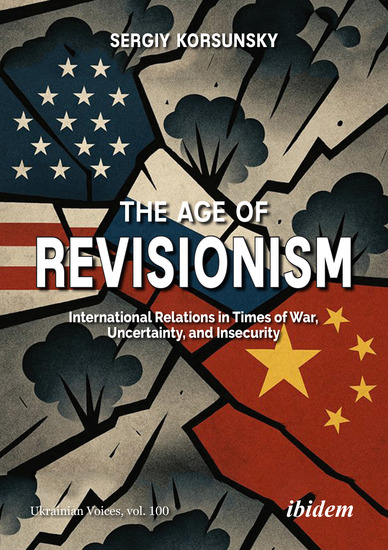
  • The Age of Revisionism - International Relations in Times of War Uncertainty and Insecurity - cover

    The Age of Revisionism -...

    Sergiy Korsunsky

    • 0
    • 0
    • 0
    Political revisionism is reshaping global relations in an era marked by rising powers, nuclear threats, AI, migration, and climate change. Drawing on 30 years of diplomatic experience, the author revisits key concepts in international relations to provide a new understanding of today’s complex and unstable world order.
    Zum Buch
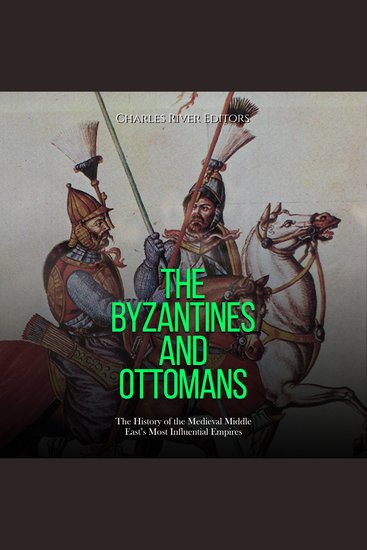
  • Byzantines and Ottomans The: The History of the Medieval Middle East’s Most Influential Empires - cover

    Byzantines and Ottomans The: The...

    Editors Charles River

    • 0
    • 0
    • 0
    In terms of geopolitics, perhaps the most seminal event of the Middle Ages was the successful Ottoman siege of Constantinople in 1453. The city had been an imperial capital as far back as the 4th century, when Constantine the Great shifted the power center of the Roman Empire there, effectively establishing two almost equally powerful halves of antiquity’s greatest empire. Constantinople would continue to serve as the capital of the Byzantine Empire even after the Western half of the Roman Empire collapsed in the late 5th century. Naturally, the Ottoman Empire would also use Constantinople as the capital of its empire after their conquest effectively ended the Byzantine Empire, and thanks to its strategic location, it has been a trading center for years and remains one today under the Turkish name of Istanbul. 
    The end of the Byzantine Empire had a profound effect not only on the Middle East but Europe as well. Constantinople had played a crucial part in the Crusades, and the fall of the Byzantines meant that the Ottomans now shared a border with Europe. The Islamic empire was viewed as a threat by the predominantly Christian continent to their west, and it took little time for different European nations to start clashing with the powerful Turks. In fact, the Ottomans would clash with Russians, Austrians, Venetians, Polish, and more before collapsing as a result of World War I, when they were part of the Central Powers. 
    The Ottoman conquest of Constantinople also played a decisive role in fostering the Renaissance in Western Europe. The Byzantine Empire’s influence had helped ensure that it was the custodian of various ancient texts, most notably from the ancient Greeks, and when Constantinople fell, Byzantine refugees flocked west to seek refuge in Europe. Those refugees brought books that helped spark an interest in antiquity that fueled the Italian Renaissance and essentially put an end to the Middle Ages altogether.
    Zum Buch
  • 300 per hour - The price for my freedom - cover

    300 per hour - The price for my...

    Mathilde Davril

    • 0
    • 0
    • 0
    "I am Mathilde, alias Mathilda. I am 37 years old and I prostitute myself to be a free woman. I have been an executive assistant, a sales manager in media, a communication manager for an employers' confederation and a company director in business aviation. But I was a precarious woman, being used for a low price, like a great majority of women in France. In parallel to my work activities, I became an escort to get out of my social condition and not be a free and disposable object anymore. I have been leading this double life for 10 years in Lyon; and today men, but also women, respect me for what I am. I like this life and I embrace it fully."
    Like 5% to 10% prostitutes in France (and certainly many more), Mathilde engages in this profession freely and without constraint, to no longer be the prey of males and a patriarchal society. Free, authentic and without pretense, she takes the reader on a journey of discovery of a profession that fascinates and that no one talks about in this way. With a provocative but always human tone, she reveals with strength and fragility her non-conformist universe and her atypical personality. From her family to her friends, from her lovers to her clients, from her jobs to her first trick, Mathilde shares her way of life openly because her reality does not need to be hidden.
    Zum Buch
  • A Light in the Northern Sea - Denmark's Incredible Rescue of Their Jewish Citizens During WWII - cover

    A Light in the Northern Sea -...

    Tim Brady

    • 0
    • 0
    • 0
    August 25, 1943. A lone bicyclist transports a cache of explosives, hidden in a beer crate, to a Copenhagen hall being readied to house German troops. In a violent blast, the would-be barracks is reduced to rubble. It's the boldest act yet of Holger Danske and the growing Danish resistance combating the oppressiveness of Hitler's Reich. 


    In 1940, on its way to conquering Western Europe, Germany coerced the Danish government into a "cooperative" agreement that lasted three long years until the increasing brazenness of the Resistance movement prompted a crackdown. Denmark's nearly 8000 Jews, who had so far been spared Hitler's wrath, now became the focus of his rage. A roundup was ordered to begin on October 1st, 1943, the first day of the Jewish New Year. 


    The only passage to safety was across the Oresund to Sweden. But no group existed to organize an escape. Until the last moment, Sweden didn’t agree to allow the refugees into the country; and the strait between the two nations was swarming with Gestapo. What happened next was a miracle. 95% of Denmark's Jews survived the Holocaust, the highest percentage in Europe. Here are the riveting true accounts of ordinary Danes who, using their modest resources, wiles, remarkable courage, and camaraderie, quietly orchestrated their escape.
    Zum Buch