Begleiten Sie uns auf eine literarische Weltreise!
Buch zum Bücherregal hinzufügen
Grey
Einen neuen Kommentar schreiben Default profile 50px
Grey
Jetzt das ganze Buch im Abo oder die ersten Seiten gratis lesen!
All characters reduced
Brother Copas - cover

Brother Copas

Arthur Quiller-Couch

Verlag: DigiCat

  • 0
  • 0
  • 0

Beschreibung

In "Brother Copas," Arthur Quiller-Couch presents a masterfully woven narrative that delves into the intricacies of human relationships set against the backdrop of the Cornish countryside. With its rich, lyrical style, the novel captures the essence of early 20th-century English literature, intertwining elements of local folklore, existential exploration, and the moral dilemmas faced by its characters. Quiller-Couch employs a nuanced prose that elegantly reflects the atmospheric landscapes, inviting readers to deeply engage with the emotional landscapes of the protagonists as they navigate life's trials and tribulations. Arthur Quiller-Couch, a formidable figure of the Edwardian literary scene, was not only a novelist but also a renowned critic and scholar. His deep-rooted appreciation for storytelling and local history shines through in "Brother Copas," influenced by his own upbringing in Cornwall and a rich tradition of storytelling that permeates his work. Quiller-Couch's academic background, notably his tenure at Cambridge University, further enriched his perspective, allowing him to draw upon a wealth of literary traditions and styles in this poignant tale. Highly recommended for readers interested in literary fiction, "Brother Copas" offers an engaging blend of character study and social commentary. Those seeking a thoughtful exploration of familial bonds, moral conflicts, and the pursuit of identity will find this narrative both evocative and enlightening.
Verfügbar seit: 16.09.2022.
Drucklänge: 160 Seiten.

Weitere Bücher, die Sie mögen werden

  • The Star - cover

    The Star

    H. G. Wells

    • 0
    • 0
    • 0
    "The Star" is an 1897 apocalyptic short story by H. G. Wells.
    Here is an impressive story based on the inter-action of planetary bodies and of the sun upon them. A great star is seen approaching the earth. At first it is only an object of interest to the general public, but there is an astronomer on the earth, who is watching each phase and making mathematical calculations, for he knows the intimate relation of gravitation between bodies and the effect on rotating bodies of the same force from an outside source. He fears all sorts of wreckage on our earth. He warns the people, but they, as usual, discount all he says and label him mad. But he was not mad. H. G. Wells, in his own way, gives us a picturesque description of the approach of the new body through long days and nights—he tells how the earth and natural phenomena of the earth will react. Though this star never touches our sphere, the devastation and destruction wrought by it are complete and horrible. The story is correct in its astronomical aspects.
    Zum Buch
  • Jane Eyre: A Christian Readers' Guide - cover

    Jane Eyre: A Christian Readers'...

    Rachel Kovaciny

    • 0
    • 0
    • 0
    Explore the story of Jane Eyre in a brand new light. With prompts for discussions, thought provoking questions, and a breakdown and analysis of each chapter,Rachel Kovaciny brings to the forefront the major and minor themes and valuable lessons to be learned from this classic novel. An excellent companion for the novel, this guide demonstrates a love and appreciation for the classics and elevates understanding through the author’s clear grasp of the historical context as well as Charlotte Brontë’s background. Kovaciny’s guide also approaches each analysis through the lens of a Christian worldview. Viewing the heartbreak, growth, introspection, and lessons of love and loss through a Biblical perspective allows for an even deeper understanding of the characters, plot, and even Brontë herself. A wonderful library addition for fans of classic literature, homeschool families, book clubs, or those looking to further their education on the classics, this thoughtful and thorough guide is a must have!
    Zum Buch
  • Tales of the Jazz Age - cover

    Tales of the Jazz Age

    F. Scott Fitzgerald

    • 0
    • 0
    • 0
    The collection Tales of the Jazz Age includes the short stories of F. Scott Fitzgerald: 
    The Jelly-Bean
    May Day
    Porcelain and Pink
    Tarquin of Cheapside
    Oh Russet Witch!
    The Lees of Happiness
    Mr. Icky
    Jemina, The Mountain Girl
    Zum Buch
  • The Last Frontier - cover

    The Last Frontier

    Alistair MacLean

    • 0
    • 0
    • 0
    An undercover mission beyond the Iron Curtain to recover a defected scientist goes disastrously wrong – a classic early Cold War thriller from the acclaimed master of action and suspense. 
    Doctor Jennings, a noted scientist in possession of a precious secret, has gone over to the Soviet Union. It is Michael Reynolds’ mission to get him back. 
    To penetrate behind the Iron Curtain and reach his quarry will be difficult enough, especially with the fearsome Hungarian Secret Police watching his every move. 
    Then, from inside that terrifying organisation, comes the offer of help – the question is: can it be trusted? 
    In THE LAST FRONTIER, Alistair MacLean masterfully combines elements of espionage, military strategy, and technological intrigue to create a classic adventure thriller. This top-tier fiction novel is a testament to MacLean's storytelling prowess. 
    For fans of Frederick Forsyth (The Fourth Protocol), Rory Clements (A Cold Wind From Moscow), Nevil Shute (A Town Like Alice), Ken Follett (Circle of Days), and Edward Marston (The Railway Detective's Christmas Case).
    Zum Buch
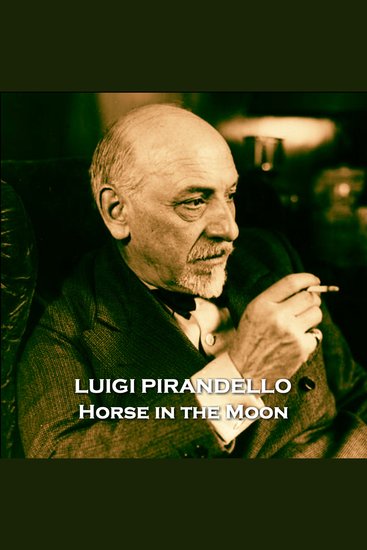
  • Horse in the Moon - From their pens to your ears genius in every story - cover

    Horse in the Moon - From their...

    Luigi Pirandello

    • 0
    • 0
    • 0
    Luigi Pirandello was born on 28th June 1867 into an upper-class family in Agrigento, in Sicily. 
    In 1880, the family moved to Palermo and there he completed high school and thence to the University of Palermo, at that time the centre of what became the Fasci Siciliani movement.  Although not an active member he had close friendships with many of its leading ideologists.  Pirandello then completed his university studies in Rome and Bonn, receiving his Doctorate in March, 1891. 
    His time in Rome had provided him with the opportunity to visit its many theatres. "Oh the dramatic theatre! I will conquer it. I cannot enter into one without experiencing a strange sensation, an excitement of the blood through all my veins..." 
    1894 brought marriage, at his father's suggestion, to a shy, withdrawn girl: Mara Antonietta Portulano.  The marriage encouraged his studies and writings and, the following year, the first part of the ‘Dialoghi tra Il Gran Me e Il Piccolo Me’ was published. 
    In 1903 the flooding of the sulphur mines in which his father had invested the family capital and Antonietta's dowry, brought financial catastrophe.  She, on hearing the news, was mentally broken.  Pirandello would now work a full day and then watch over his troubled wife at night. Somehow he found time to write ‘The Late Mattia Pascal’.  It was an immediate and resounding success.  
    In 1909, Pirandello began his collaboration with the prestigious Corriere della Sera.  Whilst his fame as a writer was increasing his private life was poisoned by the suspicion and jealousy of Antonietta who now turned physically violent.  His plays were now being regularly performed but, within a decade, Antonietta had to be placed into an asylum from which she never left. 
    In 1921, in Rome his play, ‘Six Characters in Search of an Author’ debuted.  It was a failure.  However, when presented in Milan it was a great success, as it also was in London and New York. 
    In 1925, Pirandello, with Mussolini’s help, assumed the artistic direction and ownership of the Teatro d'Arte di Roma.  He now described himself both as ‘a Fascist because I am Italian’ and ‘I'm apolitical, I'm only a man in the world...’  However his later conflicts with fascist leaders meant he fell under close surveillance by the OVRA, the secret police. 
    In 1934 he won the Nobel Prize but asked that the medal be melted down for Italy’s occupation of Abyssinia Campaign to which he had given his support.  
    Pirandello's canon stretches across novels, short stories, poetry, essays and some 40 plays.  His tragic farces are often cited as forerunners of the Theatre of the Absurd. 
    Luigi Pirandello died on the 10th December 1936 at his home at Via Bosio, Rome, Italy.  He was 69.
    Zum Buch
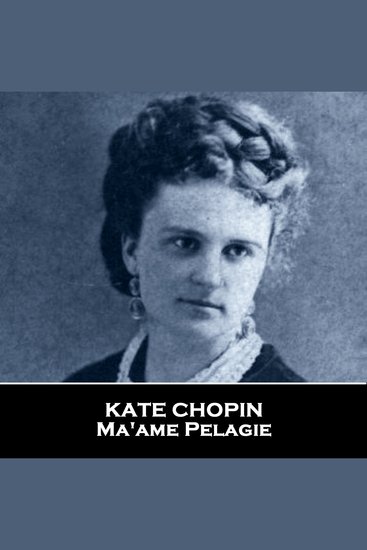
  • Ma'ame Pelagie - From their pens to your ears genius in every story - cover

    Ma'ame Pelagie - From their pens...

    Kate Chopin

    • 0
    • 0
    • 0
    Katherine O'Flaherty was born on the 8th February 1850 in St Louis, Missouri to parents of French and Irish descent. 
    At age 5, she was sent to the Sacred Heart Academy and, apart from a 2 year period at home when her father died, remained there until graduating in 1868.  Whilst there she began writing and became an avid reader of almost anything that crossed her path.   
    Kate married Oscar Chopin in 1870 and the couple moved to New Orleans, and later to the rural setting of Cloutierville, Louisiana to raise their 6 children.  
    In 1882 her husband died leaving her in a deep trench of debt.  Despite her best efforts to turn the businesses around they were sold, and she moved the family back to St Louis and the financial help of her mother.  Sadly, her mother died within the year.  Kate, now struggling with depression, pushed herself to write and gained a local reputation as a writer of short stories that captured the local color and vibrancy of her surroundings.  
    By the early 1890’s her short stories were published nationally.  With this widespread audience also came negative reviews, controversy, and cries of immorality as themes such as interracial relationships, the rights of women and other burning issues of the day were written about. 
    Despite the criticism, which unnerved her, she continued to write though in the main her works, around 100 short stories and two novels, were not attributed with any literary worth. 
    Kate Chopin died from a brain haemorrhage in St Louis Missouri on the 22nd of August 1904.  She was 54. 
    For much of the 20th Century her work was forgotten and out of print.  It was only in early 1970’s, with the rise of feminism and the call for a more just society that she was given the status her works had long described and shone a literary light at.  She is now safely revered as one of America’s great authors.
    Zum Buch