Rejoignez-nous pour un voyage dans le monde des livres!
Ajouter ce livre à l'électronique
Grey
Ecrivez un nouveau commentaire Default profile 50px
Grey
Abonnez-vous pour lire le livre complet ou lisez les premières pages gratuitement!
All characters reduced
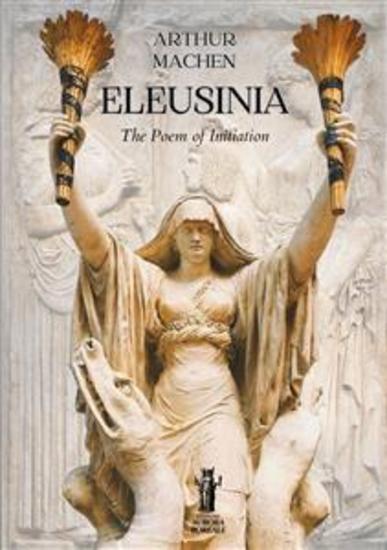
Eleusinia - cover

Eleusinia

Arthur Machen

Maison d'édition: Edizioni Aurora Boreale

  • 0
  • 0
  • 0

Synopsis

The Welsh writer, poet and novelist Arthur Machen, best known for his influential supernatural, fantasy, and horror fiction, was above all a great mystic and initiate, and a member of the Hermetic Order of the Golden Dawn.From the beginning of his literary career, Machen espoused a mystical belief that the humdrum ordinary world hid a more mysterious and strange world beyond. His later works became somewhat less obviously full of gothic trappings, but for him investigations into mysteries invariably resulted in life-changing transformation.Arthur Machen wrote his amazing poem Eleusinia in 1881, when he was only 18 years old. In our opinion, it is one of his best poetic works.Was Arthur Machen an Eleusinian initiate? We have no certainty about it, even if we know how much the Eleusinian mystery tradition, which survived in secrecy throughout the Middle Ages and reached the modern age, was also widespread and practiced in Great Britain in the 19th century. In any case, his great propensity for mysticism and spirituality and his initiatory belonging to the Golden Dawn led Machen to want to understand the great mystery of Eleusis and to try to undo its millennial veil.We propose to our readers the poem Eleusinia, preceded by a beautiful biographical essay on Machen written and published in Chicago in 1918 by the American writer, journalist, and bibliophile Vincent Starrett: Arthur Machen: A Novelist of Ecstasy and Sin. An essay that, better than many others, has captured the authentic spirit of the great Welsh writer. Starrett, a great connoisseur and admirer of British literature, was a major enthusiast of Arthur Machen and was instrumental in bringing Machen’s work to an American audience for the first time.
Disponible depuis: 05/08/2023.


D'autres livres qui pourraient vous intéresser

  • By Blood and Blade - A Taletha Love Story - cover

    By Blood and Blade - A Taletha...

    Anna Augustine

    • 0
    • 0
    • 0
    In the land of Taletha, the Wife Market is the prime place for young lords to find a spouse...but not the place for love. Something Inara knows all too well. After six years of rejection, she has no hope of being chosen for anything but a plaything. 
    When the future ruler of Taletha arrives at the Market, Inara is chosen. More shocking still, Dhamar is exactly what he appears to be: kind, gentle, and willing to build a relationship of mutual respect and trust. 
    Yet Dhamar has his own demons to fight. With a tyrannical father pushing for war with the Šerians, a scheming council, and the burden to protect those he loves, Dhamar is stretched thin. He wants to be a good husband to his wife, but how? 
    Thrown together by chance, will breaking down their walls reveal something beautiful, or leave only shattered pieces behind?
    Voir livre
  • Vivienne - cover

    Vivienne

    Rachel Lawson

    • 0
    • 0
    • 0
    originally written as separate poems for contests on allpoetry.com I tacked them together to make this epic the story in verse of the Life and Death of Vivienne and the Reaper is part of the story.
    Voir livre
  • Petrarch's Canzoniere - Scattered Rhymes - A New Verse Translation - cover

    Petrarch's Canzoniere -...

    Francesco Petrarch

    • 0
    • 0
    • 0
    Francesco Petrarch's Canzoniere (translated in English as 'Scattered Rhymes') is a collection of 14th century poems famed for their deep exploration of love, grief, spirituality and nature. Written over the course of forty years (approximately between 1328-1368), this collection includes 317 sonnets, 29 canzoni, 9 sestine, 4 madrigals and 7 ballate. 
    These Scattered Rhymes almost always return to Laura, a women who Petrarch loves deeply, whom he first saw on a Good Friday. On this same day, some years later, Laura died. But Petrarch's love does not wane, in fact at points it burns brighter. Il Canzoniere also serves as a valuable contemporary insight into 14th century religion and the role of the papacy in Christendom. 
    Petrarch's work is one of civilization's most immaculate achievements. Michael R. G. Spiller regards Il Canzoniere as 'the single greatest inspiration for the love poetry of Renaissance Europe until well into the seventeenth century'. 
    Following his acclaimed translation of Dante's Inferno, which 'immediately joins ranks with the very best available in English' (Dr Richard Lansing), Peter Thornton brings the poetry of Petrarch to the 21st Century in direct and luminous verse. 
    Here's a madrigal, number 52 in the sequence. 
    52 
    However much Diana may have pleasedthe lover who by like chance spied her bareamid the frigid water, I no less 
    delighted in the shy hill shepherdesswashing a wisp of veil to keep her hair,glinting with gold, protected from the breeze.  
    And even now, when the sky burns above,she makes me shiver with a chill of love.
    Voir livre
  • The Ruins of Nostalgia - cover

    The Ruins of Nostalgia

    Donna Stonecipher

    • 0
    • 0
    • 0
    What is it to feel nostalgia, to be skeptical of it yet cleave intently to the complex truths of feeling and thought? In a series of 64 gorgeous, ramifying, unsettling prose poems addressing late-twentieth- and twenty-first century experience and its discontents, The Ruins of Nostalgia offers a strikingly original exploration of the misunderstood phenomenon of nostalgia as both feeling-state and historical phenomenon. Each poem, also titled The Ruins of Nostalgia, is a kind of lyrical mini-essay, playful, passionate, analytic. Some poems take a location, memory, conceit, or object as their theme. Throughout the series, the poems recognize and celebrate the nostalgias they ironize, which are in turn celebrated and then ironized again. Written often in the fictional persona of the first-person plural, The Ruins of Nostalgia explores the rich territory where individual response meets a collective phenomenon.[sample poem]The Ruins of Nostalgia 13Where once there had been a low-end stationery store minded by an elderly beauty queen, there was now a store for high-end espresso machines minded by nobody. Where once there had been an illegal beer garden in a weedy lot, there was now a complex of luxury lofts with Parisian-style ivory façades. Where once there had been a bookstore and a bike shop and a bakery, there was now a wax museum for tourists. Where once there had been an empty lot there was now a building. Where once there had been an empty lot there was now a building. Where once there had been an empty lot there was now a building. Where once there had been an empty lot there was now a building. Where once there had been farms there were now subdivisions. Where once there had been subdivisions there were now sub-subdivisions. We lived in a sub-subdivision of a subdivision. We ourselves had become subdivided—where once we had merely been of two minds. * Where once there had been a river there was now a road. A vocal local group had started a movement to break up the road and "daylight" the river, which still flowed, in the dark, underneath the road. * Could we daylight the farms, the empty lots, the stationery store, the elderly beauty queen, the city we moved to? Was it still flowing somewhere, under the luxury lofts, deliquescing in the dark, inhabited by our luxury selves, not yet subdivided, because not yet whole? * Could we daylight the ruins of nostalgia?
    Voir livre
  • Birds Knit My Ribs Together - cover

    Birds Knit My Ribs Together

    Phil Barnett

    • 0
    • 0
    • 0
    what if / I actually – am – a bird / my cupped hands / opening to release me... Phil Barnett's relationship with birds is so close that his poetry blurs the distinctions between himself and the birds - a kind of ornimorphology where rather than giving the birds human characteristics, the reverse happens, and he imagines himself as a bird. Phil Barnett is a photographer, writer, musician, artist and naturalist, who has a passion for the birds that kept him company through a long hard illness. His photography and poetry have quite a following on social media, which is where we found him, on The Daily Haiku. His skill as a photographer leads to an acute visual sensibility, and his slow recovery moves from a tick sheet his mother had to fill in for him, to extraordinary poetry - full of wit and wonder and spectacular language.
    Voir livre
  • Vital Possessions - cover

    Vital Possessions

    Marc Nair

    • 0
    • 1
    • 0
    Vital Possessions by Marc Nair contemplates how city-dwellers negotiate their uneasy relationship with nature in a world where growth is both man-made and natural. The jungle is always one trim away from over-running us and we are often oblivious to it. The poems question what we hold as vital amid ceaseless consumption and our urban existence.
    Voir livre