Begleiten Sie uns auf eine literarische Weltreise!
Buch zum Bücherregal hinzufügen
Grey
Einen neuen Kommentar schreiben Default profile 50px
Grey
Jetzt das ganze Buch im Abo oder die ersten Seiten gratis lesen!
All characters reduced
The Chronicles of Newgate (Vol 1&2) - True Crime Cases Through The Centuries - cover

The Chronicles of Newgate (Vol 1&2) - True Crime Cases Through The Centuries

Arthur Griffiths

Verlag: Good Press

  • 0
  • 0
  • 0

Beschreibung

In "The Chronicles of Newgate (Vol. 1 & 2)," Arthur Griffiths intricately weaves a narrative that delves into the shadowy underbelly of Victorian England, offering a vivid historical tableau set against the backdrop of Newgate Prison. Griffiths employs a rich Gothic style, marked by vivid descriptions and a keen sense of atmosphere, to explore themes of crime, justice, and moral ambiguity. Through a series of compelling characters, both innocent and guilty, the text illuminates the complexities of the penal system, effectively reflecting the societal anxieties and reform movements of the era. Arthur Griffiths, himself a journalist and an officer of the law, possessed a profound understanding of the criminal psyche and the intricacies of justice, which heavily influenced his literary endeavors. His first-hand experiences with the penal system and the burgeoning interest in crime narratives during the late 19th century equipped him with the insights necessary to frame a narrative that is both entertaining and thought-provoking. Griffiths'Äôs unique perspective allows readers to engage deeply with the ethical dilemmas inherent in the criminal justice system. "The Chronicles of Newgate" is highly recommended for readers interested in historical crime narratives and those seeking to understand the intricate interplay of morality and social justice. This work not only serves as a thrilling read but also as a valuable social document that invites reflection on the complexities of crime and punishment in a crucial period of British history.
Verfügbar seit: 18.12.2023.
Drucklänge: 649 Seiten.

Weitere Bücher, die Sie mögen werden

  • Aesthetical Essays - cover

    Aesthetical Essays

    Friedrich Schiller

    • 0
    • 0
    • 0
    In "Aesthetical Essays," Friedrich Schiller delves into the profound role of art and beauty in human life and society. Through a series of insightful essays, Schiller explores the transformative power of aesthetics, arguing that beauty elevates the human spirit and fosters freedom and moral development. He posits that art bridges reason and emotion, offering a path to achieving harmony within the self and the world. This philosophical masterpiece invites readers to ponder art's enduring impact.
    Zum Buch
  • In Fraud We Trust - How Leaders in Politics Business and Media Profit from Lies―and How to Stop Them - cover

    In Fraud We Trust - How Leaders...

    Wes Henricksen

    • 0
    • 0
    • 0
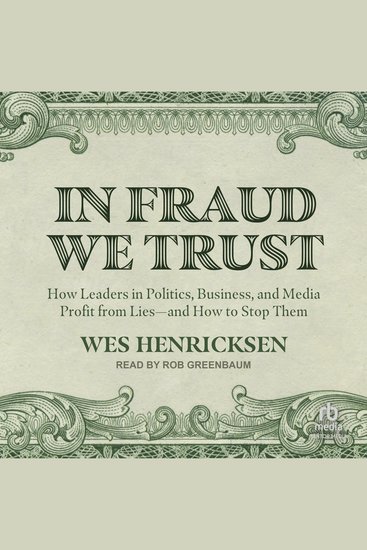
    Telling lies, and falling for them, is one of the things that makes us human. But when someone deceives another for material gain or profit, inflicting injury in the process, we give this kind of lie a special label: fraud. 


    Most people are familiar with the concept and understand that fraud is prohibited by law. What many fail to appreciate, however, is that the law does not treat all frauds equally. In a perverse sense, the bigger the fraud, the more likely it is protected by the First Amendment and therefore legal. 


    Examples of fraud on the public are everywhere. Politicians on both sides of the aisle lie with such regularity that people have become deeply cynical about whether to believe anything they say. Henricksen shows that large-scale fraud is carried out for many reasons beyond financial profit, including political gain, the prevention of justice, and the falsification of history. 


    In addition to exposing the depths of the problem, Henricksen gives listeners a way forward. By revealing for the first time the root legal cause of the misinformation crisis and presenting novel solutions, In Fraud We Trust speaks to the present moment as it offers answers for the future.
    Zum Buch
  • Pieces of Mee - cover

    Pieces of Mee

    Anexis Matos

    • 0
    • 0
    • 0
    Unleash your inner teen, fangirl, and your best and worse parts in this debut poetry collection. 
    The cringe of being a teenage girl. Blindness in all its glory and challenge. The fantastic parts of fandom. The power of stories. From reflections to a tragic love story of Death and their priestess, a poem is waiting to become your favorite.
    Zum Buch
  • The Curtain - An Essay in Seven Parts - cover

    The Curtain - An Essay in Seven...

    Anonym

    • 0
    • 0
    • 0
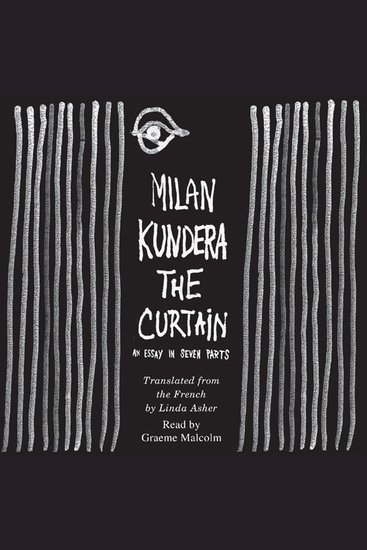
    “A magic curtain, woven of legends, hung before the world. Cervantes sent Don Quixote journeying and tore through the curtain. The world opened before the knight-errant in all the comical nakedness of its prose.” 
    In this thought-provoking, endlessly enlightening, and entertaining essay on the art of the novel, renowned author Milan Kundera suggests that “the curtain” represents a ready-made perception of the world that each of us has—a pre-interpreted world. The job of the novelist, he argues, is to rip through the curtain and reveal what it hides. Here an incomparable literary artist cleverly sketches out his personal view of the history and value of the novel in Western civilization. In doing so, he celebrates a prose form that possesses the unique ability to transcend national and language boundaries in order to reveal some previously unknown aspect of human existence.
    Zum Buch
  • Exploding Beetles - cover

    Exploding Beetles

    Sally Cook

    • 0
    • 0
    • 0
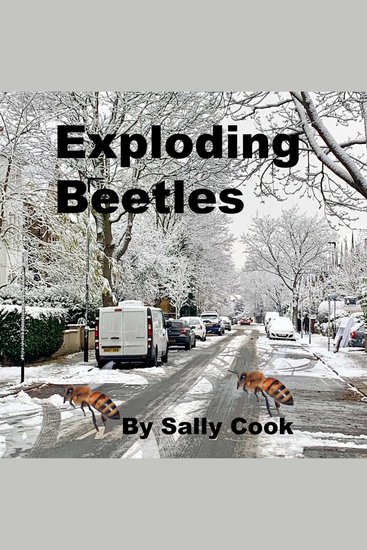
    The author is in court with a murderer, she is invited to drink tea from a urine filled pot, she covers theatre and cinema  reviews as a London reporter, she works amid opulent carpets and heavy old typewriters with former criminals below in the printing works. She rides a Honda 90 motor bike across the Engiish fens on her way to cover stories in  March, birthplace of the fabled March hare, She writes stories about a drunken turnip planter, a man named Jack Spratt, another man who didn't travel as far as his own bees. She writes about being bitten by a totters horse and of a local crazy woman who used to shout up at the newspapers weed ridden gutters. She lived in a house of many young women in Chalk Farm London and as a young wife on a Royal Airforce base in Cambridgeshire. Story telling runs deep within in her and as a young Australian in England she certainly got that opportunity.
    Zum Buch
  • Obedience - The Willing Follow - Aligning Your Actions with Divine Will - cover

    Obedience - The Willing Follow -...

    Esther Jameson

    • 0
    • 0
    • 0
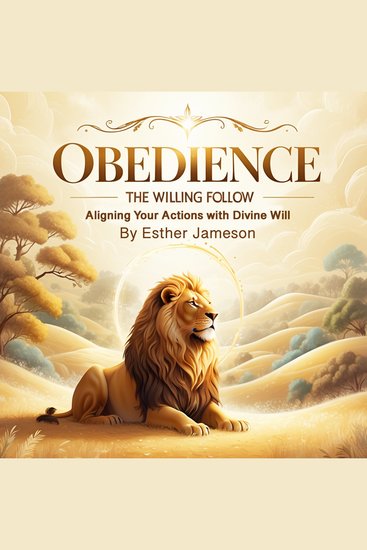
    Obedience, at its core, is the act of aligning one’s actions with a higher authority or divine purpose. It is not merely the submission to rules or commands, but a conscious choice to follow the guidance of a force greater than oneself. In the context of spiritual growth, obedience is deeply intertwined with faith, trust, and surrender. It requires an individual to recognize that there is wisdom beyond their understanding and that, by following divine guidance, they are led to a path of fulfillment and purpose. 
    The true essence of obedience goes beyond blind submission. It is an active decision to place one’s will in alignment with divine will, acknowledging that this alignment leads to a more harmonious and meaningful existence. It calls for humility, as one must be willing to accept that their personal desires, while valid, may not always align with the greater plan. This humility allows individuals to move away from a sense of ego-driven control and step into a flow where they are led by wisdom that is both timeless and profound. 
    Faith is a foundational element of obedience. When one trusts in a higher purpose, they are more likely to act in accordance with divine will, even when the path ahead is unclear or difficult. This trust creates a foundation for obedience that is not rooted in fear or obligation but in the understanding that divine guidance is always for the highest good, even if it does not immediately make sense to the individual.
    Zum Buch