Begleiten Sie uns auf eine literarische Weltreise!
Buch zum Bücherregal hinzufügen
Grey
Einen neuen Kommentar schreiben Default profile 50px
Grey
Jetzt das ganze Buch im Abo oder die ersten Seiten gratis lesen!
All characters reduced
Through the Magic Door - cover

Through the Magic Door

Arthur Conan Doyle

Verlag: DigiCat

  • 0
  • 0
  • 0

Beschreibung

In "Through the Magic Door," Arthur Conan Doyle invites readers into a reflective journey that intertwines literary criticism with personal narrative. Written in a captivating prose style, the book is not a traditional work of fiction but an exploration of Doyle's profound admiration for literature. He examines various authors and genres, dissecting the allure of the written word and the impact of literary escape. This collection of essays provides a rich context for understanding the late 19th and early 20th-century literary landscape, highlighting Doyle's unique perspectives as both a writer and a voracious reader, while also hinting at the connections between his own works and those of the literary giants he reveres. Arthur Conan Doyle, renowned for creating the iconic detective Sherlock Holmes, was deeply embedded in the cultural currents of his time. His diverse experiences as a physician, adventurer, and prolific writer influenced his views on storytelling and the transformative power of literature. Through this reflective text, Doyle reveals the motivations that shaped his literary career, offering readers insight into the mind of a man who cherished the joy and escapism found within the pages of a book. "Through the Magic Door" is a must-read for anyone interested in the intersection of literature and life. It serves as an invitation not only to appreciate the works he discusses but to explore one's own relationship with the written word. Doyle's elegant prose and thoughtful musings will resonate with readers, urging them to find their own 'magic doors' in the literary realm.
Verfügbar seit: 15.09.2022.
Drucklänge: 114 Seiten.

Weitere Bücher, die Sie mögen werden

  • Qabbalistic Keys to the Creation of Man - cover

    Qabbalistic Keys to the Creation...

    Manly Palmer Hall

    • 0
    • 0
    • 0
    The Old Testament--especially the Pentateuch--contains not only the traditional account of the creation of the world and of man, but also, locked within it, the secrets of the Egyptian initiators of the Moses concerning the genesis of the god-man (the initiate) and the mystery of his rebirth through philosophy. While the Lawgiver of Israel is known to have compiled several works other than those generally attributed to him, the writings now commonly circulated as the purported sixth and seventh books of Moses are in reality spurious treatises on black magic foisted on the credulous during the Middle Ages. Out of the hundreds of millions of pious and thoughtful students of Holy Writ, it is almost inconceivable that but a mere handful have sensed the sublimity of the esoteric teachings of Sod (the Jewish Mysteries of Adonai). Yet familiarity with the three Qabbalistical processes termed Gematria, Notarikon, and Temurah makes possible the discovery of many of the profoundest truths of ancient Jewish superphysics.
    Zum Buch
  • Cicero - Biography of a Roman Lawyer Writer and Statesman - cover

    Cicero - Biography of a Roman...

    Kelly Mass

    • 0
    • 0
    • 0
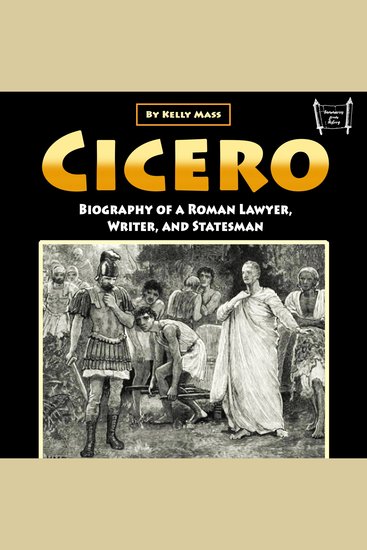
    Marcus Tullius Cicero was a Roman statesman, lawyer, scholar, philosopher, and Academic skeptic who became a prominent figure in the political and intellectual life of the late Roman Republic. He is best remembered for his eloquence and his staunch defense of ethical ideals in the face of political turmoil, a period that ultimately led to the rise of the Roman Empire. Cicero’s influence extended far beyond his time as he became one of Rome's most revered orators and prose stylists, producing an extensive body of work encompassing treatises on rhetoric, philosophy, and politics. His works remain fundamental to the study of Latin and Western philosophy today. 
    Cicero was born into a wealthy municipal family within the Roman equestrian order and held the esteemed office of consul in 63 BC, a significant achievement in his career. His oratorical prowess was unrivaled, and his skill in public speaking earned him a reputation that endured through the centuries. His publications spanned a broad range of subjects, from the theoretical aspects of rhetoric to the practical concerns of governance and philosophy. Cicero’s mastery of the Latin language was profound—he is said to have written over three-quarters of all surviving Latin literature from his time. His works, characterized by their clarity and depth, formed the foundation for subsequent Latin prose, influencing European languages and thinkers well into the 19th century.
    Zum Buch
  • America’s Westward Expansion Trails: The History and Legacy of the 19th Century’s Most Famous Routes to the West - cover

    America’s Westward Expansion...

    Editors Charles River

    • 0
    • 0
    • 0
    The Lewis and Clark Expedition, notwithstanding its merits as a feat of exploration, was also the first tentative claim on the vast interior and the western seaboard of North America by the United States. It set in motion the great movement west that began almost immediately with the first commercial overland expedition funded by John Jacob Astor’s Pacific Fur Company and would continue with the establishment of the Oregon Trail and California Trail.  
    The westward movement of Americans in the 19th century was one of the largest and most consequential migrations in history, and as it so happened, the paths were being formalized and coming into use right around the time gold was discovered in the lands that became California in January 1848. Located thousands of miles away from the country’s power centers on the East Coast at the time, the announcement came a month before the Mexican-American War had ended, and among the very few Americans that were near the region at the time, many of them were Army soldiers who were participating in the war and garrisoned there. San Francisco was still best known for being a Spanish military and missionary outpost during the colonial era, and only a few hundred called it home. Mexico’s independence, and its possession of those lands, had come only a generation earlier. 
    The most well-known is the Oregon Trail, which was not a single trail but a network of paths that began at one of four “jumping off” points. The eastern section of the Oregon Trail, which followed the Missouri River through Kansas, Nebraska, and Wyoming, was shared by people traveling along the California, Bozeman, and Mormon Trails. These trails branched off at various points, and the California Trail diverged from the Oregon Trail at Fort Hall in southern Idaho. From there, the Oregon Trail moved northward, along the Snake River, then through the Blue Mountains to Fort Walla Walla.
    Zum Buch
  • We Want Our Bodies Back - Poems - cover

    We Want Our Bodies Back - Poems

    jessica Care moore

    • 0
    • 0
    • 0
    A dazzling full-length collection of verse from one of the leading poets of our time. 
    Over the past two decades, jessica Care moore has become a cultural force as a poet, performer, publisher, activist, and critic. Reflecting her transcendent electric voice, this searing poetry collection is filled with moving, original stanzas that speak to both Black women’s creative and intellectual power, and express the pain, sadness, and anger of those who suffer constant scrutiny because of their gender and race. Fierce and passionate, Jessica Care moore argues that Black women spend their lives building a physical and emotional shelter to protect themselves from misogyny, criminalization, hatred, stereotypes, sexual assault, objectification, patriarchy, and death threats.  
    We Want Our Bodies Back is an exploration—and defiant stance against—these many attacks.
    Zum Buch
  • Rise of Islam in the Balkans The: The History of the Ottoman Empire’s Islamization Efforts in Eastern Europe - cover

    Rise of Islam in the Balkans...

    Editors Charles River

    • 0
    • 0
    • 0
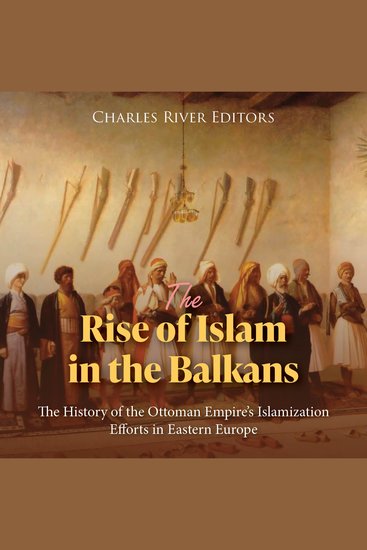
    In terms of geopolitics, perhaps the most seminal event of the Middle Ages was the successful Ottoman siege of Constantinople in 1453. The city had been an imperial capital as far back as the 4th century, when Constantine the Great shifted the power center of the Roman Empire there, effectively establishing two almost equally powerful halves of antiquity’s greatest empire. Naturally, the Ottoman Empire would also use Constantinople as the capital of its empire after their conquest effectively ended the Byzantine Empire. 
    In the wake of taking Constantinople, the Ottoman Empire would spend the next few centuries expanding its size, power, and influence, bumping up against Eastern Europe and becoming one of the world’s most important geopolitical players. It was a rise that would not truly start to wane until the 19th century. In fact, its decline would be brought about not just because of military setbacks and government corruption, but also because of nationalist uprisings among its multiethnic territories. The fact that the other existing multicultural empire, the Austro-Hungarian Empire, also did not survive World War I makes clear just how hard governing such a vast expanse of land can be. The Ottoman Empire’s inability to create a shared identity, a weak central state, and growing inner dissensions were some of the main factors explaining its long demise. 
    Of course, before that demise, the Ottomans brought plenty of their own cultural influence to the lands they reached, and nowhere is that more evident than in the spread of Islam. While Ottoman conflicts with European powers were often portrayed as religious conflicts, the fact is that the Ottomans managed to bring Islam with them into parts of Europe, especially the Balkans, and Islam took hold in various regions, adding even more demographic complexity to a place that already had no shortage of it.
    Zum Buch
  • Critique of Interventionism - cover

    Critique of Interventionism

    Ludwig Von Mises

    • 0
    • 0
    • 0
    In "Critique of Interventionism," Ludwig von Mises delves into the economic consequences and philosophical underpinnings of government intervention in the market. Mises argues that interventionism, which involves state interference in economic affairs while maintaining private ownership, inevitably leads to unintended consequences, distortions, and economic inefficiencies. The book is a critical analysis of interventionist policies, examining their impact on individual freedom, economic coordination, and the overall functioning of a market economy.
    Zum Buch