Begleiten Sie uns auf eine literarische Weltreise!
Buch zum Bücherregal hinzufügen
Grey
Einen neuen Kommentar schreiben Default profile 50px
Grey
Jetzt das ganze Buch im Abo oder die ersten Seiten gratis lesen!
All characters reduced
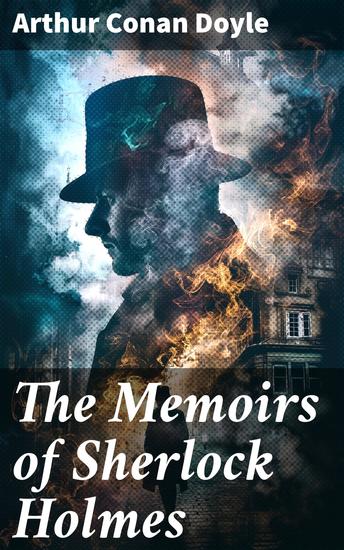
The Memoirs of Sherlock Holmes - Unraveling mysteries with the iconic detective and his loyal companion - cover

The Memoirs of Sherlock Holmes - Unraveling mysteries with the iconic detective and his loyal companion

Arthur Conan Doyle

Verlag: Good Press

  • 0
  • 0
  • 0

Beschreibung

In 'The Memoirs of Sherlock Holmes,' Arthur Conan Doyle continues the enthralling journey of his iconic detective, Sherlock Holmes, through a collection of twelve short stories that delve into the complexities of crime and the human psyche. Written in the late 19th century, this compilation showcases Doyle's mastery of the detective genre, blending intricate plotting with rich character development. The literary style is marked by sharp, concise prose, characterized by vivid descriptions and a considerable emphasis on logical reasoning, reflecting the era's fascination with rational thought and scientific inquiry. These stories not only highlight Holmes's unparalleled deductive abilities but also explore themes of morality and justice in Victorian society, setting a benchmark for future detective fiction. Arthur Conan Doyle, a physician by training, turned to writing, inspired by his interest in criminology and his experiences with real-life detectives. His fascination with human psychology, coupled with an acute understanding of the legal system, informs the nuanced narratives and complex characters in his work. The interplay between Holmes and Watson serves as a reflection of Doyle's own views on friendship and loyalty, making these tales as much about companionship as they are about solving mysteries. This collection is a must-read for anyone interested in the evolution of detective fiction, as well as fans of thrilling mysteries that encourage intellectual engagement. Doyle's stories not only entertain but also challenge readers to think critically about the nature of crime and morality, making 'The Memoirs of Sherlock Holmes' a timeless classic that deserves a place on every bookshelf.
Verfügbar seit: 29.12.2023.
Drucklänge: 200 Seiten.


Weitere Bücher, die Sie mögen werden

  • A Lesson on a Tortoise - From their pens to your ears genius in every story - cover

    A Lesson on a Tortoise - From...

    D H Lawrence

    • 0
    • 0
    • 0
    David Herbert Lawrence was born on the 11th September 1885 in Eastwood, Nottinghamshire, a coal mining town where the reality of a harsh life was only useful as experiences for future literary works. 
    He was educated at Beauvale Board School and became the first local boy to receive a scholarship to attend Nottingham High School. After 3 years he became a junior clerk in Haywood’s surgical appliances factory. He was also attempting a literary career which, in the short term, led to a teacher training position in Eastwood and later a teaching qualification from University College, Nottingham.  
    Lawrence’s first efforts were poems, short stories and a draft of ‘The White Peacock’. Moving to London and a teaching position in Croydon his writing attracted the attention of Ford Madox Ford, editor of The English Review, and he commissioned him to write ‘Odour of Chrysanthemums’.  
    Wanting to write full-time he now began work on what would become ‘Sons and Lovers.   
    In 1912 he met the older and married mother-of-three Frieda Weekley. They eloped to Germany and here Lawrence could see for himself the growing tensions with France.  So keen was his interest that he was arrested and accused of being a British spy.  
    In early 1914 Frieda obtained her divorce and they returned to Britain to be married just days before the outbreak of war. Owing to her German parentage, and his own public dislike of militarism and violence, the couple were treated with contempt and suspicion throughout the war years.  
    Despite this he continued to write but his reputation in England was so tarnished and, mirrored by his own disdain for the country, he and Frieda left England in November 1919, first for Europe and then America via Ceylon and Australia. 
    They bought a ranch in Taos, New Mexico and visited Mexico several times. The third visit in March 1925 caused a near fatal attack of malaria. To convalesce they moved to Florence. Here he continued work on ‘Lady Chatterley’s Lover’ which for many years would cause controversy. A renewed interest in oil painting resulted in an exhibition in 1929 which was raided by the police and several works were confiscated.  
    D H Lawrence died of complications arising from a bout of tuberculosis on the 2nd of March 1930 in Vence, France.  He was 44.
    Zum Buch
  • Seven Ravens The - Story Time Episode 48 (Unabridged) - cover

    Seven Ravens The - Story Time...

    Brothers Grimm

    • 0
    • 0
    • 0
    A peasant has seven sons and no daughter. Finally a daughter is born, but is sickly. The father sends his sons to fetch water for her, in the German version to be baptized, in the Greek version to take water from a healing spring. In their haste, they drop the jug in the well. When they do not return, their father thinks that they have gone off to play and curses them and so they turn into ravens.
    Zum Buch
  • Porch Swings Parlors & Pryin’ Eyes - Gossip Gumption and the Glories of Small-Town Life - cover

    Porch Swings Parlors & Pryin’...

    Anne Warner, Edna Ferber, Booth...

    • 0
    • 0
    • 0
    In the towns where the porch lights glow late, the screen doors creak often, and no secret stays secret for long, life unfolds with charm, chatter, and more than a touch of mischief. 
    Porch Swings, Parlors & Pryin’ Eyes invites you into parlors both prim and peculiar, where romances are whispered behind teacups, rivalries simmer at choir practice, and widows form committees with suspicious speed. Within these sixteen short stories, you’ll find aging sopranos and checker champions, tangled telegrams and moonlit deacons, poker parties gone sideways and gossip spun tighter than a handmade scarf. 
    Each tale captures the distinct rhythms of small-town American life in the late 19th and early 20th centuries—with all its humor, heartbreak, and sly subversion of social norms. These are stories not just of people, but of places—of communities that cradle, confine, and sometimes surprise those who call them home. 
    Pull up a chair, pour something sweet, and don’t be surprised if someone starts talkin’ about you next. 
    Featuring the work of renowned authors and some hidden gems of classic American fiction, including: 
    The Gay Old Dog, by Edna Ferber 
    Melinda's Humorous Story, by May McHenry 
    Friends in San Rosario, by O. Henry 
    The Associated Widows, by Katharine M. Roof 
    The Tale of the Tangled Telegram, by Wilbur D. Nesbit 
    A Village Singer, by Mary E. Wilkins Freeman 
    A New England Nun, by Mary E. Wilkins Freeman 
    The Scarf, by Madeline Yale Wynne 
    The Champion Checker-Player of Ameriky, by James Whitcomb Riley 
    How The Widow Won The Deacon, by William James Lampton 
    Evan Anderson's Poker Party, by Benjamin Stevenson 
    A Rivermouth Romance, by Thomas Bailey Aldrich 
    Not According to Schedule, by Mary Stewart Cutting 
    A Reward of Merit, by Booth Tarkington 
    Sand Flat Shadows, by Carl Sandburg 
    Mrs. Lathrop's Love Affair, by Anne Warner
    Zum Buch
  • The Theogony - cover

    The Theogony

    Hesiod

    • 0
    • 0
    • 0
    The Theogony "the genealogy or birth of the gods" is a poem by Hesiod (8th – 7th century BC) describing the origins and genealogies of the Greek gods, composed c. 730–700 BC. It is written in the Epic dialect of Ancient Greek and contains 1022 lines. 
    Hesiod's Theogony is a large-scale synthesis of a vast variety of local Greek traditions concerning the gods, organized as a narrative that tells how they came to be and how they established permanent control over the cosmos. It is the first known Greek mythical cosmogony. The initial state of the universe is chaos, a dark indefinite void considered a divine primordial condition from which everything else appeared. Theogonies are a part of Greek mythology which embodies the desire to articulate reality as a whole; this universalizing impulse was fundamental for the first later projects of speculative theorizing.
    Hesiod appropriates to himself the authority usually reserved to sacred kingship. The poet declares that it is he, where we might have expected some king instead, upon whom the Muses have bestowed the two gifts of a scepter and an authoritative voice (Hesiod, Theogony 30–3), which are the visible signs of kingship. It is not that this gesture is meant to make Hesiod a king. Rather, the point is that the authority of kingship now belongs to the poetic voice, the voice that is declaiming the Theogony.
    Zum Buch
  • Sailors' Yarns (Unabridged) - cover

    Sailors' Yarns (Unabridged)

    Pierre Loti

    • 0
    • 0
    • 0
    Pierre Loti born to a Protestant family, Loti's education began in his birthplace, Rochefort, Charente-Maritime. At age 17 he entered the naval school in Brest and studied at Le Borda. He gradually rose in his profession, attaining the rank of captain in 1906. In January 1910 he went on the reserve list. He was in the habit of claiming that he never read books, saying to the Académie française on the day of his introduction (7 April 1892), "Loti ne sait pas lire" ("Loti doesn't know how to read"), but testimony from friends proves otherwise, as does his library, much of which is preserved in his house in Rochefort. In 1876 fellow naval officers persuaded him to turn into a novel passages in his diary dealing with some curious experiences in Istanbul. The result was the anonymously published Aziyadé (1879), part romance, part autobiography, like the work of his admirer, Marcel Proust, after him.
    SAILORS' YARNS: Within the tropics, on a wondrous evening when the Southern trades were blowing with their balmiest softness, the corporeal portion of his being tired with a healthy muscular fatigue, gently lulled by the slumberous rhythmic motion of the ship.
    Zum Buch
  • He (Unabridged) - cover

    He (Unabridged)

    H. P. Lovecraft

    • 0
    • 0
    • 0
    'He' is a short story by American horror writer H. P. Lovecraft. Written August 1925, it was first published in Weird Tales, September 1926. Plot: The story's anonymous narrator has moved from New England to New York City, and greatly regrets it. One night, while wandering in a historic part of Greenwich Village, he happens upon a man dressed in garments from the 18th century. The man offers to show the narrator the secrets of the town. - The man brings the narrator to his home; there, he tells him the story of a squire who bargained with Native Americans for the secrets of their rituals concerning time and space, which were practiced on the land where the squire had recently taken up residence. After learning these secrets, the squire killed the Native Americans by giving them "monstrous bad rum"; within a week all of them were dead, and he alone had the secret knowledge. The man shows the narrator visions of the city's past and future so terrifying that the narrator begins to scream wildly. The screams rouse the spirits of the Native Americans to take vengeance on the man, who is the same squire from 1768.
    Zum Buch