Rejoignez-nous pour un voyage dans le monde des livres!
Ajouter ce livre à l'électronique
Grey
Ecrivez un nouveau commentaire Default profile 50px
Grey
Abonnez-vous pour lire le livre complet ou lisez les premières pages gratuitement!
All characters reduced
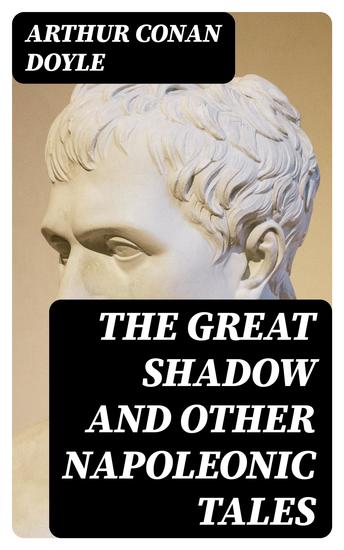
The Great Shadow and Other Napoleonic Tales - cover

The Great Shadow and Other Napoleonic Tales

Arthur Conan Doyle

Maison d'édition: DigiCat

  • 0
  • 0
  • 0

Synopsis

In "The Great Shadow and Other Napoleonic Tales," Arthur Conan Doyle ventures beyond his renowned detective fiction to explore the turbulent landscapes of the Napoleonic Wars. This collection of stories intertwines vivid historical detail with the author's characteristic narrative style, showcasing his ability to weave action, emotion, and morality into compelling tales. The stories reflect a nuanced understanding of the complexities of war, the intricacies of human character, and the specter of heroism that looms over these tumultuous times, demonstrating a literary context that honors and critiques the era's romanticism. Doyle's own experiences, including his training as a physician and a keen interest in history, deeply informed his portrayal of Napoleonic events. His historical empathy allows readers to glimpse the psychological intricacies of soldiers and civilians alike, reflecting a broader societal interest in the Napoleonic era during the late 19th and early 20th centuries. Doyle's fascination with the heroism and tragedy of war, contrasted with civilian life, offers valuable insight into his motivations as a storyteller. Readers seeking a fresh perspective on historical fiction will find "The Great Shadow and Other Napoleonic Tales" both engaging and enlightening. This collection not only showcases Doyle's narrative prowess but also enriches our understanding of a pivotal moment in world history. It is an essential read for anyone interested in the intertwining of personal and historical narratives.
Disponible depuis: 15/09/2022.
Longueur d'impression: 112 pages.
D'autres livres qui pourraient vous intéresser

  • Great Escapes of World War I The: The History of the Most Famous Prisoner Breakouts during the Great War - cover

    Great Escapes of World War I...

    Editors Charles River

    • 0
    • 0
    • 0
    In the first half of the 20th century, war was fought on a global and industrial scale. Millions of men were flung into the grinder of World War I and World War II, leading to commensurately huge numbers of prisoners of war (POWs). Camps were built to hold thousands of captives, with their own barracks blocks, parade grounds, and even farms. In World War I, there were several fronts in the war - Britain, France, Belgium, and Germany faced each other on the Western Front, fought mostly in northeast France and Belgium, while Germany and Austria Hungary faced Russia on the Eastern Front, where much of the war was fought in East Prussia and what is now Poland. The Italians and Austrians fought in the region of northeast Italy, and the Austrians and Bulgarians faced Serbia and then later an Allied army based in Salonica in the Balkans. The Ottomans faced Russia in northeast Anatolia, the British and Allied forces in the Mesopotamian campaign (mainly in today’s Iraq), the British in Palestine, and the Allies at Gallipoli.  
    	Regardless of rank, throughout the war, many of these men did not sit idle. Many spent their time preparing elaborate escape plans in the hopes of returning to their home nations and back to the fight. Following World War I, several books were published giving romantic accounts of successful escapes. For example, the wildly popular film The Great Escape (1963), has been a main factor in how the public views prisoners of war, and while that film was based on a book that details a mass escape of British and Allied prisoners from a World War II German prison camp for aviators, Stalag Luft III, a real escape from a German prisoner camp in World War I inspired the 1944 great escape from Stalag Luft III. 
    Voir livre
  • The Truce - Progressives Centrists and the Future of the Democratic Party - cover

    The Truce - Progressives...

    Hunter Walker, Luppe B. n

    • 0
    • 0
    • 0
    The Truce is a definitive history of a half-decade of upheaval in the Democratic Party in which a new generation aggressively pursued their progressive ideals while the powerful, centrist establishment adapted to remain in command. Journalists Hunter Walker and Luppe B. Luppen illuminate this story of backroom maneuvering and political strategy with new revelations about pivotal events and exclusive, on-the-record comments from activists, campaign operatives, and members of Congress. 


    The Truce explores the major fault lines that define Democratic politics today and asks big questions about the future of the party. Will economic or social justice hold primacy at the top of the Democratic agenda? Who will lead the major wings of the party after two defining figures, Biden and Sanders, exit the stage? The Truce surveys the major shifts underway, from the rise of the Squad and new Democratic leadership in the House to a complete overhaul of the primary process. By digging into the divide between left and center, Walker and Luppen expose the creeping generational and political tensions that Biden has—for the moment—kept at bay. 


    An engrossing work, and a surprising must-listen, The Truce grapples with the dangers that threaten American democracy and the complicated cast of characters who are trying to save it.
    Voir livre
  • The Lost Veda Sri Brama Samhita - Lord Brama's Prayers To Govindaji - cover

    The Lost Veda Sri Brama Samhita...

    Sripad Jagannatha Dasa

    • 0
    • 0
    • 0
    Lord Brahma saw Krsna directly and composed a prayer based on his realizations – a striking prayer by one who has seen the truth. 
      
    Krsna revealed himself to Brama, along with his spiritual planets. Overwhelmed by this transcendental revelation, Brama spoke these words glorifying Krsna. Brama’s awe and love permeate the text and reveal the workings of the cosmic creation. 
      
    The Brama Samhita teaches that transcendence, truth, and ultimate reality can be apprehended only by the mercy of the supreme transcendent entity, the Absolute Truth Himself, and that perception of ultimate reality is a function not of speculative reason but of direct spiritual cognition through divine revelation. This collection is taken from the fifth chapter of the Hymns of Brama, and includes verses 1 to 29.. There were 100 chapters in the Brama Samhita. This 5th chapter of the Brama Samhita was discovered by Lord Chaitanya. The other chapters have not yet been revealed. 
     
    The Brama-samhita clearly describes Brahman. Kṛṣṇa is the Supreme Brahman because of His unlimited knowledge, unlimited potencies, unlimited strength, unlimited influence, unlimited beauty, and unlimited renunciation. Ultimately, therefore, the word Brahman can be applied to Kṛṣṇa only.  
      
    Because the impersonal Brahman is the effulgence emanating as rays of Kṛṣṇa’s transcendental body, Kṛṣṇa is the Parabrahman. Everything rests on Brahman, but Brahman rests upon Kṛṣṇa. The material elements are accepted as the inferior energy of Kṛṣṇa. By their interaction, the cosmic manifestation takes place, rests on Kṛṣṇa, and after dissolution again enters into the body of Kṛṣṇa as His subtle energy. Kṛṣṇa is therefore the cause of both manifestation and dissolution. 
     
    Translator and commentator Bhaktisiddhanta Sarasvati was a Gaudīya Vaisnava Hindu guru, ācārya, and revivalist in early 20th century India. 
    Voir livre
  • Little Women Podcast Laurie In The MeToo Era - cover

    Little Women Podcast Laurie In...

    Niina Niskanen, Kymberly East

    • 0
    • 0
    • 0
    Dive into the world of Little Women with our engaging podcast episode, where Niina and Kymberly breathe new life into the beloved classic. This episode centers on the chapter "Laurie Makes Mischief and Jo Makes Peace," exploring how Laurie's playful yet troubling antics would resonate in today’s #MeToo era. Discover the timelessness of Alcott’s characters as they navigate themes of manipulation, consent, and forgiveness, seen through a modern feminist lens. 
    Whether you're a devoted fan of "Little Women" or new to its charm, this podcast offers fresh insights and thought-provoking discussions. Niina and Kymberly’s analysis is both respectful of the original text and critical of its implications in contemporary society. 
    Who is this for? This podcast is perfect for literature enthusiasts, and anyone interested in how classic texts hold up in modern discourse. Use this episode to spark conversations in book clubs, classrooms, or casual discussions with friends. 
    Where and How to Use This Product:Book Club Discussions: Perfect for deepening your book club's discussion with modern perspectives.Literature Classes: Enhance students’ understanding of classic texts in a modern context.Feminist Study Groups: Explore feminist themes in classic literature.Commuting: Listen during your daily commute for an intellectual start to your day.Personal Reflection: Engage with the material personally, reflecting on how far society has come and where it needs to go.
    Voir livre
  • Who Has Buried the Dead? - From Stalin to Putin … The last great secret of World War Two - cover

    Who Has Buried the Dead? - From...

    KGE Konkel

    • 0
    • 1
    • 0
    The Second World War was fought not only on the front lines but also in secrets, some of which have never been revealed. One such secret was buried in the deep, dark forest of Katyn, Poland. The other in the pages of a notebook hidden in an otherwise unremarkable café in an ancient Polish city.
    		 
    That notebook, known as the Scottish Book, was an obscure work of intellectual gamesmanship between a specialized group of mathematicians who met at a local pub near the town’s medieval university, where they shared and solved complex mathematical problems in the pages of the book. In 1939, as the Nazis overran the country, the book mysteriously vanished from its hiding place in the café. Some of its contributors avoided certain death by fleeing Poland  for America, where the government recruited them. Ultimately, some of these intellectuals became participants in a deadly undertaking: the Manhattan Project.
    		 
    Who Has Buried the Dead? may be fiction, but it draws on years of research to plausibly answer the real questions surrounding one of the last great secrets of the Second World War. What did the Scottish Book contain that led the NKVD, the Gestapo, and the Allies on a desperate search, using any means to find it? Why has its existence not factored into the telling of Second World War history? What is ultimately revealed within the Scottish Book that brought mortal enemies and their top spy operatives into a deadly contest for its discovery and seizure?
    Voir livre
  • On Drugs - Psychedelics Philosophy and the Nature of Reality - cover

    On Drugs - Psychedelics...

    Justin Smith-Ruiu

    • 0
    • 0
    • 0
    “Like the best psychedelic experiences, On Drugs estranges the familiar, familiarizes the strange, and returns us to reality (whatever that is) with a broadened sense of the possible. Justin Smith-Ruiu is simply one of the most interesting thinkers alive, and he has found an ideal subject for his peculiar brand of brilliance.”—Christopher Beha, author of The Index of Self-Destructive Acts 
      
    In the late, post-lockdown days of the pandemic, grappling with personal loss and existential uncertainty, Justin Smith-Ruiu found himself standing in a California cannabis dispensary, pondering a question his tribe of fellow philosophers have often dismissed as too simple: How did I get here? That moment marked a transition for him—it was the start of a journey Smith-Ruiu would take to experience his own mind and the world around him in a new, clarifying way.  
      
    On Drugs blends autobiography, intellectual history, and philosophical inquiry to explore the transformative impact of psychedelics on human consciousness and thought. Drawing on his personal experiences as “an articulate guinea pig,” Smith-Ruiu argues that psychedelics upend our assumptions about the nature of reality—and thus force a reckoning with the very foundations of Western philosophy.  
      
    Provocative, profound, and deeply personal, On Drugs points toward a radically new way of thinking about the world and our capacity to understand it. 
    Voir livre