Begleiten Sie uns auf eine literarische Weltreise!
Buch zum Bücherregal hinzufügen
Grey
Einen neuen Kommentar schreiben Default profile 50px
Grey
Jetzt das ganze Buch im Abo oder die ersten Seiten gratis lesen!
All characters reduced
The Crime of the Congo - Enriched edition - cover

The Crime of the Congo - Enriched edition

Arthur Conan Doyle

Verlag: DigiCat

  • 0
  • 0
  • 0

Beschreibung

In "The Crime of the Congo," Arthur Conan Doyle presents a powerful and impassioned critique of the brutal exploitation and atrocities perpetrated during King Leopold II's rule over the Congo Free State. Employing a journalistic style infused with a moral urgency, Doyle blends vivid narrative with meticulous documentation, allowing readers to grasp the chilling reality of colonial violence. The book emerges in the context of early 20th-century imperialism and humanitarian movements, urging global awareness and accountability for the Congo's plight. Doyle's compelling arguments highlight the intersection of ethics and empire, making a significant literary contribution to the ongoing discourse surrounding colonialism and human rights. Arthur Conan Doyle, best known for his creation of Sherlock Holmes, was a man of diverse interests and deep humanitarian convictions. His exposure to the struggles of the Congolese people arose from a growing concern regarding moral responsibility and social justice. Witnessing the impact of imperialism, Doyle felt compelled to leverage his platform as a prominent author to shine a light on the suffering inflicted upon innocent populations, showcasing his evolution from a writer of fiction to one of a social commentator. For readers interested in historical injustices, colonial criticism, or the role of literature in advocacy, "The Crime of the Congo" is an essential read. This book not only chronicles a dark chapter in history but also serves as a poignant reminder of the enduring human spirit and the necessity for accountability. Doyle's incisive critique resonates profoundly in contemporary discussions on ethical governance and global responsibility.

In this enriched edition, we have carefully created added value for your reading experience:
- A succinct Introduction situates the work's timeless appeal and themes.
- The Synopsis outlines the central plot, highlighting key developments without spoiling critical twists.
- A detailed Historical Context immerses you in the era's events and influences that shaped the writing.
- An Author Biography reveals milestones in the author's life, illuminating the personal insights behind the text.
- A thorough Analysis dissects symbols, motifs, and character arcs to unearth underlying meanings.
- Reflection questions prompt you to engage personally with the work's messages, connecting them to modern life.
- Hand‐picked Memorable Quotes shine a spotlight on moments of literary brilliance.
- Interactive footnotes clarify unusual references, historical allusions, and archaic phrases for an effortless, more informed read.
Verfügbar seit: 20.07.2022.
Drucklänge: 129 Seiten.
Weitere Bücher, die Sie mögen werden

  • Creating the Modern Army - Citizen-Soldiers and the American Way of War 1919-1939 - cover

    Creating the Modern Army -...

    William J. Woolley

    • 0
    • 0
    • 0
    The modern US Army was largely created in the years between the two world wars. Prior to World War I, officers in leadership positions were increasingly convinced that building a new army could not take place as a series of random developments but had to be guided by military policy. In 1920, Congress accepted that idea and embodied it in the National Defense Act. In doing so it also accepted army leadership's idea of entrusting America's security to the Citizen Army, and tasked the nation’s Regular Army with developing and training that force. Creating the Modern Army details the efforts of the Regular Army to do so in the face of austerity budgets and public apathy while simultaneously responding to the challenges posed by the new and revolutionary mechanization of warfare. 


    In this book Woolley focuses on the development of what he sees as the four major features of the modernized army that emerged due to these efforts. 


    The US Army that fought World War II was clearly a citizen army whose leadership was largely trained within the framework of the institutions of the army created by the National Defense Act. The way that army fought the war may have been less decisive and more costly in terms of lives and money than it should have been. But that army won the war and therefore validated the citizen army as the US way of war.
    Zum Buch
  • American Injustice - My Battle to Expose the Truth - cover

    American Injustice - My Battle...

    John Paul Mac Isaac

    • 0
    • 0
    • 0
    As seen on Tucker Carlson Tonight! 


    This is the story of how I tried to get the Hunter Biden laptop evidence to the authorities. 


    My life changed forever on April 12, 2019, when Hunter Biden stumbled into my shop requesting data recovery from one of his liquid-damaged laptops. After his father announced his candidacy for president of the United States, and Hunter failed to pay for and collect his computer, fear for my safety grew. There was paperwork in Hunter's possession giving me permission to examine and copy his data—someone was going to come looking for the laptop, and come looking for me. Concerned that I was sitting on evidence in a criminal investigation, I set out to hand everything over to the FBI. But, feeling betrayed by the FBI's inaction in providing the laptop as evidence during the impeachment trial, I then turned to Congress, and ultimately, to a lawyer for the president, Rudy Giuliani. When the story broke, Big Tech and social and mainstream media blocked the reporting. I was instantly labeled as a hacker and a criminal. My actions were labeled Russian disinformation, and it didn't take long before people started attacking my business and my character, forcing me to close my shop and flee the state.
    Zum Buch
  • The Essential Guide for Counseling Black Women - cover

    The Essential Guide for...

    EdD LaNail R. Plummer

    • 0
    • 0
    • 0
    Black women deserve a safe therapeutic space to process their experiences. 
     
    As the fastest growing population in education, economics, entrepreneurship, and international travel, Black women are forging a world of their own. They are breaking generational cycles, reinventing social norms, and developing new identities. However, as a double marginalized minority, Black women are also navigating socially constructed ideas of race, oppression, and privilege. Many well-intentioned clinicians lack the skills and knowledge to properly support, guide, and develop inquiries with these clients. 
     
    Clinicians will find foundational information on the types of experiences that cause many Black women to seek therapy as well as ways to support them on their therapeutic journey. Topics such as nontraditional lifestyles, work ethic and legacy, understanding friendships, embracing newfound freedoms and opportunities, moving beyond stereotypes, understanding and working with emotions, addressing trauma, and mental health disorders through a cultural lens are explored.
    Zum Buch
  • Medieval History - The Issues and Opportunities of the Dark Ages (10 in 1) - cover

    Medieval History - The Issues...

    Kelly Mass

    • 0
    • 0
    • 0
    This book consists of 10 titles, which are: 
    Brian Boru - Biography of a Medieval King from Ireland 
    Constantinople - History of the Byzantine Empire’s Gigantic Capital 
    Justinian I - Biography of the Byzantine Emperor, Justinian the Great 
    King Arthur - His Life, Authenticity, Historicity, and Legacy 
    Magna Carta - Its Medieval Writings, Rights, and Background 
    Medieval Knights - Historical Details of the Military in the Middle Ages 
    The Great Schism - How the Catholic Church Split up 
    The Hundred Years’ War - History of the War between the French and English in the 14th Century 
    The Puritans - History of the English Protestants Who Tried to Purify the Church of England 
    The Thirty Years’ War - The Most Destructive Religious War in European History
    Zum Buch
  • The Pacific Theater - Island Hopping and the Fight Against Japan - cover

    The Pacific Theater - Island...

    Sage Winters

    • 0
    • 0
    • 0
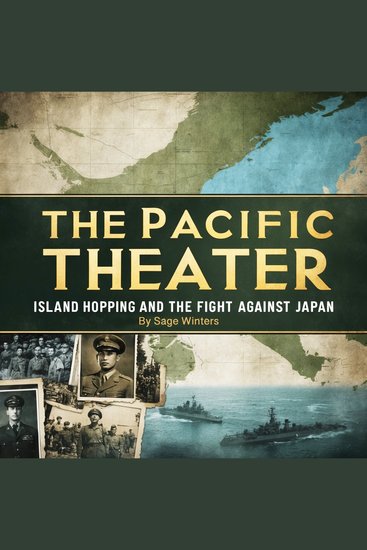
    The Pacific Theater of World War II was the culmination of decades of tension, territorial disputes, and ideological differences between Japan and the Allied Powers, particularly the United States. The roots of the conflict can be traced back to Japan’s rise as an imperial power in the late 19th and early 20th centuries. Seeking to expand its influence across East Asia and the Pacific, Japan embarked on a campaign of military conquest and economic domination, often at the expense of its neighbors.  
      
    By the 1930s, Japan’s aggressive expansionist policies became more pronounced, beginning with the invasion of Manchuria in 1931 and escalating with the full-scale war against China in 1937. These actions alarmed Western powers, who viewed Japan’s ambitions as a direct challenge to their interests in the region. The United States, in particular, responded by imposing economic sanctions and cutting off vital supplies, including oil, to curtail Japan’s militarism. However, these measures only further inflamed tensions, as Japan viewed them as an existential threat to its survival and growth as a global power.  
      
    The turning point came on December 7, 1941, with Japan’s surprise attack on Pearl Harbor. This audacious assault on the U.S. Pacific Fleet in Hawaii aimed to neutralize American naval power and secure Japan’s dominance in the Pacific. Although the attack achieved significant tactical success, crippling much of the U.S. fleet, it also galvanized American public opinion and led to the United States’ entry into World War II. The attack on Pearl Harbor marked the beginning of a brutal and protracted conflict that would span nearly four years and claim millions of lives. 
    Zum Buch
  • Confederacy on the Brink The: The History and Legacy of the Battles that Saved the Confederate Cause in 1862 - cover

    Confederacy on the Brink The:...

    Editors Charles River

    • 0
    • 0
    • 0
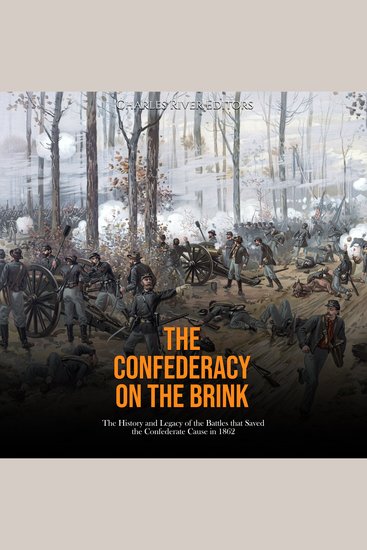
    As Union commander George McClellan moved the Army of the Potomac up the Peninsula in early 1862, the Union army had a nearly 2-1 advantage in manpower, so Army of Northern Virginia commander Joseph E. Johnston continued to gradually pull his troops back to a line of defense nearer Richmond as McClellan advanced. In conjunction, the Union Navy began moving its operations further up the James River, until it could get within 7 miles of the Confederate capital before being opposed by a Southern fort.  
    It was at this point that Johnston got uncharacteristically aggressive at the end of May, perhaps because he had run out of breathing space for his army. By the time the Battle of Seven Pines was over, nearly 40,000 had been engaged on both sides, making it the biggest battle in the Eastern theater to date, and Johnston was injured, bringing Robert E. Lee to command. 
    Despite not losing, the fighting rattled McClellan, but even after Lee pushed McClellan’s Army of the Potomac away from Richmond and back up the Peninsula in late June, he then had to swing his army north to face a second Union army: John Pope’s Army of Virginia. Correctly assuming that he needed to strike out before the Army of the Potomac successfully sailed back to Washington and linked up with Pope’s army, Lee daringly split his army to threaten Pope’s supply lines, forcing Pope to fall back to Manassas to protect his flank and maintain his lines of communication. At the same time, it left half of Lee’s army (under Stonewall Jackson) potentially exposed against the larger Union army until the other wing (under James Longstreet) linked back up. Thus, in late August 1862, the Army of Northern Virginia and the Army of Virginia found themselves fighting over nearly the exact same land the North and South fought over in the First Battle of Bull Run 13 months earlier. 
    Zum Buch