Begleiten Sie uns auf eine literarische Weltreise!
Buch zum Bücherregal hinzufügen
Grey
Einen neuen Kommentar schreiben Default profile 50px
Grey
Jetzt das ganze Buch im Abo oder die ersten Seiten gratis lesen!
All characters reduced
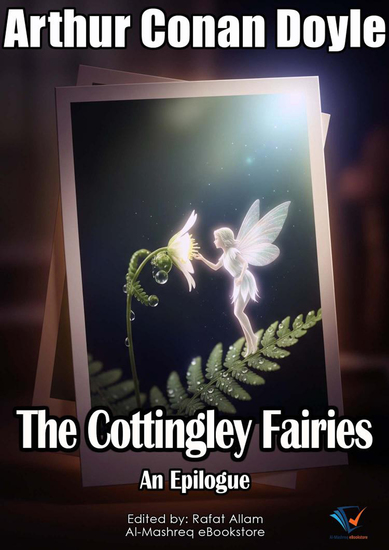
The Cottingley Fairies - An Epilogue - cover

The Cottingley Fairies - An Epilogue

Arthur Conan Doyle

Verlag: Al-Mashreq eBookstore

  • 0
  • 0
  • 0

Beschreibung

In this follow-up to the Cottingley Fairies episode, Arthur Conan Doyle reflects on the public's response to the fairy photographs and the spiritual meaning behind them. An Epilogue serves both as a defense and a deeper interpretation of what Doyle saw as proof of unseen forces in the world. This short piece offers insight into Doyle's enduring belief in spiritual reality over skeptical criticism.
Verfügbar seit: 01.08.2025.
Drucklänge: 32 Seiten.

Weitere Bücher, die Sie mögen werden

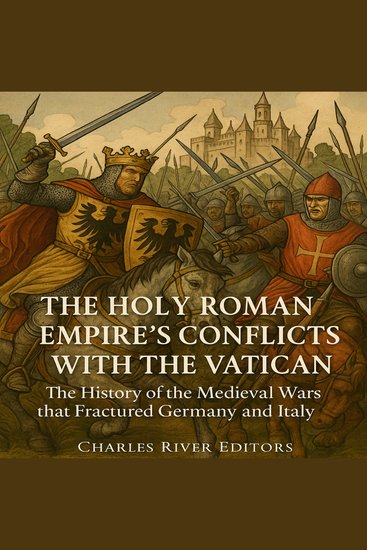
  • Holy Roman Empire’s Conflicts with the Vatican The: The History of the Medieval Wars that Fractured Germany and Italy - cover

    Holy Roman Empire’s Conflicts...

    Charles River Editors

    • 0
    • 0
    • 0
    It has been famously pointed out that the Holy Roman Empire was neither holy, nor Roman, but it was also not an empire in the sense people expect when hearing the term. In theory, the emperor was the highest prince in Christendom, and his dominion extended the length and breadth of Western Europe. The empire had been created by the papacy in 801 when Pope Leo the Third famously crowned the supposedly unwitting Charlemagne in Saint Peter’s Basilica, intending to recreate the Western Roman Empire. In truth, the imperial power did not extend beyond central Europe, which by the beginning of the 16th century included Germany, northern Italy, and the Netherlands. Even in these lands, however, the emperor struggled to command obedience. His dominion over northern Italy was theoretical only, the cities of the Netherlands were deeply conscious of their ancient rights and privileges, and Germany had long ceased to be compliant. The latter had become a collection of principalities, dukedoms and bishoprics which vied with each other and pursued their own agendas. They were, however, united in only one sense: denying the emperor power and resisting attempts to centralize the government.  
    	At the same time, the secular sovereigns frequently butted heads with religious authorities back in Rome, and arguably none of the conflicts were as crucial as the War of the Keys and the Investiture Controversy. The tensions between the Holy Roman Empire and Church over the power to invest bishops with authority led to decades of civil war in Germany on the way to establishing the relationship between Church and state, elevating the status of the papacy and weakening the Holy Roman Empire. What is crucial in understanding the conflicts is to not view them with the benefit of hindsight. Most importantly, no nation as people recognize it today yet existed, as England, France, Germany, and Italy were largely geographical expressions, not national identities.
    Zum Buch
  • The History of England Volume 3 - From Henry VII to Mary - cover

    The History of England Volume 3...

    David Hume

    • 0
    • 0
    • 0
    The accession of Henry VII (reigned 1485-1509) to the throne of England, leading to the end of the Wars of the Roses, opened the door to Tudor rule, setting a different character to the monarchy. In Volume 3 of The History of England, Hume traces the story through turbulent and unpredictable times, the reigns of Henry VII, Henry VIII, Edward VI, the brief period of Jane Grey; and concluding with the brutal religious persecutions of Mary I.  
    Initially, Henry VII had to establish royal control and legitimacy. With his customary clarity and natural story-telling style, Hume tells how Henry established his authority with a firm, ruthless but sure hand. He suppressed insurrections, faced French incursions into Brittany, instability in Scotland, and other fractious relationships with Spain and Flanders. Just as important was his commitment to improving the monetary state of the country after the turmoil of the Wars of the Roses. As a result, he was able to pass on a wealthier England to his successor. 
    Henry VIII (reigned 1509-1547) was welcomed as a huge contrast, from the ‘jealous, severe and avaricious’ character of his father. The bold, youthful and courageous prince of just 18 years engendered much hope in the populace. But his character resulted in a reign of much turbulence, from his marital profligacy as he searched for an heir, to his departure from the religious overlordship of the Pope.  Under his flamboyant rule the country was to experience huge uncertainties, with expeditionary failures abroad, introduction of the new religion, the dissolution of monasteries and constant financial challenges. 
    His son, Edward VI (reigned 1547-1553) raised hopes as he was known to be a committed Protestant. But his early death at the age of 15, (apart from the short, disputed reign of Lady Jane Grey), saw the fiercely Catholic Mary (1553-1558) accede to the throne. Predictably, the five years of her monarchy was dominated by religious persecution as an increasingly embittered sovereign sought to impose Catholicism on the nation. Her death after only five years left England in a parlous state. 
    As always, Hume’s characterful but well-informed view of events brings the launch of the Tudor monarchy to life. He deals not only with the major events and personalities, but by introducing many less well-known individuals and their actions, brings a vivid quality to the story of England as it unfolds.
    Zum Buch

  • Pain as a Portal - A Philosophy to Explore Your Potential - cover

    Pain as a Portal - A Philosophy...

    April Simone

    • 0
    • 0
    • 0
    Discover how Mettāmorphosis-an essential new philosophy-offers a pathway to alleviate suffering and connects you with your own inherent wisdom to make sense of it all. 
    The book is divided into three parts: 
        * Part One explores The PAIN Process model, introducing the philosophy behind it and a step-by-step guide to frame, process and morph your pain into gifts. 
        * Part Two includes case studies to provide clear examples of how this model has been applied in real-life scenarios. 
        * Part Three offers deeply personal and vulnerable narratives from April Simone's own life, serving as sustenance of hope for your mind and heart. 
    Pain as a Portal is a transmission that serves as a guide, travelling alongside you on your journey to uncover the many gifts your pain has to offer.
    Zum Buch
  • Can Thought Bring Order? - Saanen 1974 - Public Talk 2 - cover

    Can Thought Bring Order? -...

    Jiddu Krishnamurti

    • 0
    • 0
    • 0
    Can thought bring order? - 18 July 1974 
    • Are thoughts, feelings, reactions and relationships merely mechanical? Is there 
    any other movement? 
    • Where there is a cause there is time and so living becomes relative. 
    • Is my relationship with another based on opinions, memories, demands and 
    sexual appetites? 
    • Is there a way of living which has no cause? 
    • Do I actually see disorder or only its description? 
    • Is it only when the ‘me’ is non-existent that I am related? 
    • What takes place when the mind has order and a sense of total relationship? • Can the mind be free of the word to look and discover its disorder? 
    Questions from the audience followed the talk."
    Zum Buch
  • Summary of Kevin Simler & Robin Hanson’s The Elephant in the Brain - cover

    Summary of Kevin Simler & Robin...

    Falcon Press

    • 0
    • 0
    • 0
    Buy now to get the main key ideas from Kevin Simler & Robin Hanson’s The Elephant in the Brain 
      
    We, the human species, not only act on hidden motives, but we’re naturally designed to do so. Our brains are programmed to act in our own interest, even while we are trying hard not to be selfish. That’s why our brain often keeps our conscious mind in the dark. The more we ignore our ugly, hidden motives, the easier it is for us to keep them hidden from others, too. Self-deception is a strategic ploy that our brain adopts to disguise our bad behavior, and the key to change is understanding it.  
    In The Elephant in the Brain (2017), writer Kevin Simler and professor Robin Hanson uncover the hidden motives behind our main social behaviors and shed light on unexamined aspects of public life: respected social institutions in which nearly all participants are strategically self-interested, self-deceived, and driven by social signaling. 
     
    Zum Buch
  • Talking to Children About Divorce - cover

    Talking to Children About Divorce

    Jenelle Winter

    • 0
    • 0
    • 0
    Talking to Children About Divorce: A Parent's Handbook on Helping Children Cope With DivorceDivorce can be a difficult and emotional process for all involved, but it can be especially challenging for children. As parents navigate the legal and emotional aspects of ending their marriage, children may struggle to understand and cope with the changes in their lives. This audiobook aims to provide guidance and support for parents, caregivers, and professionals working with children affected by divorce. It aims to help families navigate this difficult time and promote positive outcomes for children.This audiobook will cover the following topics:- The Impact of Divorce on Children's Emotional and Behavioral Development- Co-Parenting After Divorce- Assisting Children in Coping with Life Post-Divorce- The Role of the Family Court System in Divorce Cases Involving Children- Child Custody and Visitation Arrangements- The Monetary Effects of Divorce on Children and Households- Assisting Children During High-Stress Divorce Situations- The Importance of Therapy and Counseling in Assisting Children Post-Divorce- Avoiding Parent-Child Estrangement During and Post-Divorce- How to Promote Positive Outcomes for Children After Divorce - And many more!The end of a marriage can be a traumatic and stressful event for children, and the process of adjusting to a new family structure can be difficult and confusing. To have a helpful resource to navigate through this process, scroll up and click “add to cart” now
    Zum Buch