Rejoignez-nous pour un voyage dans le monde des livres!
Ajouter ce livre à l'électronique
Grey
Ecrivez un nouveau commentaire Default profile 50px
Grey
Abonnez-vous pour lire le livre complet ou lisez les premières pages gratuitement!
All characters reduced
Crossing an Alpine Pass on Ski - Autobiographical Writings - cover

Crossing an Alpine Pass on Ski - Autobiographical Writings

Arthur Conan Doyle

Maison d'édition: Al-Mashreq eBookstore

  • 0
  • 0
  • 0

Synopsis

Embark on a heart-pounding alpine adventure with Sir Arthur Conan Doyle as he swaps his deerstalker hat for skis in Crossing an Alpine Pass on Ski. In this vivid autobiographical account, Doyle recounts one of the earliest ski expeditions by an Englishman across the treacherous mountain passes of the Alps in the late 19th century. What begins as a daring physical challenge quickly unfolds into a thrilling tale of endurance, discovery, and sheer human will against nature's white-clad giants. With a mix of danger, exhilaration, and poetic awe for the snow-laden wilderness, Doyle not only captures the spirit of exploration but also introduces a generation to the seductive pull of the slopes. This narrative is a rare glimpse into the adventurer behind Sherlock Holmes—one willing to brave avalanches, blizzards, and bone-deep cold for the love of the unknown.
Disponible depuis: 01/08/2025.
Longueur d'impression: 32 pages.


D'autres livres qui pourraient vous intéresser

  • Terra Incognita - Probing the Secrets of the Earth's Most Bewildering Isle - cover

    Terra Incognita - Probing the...

    John Harpoon

    • 0
    • 0
    • 0
    To document the unknown is to navigate a delicate and often treacherous path. It is an undertaking that demands curiosity and courage, tempered by discipline and respect for the subject at hand. When the unknown takes the form of a remote, enigmatic island, the challenges multiply, and the journey becomes as much about understanding ourselves as it is about uncovering the mysteries of the place. 
    One of the primary obstacles is the inherent unpredictability of the venture. An island untouched by mainstream exploration holds its secrets tightly. Its terrain might defy navigation, its climate could shift without warning, and its ecosystems may present risks to even the most prepared. In such circumstances, even the best-laid plans can unravel, requiring constant adaptation. To face these uncertainties is to embrace the idea that success is not guaranteed, and setbacks are part of the process. 
    Another challenge lies in balancing observation with interpretation. A place this unique invites wonder and speculation, but separating fact from fiction is essential. Legends, often steeped in cultural heritage, must be approached with sensitivity, while scientific observations require rigorous validation. There is always the temptation to romanticize the unknown, but doing so risks misrepresenting the truth. The challenge, then, is to honor both the scientific integrity of the exploration and the intangible allure that makes the island so captivating.
    Voir livre
  • Anchors Away - Your Ultimate Guide to First-Time Cruising - cover

    Anchors Away - Your Ultimate...

    William Frye Sr.

    • 0
    • 0
    • 0
    Embark on a thrilling voyage with "Anchors Away: Your Ultimate Guide to First-Time Cruising." This comprehensive handbook is your compass to navigating the exhilarating world of cruising. Discover essential tips for selecting the perfect cruise, from choosing itineraries to securing the best deals. Learn how to maximize your onboard experience with insights into ship amenities, accommodations, and budgeting strategies. Dive into the excitement of shore excursions while respecting local cultures, and embrace the onboard community for memorable experiences. Set sail with confidence and make your dream cruise a reality with "Anchors Away."
    Voir livre
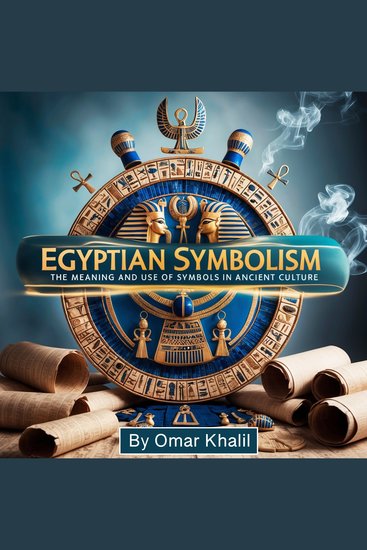
  • Egyptian Symbolism - The Meaning and Use of Symbols in Ancient Culture - cover

    Egyptian Symbolism - The Meaning...

    Omar Khalil

    • 0
    • 0
    • 0
    Egyptian symbolism is one of the most captivating aspects of ancient Egyptian culture, reflecting their deeply spiritual worldview and providing insight into their daily lives, religious practices, and understanding of the universe. From the majestic pyramids to the intricate hieroglyphs on temple walls, symbolism played a crucial role in conveying meanings that went beyond the literal. It was a tool to communicate with the gods, mark divine power, and ensure continuity in both life and the afterlife. 
    At the heart of Egyptian symbolism was the belief that the world was filled with hidden meanings and spiritual forces, each symbol carrying its own power. This belief was manifested in art, architecture, rituals, and even the everyday objects used by the ancient Egyptians. Symbols were not just representations; they were believed to hold an active force that could influence the material world and the spiritual realm. For example, the Ankh, a symbol resembling a cross with a loop at the top, represented life and was often used in funerary texts to ensure immortality for the deceased. 
    In Egyptian society, symbols were central to religious practices. The gods and goddesses, each represented by specific symbols and animal forms, embodied different aspects of life, death, and the cosmos. The sun god Ra, for instance, was depicted as a falcon, symbolizing both the sun’s power and the bird's dominance in the sky. The scarab beetle, a symbol of rebirth and protection, was commonly used in amulets and artifacts, signifying the cyclical nature of life and the hope for resurrection.
    Voir livre
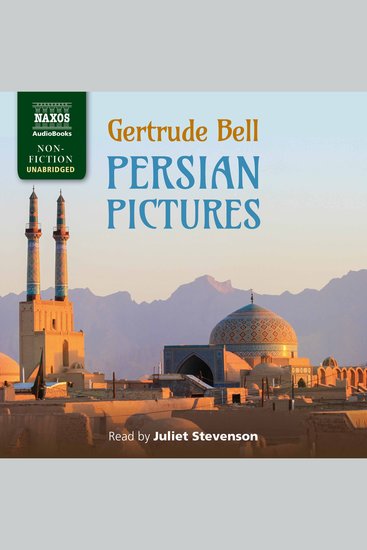
  • Persian Pictures - cover

    Persian Pictures

    Gertrude Bell

    • 0
    • 0
    • 0
    In 1892, Gertrude Bell visited Persia (now Iran) shortly after the appointment of her uncle, Sir Frank Lascelles, as British minister in Tehran. Three years later came Persian Pictures, Gertrude Bell’s first written work, which presents a series of vivid sketches of Persian culture and society at the time. Bell explores various cities and landscapes, and encounters local characters along the way, providing a unique perspective on Persian life and customs. While much of what is depicted in Persian Pictures has long since changed, Bell’s writing is a valuable account of the anachronisms and inconsistencies of the dying dynasty of medieval Persia. Her depiction of Muharram – the month of mourning for Imam Hussein, the grandson of the Prophet Mohammed – and Ramadan, display a mind finely attuned to the differences and similarities between Islam and Christianity, and East and West. Persian Pictures is both travelogue and meditation – an elegiac and beautifully observed account of a spellbinding land.
    Voir livre
  • The Status and Recognition of Post-1992 Transnistria - An Investigation of the Case for de jure Independence - cover

    The Status and Recognition of...

    Richard Colbey

    • 0
    • 0
    • 0
    The only book in English on the subject. Of topical relevance in the context of the current conflict in Ukraine.
    Voir livre
  • Taisho Era - Democracy and Social Change in a Modernizing Japan - cover

    Taisho Era - Democracy and...

    Rolf Hedger

    • 0
    • 0
    • 0
    The Taisho Era (1912–1926) marked a period of transition in Japan, bridging the highly centralized and authoritarian rule of the Meiji period with the growing democratic movements that characterized the early 20th century. Emperor Taisho ascended to the throne following the death of Emperor Meiji in 1912. Unlike his predecessor, who had been a strong and active ruler, Emperor Taisho was frail and suffered from chronic illness, which significantly limited his ability to govern. As a result, political power gradually shifted away from the emperor and toward elected officials and political parties, paving the way for what would become known as "Taisho Democracy." 
    At the dawn of the Taisho Era, Japan stood at a crossroads between tradition and modernization. The country had rapidly industrialized during the Meiji period, transforming from a feudal society into a modern industrial state. However, with this modernization came social and political unrest. As Japan’s economy expanded, so too did the urban population, leading to the rise of a new middle class that demanded greater political participation and social change. The oligarchic rule of the genrō—elder statesmen who had dominated Meiji politics—faced increasing pressure from political parties, intellectuals, and the general public. 
    The political landscape of early Taisho Japan saw significant changes, including the growing influence of elected politicians. The 1912–1913 Taisho Political Crisis was a defining moment in this shift. When Prime Minister Saionji Kinmochi refused to increase military funding, the army resigned in protest, forcing him to step down. This led to widespread public outrage and a movement advocating for the power of elected officials over military and oligarchic influence. In 1913, the Katsura Tarō government collapsed due to public demonstrations, highlighting the rising political consciousness of the people.
    Voir livre