Rejoignez-nous pour un voyage dans le monde des livres!
Ajouter ce livre à l'électronique
Grey
Ecrivez un nouveau commentaire Default profile 50px
Grey
Abonnez-vous pour lire le livre complet ou lisez les premières pages gratuitement!
All characters reduced
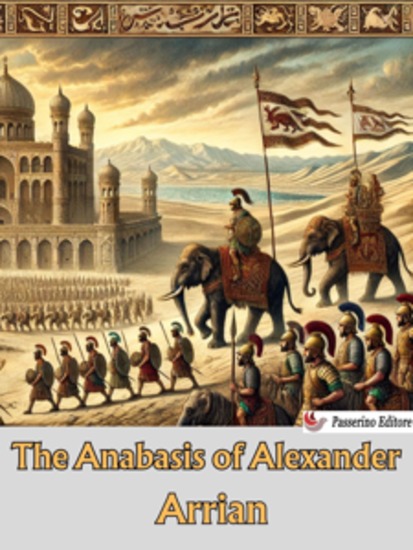
The Anabasis of Alexander - cover

The Anabasis of Alexander

Arrian

Maison d'édition: Passerino

  • 0
  • 0
  • 0

Synopsis

The Anabasis of Alexander was composed by Arrian of Nicomedia in the second century AD, most probably during the reign of Hadrian. The Anabasis (which survives complete in seven books) is a history of the campaigns of Alexander the Great, specifically his conquest of the Persian Empire between 336 and 323 BC.Both the unusual title "Anabasis" (literally "a journey up-country from the sea") and the work's seven-book structure reflect Arrian's emulation (in structure, style, and content) of the Greek historian Xenophon, whose own Anabasis in seven books concerned the earlier campaign "up-country" of Cyrus the Younger in 401 BC.Arrian of Nicomedia  (c. 86/89 – c. after 146/160 AD) was a Greek historian, public servant, military commander, and philosopher of the Roman period.
Disponible depuis: 23/04/2025.
D'autres livres qui pourraient vous intéresser

  • INSECURE ATTACHMENT - Healing from Insecurity Fostering Healthy Connections and Embracing Emotional Resilience (2024) - cover

    INSECURE ATTACHMENT - Healing...

    TYRONE SCHUMAN

    • 0
    • 0
    • 0
    "Insecure Attachment" is your guide to understanding and overcoming the challenges associated with insecure attachment styles, empowering you to cultivate healthier relationships and build emotional resilience. Rooted in psychological insights and practical strategies, this book offers a compassionate approach to healing from past wounds and fostering secure connections.Exploring Attachment Dynamics: Gain a deep understanding of insecure attachment styles and their impact on interpersonal relationships.Recognizing Personal Patterns: Identify and navigate the signs of insecure attachment in yourself and others, fostering self-awareness.Healing Attachment Wounds: Discover evidence-based techniques to heal from past attachment traumas and build a foundation for secure connections.Cultivating Self-Compassion: Develop a kinder relationship with yourself, promoting emotional well-being and a positive self-image.Building Secure Connections: Learn practical strategies to enhance your ability to form and maintain secure, meaningful relationships.Navigating Relationship Challenges: Address common issues related to insecure attachment, fostering communication, trust, and intimacy. 
    🌱 Ready to break free from the bonds of insecurity and foster healthier connections? Dive into "Insecure Attachment" and embark on a journey of self-discovery, healing, and personal growth. Whether you're navigating your own attachment challenges or supporting someone else on their journey, this guide provides the tools to foster positive change. Transform your relationships—start your attachment healing journey today! 🌱 
     
    Voir livre
  • A Rare Recording of Pope Paul VI - cover

    A Rare Recording of Pope Paul VI

    Pope Paul VI

    • 0
    • 0
    • 0
    Pope Paul VI (born Giovanni Battista Enrico Antonio Maria Montini) lived from Sept. 26, 1897 to August 6, 1978. He reigned as Pope from June 21, 1963 to his death on August 6, 1978. After succeeding John XXIII, he continued the Second Vatican Council, which he closed in 1965. He then helped to oversee the numerous reforms and improved ecumenical relations with Eastern Orthodoxy and Protestants. This speech is delivered primarily in Latin, with a short message of prayer in English for American astronauts.
    Voir livre
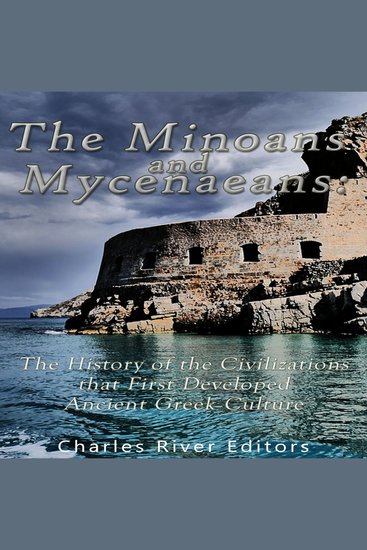
  • Minoans and Mycenaeans The: The History of the Civilizations that First Developed Ancient Greek Culture - cover

    Minoans and Mycenaeans The: The...

    Editors Charles River

    • 0
    • 0
    • 0
    Nearly 2,500 years after the Golden Age of Athens, people across the world today continue to be fascinated by the Ancient Greeks. But who did the Ancient Greeks look up to? The answer to that question can be found in Homer’s The Odyssey, in which Odysseus makes note of “a great town there, Cnossus, where Minos reigned.” It was perhaps the earliest reference to the Minoan civilization, a mysterious ancient civilization that historians and archaeologists still puzzle over, but a civilization that renowned historian Will Durant described as "the first link in the European chain.” 
    Nearly 2,000 years before Homer wrote his epic poems, the Minoan civilization was centered on the island of Crete, a location that required the Minoans to be a regional sea power. And indeed they were, stretching across the Aegean Sea from about 2700-1500 BCE with trade routes extending all the way to Egypt. 
    The Minoans may have been the first link in the “European chain”, leading to the Ancient Greeks and beyond, but questions persist over the origins of the civilization, the end of the civilization, and substantial parts of their history inbetween, including their religion and buildings.  
    In the wake of the Minoans, a Greek culture flourished and spread its tentacles throughout the western Mediterranean region via trade and warfare. Scholars have termed this pre-Classical Greek culture the Mycenaean culture, which existed from about 2000-1200 BCE, when Greece, along with much of the eastern Mediterranean, was thrust into a centuries long dark age. However, before the Mycenaean culture collapsed, it was a vital part of the late Bronze Age Mediterranean system and stood on equal footing with some of the great powers of the region, such as the Egyptians and Hittites. At the same time, the Mycenaeans had more in common with their neighbors from the island of Crete.
    Voir livre
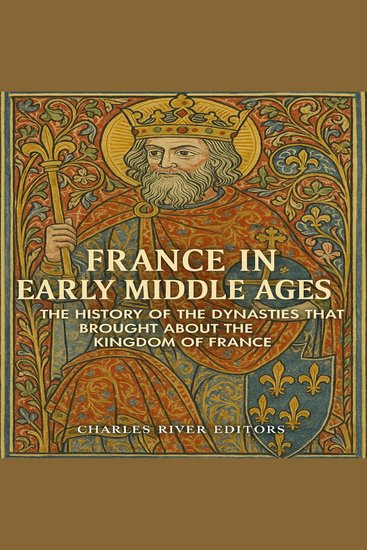
  • France in the Early Middle Ages: The History of the Dynasties that Brought about the Kingdom of France - cover

    France in the Early Middle Ages:...

    Charles River Editors

    • 0
    • 0
    • 0
    The birth of Europe as people know it today was hardly an easy and effortless process. The end of antiquity was shaped by centuries of continuous wars, raids, and the falls and rises of empires. The most turbulent of these events happened at the beginning of the Middle Ages, from the 3rd-7th centuries CE. This was the time when the old slave society gave way to the feudal system that marked the latter Middle Ages, and it was also a period of battles between the Roman Empire and various barbarian peoples. The Roman Emperors waged wars, made and broke alliances, and bribed and negotiated with chieftains of various “barbarian” tribes to preserve the territorial integrity of their Empires. 
    After Julius Caesar conquered Gaul in the mid-1st century BCE, Augustus and his successors eventually began a program of Romanization that, in a remarkably short period of time, transformed Gaul into four provinces. All of these locales added enormously to the Roman Empire in terms of manpower, material goods and wealth. Even today, historians are amazed at how such a large population that was not without its own systems of administration and vibrant culture and tradition could so easily succumb to Rome’s pacification process, and to such an extent that, within short periods of time, the indigenous language and traditions of the Celtic peoples of Gaul were totally supplanted. The reasons why Rome was able to subjugate and then transform what was for that time an immense population of over 10 million people lie not only in its military superiority but its system of organization and its conscious program of Romanization.  
    	Ironically, even as Rome’s control over Gaul kept modern France fragmented, the medieval dynasties that sprouted up in the area looked up to the Romans as their predecessors, and in essence they would attempt to recreate the Roman Empire.
    Voir livre
  • Stream to Income - Turn Your Skills Content and Time Into Online Revenue - cover

    Stream to Income - Turn Your...

    Kyla Jennings

    • 0
    • 0
    • 0
    🎧 Stream to Income: Turn Your Skills, Content, and Time Into Online Revenue 
     Written and narrated for creators, freelancers, and everyday entrepreneurs ready to earn online. 
    Are you sitting on untapped skills, valuable knowledge, or just a passion to create—and wondering how to turn it all into real income? Stream to Income is your step-by-step audio guide to transforming your expertise, content, and free time into multiple streams of online revenue. 
    Whether you're a teacher, writer, gamer, artist, coach, or side hustler, this audiobook walks you through practical, actionable strategies for monetizing what you already know and love to do. No fluff, just a clear roadmap. 
    Inside, you’ll learn how to:Identify the most profitable parts of your skill setCreate digital products that sell while you sleepBuild your audience without burning outChoose the best platforms for content, coaching, courses, and moreStreamline your time and set up sustainable systems for passive income 
    From side hustle to full-time freedom, Stream to Income breaks down the myths and shows you what’s really working right now in the digital economy. 
    🎙️ Perfect for listening on the go, this audiobook includes real examples, bonus tips, and mini-audio exercises to help you build your revenue engine as you listen. 
    If you're ready to stop trading hours for dollars and start building income streams that work while you sleep, press play and let’s start streaming your income today.
    Voir livre
  • Citizenship Without Illusions - A Christian Guide to Political Engagement - cover

    Citizenship Without Illusions -...

    David T. Koyzis

    • 0
    • 0
    • 0
    Christianity Today Book Awards Finalist—Politics and Public Life
    How can Christians live as citizens of God's kingdom while also fulfilling their responsibilities as citizens of political communities? David Koyzis, author of Political Visions and Illusions, offers a brief, practical guide on political engagement and citizenship.
    During numerous conversations with students and readers of his books in Canada, the United States, Brazil, Chile, the United Kingdom, and elsewhere, Koyzis has heard the same questions repeated. Can Christians participate in the public square without buying in to political illusions—ideologies that become idolatrous? Is it better to avoid politics than risk ethical compromise or division among believers? In Citizenship Without Illusions, Koyzis presents a case for political engagement as a way to love our neighbors that doesn't require our full devotion to parties or ideologies. He explores key topics such as:
    
    - the responsibilities of citizens
    - how to vote
    - mobilizing for political action
    - citizenship under less-than-ideal circumstances
    - the importance of both local and global engagement
    - the role of the church in society
    Using examples from various eras and places, Koyzis guides readers to make the best of their own political situations, make thoughtful decisions, and promote societal diversity while respecting those who disagree. With clear understanding and confidence in their ultimate allegiance, Christians can employ their citizenship for the greater good.
    Voir livre