Join us on a literary world trip!
Add this book to bookshelf
Grey
Write a new comment Default profile 50px
Grey
Subscribe to read the full book or read the first pages for free!
All characters reduced
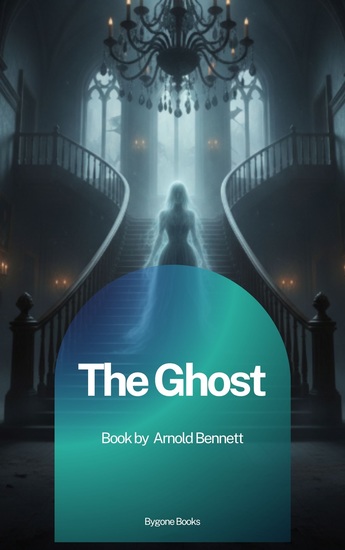
The Ghost - cover

The Ghost

Arnold Bennett

Publisher: Bygone Books

  • 0
  • 0
  • 0

Summary

A quiet house. A lingering presence. A mystery that refuses to fade.

The Ghost is a compelling supernatural-themed novel by Arnold Bennett, blending psychological depth with atmospheric storytelling.

The story unfolds around a haunting presence that disrupts ordinary life, gradually revealing hidden emotions, unresolved past events, and the fragile boundaries between reality and imagination. Rather than focusing solely on fear, the narrative explores how memory, guilt, and human perception can shape what people believe they experience.

With its subtle tension and introspective style, the novel reflects Bennett's skill in portraying everyday life while introducing elements of mystery and the uncanny.

A thought-provoking classic, The Ghost offers a unique blend of literary realism and supernatural suggestion, making it an intriguing read for fans of psychological fiction and classic mystery literature.
Available since: 06/19/2026.
Print length: 205 pages.
Other books that might interest you

  • Justice Hilton Must Also Go - cover

    Justice Hilton Must Also Go

    Bhagat Singh

    • 0
    • 0
    • 0
    Justice Hilton Must Also Go by Bhagat Singh is offered here in a clean English digital edition prepared for fluent ebook reading. The work stands within classics and gives modern readers direct access to a public-domain classic with navigable structure and a restrained typographic presentation. The opening pages establish the book's atmosphere with this first movement: June 25, 1930 Lahore Conspiracy Case before the Special Tribunal opened on May 5, 1930. On May 12 the presiding judge lost his temper on the question of a song. He ordered that the accused be handcuffed. The accused resisted. They were removed from the court by force and sent back to the jails. The This edition is suited to readers who want a reliable, uncluttered version of the text for study, rediscovery, and sustained reading.
    Show book
  • Hunchback of Notre-Dame The (Volume 2) - cover

    Hunchback of Notre-Dame The...

    Victor Hugo

    • 0
    • 0
    • 0
    The Hunchback of Notre-Dame or Notre-Dame de Paris is a French Gothic novel by Victor Hugo, published in 1831.
    The story is set in Paris in 1482 during the reign of Louis XI. The gypsy Esmeralda (born as Agnes) captures the hearts of many men, including those of Captain Phoebus and Pierre Gringoire, but especially Quasimodo and his guardian Archdeacon Claude Frollo. Frollo is torn between his obsessive lust for Esmeralda and the rules of Notre Dame Cathedral. He orders Quasimodo to kidnap her, but Quasimodo is captured by Phoebus and his guards, who save Esmeralda. Gringoire, who attempted to help Esmeralda but was knocked out by Quasimodo, is about to be hanged by beggars when Esmeralda saves him by agreeing to marry him for four years.
    Show book
  • Monsieur Madame and Bébé - cover

    Monsieur Madame and Bébé

    Gustave Droz

    • 0
    • 0
    • 0
    Sketches of a French marriage: the courtship, the wedding night, the first baby, the nurse, the mother-in-law, the boredom, and a great deal that the 1860s did not put in print. Droz trained as a painter and exhibited at the Salon for a decade before a magazine asked him for sketches of married life; the book went through a hundred editions and was thought scandalously frank.
    Show book
  • Nine Points of the Law - From their pens to your ears genius in every story - cover

    Nine Points of the Law - From...

    E W Hornung

    • 0
    • 0
    • 0
    Ernest William Hornung was born in Middlesbrough, England on 7th June 1866, the third son and youngest of eight children.   
    Although spending most of his life in England and France he spent two years in Australia from 1884 and that experience was to colour and influence much of his written works. 
    His most famous character A. J. Raffles, ‘the gentleman thief’, was published first in Cassell's Magazine during 1898 and was to make him famous across the world as the new century dawned.  
    Hornung also wrote several stage plays and was a gifted poet. 
    Spending time with the troops in WWI he published Notes of a Camp-Follower on the Western Front during 1919, a detailed account of his time there.  This was especially close to his heart as his son, and only child, was killed at the Second Battle of Ypres on 6th July 1915.   
    Ernest William Hornung died in Saint-Jean-de-Luz, in the south of France on 22nd March 1921.
    Show book
  • The Best Collection of Franz Kafka - cover

    The Best Collection of Franz Kafka

    Franz Kafka

    • 0
    • 0
    • 0
    What if the world no longer made sense—and never explained why?
    
    The Best Collection of Franz Kafka brings together the most powerful and influential works of one of the twentieth century's most important writers. Kafka's fiction explores a nightmarish world of endless bureaucracy, isolation, guilt, and silent authority—where individuals struggle to understand forces beyond their control.
    
    This carefully curated collection includes Kafka's essential novels and short stories, capturing his unique blend of realism and surrealism. His haunting imagination gives shape to modern anxiety, revealing how fear, identity, and power operate beneath ordinary life.
    
    Kafka's writing is spare, unsettling, and deeply philosophical, offering stories that linger long after the final page.
    
    Inside this eBook, you'll explore:
    
    Essential works such as The Metamorphosis, The Trial, and The Castle
    
    Short stories that define modern existential fiction
    
    Themes of alienation, absurdity, and power
    
    A cornerstone collection of literary modernism
    
    Studied worldwide and endlessly influential, Franz Kafka's work continues to define how literature confronts anxiety, authority, and meaning in the modern world.
    
    Enter the labyrinth of the modern mind. Buy now and experience the best collection of Franz Kafka.
    Show book
  • A Tale Of Two Cities - cover

    A Tale Of Two Cities

    Charles Dickens

    • 0
    • 0
    • 0
    A doctor is released from the Bastille after being falsely imprisoned for almost eighteen years. A young woman discovers the father she's never known is not dead but alive, if not entirely well. A young man is acquitted of being a traitor, due in part to the efforts of a rather selfish lout who is assisting the young man's attorney. A man has a wine shop in Paris with a wife who knits at the bar. These disparate elements are tied together as only Dickens can, and in the process he tells the story of the French Revolution. Charles Dickens was fascinated by Thomas Carlyle's magnum opus The French Revolution ; according to Dickens' letters, he read it "500 times" and carried it with him everywhere while he was working on this novel. When he wrote to Carlyle asking him for books to read on background, Carlyle sent him two cartloads full. Dickens mimicked Carlyle's style, his chronology, and his overall characterization of the revolution; although A Tale of Two Cities is fiction, the historical events described are largely accurate, sometimes exactly so. Even so, Dickens made his name and reputation on telling stories full of characters one could be invested in, care about, and despise, and this novel has all of those and more. It also, in its first and last lines, has two of the most famous lines in literature. With the possible exception of A Christmas Carol , it is his most popular novel, and according to many, his best. Charles Dickens (died 1870) was one of the most distinguished authors of the Victorian age. Their work has endured across generations and continues to be read and studied worldwide. As a work of classic literary fiction, A Tale Of Two Cities exemplifies the narrative craft and social insight that defined great storytelling of its era. Literary fiction of this period was characterized by careful attention to character psychology, social milieu, and the moral questions that animated public discourse.
    Show book