Junte-se a nós em uma viagem ao mundo dos livros!
Adicionar este livro à prateleira
Grey
Deixe um novo comentário Default profile 50px
Grey
Assine para ler o livro completo ou leia as primeiras páginas de graça!
All characters reduced
Poetics - cover
LER

Poetics

Aristotle

Tradutor S. H. Butcher

Editora: DigiCat

  • 0
  • 0
  • 0

Sinopse

Aristotle's "Poetics" stands as a seminal text in the foundation of literary theory, wherein he meticulously analyzes the principles of dramatic and epic poetry. Written in the 4th century BCE, this work deftly bridges philosophical inquiry with the art of storytelling, presenting concepts such as mimesis, catharsis, and the unities of time, place, and action. Aristotle's analytical style combines empirical observation with deductive reasoning, offering a systematic inquiry into the nature of poetry and its emotive effects on audiences. His exploration of tragedy, in particular, delineates the characteristics of heroic narratives and serves as a cornerstone for the future development of dramatic literature in the Western canon. As a towering figure in ancient philosophy, Aristotle's extensive educational and intellectual background informed his literary critiques. A student of Plato and a teacher of Alexander the Great, he cultivated a profound understanding of human nature and the societal roles that literature plays within it. His holistic approach to knowledge also encompassed natural sciences and ethics, allowing him to draw interdisciplinary connections that enrich his examination of poetic form and function. "Poetics" is essential for anyone keen on understanding the intricate mechanics of storytelling and dramatic art. Whether you are a scholar, a writer, or simply an avid reader, Aristotle's insights will deepen your appreciation for literature's ability to reflect and influence human experience. Engage with this timeless work to unlock the enduring principles that continue to shape narrative art.
Disponível desde: 13/11/2022.
Comprimento de impressão: 38 páginas.
Outros livros que poderiam interessá-lo

  • Merry Springtime - From their pens to your ears genius in every story - cover

    Merry Springtime - From their...

    William Pett Ridge

    • 0
    • 0
    • 0
    William Pett Ridge was born at Chartham, near Canterbury, Kent, on 22nd April 1859. 
    His family’s resources were certainly limited. His father was a railway porter, and the young Pett Ridge, after schooling in Marden, Kent became a clerk in a railway clearing-house. The hours were long and arduous, but self-improvement was Pett Ridge’s goal.  After working from nine until seven o’clock he would attend evening classes at Birkbeck Literary and Scientific Institute and then to follow his passion; the ambition to write.  He was heavily influenced by Dickens and several critics thought he had the capability to be his successor. 
    From 1891 many of his humourous sketches were published in the St James's Gazette, the Idler, Windsor Magazine and other literary periodicals of the day. 
    Pett Ridge published his first novel in 1895, A Clever Wife. By the advent of his fifth novel, Mord Em'ly, a mere three years later in 1898, his success was obvious.  His writing was written from the perspective of those born with no privilege and relied on his great talent to find humour and sympathy in his portrayal of working class life. 
    Today Pett Ridge and other East End novelists including Arthur Nevinson, Arthur Morrison and Edwin Pugh are being grouped together as the Cockney Novelists.   
    In 1924, Pugh set out his recollections of Pett Ridge from the 1890s: “I see him most clearly, as he was in those days, through a blue haze of tobacco smoke. We used sometimes to travel together from Waterloo to Worcester Park on our way to spend a Saturday afternoon and evening with H. G. Wells. Pett Ridge does not know it, but it was through watching him fill his pipe, as he sat opposite me in a stuffy little railway compartment, that I completed my own education as a smoker... Pett Ridge had a small, dark, rather spiky moustache in those days, and thick, dark, sleek hair which is perhaps not quite so thick or dark, though hardly less sleek nowadays than it was then”. 
    With his success, on the back of his prolific output and commercial success, Pett Ridge gave generously of both time and money to charity. In 1907 he founded the Babies Home at Hoxton.  This was one of several organisations that he supported that had the welfare of children as their mission.  
    His circle considered Pett Ridge to be one of life's natural bachelors. In 1909 they were rather surprised therefore when he married Olga Hentschel.  
    As the 1920’s arrived Pett Ridge added to his popularity with the movies. Four of his books were adapted into films.  
    Pett Ridge now found the peak of his fame had passed. Although he still managed to produce a book a year he was falling out of fashion and favour with the reading public and his popularity declined rapidly.  His canon runs to over sixty novels and short-story collections as well as many pieces for magazines and periodicals. 
    William Pett Ridge died, on 29th September 1930, at his home, Ampthill, Willow Grove, Chislehurst, at the age of 71. 
    He was cremated at West Norwood on 2nd October 1930.
    Ver livro
  • The Trouble at Pinelands - cover

    The Trouble at Pinelands

    Ernest M. Poate

    • 0
    • 0
    • 0
    A haunted house. A murdered physician. A bridegroom found holding the smoking gun. 
     
    George Uhlman has reluctantly agreed to watch over his niece, Dorothy McGregor, as she prepares to marry young physician Lewis Parker. His stay at Fort House should be uneventful—but the gloomy North Carolina mansion is already troubled by unexplained noises, shattered dishes, missing food, and rumors of a destructive poltergeist. 
     
    Then the disturbances take a deadly turn. 
     
    After a bitter confrontation between Lewis and his professional rival, Dr. Gaskell, a shotgun blast shatters the early-morning quiet. Gaskell is discovered dead in the scrub oaks, and Lewis is found nearby with the weapon in his hands. 
     
    The evidence appears damning. The townspeople demand justice, the authorities close in, and Dorothy’s future collapses around her. But when Lewis’s sharp-minded best man, Dr. Floyd Somers, arrives in Pinelands, he refuses to accept the obvious solution. 
     
    Behind the ghostly disturbances lies a household filled with secrets. Behind the murder lies a web of jealousy, old grudges, hidden criminal activity, and carefully arranged deception. 
     
    First published in 1922, *The Trouble at Pinelands* is an atmospheric American mystery combining a seemingly haunted house, small-town rivalries, courtroom intrigue, and a classic puzzle of detection. 
     
    Narrated by John Riddle.
    Ver livro
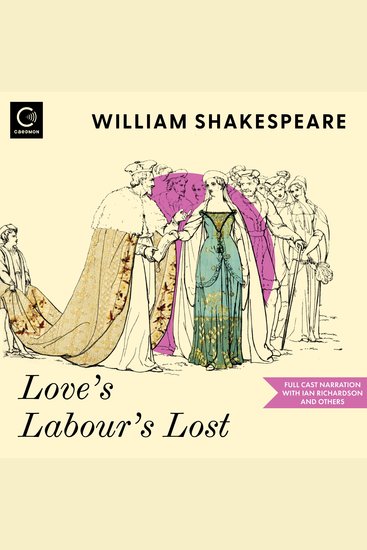
  • Love's Labour's Lost - cover

    Love's Labour's Lost

    William Shakespeare

    • 0
    • 0
    • 0
    This new edition of Shakespeare's Love's Labour's Lost presents a highly readable text of the play based on the first quarto of 1598. A thorough but concise critical commentary and a comprehensive introduction illuminate the significant elements of the play, its remarkable use of language, and its performance history.
    Ver livro
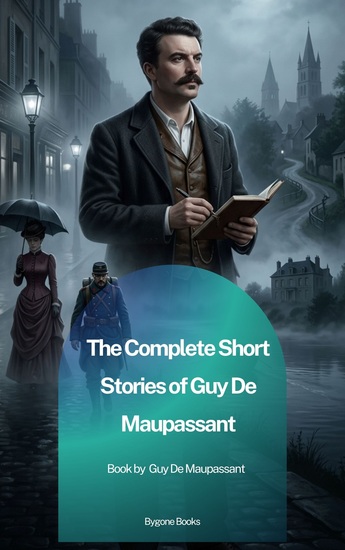
  • The Complete Short Stories of Guy De Maupassant - cover

    The Complete Short Stories of...

    Guy de Maupassant

    • 0
    • 0
    • 0
    Discover the brilliance of one of the world's greatest short story writers in this comprehensive collection of timeless literary masterpieces.
    
    Explore "The Complete Short Stories of Guy de Maupassant," an extraordinary anthology bringing together the celebrated short fiction of one of France's most influential authors. Renowned for his elegant prose, psychological insight, vivid realism, and unforgettable storytelling, Guy de Maupassant transformed the short story into a literary art form that continues to captivate readers around the world.
    
    This comprehensive collection offers readers the opportunity to experience Maupassant's remarkable range of storytelling. Through compelling characters and richly observed narratives, his stories explore universal themes of love, ambition, friendship, family, human nature, social class, morality, war, loneliness, fate, and the unexpected twists of everyday life. Blending realism, irony, emotional depth, and subtle humor, these timeless works remain as engaging and relevant today as when they were first published.
    
    Widely regarded as one of the greatest masters of the short story, Guy de Maupassant influenced generations of writers with his concise style, memorable characters, and masterful endings. His literary legacy continues to inspire readers, scholars, and authors across the globe.
    
    Perfect for readers who enjoy classic literature, French literature, literary fiction, psychological fiction, realist fiction, nineteenth-century classics, short stories, and timeless literary masterpieces, "The Complete Short Stories of Guy de Maupassant" is an essential addition to every digital library.
    
    Experience the artistry of one of literature's finest storytellers. Add "The Complete Short Stories of Guy de Maupassant" to your Kindle library today and enjoy a timeless collection of unforgettable stories and literary masterpieces.
    Ver livro
  • A House of Pomegranates - cover

    A House of Pomegranates

    Oscar Wilde

    • 0
    • 0
    • 0
    Oscar Wilde supposedly said that these fables were “intended neither for the British child nor the British public”. A follow-up to his first popular fairy-tale collection (‘The Happy Prince and Other Tales’), ‘A House of Pomegranates’ (1891) is indeed decidedly darker and more adult. The collection includes “The Young King”, “The Birthday of the Infanta, “The Fisherman of his Soul”, and “The Star Child”. While similar, in some ways, to the fairy-tales of Hans Christian Andersen and the Brothers Grimm these have a certain interesting Wilde flair to them that is hard to pinpoint. Oscar Wilde (1854-1900) was an Irish playwright, novelist, essayist, and poet, famous for ‘The Picture of Dorian Gray’ and ‘The Importance of Being Earnest’ to name a couple. He was believed to be gay and met a lot of resistance in his life on that account. He died in Paris at the age of 46.
    Ver livro
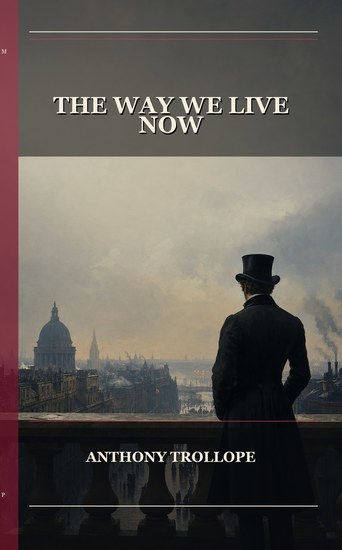
  • The Way We Live Now - cover

    The Way We Live Now

    Anthony Trollope

    • 0
    • 0
    • 0
    The Way We Live Now is Anthony Trollope's longest novel, published in two volumes in 1875 after first appearing in serial form. After an extended visit to Australia and New Zealand in 1872, Trollope was outraged on his return to England by a number of financial scandals, and was determined to expose the dishonesty, corruption, and greed they embodied. The Way We Live Now centers around a foreign businessman, Augustus Melmotte, who has come to prominence in London despite rumors about his past dealings on the Continent. He is immensely rich, and his daughter Marie is considered to be a desirable catch for several aristocratic young men in search of a fortune. Melmotte gains substantial influence because of his wealth. He rises in society and is even put up as a candidate for Parliament, despite a general feeling that he must be a fraudster and liar. A variety of sub-plots are woven around this central idea. The Way We Live Now is generally considered to be one of Trollope's best novels and is often included in lists of the best novels written in English. Anthony Trollope (died 1882) was one of the most distinguished authors of the Victorian age. Their work has endured across generations and continues to be read and studied worldwide. As a work of classic literary fiction, The Way We Live Now exemplifies the narrative craft and social insight that defined great storytelling of its era. Literary fiction of this period was characterized by careful attention to character psychology, social milieu, and the moral questions that animated public discourse.
    Ver livro