Rejoignez-nous pour un voyage dans le monde des livres!
Ajouter ce livre à l'électronique
Grey
Ecrivez un nouveau commentaire Default profile 50px
Grey
Abonnez-vous pour lire le livre complet ou lisez les premières pages gratuitement!
All characters reduced
The Clouds - cover

The Clouds

Aristophanes

Maison d'édition: CLXBX

  • 0
  • 0
  • 0

Synopsis

The Clouds by Aristophanes is a sharp and satirical comedy that offers a witty critique of intellectual trends and social attitudes in ancient Athens. First performed in 423 BCE, the play humorously examines the influence of new philosophical ideas and the shifting values of Athenian society, particularly through its parody of education and rhetoric.

The story follows Strepsiades, an indebted and desperate man seeking a way to escape his financial troubles. Hoping to outwit his creditors, he enrolls in a peculiar school known as the "Thinkery," where unconventional teachings promise to turn weak arguments into strong ones. There, he encounters a caricature of the philosopher Socrates, who is portrayed as the head of this absurd institution, suspended between heaven and earth while pondering abstract ideas.

As Strepsiades and later his son become entangled in this world of distorted logic and clever wordplay, the play unfolds into a comedic exploration of morality, responsibility, and the misuse of knowledge. Aristophanes uses exaggerated characters and imaginative scenarios to question whether intellectual sophistication leads to wisdom—or merely provides tools for deception.

Blending humor with biting social commentary, The Clouds reflects concerns about the erosion of traditional values and the consequences of prioritizing cleverness over integrity. Its playful yet critical tone continues to resonate, making it a timeless work that invites readers to reflect on education, ethics, and the true purpose of knowledge.
Disponible depuis: 17/03/2026.
Longueur d'impression: 54 pages.

D'autres livres qui pourraient vous intéresser

  • Aristopia: a Romance-History of the New World - cover

    Aristopia: a Romance-History of...

    Castello Newton Holford

    • 0
    • 0
    • 0
    "Aristopia: A Romance-History of the New World is an 1895 utopian novel written by Castello Holford. It holds the distinction of being considered the first novel-length alternate history in English and is among the earliest examples of alternate histories in general1.    In this captivating tale, Ralph Morton, an early settler in Virginia, stumbles upon a reef made of solid gold. Rather than squandering his newfound wealth, Morton shrewdly uses it to establish a planned society called Aristopia (derived from the Greek word for "the best place"). Drawing inspiration from Sir Thomas More's Utopia, Morton introduces his own innovations and adaptations.    Here are some key features of Aristopia:    Land Ownership: In Aristopia, all land is owned by the government, which then leases it to businesses and private citizens.  Monopolized Trade: Large-scale trade is monopolized by the state.  Wealth Limitations: Inherited wealth is limited.  Productive Refugees: Morton welcomes productive refugees from European conflicts, including Huguenots, Irish fugitives, and skilled artisans from northern Italy and Switzerland.  Prosperity and Expansion: The colony thrives, expands westward, and even supports the American Revolution. Eventually, Aristopia conquers Canada and comes to dominate all of North America north of Mexico.  This novel offers a unique twist on the utopian genre by imagining an alternate history where the United States was founded under different circumstances, leading to a superior society in the author's own time"
    Voir livre
  • Beowulf - cover

    Beowulf

    Beowulf

    • 0
    • 0
    • 0
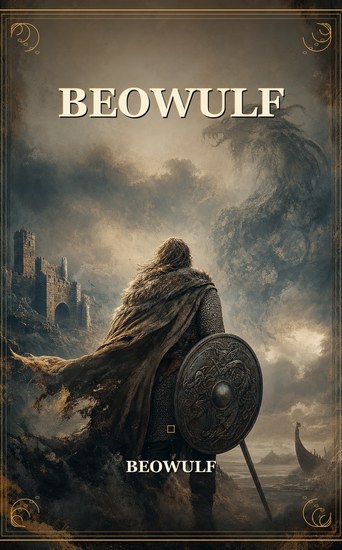
    Beowulf by Beowulf is offered here in a clean English digital edition prepared for fluent ebook reading. The work stands within classics and gives modern readers direct access to a public-domain classic with navigable structure and a restrained typographic presentation. The opening pages establish the book's atmosphere with this first movement: Lo! the Spear-Danes' glory through splendid achievements The folk-kings' former fame we have heard of, How princes displayed then their prowess-in-battle. Oft Scyld the Scefing from scathers in numbers From many a people their mead-benches tore. Since first he found him friendless and wretched, The This edition is suited to readers who want a reliable, uncluttered version of the text for study, rediscovery, and sustained reading.
    Voir livre
  • The Wild Duck - cover

    The Wild Duck

    Henrik Ibsen

    • 0
    • 0
    • 0
    "The Wild Duck" is a play written by Henrik Ibsen, a renowned Norwegian playwright. First published in 1884, it is considered one of Ibsen's most complex and psychologically intense works. "The Wild Duck" delves into themes of truth, illusion, and the consequences of deception, exploring the effects of hidden truths on individuals and their relationships. 
     
    The play revolves around the Ekdal family and their complex dynamics. Gregers Werle, a well-intentioned but idealistic outsider, enters their lives and sets in motion a chain of events that unravel long-held secrets. Central to the story is the metaphor of the wild duck, which represents the ideal of truth and the consequences of disrupting the illusions that people construct to protect themselves. 
     
    Through the characters' interactions and revelations, Ibsen explores the destructive nature of hidden truths and the self-deception that individuals engage in to maintain a fragile sense of happiness. The play raises questions about the value of truth, the masks people wear to navigate their lives, and the consequences of confronting or avoiding painful realities. 
     
    Ibsen's skillful character development and intricate plot twists make "The Wild Duck" a powerful exploration of human nature and the complexities of interpersonal relationships. The play challenges societal norms and exposes the destructive effects of maintaining illusions. It serves as a critique of social hypocrisy and the consequences of clinging to idealistic notions of truth. 
     
    "The Wild Duck" continues to be regarded as a significant work in the canon of modern drama. Its exploration of truth, illusion, and the consequences of deception resonates with audiences, prompting contemplation of the human capacity for self-deception and the inherent complexities of navigating relationships and society. 
    .
    Voir livre
  • The Schoolmistress - cover

    The Schoolmistress

    Anton Chekhov

    • 0
    • 0
    • 0
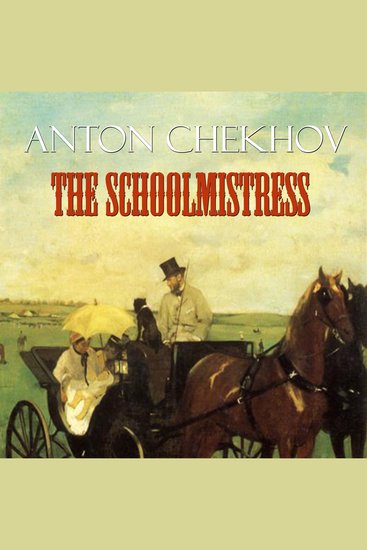
    The short story focuses on a schoolmistress who is returning home after collecting her salary from the town. The weather is terrible, and makes the journey far longer than it should be. She meets a man named Hanov, an aging man who is joyful and seemingly ignorant of the misery of life. On this journey, Marya Vassilyevna ponders her life, her happiness and the repetition of it all. When a train goes past, she sees a woman who looks much like her late mother, which fills her with joy she hasn't felt in a very long time.
    In 'The Schoolmistress' by Anton Chekhov, life is represented as meaningless, repetitive and dull. This is done by characterization and descriptive language.
    Voir livre
  • Gulliver's Travels - cover

    Gulliver's Travels

    Jonathan Swift

    • 0
    • 0
    • 0
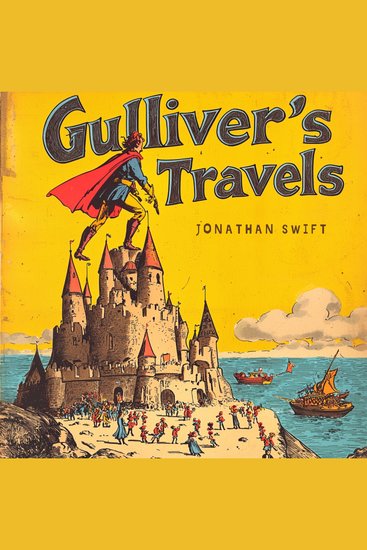
    Jonathan Swift invites readers on an unforgettable journey with Lemuel Gulliver, a ship's surgeon whose adventures span fantastical realms. Encountering societies from the minuscule Lilliputians to the towering Brobdingnagians, and the rational Houyhnhnms to the barbaric Yahoos, Gulliver's experiences satirize the eccentricities and defects of human civilization. Swift's biting humor and insightful critique craft a timeless exploration of humanity's virtues and vices.
    Voir livre
  • In a German Pension - cover

    In a German Pension

    Katherine Mansfield

    • 0
    • 0
    • 0
    Recovering from a miscarriage and a bad marriage, author Katherine Mansfield, barely 21, wrote these excellent short stories around the time she was staying in a spa town in Germany. With wry humour, she depicts a German upper middle class defined by their rude habits, but she also touches upon the hard life of servants and the oppression of women. The latter distinguishes her writing from that of Jane Austen, but the way in which Mansfield mocks the stiff-upper-lipped ladies and Barons of these stories and zeroes in on character quirks is particularly Jane Austen-like, and just as satisfying as in ‘Pride and Prejudice’. 
    Katherine Mansfield (1888-1923) was short story writer and poet from New Zealand, who settled in England at the age of 19. Virginia Woolf and D.H. Lawrence were among her literary friends and admirers. She died of tuberculosis at the age of 34.
    Voir livre